When Hollywood Made the Big Left Turn

The Hollywood tale begins in the 1920s.

It was a time when most major studio heads were decidedly on the conservative side of the political aisle.

So how did the entertainment industry veer into the leftist stratosphere?

Well, the process seemed to begin after some Hollywood-related scandals caused quite a bit of public embarrassment, which prompted the studios to become more proactive in terms of controlling the inner workings of the movie business.

Rather than having to bow to government regulators, the Motion Picture Producers and Distributors of America hired a former U.S. postmaster general by the name of Will Hays to help develop guardrails for movie production.

In 1933, Hays pushed the film industry to adopt what would come to be known as the Hays Code, which established rules that set boundaries pertaining to onscreen depictions of sex and crime.

Films and eventually television content that conformed to the code received a seal of approval upon which the movie-going public could rely, particularly families with children.

A pivotal event occurred in the late 1940s, which resulted in a transformation of the industry itself.

Some of the intellectuals around town, who were purportedly sympathetic to communist ideology, were investigated by the House Un-American Activities Committee.

The Motion Picture Alliance for the Preservation of American Ideals provided to the committee the names of those who were alleged to be communists as well as those who supported communist organizations.

Notable entertainment figures of the time, including Gary Cooper, Ronald Reagan, Robert Taylor, Sterling Hayden, and Edward G. Robinson named names and/or expressed concern about subversive content of screenplays.

Most of the names that were named were those of screenwriters. A select group of blacklisted individuals became known as the “Hollywood Ten.”

Hollywood is still burdened with an obsession over the blacklist era. Movies that deal with the subject are continuously being produced: “Good Night, and Good Luck,” “The Front,” “Guilty by Suspicion,” “Yoo-Hoo, Mrs. Goldberg,” “The Majestic,” and two biopics, both titled “Trumbo” based on blacklisted screenwriter Dalton Trumbo, just to name a few.

At the time of the blacklist and up until the late 1960s, Hollywood was structured along the lines of what came to be called the “studio system.”

This top-down model was controlled by five major movie studios known as the Big Five, and three smaller studios known as the Little Three.

The Big Five was comprised of Paramount, Warner Bros., RKO Pictures, Metro-Goldwyn-Mayer, and 20th Century Fox.

The Little Three were United Artists, Universal, and Columbia Pictures.

Interestingly, today’s largest and most powerful company, Disney, was not part of either the Big Five or the Little Three.

The studio system, as well as Hollywood’s Golden Era, took a hit both in power and influence as a result of a landmark Supreme Court decision, United States v. Paramount, an antitrust case.

Originally filed a decade earlier, the landmark case shocked the entertainment industry with language that called for the complete separation of ownership of movie theaters from film production and distribution, effectively terminating the studio system.

This legal decision, along with the continuing backlash against the blacklist, ended up being the catalyst for Hollywood’s extreme leftward tilt.

The studios opened up to independent filmmakers, and by the early 1960s the Hays Code had been replaced by a rating system that had been implemented by the newly formed Motion Picture Association of America, the same rating system that the industry uses to this day.

A new breed of filmmakers began to produce titles with defiant, rebellious, and anti-conventional themes, such as “Easy Rider,” “Midnight Cowboy,” and “Carnal Knowledge.”

By the late 1970s, its metamorphosis was evident. Hollywood continued over the years to become ever more left-wing, which cultivated the soil from which the unimpeded weeds of wokeness grew.

So here we are stuck with the 96th Academy Awards ceremony that recently aired, which, among other things, had imposed a set of DEI rules for a nominee to qualify for the Best Picture Oscar.

Needless to say, the DEI rules are at a minimum a profound obstacle to the creative process and another truly divisive thorn in our culture’s side.

Veteran actor Richard Dreyfuss gave a candid response to the Academy’s DEI standards, after they had been revealed to the public.

“They make me vomit,” Dreyfuss said. “Because this is an art form, it’s also a form of commerce, and it makes money, but it’s an art.”

Is life imitating art or art imitating life?

In a woke world, it’s anybody’s guess.

Canceling Captain Kirk

The “Star Trek” series made its television debut back in 1966.

The show would prove to be a game changer that would ultimately become a worldwide pop-culture phenomenon.

If only NBC had known.

The network unfortunately canceled the series after a short three-season run. But the saga lives on to this day.

“Star Trek” became a franchise of its own, giving birth to TV reboots, spin-offs, movies, video games, novels, comic books, and so much more.

For those who weren’t around at the start, the show takes place in the 23rd Century, and tells the tale of the starship USS Enterprise and its team of onboard futuristic characters.

In the original series, the mission of the Enterprise is enunciated in dramatic fashion at the beginning of each episode: “To explore strange new worlds, to seek out new life and new civilizations, to boldly go where no man has gone before.”

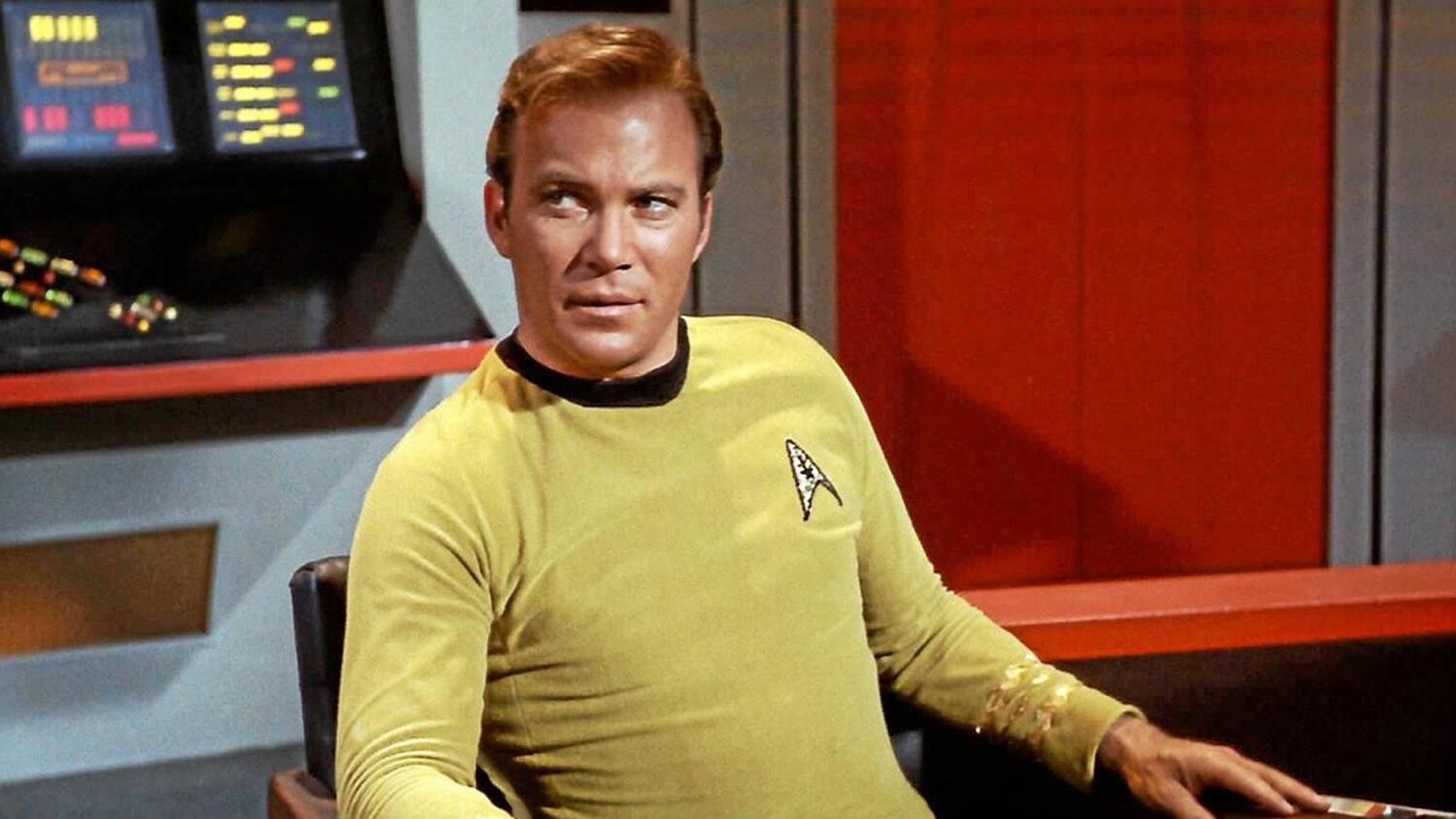
The lead star of the original series and the figure that truly personifies the “Star Trek” brand is William Shatner.

For three seasons Shatner played the role of Captain James Tiberius Kirk, the charismatic leader of the starship.

He also provided the voice of the animated version of Kirk in “Star Trek: The Animated Series,” and portrayed Kirk in seven “Star Trek” films. He was essential to the establishment of the franchise.

In a strange turn of events, it now appears that Paramount is deliberately trying to redact Shatner’s iconic Kirk character.

The subject recently came up on Shatner’s Twitter/X account, when a follower wanted to find out the actor’s reaction to Sir Patrick Stewart’s announcement that a new Captain Picard movie is in the works.

“I think that a new movie with Sir Patrick is wonderful news,” Shatner graciously wrote.

Another user asked, “But will we ever see Captain Kirk again?”

Shatner replied, “All you have to do is look at the Paramount+ graphics to answer that question.”

Along with his tweet, he posted a picture of “Star Trek Originals,” which included images of characters from across the history of the franchise. Noticeably absent is a picture of Shatner as Captain Kirk.

A third follower asked, “Has anyone at Paramount come out with an official explanation for this MASSIVE FLUB?”

In response, Shatner posted another example of the promotional imagery from Paramount+. Once again Shatner in the Captain Kirk role was nowhere to be seen.

“It’s not the first time it’s been going on for years,” the actor wrote. “It makes no difference to me that a group who think they are ‘enlightened’ (or whatever they think they are) obviously feels threatened by the Kirk character.”

“It’s a character from a 1960’s TV show- get over it,” he added, tweeting, “It it doesn’t bother me in the least.”

“A bunch of self righteous strangers thinking they are sending a message by erasing the past? Who is going to forget? It’s everywhere. It’s so indoctrinated that it will take many generations to be forgotten no matter what they do, Let it be,” Shatner stated.

It’s no mystery that Shatner’s “Star Trek” captain character was given the Paramount snub.

His version of Kirk is the kind that drives the Hollywood woke crowd crazy – a distinctly male leader who is competent, confident, and courageous. And what makes matters worse for them is that fans simply adore him.

The truth is that without Shatner’s Captain Kirk the “Star Trek” phenom would never have been. And after seven decades in film, television, and audio, the 92-year-old actor just keeps on keepin’ on.

In addition to his acting gigs, he is an award-winning horseman and owns a farm in Kentucky where he breeds American Saddlebreds.

In 2021 he found time to venture out into the real-life cosmos, hopping aboard a sub-orbital capsule. At age 90 he was the oldest person to fly into space.

His work ethic is a big part of the values that were instilled in him by his parents. A few years ago he shared with the Sydney Morning Herald his perspective regarding his personal belief system.

“My father and mother had an observant religious life. They went to temple every Sabbath, prayed to God, and I was dragged along. I’m not religious, but I’m spiritual. I read avidly on philosophy and animals, plants and trees; how connected all of life is,” he stated.

His background imbued him with valuable guideposts that are manifest in his life.

“There’s a value system. Giving to people. Being generous and charitable,” he said.

“Star Trek”’s Captain Kirk once uttered the following words: “What is a man but that lofty spirit, that sense of enterprise, that devotion for something that cannot be sensed, cannot be realized, but only dreamed, the highest reality?”

Words from a visionary “Star Trek” script that sound as if they describe Shatner himself.

Hollywood Dream to Hollywood Nightmare

If only it were just a bad dream.

That’s what a lot of folks in Hollywood are thinking at this year’s end.

The entertainment industry definitely had its share of ups and downs in 2023, with the labor strikes, internal friction, and even some rare ideological divisions.

But nothing compares to the disaster of the incredible shrinking box-office.

Disney, which is the largest entertainment company in the world, un-merrily continues on its downhill trajectory.

The Marvel Cinematic Universe, which is one of the most popular film franchises, is in serious condition, as was exemplified by “The Marvels” lower-than-expected revenues of $84.4 million, after costing $250 million to make.

Despite the successes of the “Barbie” and “Oppenheimer” films, Hollywood executives are still wondering whether the once-invincible Marvel brand’s tanking will cause the entire cinema business to falter.

The Disney animated feature called “Wish,” with its $200 million budget, only managed to gross about $50 million domestically.

The live-action remake of “The Little Mermaid,” the fifth installment of “Indiana Jones,” and the reboot of “Haunted Mansion” all ended up far below box-office expectations.

Pixar isn’t what it used to be either. “Elemental,” the company’s only film of 2023, was below par in performance, with a box office of $154 million and a price tag of $200 million.

Warner’s “Aquaman” sequel, the DC superhero movie “Aquaman and the Lost Kingdom,” had an embarrassing release, opening with a meager $28 million and having a domestic gross as of this writing of just over $46.6 million. The movie tracked the feeble box-office numbers of “The Flash” and “Blue Beetle.”

In developing my own perspective on things, I did a bit of research on Hollywood box-office numbers of the past and their comparison to those of the present.

Here’s what I found.

As of this writing, the ranking of 2023’s top-10 highest-grossing films in North America is as follows:

1. “Barbie” $636.2 million

2. “The Super Mario Bros. Movie” $574.9 million

3. “Spider-Man: Across the Spider-Verse” $381.3 million

4. “Guardians of the Galaxy Vol. 3” $358.9 million

5. “Oppenheimer” $326.1 million

6. “The Little Mermaid” $298.1 million

7. “Avatar: The Way of Water” $283.0 million

8. “Ant-Man and the Wasp” $214.5 million

9. “John Wick” $187.0 million

10. “Sound of Freedom” $184.1 million

Now here’s a look at the top box-office hits of 50 years ago.

The ranking of 1973’s top-10 highest-grossing films in North America (Unadjusted & Inflation-Adjusted) is as follows:

Unadjusted Gross (millions) Inflation-Adjusted Gross (millions)

1. “The Exorcist” $193.0   $1,013.3

2. “The Sting” $159.6    $815.7

3. “American Graffiti” $115.0 $601.1

4. “Papillon” $53.2     $352.9

5. “The Way We Were” $49.9 $352.2

6. “Magnum Force” $44.6  $314.9

7. “Live and Let Die”$35.4  $250.0

8. “Robin Hood” $32.0    $225.9

9. “Paper Moon” $30.9   $218.9

10. “Serpico” $27.2     $192.0

It is truly an eye-opening experience when you compare the top-10 domestic box office of 1973 to that of 2023 using inflation-adjusted numbers.

The combined inflation-adjusted top-10 domestic box office of fifty years ago is approximately $4.3 billion, which is significantly higher than the top-10 domestic box office of 2023, which is about $3.4 billion.

It was fifty years ago that a group of film school graduates set out to make artistic entertaining movies the likes of the legendary filmmakers that they admired most: John Ford, Howard Hawks, Frank Capra, and other greats.

In my humble opinion, the list of 1973 movies, when compared to the list of 2023, is far superior in terms of substance, originality, artistry, and wide-ranging popular appeal.

At its essence the focus of the entertainment industryused to be entertainment. It was the very reason the industry came to be and was able to flourish to the degree that it did.

So much appears to have been lost in this regard, and the stats seem to show it.

Almost all of the top movies of 1973 were actually groundbreaking creative achievements and at the same time were appealing to the public.

The top three titles, “The Exorcist,” “The Sting,” and “American Graffiti,” are still considered to be the best films of their respective genres, and they continue to have an impact on the culture to this very day.

There was a bright spot in the movie business in 2023. It came in the form of faith-based films, which met with unexpected success.

“His Only Son,” “Sound of Freedom,” and “After Death” all surpassed box-office expectations.

On the Fourth of July, “Sound of Freedom” opened ahead of Disney’s “Indiana Jones” installment. “His Only Son” opened with the No. 3 slot during its opening weekend. And “After Death” became the top-grossing documentary since 2019.

Another faith-based film, “Jesus Revolution,” which features “Frasier” star Kelsey Grammer as Southern California pastor Chuck Smith, made it to the third spot on its opening weekend.

I’m truly hoping that in the New Year the entertainment industry does some soul-searching and begins to make its way back home.

If not, I fear that the Hollywood nightmare is destined to be a recurring one.

Steven Spielberg and the Hollywood Divide

The terrorist attack by Hamas, which killed 1200 unsuspecting Israeli civilians, has resulted in what Hollywood trade publications are characterizing as a “crisis.”

Despite having been affiliated with a slew of left-wing causes over an extensive course of time, many members of the Hollywood community were appalled at the sight of the October 7 massacre in Israel.

Several prominent Jewish figures within the entertainment industry have been absolutely stunned by some of the reactions and rhetoric of their fellow colleagues.

Many are questioning why organizations that purport to advocate for women’s rights have been silent about the raping of Israeli women.

Many are puzzled as to why LGBTQ groups would express support for a movement that promotes the killing of gays and lesbians.

And many are confounded at the glorification of atrocities by Black Lives Matter.

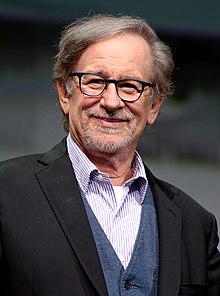
Enter Steven Spielberg.

The most commercially successful director in entertainment history and one of Hollywood’s most respected is weighing in on the October 7 carnage.

It’s a big deal for Spielberg to publicly comment on the Hamas terror attacks. A really big deal, especially for the Democratic Party.

He has donated mega-bucks to the Democrat establishment and fundraised for the Democratic Party, its candidates, and its causes.

In a recent announcement from the USC Shoah Foundation about a new campaign to record eyewitness testimony to the Hamas attacks, his comments regarding October 7 were made public.

Spielberg founded the USC Shoah Foundation in 1994, and the foundation is currently working with production teams on the ground in Israel to collect accounts of the ill-fated day.

He lauded the foundation’s team for “leading an effort that will ensure that the voices of survivors will act as a powerful tool to counter the dangerous rise of antisemitism and hate.”

He then shared his opinion of the horrific events, and he didn’t mince words.

“I never imagined I would see such unspeakable barbarity against Jews in my lifetime,” he said.

The eyes of Hollywood liberals have watched, while in Democrat-controlled cities and on Ivy League university campuses, demonstrators have overtly expressed their support of the October 7 barbarism.

Some recent videos featuring the presidents of Harvard, University of Pennsylvania, and MIT have gone viral; ones that show the individuals unable to state outright that calling for the genocide of the Jewish people violates the codes of conduct of their institutions.

This has created a major rift within the Hollywood community.

Actress Susan Sarandon was unceremoniously dropped as a client by her talent agent after she spoke at a pro-Palestinian rally.

And actress Melissa Barrera, one of the stars of the horror film franchise “Scream,” was recently fired from her role in the next installment of the series as a result of her social media posts.

On the opposite side of the spectrum, “Wonder Woman” star and former Israeli soldier Gal Gadot took to Instagram to rally support for Israel’s response to the terrorism, posting, “I stand with Israel you should too.”

And producer Matti Leshem, a self-described progressive, was quoted by The Wrap saying the quiet part out loud.

“Our problem is not right wing antisemitism. Our problem is left wing antisemitism,” Leshem stated.

The notion that the radical left poses a threat to Jewish people is a new revelation to many who have long worked in the entertainment business.

Over time the political left in Hollywood drifted away from the previously dominant centrist view; one that had affirmed strong U.S.-Israel ties and emphasized the importance of Israel’s security.

The Hollywood left became increasingly enamored with a neo-Marxist agenda that divides the world into two categories: those who are oppressors and those who are oppressed.

In addition, terms such as “colonial occupation” and “apartheid state” have been being used to describe Israel’s policies, framing those who are in leadership as the oppressors of marginalized groups.

This increasing polarization in Hollywood is creating a major divide in the entertainment community.

A divide that has the potential to dramatically alter the course of Hollywood’s political history.

The Treasure Chest of Values in the TV of Old

“Frasier” and “Monk,” two popular TV shows of the past, have recently been brought back to life.

The original “Frasier” series ran from 1993 to 2004, earning 37 Emmys in its run.

In October of 2023, a “Frasier” reboot made its debut on Paramount+, featuring the same character as seen in the original, i.e., the one and only Frasier Crane, who this time is dealing with life while in his sixties.

The producers were able to snag much of the original cast, with six-time Emmy winner Kelsey Grammer in the title role, along with Jane Leeves playing Daphne Moon, Peri Gilpin portraying Roz Doyle, David Hyde Pierce reprising Niles Crane, and Bebe Neuwirth as Lilith Sternin.

The reboot has been met with great success. The first two episodes of the show were the most-watched original series premiere on Paramount+, and as a result the new “Frasier” has been renewed for a second season.

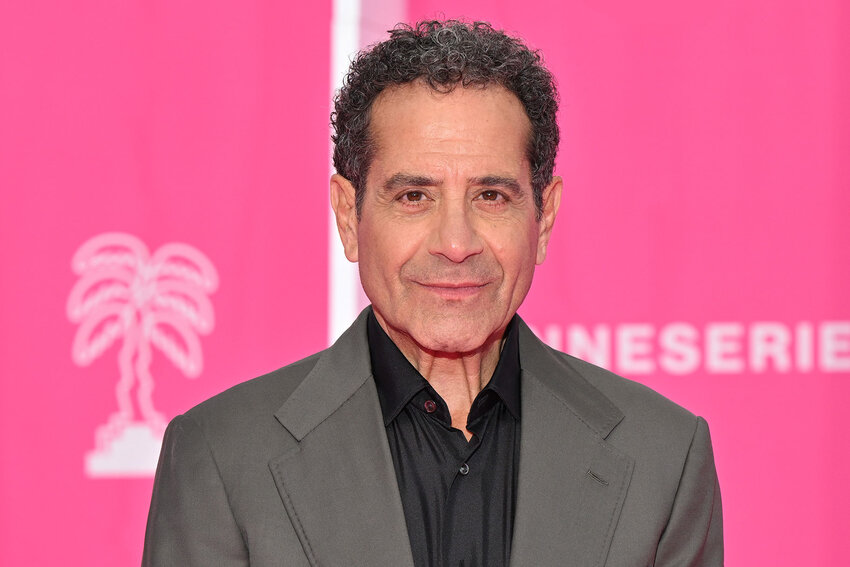
Meanwhile Emmy winner Tony Shalhoub can soon be seen in a new upcoming feature film, “Mr. Monk’s Last Case: A Monk Movie,” which premieres December 8 on Peacock.

Shalhoub portrays Adrian Monk, the same loveable neurotic savant detective character that he played in the original TV series. The show ran for eight great seasons on the USA Network.

In addition to Shalhoub, “Mr. Monk’s Last Case” includes many of the actors that appeared in the original series, including Traylor Howard playing Natalie Teeger, Ted Levine as Leland Stottlemeyer, and Jason Gray-Stanford as Randy Disher.

Peacock’s movie reboot comes almost fourteen years after the final episode of the original “Monk” series aired, which in its run took home eight Emmys, including three for Shalhoub for Outstanding Lead Actor in a Comedy Series.

Reboots are part of a current Hollywood trend of reaching back in time to find material to produce.

A few examples include a sequel to the original Full House called “Fuller House,” a revival of the original series “Gilmore Girls” titled “Gilmore Girls: A Year in the Life,” a reboot of the original “Roseanne” with the same title, and a spin-off of the original “Roseanne” called “The Connors.”

Television shows of bygone eras actually comprise a significant portion of today’s entertainment programming, and the public’s interest itself seems to be on the rise.

Networks such as MeTV, Antenna TV, Cozi TV, Uptv, Encore Classic, Encore Black, and TV Land are dedicated to serving up classic fare to their respective audiences.

Nick at Nite, TBS, TNT, AMC, and the Hallmark Channel have reserved spots in their lineups for TV shows of old as well.

And not to be left out, services such as Netflix, Hulu, and Amazon Prime are also streaming the classics.

Why would there be such a demand to see shows that were produced decades ago?

Here’s my theory.

These are tough times we are living through in many ways. The changes we have experienced have occurred more rapidly than we could even process.

It is a truism that a common set of values is what holds a society together. The unspoken bond.

What were some of the values that in the past we collectively held as ideals? Ones to which we agreed that we would all strive to uphold?

Honesty, fairness, kindness, loyalty, perseverance, courage, and respect to name a few.

Something happened to that vessel of shared values. Cracks appeared.

Some values eroded. Some were supplanted. And some were merely lost in the fog of the culture war.

Classic TV at its finest had our common set of values embedded within its story lines, and within the minds and hearts of the characters that were living out the comedies and dramas.

While these television shows may have been set in a bygone era, the values contained within them are timeless.

Here’s to the people who cling to their favorite shows and to the values that are worth their weight in gold.

Taylor Swift’s Movie Success Is More than Meets the Eye

Taylor Swift has an unusual entertainment tale to tell.

It’s a pretty sure bet there are plenty more chapters to her Hollywood story.

She’s already recognized the world over for her performance skills, songwriting ability, and business sense.

It is factors such as these that have procured her millions of devoted fans, the likes of which few celebrities have enjoyed.

The seasoned star has now added another notch to her celebrity belt.

She has taken a concert performance and plastered it on the big screen, where it has been met with blockbuster success.

Shortly after wrapping up a record-breaking concert tour, a film version of her live performance, titled “Taylor Swift: The Eras Tour,” made its debut in theaters.

Unlike most past and present Hollywood films, Swift made the decision to bypass the studios and instead deal directly with movie theaters. The results have been remarkable.

The film has already grossed $140 million worldwide and $110 million domestically, making it the highest-grossing concert movie of all time. And it only cost $15 million to make.

Here’s some background on the celebrity herself.

Swift spent her early years on a Christmas tree farm that her stockbroker father had purchased from one of his clients.

She attended pre-school and kindergarten at a Montessori school, which was run by the Bernadine Franciscan Sisters.

As she grew, so did her music aspirations. Influenced by a documentary she had seen on Faith Hill, she felt drawn to Nashville, Tennessee.

The opportunity to visit Music City arrived at age eleven. Accompanied by her mother, demo tapes were pitched to various record labels, but the efforts were unsuccessful.

In order to help his daughter’s dreams materialize, Swift’s father sought a job transfer to an office located in Nashville. Fourteen year-old Taylor and family packed up their bags and moved to Tennessee, and the rest is music history.

Swift’s recent movie success has a lot to do with the unique manner in which she has structured her career.

She seems to have understood at a very young age that art has an intrinsic “mission.” It’s not enough to merely be created. It must be shared.

It is in the sharing that a relationship is formed. And it is in the relationship that mutual appreciation and admiration blossom.

Consistent with the artist’s mission, Swift dutifully placed her audience first. As a result, she acquired a highly dedicated fan base, many of whom continue to endure.

“Swifties,” as her devotees are called, feel a profound sense of connection with her, as she seemingly does with them.

The film provides a way for fans to come together in a communal interactive experience. Viewers sing, dance, and connect with the onscreen presence as well as with one another.

The movie features performances of songs from all of Swift’s “Eras,” taking viewers on a trip through her life from her country music beginnings to her current creations.

In addition to the varying musical and stylistic periods of her career, each era is represented by a distinct visual aesthetic, costume design, and set list.

Here’s an “Eras” sampling:

– The Country Era features Swift’s early hits about first love (“Tim McGraw,” “Our Song,” and “Love Story”).

– The Fearless Era focuses on love found and love lost (“You Belong with Me” and “White Horse”).

– The 1989 Era appears to be a significant turning point as Swift enters the world of pop and rap, and optimism turns to cynicism (“Shake It Off,” “Blank Space,” and “Bad Blood”).

– The Reputation Era moves significantly to the dark side both musically and lyrically (“…Ready for It?,” “Look What You Made Me Do,” and “Delicate”).

To me, Swift’s life story so far appears to be part fairy tale and part misfortune.

The lyrics to her songs across the eras give the impression that they emanate from personal understanding.

Her trademark first person perspective makes the listening experience highly relatable for audiences, meaning her story is our story.

Young Taylor initially wrote and performed songs that primarily focused on the search for the one with whom she could find true love.

As time passed, the music and lyrics changed, possibly a reflection of transitions occurring within her own life.

In any event, darkness, cynicism, and coldness, which are reflected in the melodies, lyrics, and video imagery of later eras, reveal a hardened heart.

Whether or not this is the case in Swift’s personal circumstance, it is important to keep in mind that along with fame comes responsibility.

This is because fans put the recipient of their admiration on a pedestal and are influenced by things said and done.

I’m sure I’m not the only one who is hoping for a Swift return to her songwriting roots.

And a resurrection of the artistic mission she was graced with at the start.

Skip ‘The Exorcist: Believer’ Remake and Opt for the Original

Hollywood heads are spinning over the poor box-office performance of “The Exorcist: Believer.”

The recent big-screen release is a remake of the original horror flick “The Exorcist,” which back in 1973 scared the wits out of its massive viewing audience.

Universal shelled out a whopping $400 million for the intellectual property rights and was actually planning on a franchise trilogy.

However, the remake, with a budget of $30 million, only managed to take in $26.5 million in its initial debut. It then fell almost 60% in its second weekend, with a paltry $11 million haul.

Critics and audiences were in agreement that the movie was simply a dud. Studios generally view a CinemaScore grade below “B” as a fail. This movie received a grade of “C.”

The film’s over reliance on jump scares and computer-generated effects are only part of why it bombed. Blame the rest on the movie’s inauthentic approach to a very real supernatural occurrence.

The truth is the rite of exorcism is steeped in biblical and religious history, and the original film gave the plot and characters their proper due. It was a huge financial and critical success.

It also legitimately lays claim to being one of the scariest films ever made.

One of the constructive consequences at the time of being terrified by the notion of demonic possession, albeit via film, was that many individuals were affected deeply enough to turn away from the evil that had seeped into their own personal lives.

Here’s a summary of the true story upon which the original film was based.

The real-life demonic possession of a young 14-year-old boy occurred in Maryland.

The youth began to exhibit eerie and peculiar behavior, including speaking aloud in foreign tongues, the levitation of his body, and a display of inordinate superhuman strength.

His family consulted a number of doctors and psychiatric professionals, but they were unable to help. Eventually, his parents turned to the Catholic Church for assistance.

A request was made of two priests, Fr. William S. Bowdern and Fr. Edward Hughes, to perform the rite of exorcism on the boy. The ritual took place over the course of more than two weeks, and there were occasions of extreme violence.

Curse words directed at the priests flowed from the boy’s mouth. His body levitated at times and his speaking became that of an unnatural entity. Eventually, the priests were able to successfully drive out the evil spirit, which allowed the boy to return to a normal life.

The exorcism story was widely reported in the media, and it caught the attention of a Catholic Christian student at Georgetown University named William Peter Blatty. He began to research the subject and eventually wrote a novel based on the supernatural occurrence and deliverance from evil.

Blatty’s novel, which was also titled “The Exorcist,” was published in 1971.

Back when he was still climbing the ladder of success, a young Blatty dressed up as a Saudi Arabian prince and appeared as a contestant on Groucho Marx’s game show “You Bet Your Life.” He won $10,000.

This gave him enough money to quit his job and write full-time. He eventually penned a film adaptation of his novel that bore the same name and in 1973 took home an Oscar.

Blatty was uniquely prepared by his faith to take on the subject. His parents were Lebanese immigrants. His dad Peter was a cloth cutter and mom Mary a devout Catholic Christian. Mary was also the niece of a bishop.

In his youth, he attended a Jesuit school, Brooklyn Preparatory, was the recipient of a scholarship, and graduated as class valedictorian. He once filed a canon law petition against his alma mater, Georgetown, for its promotion of anti-Christian ideas.

There is a reason why Catholic priests are routinely featured in films of this kind. The Catholic Church has a long history of analyzing and seeking to understand the theology of demonic possession.

The sequences, prayers, and sacramentals utilized over the centuries by the Catholic Church, along with the extensive preparation of the individual who is conducting the exorcist rite, have proven to be efficacious in the deliverance ministry.

The remake’s story is purportedly inspired by the real-world experiences of Fr. Gary Thomas, who is said to have participated in more than eighty exorcisms. But even though the film resembles the original in a few ways, it is markedly different in the ways that matter most.

The bottom line is that “The Exorcist: Believer” contorts the rite of exorcism to conform to the political, cultural, and theological sensibilities of today’s radical left.

In my humble opinion, the original film is the one to watch.

And in my lifespan of experience, the original teachings on demonic possession and deliverance from evil are the ones to be believed.