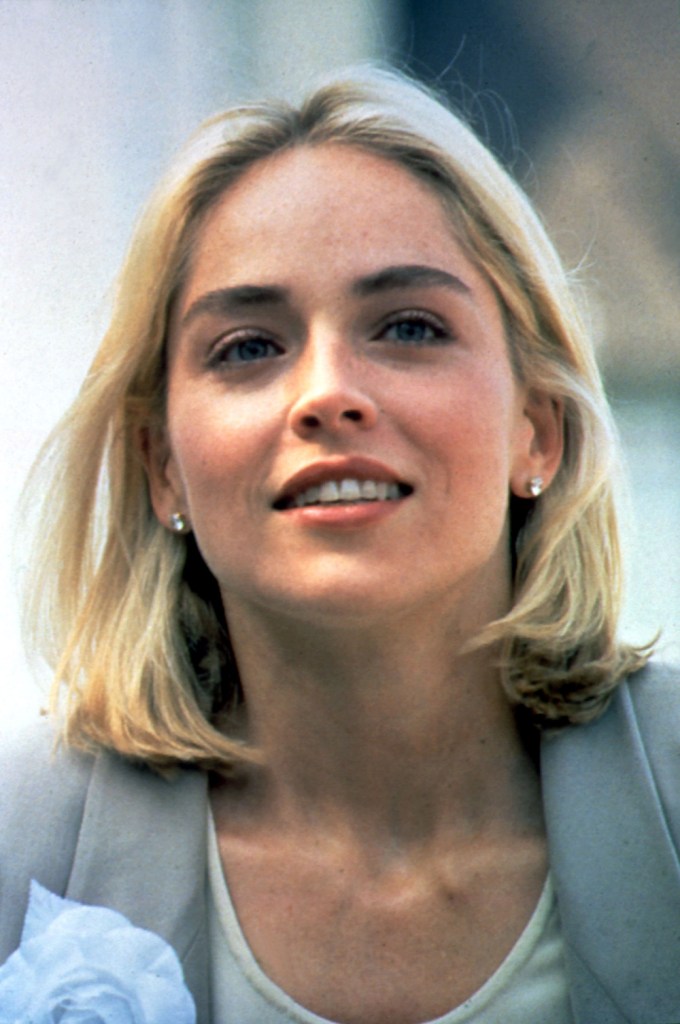
Actress Sharon Stone’s Hollywood Lesson

It was the 1990s and Sharon Stone was on top of the world.

She was one of the most popular movie stars of her times.

Her big breakthrough came when she landed a part in the 1990 science fiction action film “Total Recall.”

In 1992 she catapulted to international stardom when she appeared in the big-screen thriller “Basic Instinct.”

Later she would play a role in the 1995 epic crime drama “Casino,” which ended up delivering the best reviews of her career, along with an Academy Award nomination for Best Actress.

Numerous films would follow, cementing her position as a top Hollywood actress.

Her life was going exceptionally well with her career soaring, due in large part to the Oscar nomination, which credentialed her as a serious actress.

Her personal life was blossoming too. She and her then-husband adopted a child, experiencing the joy and fulfillment that new parenthood brings.

Unbeknownst to Stone, her world was about to turn upside down. Within a few months, life would take a sudden and tragic change for the worse.

She suffered a type of stroke in which a vertebral artery ruptures. For nine straight days bleeding was occurring in her brain, and she was given only a 1 percent chance of surviving.

Sadly, at a time when she needed them the most, her Hollywood friends and acquaintances all but abandoned her. The only person who really stood by her side in this most difficult time was her devoted Dad.

“My father was there for me, but I would say that was about it,” Stone shared.

After the terrible health crisis, she faced further personal and professional challenges. Her marriage disintegrated and the Hollywood phone eerily stopped ringing.

“I lost everything,” she said. “I lost all my money. I lost custody of my child. I lost my career. I lost all those things that you feel are your real identity and your life.”

Stone’s Hollywood experience provides the opportunity to examine the changes that have taken place in our cultural attitudes and behaviors with regard to celebrity.

Stone was a genuine movie star, the kind that in these continuing digital revolution times seems to have disappeared.

Lost, in large part, is the sense of mystique that Hollywood stars of the past possessed. Lost oftentimes, too, is the basis for admiration given.

So who are today’s stars? And has the arc of fame been irretrievably altered?

The answers to these questions seem to depend chiefly on the medium as well as the manner in which entertainment is presented to and consumed by an anticipated audience.

Over the last several years the changes that have taken place within the entertainment business have no doubt been profound. Movie theater attendance has significantly declined. And for lack of a better word, so have “conventional” movie stars.

At the same time there has been a rise in the actual number of celebrities as well as the types of venues in which fame can be attained.

We now have multiple categories of film stars, television stars, music stars, sports stars, political stars, preacher stars, internet stars, social media stars, etc., all of whom vie for the public’s attention and the varying levels of fame that accompany it.

The opportunity for people to achieve Andy Warhol moments has expanded exponentially. And so it is that anyone with a smart phone and an internet connection can potentially claim their 15 minutes of fame.

While there may be a lot more famous faces around, it is also much more difficult for those faces to maintain their celebrity status over time. In other words, fame seems to be even more fleeting than it was in the past. And the arc of fame seems to have been altered in length and breadth.

For an individual, life in the fame lane can take you from the highest of highs to the lowest of lows.

Stone has lived it.

She shares her story of survival and serves as an example of the triumph of the human spirit.

She does offer the following admonition, though. “If you want to live with solid citizens, don’t come to Hollywood.”

Don’t know if anyone is going to stop chasing fame, but it’s worth thinking about for at least an LA minute.

Strike Two: Hollywood Actors Union Goes After Video Game Companies

For months now the Hollywood actors union has been on strike against the movie studios.

Now the union is seeking to authorize a second strike, this one involving major video game companies.

The current labor actions began when the Writers’ Guild of America union (WGA) went on strike in May of this year.

In mid-July, the WGA was joined by the Screen Actors Guild-American Federation of Television and Radio Artists (SAG-AFTRA).

It was historical in nature because a simultaneous strike of both actors and writers hadn’t happened in 63 years.

The actors union hasn’t gone on strike against video game companies since 2016. The strike back then lasted 11 months.

If the sought after strike addition materializes, video game actors most affected would be ones who do motion capture work and voice-overs for the video game producers.

The largest producers of video games in the world are big-name companies like Disney, EA, Activision, Epic Games, and Take Two. These are companies that are parties to the SAG-AFTRA video game contract.

The union has stated that it is asking video game companies for an 11% raise, with two 4% increases during the term of the labor contract, along with protections against AI technology.

SAG-AFTRA President Fran Drescher issued a statement about the proposed new strike.

“Here we go again! Now our Interactive (Video Game) Agreement is at a stalemate too. Once again we are facing employer greed and disrespect. Once again artificial intelligence is putting our members in jeopardy of reducing their opportunity to work. And once again, SAG-AFTRA is standing up to tyranny on behalf of its members,” she said.

Use of the term “stalemate” by the head of a prominent union doesn’t bode well for those seeking a speedy resolution to the labor turmoil in Hollywood.

SAG-AFTRA’s strike has almost completely shutdown the activities of Hollywood studios.

Talks between the industry and the unions have not been promising. There have been no breakthroughs over a long summer. The unions seem to be far away from the better wages, residuals, working conditions, and AI protections that actors and writers seek.

SAG-AFTRA needs to supplement the picketing and negotiating with additional action. Adding video game companies to the labor lockout list is one way of increasing leverage while raising public awareness.

Evaluating these strikes is a complex calculus, one with multiple variables.

Entertainment companies are very much in need of content, and the preference would be to have the labor disputes come to an end.

Powerful studio heads are concerned about how the strikes are perceived by Wall Street. The entertainment industry had been in the doldrums before the strike began. And layoffs at production companies and talent agencies certainly didn’t help the overall economy.

Additionally, the strikes have caused significant disruptions to film and television productions all over the world. According to the Financial Times, the ongoing strikes have cost the California economy about 5 billion dollars.

The consequences of the shutdown of Hollywood productions have set off a ripple effect across a large swath of local businesses; those that provide services to the movie industry, including catering, dry cleaning services, drivers, rental companies, etc.

Hollywood jobs seem to be in constant flux. The entertainment industry in general is not known for its job security. People are routinely thinking about getting out of the industry and opting for something with more employment stability.

Workers and businesses that have been affected by the strikes may decide to relocate elsewhere, and would therefore not be available if and when productions actually resume.

On the other hand, if the unions push too long and too hard on the studios, the studios may find an alternative way to obtain the content that they need.

During the 2007-08 WGA strike, the studios were unable to hire union writers. So they turned to the reality TV genre that propelled reality shows to a level in which they still lay claim to a large portion of television production.

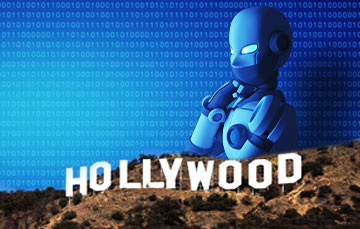
Then there’s the elephant in the room, Artificial Intelligence (AI).

Do the work stoppages and production-set standstill become incentives for studios and production companies to accelerate the use of AI technology?

The strike may just push content executives to expedite their AI capabilities.

In fact, this seems to be happening as job postings for AI product managers offering compensation packages of $300,000-$900,000 would indicate.

The studios and streaming services are already using AI technology in the script-screening process, synopsizing stories and diminishing the need for human story analysts.

When writers and actors strike because they are afraid of being replaced by technology, will the content executives be tempted to hire compliant robots that are programmed not to picket?

Hopefully, something will give soon so the cameras can get rolling again.

Voice of the Silent Unwoke Majority

The need to speak is fundamental.

Whether accomplished through verbal, non-verbal, or myriad other means of connecting, communication is a rudimentary part of just being human.

Even if denied we remain resilient, and we try again to hear and be heard.

Despite recent efforts to inhibit free communication, our human connection was made manifest, albeit in a roundabout way, as necessity dictated.

An analysis of consumer choices that have been made over the past several months is providing a window into repressed public opinion.

To put it plainly, the silent unwoke majority sure seems to have found its voice.

We can hear it in the consumer purchasing activity of wildly popular music, movies, and streaming products, including Jason Aldean’s “Try This in a Small Town” music chart-topper, Oliver Anthony’s “Rich Men North of Richmond” download phenomenon, “The Sound of Freedom” motion picture triumph, and “The Chosen” series streaming success.

In a free marketplace, brands can quickly become tainted if companies do things that their customers find offensive. Retail giant Target is the latest company to hear the silent unwoke majority’s roar.

Recently, the company reported its first sales and revenue decline in six years, with comparable sales in its second quarter falling more than 5%, when compared to last year. It suffered a drop in number of transactions as well.

The plunge in sales occurred following a boycott by those who were outraged at the store’s promotion of transgender ideology and related merchandise for children as well as adults.

Target’s CEO told investors that the company’s sales fell because of “multiple headwinds” that had slowed down business. However, the biggest cause of the company’s woes is most likely the corporate decision to go woke.

One of Target’s merchandise partners, U.K.-based brand Abprallen, was discovered to have produced apparel depicting satanic imagery. Even though the demon-draped items were not sold at Target, the partnership appears to have intensified the anger that had fueled the original boycott.

Similarly, Bud Light continues to suffer financially from a boycott that was prompted by the decision to associate the formerly popular beer with a transgender social media personality.

Needless to say, the customer base was not pleased by the company’s woke left turn. Bud Light sales dropped more than 25% for the week ending August 5, with volumes down nearly 30%.

It is owned by Anheuser-Busch InBev, which has found its entire portfolio of beers severely hurt in the woke implementation process. Anheuser-Busch InBev shares fell 6% during a six-month period, while the S&P 500 had simultaneously gone up 8%.

Bud Light’s losses led the company to place its marketing vice president on leave, and hundreds of workers had to be let go.

Disney is another company that has severely damaged its brand, incoming revenue, and reputation, particularly when it comes to its most needed fans; i.e., the paying population of parents, grandparents, and guardians. The Mouse House is currently more famous for its family-unfriendly content, and its political stance against the State of Florida’s child-protecting education bill.

With their significant losses following multiple boycotts by the silent unwoke majority, Target, Bud Light, and Disney now serve as cautionary tales for other business concerns.

If avoiding a similar fate is the goal, the above-described consumer reaction provides an ideal lesson for companies that are thinking about implementing woke practices and policies.

In order to preserve their valuable brands, companies need to be extra attentive to the potential minefield of a polarized society amplified by social media.

Additionally, possessing a basic knowledge of the human need to relate to one another, and actually caring about the beliefs, attitudes, and aspirations of the customers to which you cater, are simple common sense business axioms.

The voice of the silent unwoke majority may not exactly be music to the ears of woke corporations.

But it sure sounds sweet to those of us who still live free.

AI Is Stealing Hollywood Jobs

Believe it or not the Hollywood strike is still going on.

The problem for the members of the Writers Guild of America (WGA) and the Screen Actors Guild (SAG-AFTRA) is that right now almost nobody is paying attention to their plight.

Yes, the picket lines continue to be manned and the press conferences rage on. But something very different is going on behind the scenes.

The current strikes were initially prompted by the usual compensation-related concerns. However, this time the central issue revolves around the role that Artificial Intelligence (AI) is going to play in the future creation, production, and marketing of entertainment content.

In terms of the negotiations between labor and management, the situation is truly unprecedented, due to the technological elephant in the room.

Strikers are seeking an agreement that would set up guardrails across the industry in relation to the expanding application of AI technology.

Advances in AI are testing the law, especially when it comes to the manner in which courts are applying, interpreting, and ruling in cases that involve intellectual property.

Comedian Sarah Silverman recently brought a lawsuit in federal court against Meta and OpenAI for copyright infringement. The case is part of a proposed class action lawsuit.

Silverman in particular alleges that, without having given her consent, books that she had authored were included in the technology’s training data.

No question that actors and writers have legitimate reasons to fear the loss of their livelihoods. After all, AI has the potential to allow studios to simulate the likenesses and voices of actors in perpetuity, without ever having to compensate individuals for the use of their personal identities, characteristics, personas, etc.

Let’s not forget that AI also has the ability to create screenplays, minus the human writers.

In relation to the strike, SAG-AFTRA president Fran Drescher, best known for her starring role in the 1990s sitcom “The Nanny,” stated the following: “If we don’t stand tall right now, we are all going to be in trouble, we are all going to be in jeopardy of being replaced by machines.”

Bob Iger, who is currently a prime target of the unions, is on record as specifically having stated the drawings and videos generated by AI are “something that at some point in the future the company [Disney] will embrace.”

While speaking to a crowd gathered in Times Square, actor Bryan Cranston aimed his comment directly at Disney’s CEO, saying, “We’ve got a message for Mr. Iger. I know, sir, that you look at things through a different lens. We don’t expect you to understand who we are. But we ask you to hear us, and beyond that to listen to us when we tell you we will not be having our jobs taken away and given to robots.”

Union workers typically strike in order to increase leverage for negotiations with management.

The sad truth for both the WGA and SAG-AFTRA is that the recent strikes have increased the incentive for Hollywood employers to find ways in which they can actually prevent future strikes.

Despite the rhetoric of studio reps, AI technology equips entertainment employers to potentially avoid future strikes altogether, via drastic reductions or the complete elimination of conventional creative workers.

The Alliance of Motion Picture and Television Producers (AMPTP), i.e., the studios’ organization, has taken the position that AI should be used in what the group calls “a balanced approach based on careful use, not prohibition.”

Judging by actions as opposed to words, it appears that the major studios are tacitly embracing AI.

As a matter of fact, an AI hiring spree is currently taking place and almost every major entertainment company is involved.

— Disney has a number of open positions that focus on AI and machine learning.

— Netflix has similar job offerings, including an AI Product Manager job that promises an annual salary of up to $900,000.

— Sony is looking for what the company refers to as an AI “ethics” engineer.

— Warner Bros. Discovery, Paramount, and NBCUniversal have also joined in the AI hiring boom with their own job offerings.

It seems quite significant that Hollywood studios are seeking to fill AI jobs; this in the midst of strikes that have occurred over AI’s use itself. Tack this on to the fact that workers are having to witness layoffs that may prove to be the largest in the history of the entertainment business, including the firing of about 7,000 Disney employees.

From ancient past to present day, new inventions have historically caused the displacement of workers.

Again, though, something very different is going on. And it probably has to do with the philosophical, political, societal, cultural, and ethical transformations that are occurring simultaneously in our country and in the world.

The Hollywood strikes are likely to last a long time and may not bring a satisfactory outcome to the unions’ memberships.

So goes Hollywood, so goes the world?

Country Music Artist Jason Aldean’s Cancel Counterpunch

Country music is a genre unique to the American culture.

Up until recent times it is has served as an extraordinarily enduring American soundtrack, one that both musically and lyrically has been able to capture the spirit that lives in the down-home heart.

The blend of folk, gospel, and blues first sprouted in small southern and western towns. It soon came into full artistic bloom, not only reflecting a kind of blue-collar melodic score but also mirroring beliefs, attitudes, and values of working class society.

Music is one of the other-worldly aspects of human nature. And so it is that an essential component of any great musical composition is truth.

As in every other artistic field, country music artists have historically used their talents to share thoughts and opinions via the distinct language of the heartland.

Unfortunately, today’s country music scene is vastly different from years past. I know because I have lived it, not in cowboy hat-style but in a folk, gospel, and blues artist way.

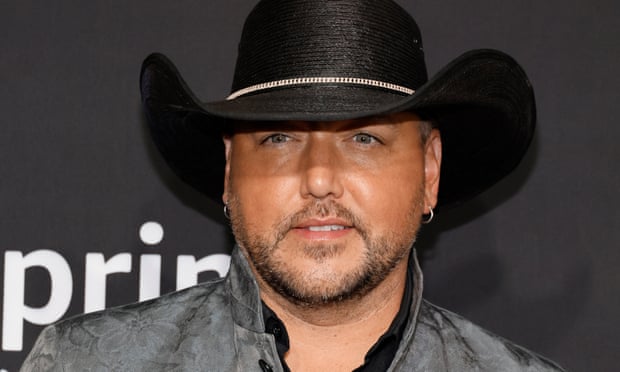
Jason Aldean is a superstar country music singer, with 27 number one hits and several top-selling albums. He recently released a song that threw him smack in the middle of the cancel-culture battle.

Aldean’s recent single “Try That In a Small Town” came out in May 2023, but went with little mention in the non-music press.

Then in July the music video was released. That’s when the artist as well as the song came under heavy mainstream media and social media attack.

In a Twitter post accompanying the video, Aldean indicated that the song represented an “unspoken rule” that is embraced by residents of small towns.

“We all have each other’s backs and we look out for each other,” he said.

This sentiment is conveyed in the song’s plain-spoken lyrics:

“Well, try that in a small town

See how far you make it down the road

Around here we take care of our own

You cross that line, it won’t take long

For you to find out, I recommend you don’t.”

It appears that Aldean’s detractors may have been lying in wait to pounce on him. His wife and sister had launched a clothing line with conservative threads, and he himself had been photographed playing golf with none other than USA’s 45th president.

The video includes footage from the Summer of 2020, where flags were burned, cars were smashed, businesses were vandalized, police were abused, etc.

The left responded in what has become routine fashion, slapping a bigoted label on the art and the artist.

The tragic incidents of 2020 and the brutal crimes that continue to ravage major cities have been minimized and/or completely ignored by dominant left-leaning media outlets.

Aldean’s artistic inclusion of depictions of events seems to have really hit a nerve. It has elicited what is clearly an over-the-top response from the left.

— Democrat Tennessee Rep. Justin Jones characterized the tune as a “heinous song calling for racist violence.”

— Some of Aldean’s peers have piled on, including former pop singer-turned-country music artist Sheryl Crow.

— Country Music Television (CMT), the cable TV channel that once upon a time was dedicated to country music, pulled the “Try That In a Small Town” video after bots on social media lobbed racist remarks. As a result, countless country fans are now giving CMT the Bud Light treatment.

— Nashville’s E3 Chophouse has banished CMT from its TV sets. The restaurant happens to be owned by the families of country singer Luke Bryan, former baseball player Adam LaRoche, and Aldean himself.

“We will not air CMT at any of our restaurants until a formal apology is made and Jason’s music video is reinstated,” the restaurant’s Twitter account stated.

Aldean used his personal Twitter account to push back against the unfair accusations.

“There is not a single lyric in the song that references race or points to it,” he wrote. “Try That In A Small Town, for me, refers to the feeling of a community that I had growing up, where we took care of our neighbors, regardless of differences of background or belief.”

Country music star Travis Tritt is defending his colleague, expressing his respect and admiration for “Try That In A Small Town.”

“IMO, this song isn’t promoting violence as some have suggested. It is simply expressing a point of view that many American people share which is against the obvious violence that we have seen from the likes of so many ‘activists groups’ in this country in recent years and the belief shared by millions that this behavior would not be tolerated by many people in many places across the USA. God bless America and all the people in it,” Tritt wrote.

Former Democratic presidential candidate Tulsi Gabbard offered some spirited support, tweeting, “The outrage around @Jason_Aldean ‘Try That in a Small Town’ is the latest round fired in the ‘woke’ war against freedom. Their attacks reveal the Democrat elite’s true values – violent looters during BLM protests can run free, but a song about respecting the flag & taking care of your neighbors is heresy and must be cancelled.”

The American people are speaking the loudest of all. “Try That in a Small Town” is No. 1 on iTunes.

Aldean performed the song at a recent concert in Cincinnati. In his intro, he directly took on his adversaries, saying, “I feel like everybody’s entitled to their opinion. You can think something all you want to — that doesn’t mean it’s true, right?”

“What I am is a proud American,” he continued. “I’m proud to be from here. I love our country. I want to see it restored to what it once was before all this bull**** started happening to it.”

Aldean’s small town is proving to be mighty big in a lot more ways than one.

The “USA! USA!” chants from the concert crowd were more than just a show of support for the country music artist.

They were a great big “Thank You!” to Jason Aldean from down-home hearts across America and around the globe.

Hidden Blessing in the Hollywood Shutdown

Hollywood sets have gone dark.

A central reason for the recent Screen Actors Guild-American Federation of Television and Radio Artists (SAG-AFTRA) strike is that actors, writers, and other entertainment artists are super nervous about Artificial Intelligence (AI) making them and their jobs obsolete.

When the strike was first announced, current president of SAG-AFTRA Fran Drescher was at the mike to address the press.

Drescher, the former lead actress of the 1990s hit TV sitcom “The Nanny,” heads the union that boasts a membership of over 160,000 film and television actors.

Interestingly, the writers union had gone on strike a couple of months back. But now that SAG-AFTRA has also taken to the picket line, the situation in Hollywood is looking pretty bleak.

The last time both unions were on strike simultaneously was over sixty years ago, when none other than then-actor (who ultimately turned President of the United States) Ronald Reagan was wearing the union president’s hat.

Like every other aspect of our lives, things presently appear to be out of whack.

The brand of Hollywood itself is in tatters, in large part because of the cultural and political agendas that permeate every nook and cranny of the town.

What has particularly outraged the public, though, are the productions that have been coming from major studios, chock-full of vile and inappropriate imagery, content, and messaging aimed straight at our kids and teens.

Could the Hollywood shutdown created by the two entertainment unions be a blessing in disguise?

A lot of consumers of entertainment fare are viewing it this way, as if maybe a wrench in the works was exactly what was needed to stop the madness.

Striking actors and writers have reason to be concerned about the capability of AI models to supplant human beings in the manufacture of entertainment products.

Creative types are also increasingly astonished at the sheer capabilities of generative AI models, which can digitally produce what would typically have been created by human beings, but in a faster and less expensive way.

AI ingests the works and images of human artists as part of its training data. The technology can then alter and/or mash-up content, allowing entertainment companies to avoid compensating the people who originally created the works or were even the subjects of images used.

Additionally, other creative types such as musicians and visual artists are carefully watching the entertainment biz battle, as are all those who work in an array of fields that will no doubt be affected by AI’s implementation.

We are already witnessing the technological replacement of human beings in a host of industries. Still, the entertainment business has a unique opportunity to do something helpful for society at large.

The manner in which Hollywood resolves the two strikes could set the marker, not only for the entertainment industry but for other businesses as well.

Digitally created trailers and scenes featuring what appear to be well known actors have popped up all over the internet. The virtual phenom is posing legal and ethical concerns that the unions are obliged to address.

At a recent press conference, Drescher warned, “If we don’t stand tall right now, we are all going to be in trouble. We are all going to be in jeopardy of being replaced by machines.”

SAG-AFTRA chief negotiator Duncan Crabtree-Ireland indicated during a press conference that a proposal by the studios would put background performers at a terrible disadvantage.

“They propose that our background performers should be able to be scanned, get paid for one day’s pay, and their company should own that scan of their image, their likeness, and should be able to use it for the rest of eternity,” Crabtree-Ireland said.

The Alliance of Motion Picture and Television Producers (AMPTP), which represents major studios including Walt Disney and Netflix, issued a statement suggesting that the claim made by SAG-AFTRA leadership is untrue.

An AMPTP spokesperson told ZDNET that the use of digital replicas would be restricted to the specific motion picture for which the actor is employed, and that any additional use would require the actor’s permission.

“Any other use requires the background actor’s consent and bargaining for the use, subject to a minimum payment,” the spokesperson stated.

This strike over AI is just the opening scene.

Sit yourself down and get ready for a real-life epic drama.

Only this time you’re not going to be able to say, “Don’t worry. It’s only a movie.”

Filmgoers Ignore Detractors and Flock to ‘Sound of Freedom’

Despite Hollywood executives trying to shelve it and mainstream media outlets trying to discredit it, the recently released film “Sound of Freedom” has upended the entertainment industry with resounding ticket sales, an enviable profit margin, and superb audience ratings.

The Washington Post, the Rolling Stone, the UK Guardian and other media organizations have denigrated the movie, falsely attempting to tie it to conspiracy theorists.

People are simply ignoring media naysayers, packing the theaters, and showering the film with standing ovations, resulting in more than $40 million in box-office revenue over a six-day period, according to industry estimates.

Due to its summer release, the movie had been facing plenty of competition, which was coming from big-budget studio blockbusters intended to please popcorn loving crowds.

“Sound of Freedom” definitely doesn’t conform to the template of a conventional summer release.

The plot of the movie is based on the true story of Tim Ballard, who founded a group to combat child sex trafficking.

Jim Caviezel, star of Mel Gibson’s 2004 cinematic masterpiece “The Passion of the Christ,” takes on the role of Ballard, a former government agent who stares down danger as he travels to godforsaken places on a quest to rescue enslaved children who have become victims of unspeakably horrifying crimes.

Summer studio releases typically have budgets that consist of hundreds of millions of dollars. However, with a tab of $14.5 million “Sound of Freedom”’s production costs were considerably less.

On the Fourth of July, “Sound of Freedom” easily passed up the franchise studio sequel “Indiana Jones and the Dial of Destiny.” The film had a release-day revenue of $14 million as compared to the $11.5 million that the “Indiana Jones” movie took in on its June 30 opening.

“Indiana Jones and the Dial of Destiny” had a budget of more than $250 million, while “Sound of Freedom” cost less than $15 million.

“Sound of Freedom” hit a very solid third place for the weekend with more than $18 million.

The public loves the film, giving it the highest CinemaScore rating possible, an A+. And movie fans who weighed-in on the Rotten Tomatoes website gave it a 100% rating.

In order to get more people to pay attention to the violations of human dignity with which the film deals, Dana White, President of the Ultimate Fighting Championship (the global mixed martial arts organization) posted a video on social media.

White spoke out on the importance of “Sound of Freedom” and the chilling nightmare of human trafficking. He was joined by legendary actor and director Gibson, who urged people to see the movie.

The White and Gibson video footage has gone viral, providing some powerful promotion for the movie.

During the video, White said, “There is a new movie out there called ‘Sound of Freedom’ and it’s about human trafficking. More importantly, about the trafficking of children. This is a disgusting, horrific issue that’s happening all around the world. And it’s not getting better, it’s getting worse.”

The UFC CEO is utilizing his own company in an effort to get the word out.

“What I’m gonna do is I’m gonna give any of my UFC employees that want to see this movie free tickets to go and see,” White said.

He even urged other business leaders to take his idea and run with it.

“I would like to encourage other executives to do the same at their company,” he said.

In the section of footage in which he appears, Gibson focused on the public becoming more knowledgeable on the issue.

“One of the most disturbing problems in the world today is human trafficking,” Gibson said.

“Particularly the trafficking of children. Now the first step in eradicating this crime is awareness. Go see ‘Sound of Freedom,’” he encouraged.

In a unique approach to ticket sales, at the end of the movie while the credits roll on, Caviezel appears onscreen to ask the audience to go to the Angel Studios website and participate in the “Pay It Forward” program.

This program allows people to purchase tickets for others so that those who cannot afford the cost will be able to obtain a ticket for free.

Those who suffer from the scourge of human trafficking are crying out to be rescued.

May “Sound of Freedom” succeed in its mission of informing people and prompting action.

And may all of us be responsive to those who wait in the shadows for someone to care.