Hollywood Dream to Hollywood Nightmare

If only it were just a bad dream.

That’s what a lot of folks in Hollywood are thinking at this year’s end.

The entertainment industry definitely had its share of ups and downs in 2023, with the labor strikes, internal friction, and even some rare ideological divisions.

But nothing compares to the disaster of the incredible shrinking box-office.

Disney, which is the largest entertainment company in the world, un-merrily continues on its downhill trajectory.

The Marvel Cinematic Universe, which is one of the most popular film franchises, is in serious condition, as was exemplified by “The Marvels” lower-than-expected revenues of $84.4 million, after costing $250 million to make.

Despite the successes of the “Barbie” and “Oppenheimer” films, Hollywood executives are still wondering whether the once-invincible Marvel brand’s tanking will cause the entire cinema business to falter.

The Disney animated feature called “Wish,” with its $200 million budget, only managed to gross about $50 million domestically.

The live-action remake of “The Little Mermaid,” the fifth installment of “Indiana Jones,” and the reboot of “Haunted Mansion” all ended up far below box-office expectations.

Pixar isn’t what it used to be either. “Elemental,” the company’s only film of 2023, was below par in performance, with a box office of $154 million and a price tag of $200 million.

Warner’s “Aquaman” sequel, the DC superhero movie “Aquaman and the Lost Kingdom,” had an embarrassing release, opening with a meager $28 million and having a domestic gross as of this writing of just over $46.6 million. The movie tracked the feeble box-office numbers of “The Flash” and “Blue Beetle.”

In developing my own perspective on things, I did a bit of research on Hollywood box-office numbers of the past and their comparison to those of the present.

Here’s what I found.

As of this writing, the ranking of 2023’s top-10 highest-grossing films in North America is as follows:

1. “Barbie” $636.2 million

2. “The Super Mario Bros. Movie” $574.9 million

3. “Spider-Man: Across the Spider-Verse” $381.3 million

4. “Guardians of the Galaxy Vol. 3” $358.9 million

5. “Oppenheimer” $326.1 million

6. “The Little Mermaid” $298.1 million

7. “Avatar: The Way of Water” $283.0 million

8. “Ant-Man and the Wasp” $214.5 million

9. “John Wick” $187.0 million

10. “Sound of Freedom” $184.1 million

Now here’s a look at the top box-office hits of 50 years ago.

The ranking of 1973’s top-10 highest-grossing films in North America (Unadjusted & Inflation-Adjusted) is as follows:

Unadjusted Gross (millions) Inflation-Adjusted Gross (millions)

1. “The Exorcist” $193.0   $1,013.3

2. “The Sting” $159.6    $815.7

3. “American Graffiti” $115.0 $601.1

4. “Papillon” $53.2     $352.9

5. “The Way We Were” $49.9 $352.2

6. “Magnum Force” $44.6  $314.9

7. “Live and Let Die”$35.4  $250.0

8. “Robin Hood” $32.0    $225.9

9. “Paper Moon” $30.9   $218.9

10. “Serpico” $27.2     $192.0

It is truly an eye-opening experience when you compare the top-10 domestic box office of 1973 to that of 2023 using inflation-adjusted numbers.

The combined inflation-adjusted top-10 domestic box office of fifty years ago is approximately $4.3 billion, which is significantly higher than the top-10 domestic box office of 2023, which is about $3.4 billion.

It was fifty years ago that a group of film school graduates set out to make artistic entertaining movies the likes of the legendary filmmakers that they admired most: John Ford, Howard Hawks, Frank Capra, and other greats.

In my humble opinion, the list of 1973 movies, when compared to the list of 2023, is far superior in terms of substance, originality, artistry, and wide-ranging popular appeal.

At its essence the focus of the entertainment industryused to be entertainment. It was the very reason the industry came to be and was able to flourish to the degree that it did.

So much appears to have been lost in this regard, and the stats seem to show it.

Almost all of the top movies of 1973 were actually groundbreaking creative achievements and at the same time were appealing to the public.

The top three titles, “The Exorcist,” “The Sting,” and “American Graffiti,” are still considered to be the best films of their respective genres, and they continue to have an impact on the culture to this very day.

There was a bright spot in the movie business in 2023. It came in the form of faith-based films, which met with unexpected success.

“His Only Son,” “Sound of Freedom,” and “After Death” all surpassed box-office expectations.

On the Fourth of July, “Sound of Freedom” opened ahead of Disney’s “Indiana Jones” installment. “His Only Son” opened with the No. 3 slot during its opening weekend. And “After Death” became the top-grossing documentary since 2019.

Another faith-based film, “Jesus Revolution,” which features “Frasier” star Kelsey Grammer as Southern California pastor Chuck Smith, made it to the third spot on its opening weekend.

I’m truly hoping that in the New Year the entertainment industry does some soul-searching and begins to make its way back home.

If not, I fear that the Hollywood nightmare is destined to be a recurring one.

Filmgoers Ignore Detractors and Flock to ‘Sound of Freedom’

Despite Hollywood executives trying to shelve it and mainstream media outlets trying to discredit it, the recently released film “Sound of Freedom” has upended the entertainment industry with resounding ticket sales, an enviable profit margin, and superb audience ratings.

The Washington Post, the Rolling Stone, the UK Guardian and other media organizations have denigrated the movie, falsely attempting to tie it to conspiracy theorists.

People are simply ignoring media naysayers, packing the theaters, and showering the film with standing ovations, resulting in more than $40 million in box-office revenue over a six-day period, according to industry estimates.

Due to its summer release, the movie had been facing plenty of competition, which was coming from big-budget studio blockbusters intended to please popcorn loving crowds.

“Sound of Freedom” definitely doesn’t conform to the template of a conventional summer release.

The plot of the movie is based on the true story of Tim Ballard, who founded a group to combat child sex trafficking.

Jim Caviezel, star of Mel Gibson’s 2004 cinematic masterpiece “The Passion of the Christ,” takes on the role of Ballard, a former government agent who stares down danger as he travels to godforsaken places on a quest to rescue enslaved children who have become victims of unspeakably horrifying crimes.

Summer studio releases typically have budgets that consist of hundreds of millions of dollars. However, with a tab of $14.5 million “Sound of Freedom”’s production costs were considerably less.

On the Fourth of July, “Sound of Freedom” easily passed up the franchise studio sequel “Indiana Jones and the Dial of Destiny.” The film had a release-day revenue of $14 million as compared to the $11.5 million that the “Indiana Jones” movie took in on its June 30 opening.

“Indiana Jones and the Dial of Destiny” had a budget of more than $250 million, while “Sound of Freedom” cost less than $15 million.

“Sound of Freedom” hit a very solid third place for the weekend with more than $18 million.

The public loves the film, giving it the highest CinemaScore rating possible, an A+. And movie fans who weighed-in on the Rotten Tomatoes website gave it a 100% rating.

In order to get more people to pay attention to the violations of human dignity with which the film deals, Dana White, President of the Ultimate Fighting Championship (the global mixed martial arts organization) posted a video on social media.

White spoke out on the importance of “Sound of Freedom” and the chilling nightmare of human trafficking. He was joined by legendary actor and director Gibson, who urged people to see the movie.

The White and Gibson video footage has gone viral, providing some powerful promotion for the movie.

During the video, White said, “There is a new movie out there called ‘Sound of Freedom’ and it’s about human trafficking. More importantly, about the trafficking of children. This is a disgusting, horrific issue that’s happening all around the world. And it’s not getting better, it’s getting worse.”

The UFC CEO is utilizing his own company in an effort to get the word out.

“What I’m gonna do is I’m gonna give any of my UFC employees that want to see this movie free tickets to go and see,” White said.

He even urged other business leaders to take his idea and run with it.

“I would like to encourage other executives to do the same at their company,” he said.

In the section of footage in which he appears, Gibson focused on the public becoming more knowledgeable on the issue.

“One of the most disturbing problems in the world today is human trafficking,” Gibson said.

“Particularly the trafficking of children. Now the first step in eradicating this crime is awareness. Go see ‘Sound of Freedom,’” he encouraged.

In a unique approach to ticket sales, at the end of the movie while the credits roll on, Caviezel appears onscreen to ask the audience to go to the Angel Studios website and participate in the “Pay It Forward” program.

This program allows people to purchase tickets for others so that those who cannot afford the cost will be able to obtain a ticket for free.

Those who suffer from the scourge of human trafficking are crying out to be rescued.

May “Sound of Freedom” succeed in its mission of informing people and prompting action.

And may all of us be responsive to those who wait in the shadows for someone to care.

Big Trouble in Little Hollywood

Over the past year, the gap between Hollywood and its customers has widened to a degree that should send shivers down the spines of every entertainment exec.

The industry has routinely used a fairly reliable gauge to measure the size of this gap. It’s called profit.

Sadly, 2022 was a disaster for the once-golden city. Media companies saw the loss of half a trillion dollars in equity.

A town that for a century had been recognized as the entertainment capital of the world has seemingly been reduced to a shadow of its former self.

How could this have happened?

In my opinion, somewhere along the road a decision was made to have entertainment take a bow so that a one-sided agenda could take center stage.

“Especially this past year, ideology has become more important than art,” Quentin Tarantino recently told the host of HBO’s “Reel Time with Bill Maher.” “It’s like ideology trumps art. Ideology trumps individual effort. Ideology trumps good.”

From the youngest of age, our primal need makes itself known with the simplest of words: Tell me a story.

It’s universal. Human beings crave stories, ones with characters, plots, and themes that reflect life’s truths. This is how Hollywood initially came to be. And how it grew to be an industry like no other, all entwined within our minds, hearts and imaginations.

We were happy when Hollywood profited. It meant more entertainment fare would be forthcoming, maybe even greater than that already experienced.

It’s hard to believe the once-great ocean of entertainment that existed steadily devolved into a digital stream of woke stories.

Evidently, the public doesn’t have the appetite for what the industry has been serving up of late. There are definite consequences when audiences’ wishes are ignored.

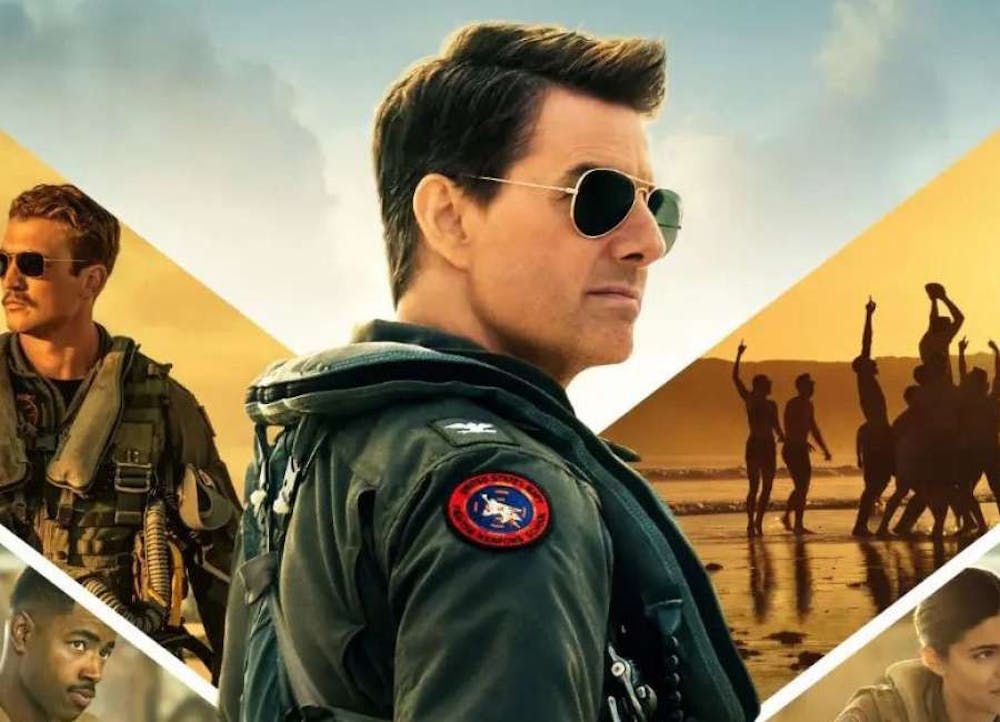
Movie theater attendees are now a fraction of what they used to be. Despite the solid successes of Tom Cruise’s “Top Gun: Maverick” and James Cameron’s “Avatar: The Way of Water,” the 2022 multiplexes saw their audiences essentially cut in half, when compared to four years ago.

Of course, movie theater companies experienced record losses in their share prices. AMC’s value dropped almost 80 percent, and Cineworld, owner of Regal, headed for bankruptcy court.

Likely hampered by projects that were saturated with woke ideology, Disney experienced its worst yearly stock-drop since 1974. Disney is the largest, most influential and sole media company that is listed in the Dow Jones Industrial Average, and it saw its shares drop a whopping 44 percent? Unbelievable.

The board of directors suddenly terminated CEO Bob Chapek and brought back former CEO Bob Iger, ostensibly to rescue the Mouse House.

Warner Bros., Discovery and Lionsgate also saw their stock prices take a plunge of over 60 percent.

With regard to television, traditional broadcast and cable TV (aka linear television) saw a significant ratings dip. Similar to what happened earlier to the music business, Hollywood executives discovered that streaming media does not yet provide sufficient revenue to offset the losses incurred in linear television and theatrical film releases.

However, a bright spot appeared on an otherwise dismal media landscape. “Yellowstone,” which is a modern perspective on the classic Western, garnered a huge audience hungry for retro-drama. Consequently, the series is continuing to enjoy stellar ratings.

Another media company that actually saw its investment value rise is the sports entertainment powerhouse WWE, which ended 2022 with a gain of 38 percent. It could be that this increase has to do with the moral sensibilities of a huge segment of viewers that find the clear distinctions between heroes and villains quite appealing.

The studios spent money galore on streaming content in 2022, and the cash layout just never panned out. Executive chairman James Dolan of AMC Networks explained Hollywood’s quandary in a memo that he recently wrote.

“It was our belief that cord-cutting losses would be offset by gains in streaming. This has not been the case. We are primarily a content company and the mechanisms for the monetization of content are in disarray,” he stated.

The AMC executive pointed out a reality that most of Hollywood is facing in 2023 and warned of “a large-scale layoff as well as cuts to every operating area.”

Netflix was first out of the gate to layoff employees, following a substantial loss of subscribers. Other major entertainment companies have also announced or have already started their layoffs, hiring freezes, and/or cost-cutting measures, including Disney, Warner Brothers, Paramount and CBS.

Warner chief David Zaslav actually stunned the entertainment world last summer, when he decided to shelve and write off the costs of “Batgirl,” a funded and completed film that was in post-production and had been approved by previous leadership at the company.

At an investor conference in November of 2022, he noted that in the past few months, things had gotten “a lot worse.”

The road that Hollywood will take going forward is yet to be mapped.

With a hope and a prayer, it will be one where entertainment takes center stage once again.

‘Lightyear’ Minus Tim Allen Equals a Flop

Hollywood is in love with franchises, and the public enjoys them too.

When it comes to entertainment industry product, franchises oftentimes provide a safe harbor for execs in the risky day-to-day struggle to come up with new projects.

Hard to believe, but a major Disney franchise recently went down in flames. It’s the latest in the “Toy Story” series.

Yes, “Lightyear,” Disney-Pixar’s “Toy Story” spin-off is a dud.

The movie tanked at the box office, taking in only $50 million domestically in its first week. And the following week it took a 65 percent dive, earning less than $18 million.

With a production budget of $200 million, and an additional $100 million or so in marketing costs, Disney is likely looking at a significant loss, despite the fact that the film was thought to be a sure shot.

Franchise power, in the conventional sense, was shown in the box-office performance of prior sequel “Toy Story 4,” which took in a haul of $120 million in its first week.

Moviegoers definitely didn’t show the same love for “Lightyear.”

There are two major reasons for the film’s apparent failure.

1. If you want to draw “Toy Story” franchise fans, it’s not a good idea to ditch the guy who made Buzz Lightyear famous in all four previous “Toy Story” flicks.

That’s right. The filmmakers left actor Tim Allen out of the project, despite the fact that Allen’s voice is what madeBuzz buzz.

A lot of excuses have been given as to why Allen was cut out.

Claims were made that Allen’s voice was the film-version voice of a toy, and the voice of “Captain America” actor Chris Evans is the film-version voice of a supposed living, breathing, real-life Buzz.

However, plenty of folks sense that politics are at play. That’s because fans of Allen’s successful “Last Man Standing” sitcom remember all too well that Disney-owned ABC inexplicably canceled the show at a time when it was still popular with the public.

“Lightyear”’s Evans-for-Allen swap prompted a number of celebrities to take to social media and express their chagrin over the decision.

– “Everybody Loves Raymond” star Patricia Heaton used her Twitter account to post, “Disney/Pixar made a HUGE mistake in not casting my pal Tim Allen. Tim Allen in the role that he originated, the role that he owns. Tim IS Buzz! Why would they completely castrate this iconic, beloved character?”

– Tom Hanks, who voiced Buzz Lightyear’s sidekick Woody in previous films, entered the fray via a CinemaBlend interview that was posted on the publication’s Instagram account. The actor discussed how his film “Elvis” hit theaters at the same time as “Lightyear.”

“I actually wanted to go head-to-head with Tim Allen and then they didn’t let Tim Allen do it,” Hanks said. “I don’t understand that.”

Allen revealed that quite a while back he had been in on discussions about the “Lightyear” concept, but the new spin-off didn’t have the same filmmakers involved as the original.

“We talked about this many years ago,” Allen said, and he remarked at the time, “What a fun movie that would be.”

He explained, “But the brass that did the first four movies is not [the same one]… this is a whole new team that had nothing to do with the first movies.”

2) A big reason for “Lightyear”’s tepid response is the unmistakable woke-influence. Inserted in an animated movie for children is a same-sex kiss.

The scene has resulted in “Lightyear” being banned in many locales that have typically welcomed Disney films, including the countries of Malaysia and Saudi Arabia.

It seems as though Disney has been on a self-destructive course. There have been a series of decisions that have led the public to believe that the company wants to shed its family-friendly brand.

Guess we can just chalk it up to one more thing we thought we’d never see –Mickey’s smile turned upside down.

Spielberg’s ‘West Side Story’ Misses the Mark

Remakes of iconic films are rarely able to match, or even come close to, the level of artistry, entertainment value, and outright magic of their original movie counterparts.

This hasn’t stopped New Hollywood from continuing to give it a try.

Steven Spielberg is the most recent one to have a go at it. Just released is Spielberg’s remake of directors Jerome Robbins and Robert Wise’s 1961 enduring musical film classic “West Side Story” (music by Leonard Bernstein and lyrics by Stephen Sondheim).

Spielberg may be wishing that he had chosen a different flick to try and reconfigure. The legendary director’s remake, which bears the original’s same name, has come up short at the box office.

The film’s estimated take for its debut weekend is around $10 million, despite its having had a production budget of about $100 million and a likely larger marketing cost. Expectations for its opening weekend had been as high as twice that amount.

Filmmaking is, of course, a uniquely collaborative art. It typically involves a large team of creative individuals who work together on a singular cinematic goal.

Sometimes everything comes together to create the perfect piece of entertainment art. That’s what happened with the original “West Side Story.” It is one of those rarities where all cinematic cylinders were fired up at peak levels.

The story by Arthur Laurents sublimely meshes with Bernstein’s musical compositions and Sondheim’s lyrics, creating a beautiful framework from which the Shakespearean inspired tale takes flight.

All things work in concert, including the impeccable casting, choreography, and screen presentation, which at the time resulted in the film’s winning 10 Academy Awards, including Best Picture.

The plot revolves around the lives of two teenagers who are madly in love with one another. Tragically, though, each one has an allegiance to family and friends of a different ethnicity and gang affiliation.

The inter-rivalry between the gangs is fierce, and they are continuously at odds with one another in an ongoing effort to dominate the New York City neighborhood.

In Spielberg’s remake, creators made what I consider to be a storytelling error that tends to worsen over the course of a movie-making process; that being, creators appear to have allowed an agenda to take precedence over fundamental artistry.

In other words, it looks as if the message derailed the medium.

In the remake of any iconic film, a mistake such as this may prove to be very troublesome. Here’s why.

In the remaking process, it is extremely important that deference to the original film be taken. This is because a classic movie has permeated society to such a degree that it has become an integral part of our shared cultural experience.

In the Spielberg version of “West Side Story,” the underlying storyline, song lyric content, and personality traits of some of the characters were significantly changed. This appears to have been done in an effort to comply with an invisible mandate contained within the film’s agenda of preference.

To compound matters, certain scenes are much less accessible, particularly for viewers who are not bilingual in English and Spanish languages. Portions of the film are actually in Spanish language only; however, there are no subtitles included, which many audiences have come to expect in such cases, and/or individual scenes.

Spielberg shared an explanation for the decision regarding language. He told IGN that the choice of not using subtitles in any of the Spanish speaking scenes was “out of respect for the inclusivity of our intentions to hire a totally Latinx cast to play the Sharks’ boys and girls.”

He also indicated that the decision was made to avoid an inequity that might be created if a language became over-empowered.

“If I subtitled the Spanish I’d simply be doubling down on the English and giving English the power over the Spanish,” he said.

Here are more ways in which the remaking process, minus the proper deference to the original, may be creating trouble for the reboot.

The late Natalie Wood, who was not of Puerto Rican descent, famously portrays Maria in the original film. Creators of the remake, likely in an effort to avoid the criticism of “cultural appropriation,” cast a Colombian American named Rachel Zegler as Maria.

Despite the apparent attempts to gain favor from those who subscribe to the tenets of the remake’s preferred agenda, the film is being slammed anyway for its ethnic insensitivity.

“I have an issue with Hollywood once again fumbling the easiest of opportunities to elevate a Puerto Rican actress. They seem to think that as long as the actors are Hispanic, that’s enough,” Daily Beast Assistant Managing Editor Mandy Velez wrote.

In terms of the music, many folks vividly remember the song “Gee, Officer Krupke,” the cleverly choreographed performance contained in the original film,

In Spielberg’s remake, the scene that contains this song and performance has unfortunately been twisted into an anti-police presentation. The setting is the 21st Precinct of the New York City Police Department, and it is here that members of the Jets proceed to mock the police and wreak havoc on the facilities.

Lyrics to the iconic “America” tune are altered as well. The snappy back-and-forth between Anita and boyfriend Bernardo about whether the U.S. is a good or bad place to live has been contorted into a flat lyric with no measurable zing.

Ditto for the original Rita Moreno scene-stealing performance. The remake seems to have put it through a redacting machine.

On a Moreno side note, the enduring star is also an executive producer of the remake, and she definitely provides some bright spots in the dull new version. She portrays a character that wasn’t in the original’s cast, Valentina, who is a widow that runs her store while simultaneously dispensing sage advice.

Too bad Doc, the “conscience” character of the original film, was left on the cutting room floor.

Other problems in Spielberg’s revised version include a lack of chemistry between lead characters Maria and Tony. This perhaps is partially due to a loss of an idealism that the original contains, as well as an innocence that is manifested by the characters.

All the seemingly forced alterations in the reboot simply don’t work. And one of the worst things about it is that this happened to a film that is considered by many to be the best movie musical in all of cinematic history.

I’ve been thinking, though, that the lackluster reboot might have the effect of bringing a whole new generation back to the movie experience of the real deal.

Young people could enjoy it with their moms and dads and grandmas and gramps, who in their drama club days sang and danced to the high school musical of their times, the original “West Side Story.”

Viewers Show Their Christmas Love for ‘The Chosen’

Dallas Jenkins, filmmaker son of “Left Behind” series author Jerry Jenkins, is the creator of the streaming series “The Chosen,” which is the first multi-season series that focuses on the life of Jesus Christ.

The series has become a global phenomenon. It currently holds the record for being the highest crowd-funded project of all time.

Its devoted audience has funded $40 million in crowd-funding financing to date, which has facilitated the production of two full seasons of programming.

The number of viewers of “The Chosen” keeps growing exponentially, thanks to the series’ multiple streaming platforms and its very own app.

The New Testament project has been translated into 50 languages and has made its way into the world’s top entertainment app list.

The success of “The Chosen” has resulted in an upgrade of the project’s production facilities, allowing future filming of the upcoming third season to take place with a historically accurate set design, one that sits on 900 acres in Midlothian, Texas.

The series is available on the app with no fee or subscription required. The opportunity for viewers to voluntarily “pay it forward” is provided via crowd-funding at the conclusion of the screening.

Plans for the series to continue for seven full seasons is in the works, allowing for a full exploration of all aspects of the life and ministry of Jesus.

Part of the uniqueness of the approach that has been taken by the creators of “The Chosen” series has to do with the emotionally relatable characters that are featured in their cinematic story lines.

Bible believing Christians adhere to the doctrine that Jesus is both human and divine.

While still staying true to Scripture, Jenkins and company have focused more heavily on Christ’s humanity. This is in contrast with what many of their predecessor filmmakers have done.

“The No. 1 word that we put on our wall, the banner across everything we do, is ‘authenticity,’” Jenkins says. “So many past Bible projects telling Jesus’ story have been a little stiff, maybe a cleaned up, sanitized version of the story. We desperately seek to pursue a portrayal that’s as authentic as possible.”

For the role of Jesus, Jenkins went with an actor that he had used before, Jonathan Roumie. Having been raised in the Greek Orthodox Church and being a convert to the Roman Catholic faith, Roumie is highly knowledgeable about the Gospel story.

He had played Jesus in a touring multi-media project about the life of Saint Faustina called “Faustina: Messenger of Divine Mercy.” He had additionally played the role of Jesus in a short film by Jenkins, titled “The Two Thieves.”

As we move further into the Christmas season, the timing is perfect for a remembrance celebration of the birth of the holy infant. It is also a welcomed time to experience a cinematic retelling of the time-honored Christmas story, particularly a retelling that is respectful in its presentation. And the following one truly is.

Multiplying the joy of the season, the producers of “The Chosen” have created an additional stand-alone big-screen movie titled “Christmas with the Chosen: The Messengers.”

The recent Christmas feature contains the same high-level production value and powerful storytelling as that of “The Chosen” series, which pleases devotees of the initial project as well as others in the movie-going public who are seeking to escape the darker and more cynical movie fare that poses as holiday entertainment.

The Christmas edition of “The Chosen” has broken yet another record by becoming the bestselling movie in the history of its distributor, Fathom Events, with $8 million for 640,000 tickets in 1,700 movie theaters nationwide.

Fathom, which has been going strong for 17 years, is the 11th largest distributor of content to movie theaters.

In the lead-up to the box-office event, $1.5 million in tickets were sold during the first 12 hours of availability. As a result, the original 2-day run had to be expanded to 10-days.

On a musical note, “Christmas with the Chosen: The Messengers” is loaded with performances by an all-star roster of contemporary Christian music performers that include For King & Country, Phil Wickham, We The Kingdom, Matt Maher, Maverick City Music, Brandon Lake, Cain, Leanna Crawford, Jordan Feliz, Dawson Hollow, One Voice Children’s Choir, The Bonner Family, and Bryan and Katie Torwalt.

The music component of the film culminates in an epic performance of “Joy to the World,” featuring a collaboration of star musicians playing and singing the venerable hymn.

May all enjoy this miraculous time of the year when Earth receives her King.

‘Charlie’s Angels’ Takes a Box-office Tumble

mv5bmdfknza3mmmtytc1mi00zwnjlwjjmjctodq2zgi2owy0ymexxkeyxkfqcgdeqxvymda4nzmyoa4040._v1_sy1000_cr006741000_al_

When it comes to box office, Hollywood’s latest remake of an iconic TV classic recently experienced a fall from grace.

The latest “Charlie’s Angels” reboot has studio executives scratching their heads in search of an explanation as to how a popular franchise with a name director, notable cast, and $50 million production budget could fail to attract a decent-sized audience.

“Wokeness” in today’s left-tilted culture is the overarching theme that is mandating current PC standards. The hyper-liberal ideology is so accepted by Hollywood’s mainstream community it makes even the savviest power players repeatedly muck things up, financially and otherwise.

Shoehorning far-left politics into what are supposed to be entertainment projects, Hollywood studios are continuing the pattern of releasing loser reboots, prequels, sequels, and the like, including “Ghostbusters,” “Men in Black,” “The Last Jedi,” and “Terminator: Dark Fate.”

The reason the “Charlie’s Angels” franchise was viewed by insiders as a viable project for a reboot in the first place was its long track record of success. It all began with a hit television series that starred Farrah Fawcett, Jaclyn Smith, and Kate Jackson.

Fawcett lost her super hero battle with cancer in 2009. But at the height of her award winning career, she was a genuine cultural phenomenon, the pin-up girl of her era, setting trends for everything from a hairstyle that in modified form would live on to this day to a poster that would adorn bedroom walls and locker doors in untold numbers. The wildly popular “Charlie’s Angels” TV show dominated the airwaves from the mid-1970s to the early 1980s, garnering consistently high ratings. However, there was an innocent charm to the show that would be lost in the revisions to come.

As studios are so often prone to do, the television series became repackaged, and it emerged as a “Charlie’s Angels” movie in 2000, starring Cameron Diaz, Drew Barrymore, and Lucy Liu in the lead roles. The film debuted with a $40 million box office.

In 2003, Diaz, Barrymore, and Liu teamed up for a sequel, “Charlie’s Angels: Full Throttle,” which took in almost $38 million in its first weekend. Left-wing propagandists had not yet infiltrated entertainment content to the degree that would ultimately come to fruition.

So here we are sixteen years after the “Charlie’s Angels” sequel. Sony brings in Elizabeth Banks to direct, star, and write, partially due to her successful directorial debut with Universal’s “Pitch Perfect 2,” but perhaps more importantly, for her having expressed her desire to redo “Charlie’s Angels” with a feminist overlay.

Opening up with a dismal $8.6 million box-office take, the current iteration of “Charlie’s Angels” makes it clear that the filmmaker had a different goal than that of making an entertaining action movie.

A montage of images from the world-over, featuring young women of supposed power, is meant to convey to movie-goers that they are in for something other than your average everyday cinematic diversion.

An opening scene features Kristen Stewart’s character subduing a male villain after he makes dastardly sexist remarks to her.

In a recent profile in WSJ Magazine, Banks evidently felt a need to highlight the film’s feminist bona fides, saying, “You’ve had 37 Spider-Man movies and you’re not complaining! I think women are allowed to have one or two action franchises every 17 years — I feel totally fine with that.”

However, “Charlie’s Angels” features a number of anemic action scenes, which end up being a major disappointment to viewers who came to see something more than an insipid “You go girl!” after-school special.

Even the hit song from the film, titled “Don’t Call Me Angel,” which features Ariana Grande, Miley Cyrus, and Lana Del Ray, couldn’t put viewers in theater seats.

The Hollywood Reporter extolled “Charlie’s Angels” for “unapologetically raising a feminist flag, championing female friendships and subtly making a point about the urgency of the ongoing climate crisis.”

That pretty much says it all, spelling it out in big bold letters why the November 2019 film turns out to be such a turkey.