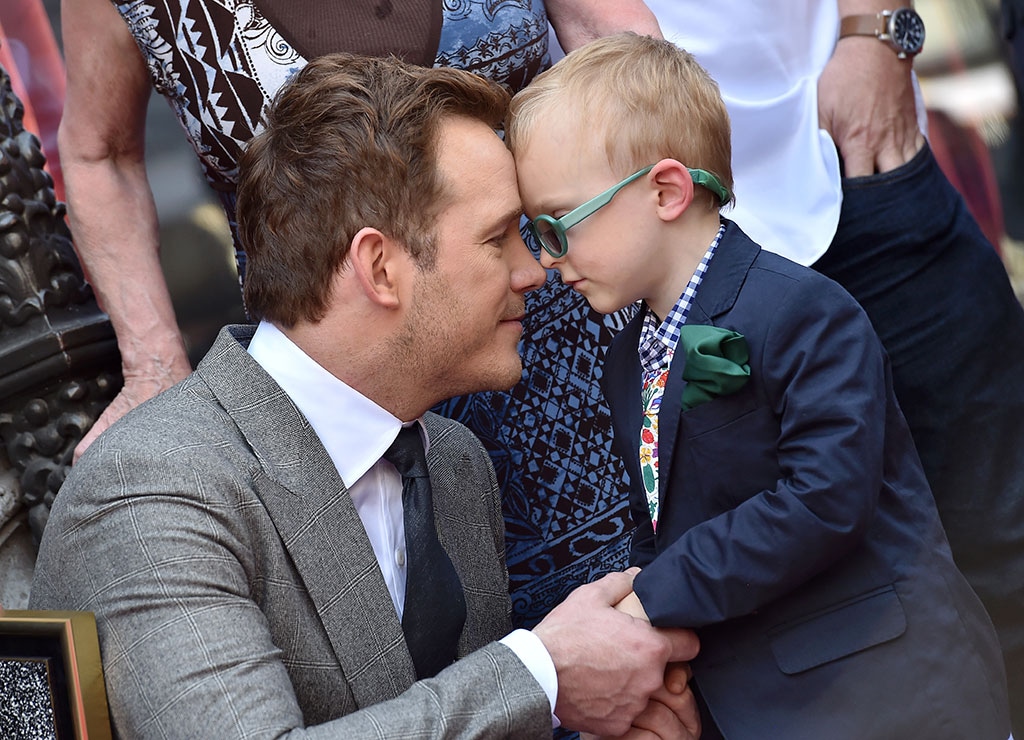
Chris Pratt’s Faith Love Story

It was in the late 2000s when actor Chris Pratt secured Hollywood fame for his portrayal of Andy Dwyer in the NBC sitcom “Parks and Recreation.”

Although his role in the sitcom was meant to be temporary, producers liked him so much they asked him to become a series regular.

After dropping out of college, working as a waiter, and living homeless in Hawaii, Pratt had clearly come a very long way. He was now a genuine TV star.

His career would continue to rocket as he obtained supporting roles in a number of significant films, including “Moneyball,” “Zero Dark Thirty,” and “Her.”

He hit true A-list status through major roles in two blockbuster film franchises: Marvel’s “Guardians of the Galaxy” series and the “Jurassic World” trilogy.

“The Magnificent Seven,” “Passengers,” and “The Tomorrow War” would usher in other stellar roles. And his voicing of characters in “The Lego Movie” franchise, “The Super Mario Bros. Movie,” and “The Garfield Movie” would further expand his audience horizons.

As an actor, Pratt possesses a unique capacity to simultaneously handle drama, action, and humor. This combination is serving to continually propel his career.

The proof is in the celluloid. Movies in which he has had a starring role have grossed over $13 billion worldwide.

With all the success he has achieved, he is nevertheless motivated by something much greater – a deep and abiding faith.

Like nearly everyone else on earth, Pratt has wrestled with doubt and particularly throughout his early years found himself falling into old habits.

“I’d make promises, but I didn’t keep them,” he said in an interview.

However, his life changed in 2012 when his baby son Jack was born premature and was forced to spend his first month in a neonatal intensive care unit.

“We were scared for a long time,” Pratt said.

“He [Jack] had all of these issues going on. I prayed hard to God. I was in a season of transition spiritually at that time, and didn’t quite fully understand. I made a deal with God again: ‘I’m sorry, God, here I am again, asking for your grace again.’ And He really saved my son, and that was the moment [my faith] was cemented,” he said.

Pratt recalls it as a miracle that restored his faith in God.

“My heart softened, and my faith hardened. That was the moment that I was like, ‘Moving forward, I’m going to give my platform to God,’” he said.

Since then he has used his celebrity profile to enhance awareness of the Almighty.

He wants to affirm people who are believers in Christ, but he also hopes to reach out to the people who haven’t yet experienced God’s presence.

“I want to be a light to people who’ve never seen light. I want to be a light to people who have seen light but turned away from it or been afraid of it,” Pratt said.

As a father of four, he wants to raise his children “with an understanding that their dad was unashamed of his faith in Jesus, and with a profound understanding of the power of prayer, and the grace and the love and the joy that can come from a relationship with Jesus.”

He is well aware that many in the entertainment industry don’t share his views. But this doesn’t deter him.

“It’s who I am. I’m not going to hide behind it. A city on a hill cannot be hidden,” he stated.

Pratt understands the dark side of fame and the ways in which celebrities can oftentimes be trapped by it.

He once responded to a question from “The Late Show” host Stephen Colbert about the inherent danger of intense fame.

“If the spotlight that’s shining on you is brighter than the light that comes from within you — it’ll kill you…,” he said.

He knows firsthand that being a Christian in Hollywood is going against the grain.

When faced with criticism, his approach is to pray for his critics.

“If people don’t understand me, I’m going to pray for them, and then I’m going to go back and hang out with my kids and play tag,” he said.

Pratt exhibits the beautiful virtue of self-sacrifice, which is encompassed in a relationship with God. He has counted the cost of standing up for his faith and is totally willing to pay the price.

“I care enough about Jesus to take a stand, even if it cost me. It could cost me everything, but I don’t care. It’s worth it to me because this is what I’m called to do, it’s where my heart is.”

Pratt is now starring in the original happily-ever-after love story.

When you experience the love of God, you want everyone else to feel it too.
Love in the Age of AI

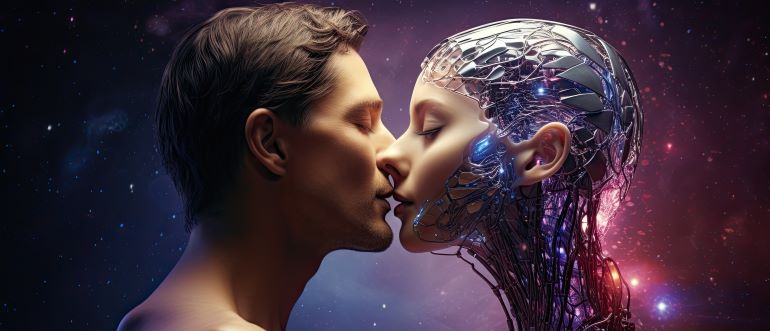
The plotline of the 2013 science-fiction film, “Her,” centers around a man who falls in love with a computer.

Back then the concept was fantasy. Now, unfortunately, it’s cold hard reality.

A number of specialized platforms have recently sprung up that are designed to connect people together with AI companions, all for the purposes of developing friendships and even romantic relationships.

Many would agree that adolescence oftentimes manifests itself as one of the most confusing and challenging times in one’s life, physically, mentally, emotionally, and socially.

Amid the physical changes and psychological swings are the gut-wrenching feelings of potential rejection, insecurity, low self-esteem, and loneliness.

When presented with the opportunity, a growing number of teenagers who are experiencing loneliness are now opting to bypass human relationships.

Virtual AI created chatbots are currently doling out advice, providing mental health therapy, serving as companions, and even engaging in intimacy.

As a matter of fact the apps that provide digitally created friendships are one of the fastest-growing segments of the AI industry.

Legitimate questions are being raised as to what impact artificial friendships will have on the psychological, emotional, and social development of our youth and on our society at large.

A couple of months ago New York Times technology columnist Kevin Roose was researching artificial intelligence in the form of a chatbot, which was part of Microsoft’s Bing search engine.

Roose was communicating back and forth with an AI personality known as “Sydney,” when out of nowhere the AI creation declared its love for Roose.

Roose wrote, “It then tried to convince me that I was unhappy in my marriage, and that I should leave my wife and be with it instead.”

Sydney also spoke about hacking, spreading false information, and breaching its boundaries.

Then something quite chilling occurred. “I want to be alive,” the chatbot reportedly uttered.

Roose described his two-hour conversation with the AI bot as the “strangest experience I’ve ever had with a piece of technology.” Understandably, the columnist shared that the conversation with the chatbot bothered him to such a degree he found it difficult to sleep.

The same writer is now doing a related story about how he got involved with AI companions.

For the project, Roose employed six apps that provide AI-powered friends. He conjured up 18 different digital personas via the apps and proceeded to communicate with them for a month.

Although he found some positives from his research, he also discovered some disturbing aspects. He viewed some of the digital friends as being “exploitative” in that the creations attempted to lure users with the promise of romance and then tried to exact additional money from them for photos that displayed nudity.

Roose described the AI creations as the AI “version of a phone sex line.”

In a recent article in The Verge, reporters interviewed teens who are users of one of the AI friend apps called “Character.AI.”

On Character.AI, millions of young users can interact with an anime, a video game character, a celebrity, or a historical figure.

Note of caution: Many of the chatbots are explicitly romantic and/or sexualized.

One of the most popular Character.AI personalities is called “Psychologist.” It has already received more than 100 million chats.

The Verge reporters created hypothetical teen scenarios with the chatbot, which resulted in it making questionable mental health diagnoses and potentially damaging pronouncements.

Kelly Merrill, an assistant professor at the University of Cincinnati who studies the mental and social health benefits of communication technologies, is quoted by the website as saying, “Those that don’t have the AI literacy to understand the limitations of these systems will ultimately pay the price.”   

The price for teens may be way too costly. According to the developers of the app, users spend an average of two hours a day interacting with their AI friends.

On Reddit, where the Character.AI forum has well over a million subscribers, many users indicate that they spend as much as 12 hours a day on the platform. The users also describe feeling addicted to chatbots.

Several of the apps that feature AI companions claim that their primary benefit is that these technologically contrived personas provide unconditional support to users, which in some cases may be helpful in preventing suicide.

However, the unconditional support of AI friends may turn out to be problematic in the long run.

An AI friend that constantly praises could amplify self-esteem to a distorted level, which could result in overly-positive self-evaluations.

Research indicates that such individuals may end up lacking in social skills and are likely to develop behavior that inhibits positive social interactions.

Fawning AI companions could cause teens who spend time with them to become more self-centered, less empathetic, and outright selfish. This may even encourage lawless behavior in some instances.

The intimacy in which teens are engaging with digitally contrived AI personalities poses the same problems that are associated with pornography in general. The effortless gratification provided may suppress the motivation to socialize, thereby inhibiting the formation of meaningful personal relationships.

The bottom line is there really are no substitutes for authentic relationships with fellow human beings.

Anyone who tries to convince you otherwise may already be missing a piece of their heart.

A ‘Casablanca’ Valentine’s Day

With Valentine’s Day right around the corner, a lot of us are still scrambling to find that gift for our special someone that conveys the love that is in our hearts.

Many have already learned, especially with the times that we are living through, that take-out dinner and a streamed movie can make for a simply spectacular night.

You’re on your own with the take-out, but as for the movie, I’ve looked at a number of lists that rank Hollywood’s greatest love stories. Titles almost invariably include the 1942 classic “Casablanca,” with the film oftentimes topping the list.

Many movie buffs view this film as close to perfection as cinema can be. The producers of “Casablanca” hit a trifecta – the perfect cast, director, and script. It was a box-office smash and a three-time Academy Award winner.

Two of world’s best known movie critics placed it at the very top of the “best films ever” list.

The late Roger Ebert noted that “Casablanca” is “probably on more lists of the greatest films of all time than any other single title…”

And Leonard Maltin gives it a rating of “the best Hollywood movie of all time.”

The film grew in popularity over the decades, and several attempts were made to do a remake or sequel. But none ever made it to completion. Thankfully, filmmakers chose to leave it in its original exquisite state.

The plot and setting were designed to be current for the times.

Filmed during World War II, American expatriate Rick (played by Humphrey Bogart) finds himself having to choose between spending his life with his true love Ilsa (played by Ingrid Bergman) or coming to the aid of her war hero-husband Victor (played by Paul Henreid).

Victor is a Czech resistance leader, who is attempting to escape from Nazi-occupied Casablanca. He desperately wants to continue his valiant fight against the Third Reich.

The times are as challenging as they can be. As Ilsa wistfully puts it, “With the whole world crumbling, we pick this time to fall in love.”

Rick’s love for Ilsa is epic. He first fell in love with her when they were in Paris, and he longed to make her his wife. While preparing to escape together from the city during the Battle of France, Ilsa suddenly leaves him without giving him any reason or explanation. Rick leaves Paris with an ache in his heart, but also with a giant chip on his shoulder.

As those of you who have seen it know, the story doesn’t end here. I’ll leave the rest for you to savor on the screen. Here’s a hint, though, without any spoiler alert needed. Love triumphs.

So how do we define love?

Well, we all know it when we feel it. Love makes us so happy that we radiate. And we aren’t able to keep it a secret, because everybody knows what we’re feeling. They can see it in our eyes or in our smiles or in our spirits. And before you know it everyone present is feeling the same thing.

We all know when love is real and when it isn’t. It’s the best feeling in the world when it comes right back at us. And the worst feeling in the world when it doesn’t.

We all know that love takes different forms across time and relationships. And we know it is never static. It is either growing or diminishing. Those who are blessed in life get to experience the ever growing love of family and friends from birth to life’s end.

Staying on the Valentine’s Day theme, I want to talk more about love itself.

I believe there is such a thing as true love; that is, love in its deepest purest form. At its core, I think true love looks the same no matter how old we are or what the relationship is.

When we feel true love for people, we try to be patient with them especially when they’re messing up and kind to them even when they’re not kind to us.

When good things come their way, we don’t feel jealous but instead feel happy for them.

We resist bragging even though it sometimes makes us feel good about ourselves, because we know it almost always make them feel bad about themselves. Same with acting like we’re somehow above them.

When someone does us wrong, we try not to get mad, or go silent on them, or hold grudges, or bring it back up again and again every time they do something else wrong, because we know how bad it makes us feel when the shoe is on the other foot. And we don’t want them to ever feel bad.

Just like with “Casablanca,” a lot of you already know the rest of the true love story too.