
Hollywood Targets LA Mayoral Candidate Spencer Pratt

As the race for the Los Angeles city mayor heats up, some top-name celebrities are rushing to the rescue of incumbent Mayor Karen Bass by targeting her rising-star challenger Spencer Pratt.

Actor, comedian, and game show host Drew Carey recently took to the social media stage to spout off about Pratt and cuss in current Dem fashion.

“Anyone who votes for, or endorses Spencer Pratt for Mayor of LA needs to get their head out of their a**,” Carey wrote.

Carey’s tirade is no isolated rant. It’s actually a reflection of a broader pattern on the part of select Hollywood celebrities, who appear to be trying to save Bass from an embarrassing loss come election day.

Aside from Carey, additional Pratt detractors include Jimmy Kimmel, Chelsea Handler, and Lisa Rinna, to name a few.

Bass is a longtime Democrat politician, who has unsurprisingly collected endorsements from some of Hollywood’s most far-left hotshots.

Why would celebrities the likes of Carey and Kimmel be rushing to endorse Bass and attack Pratt?

Much of the celebrity praise is obviously virtue signaling. But there is also a desire on the part of some to firmly align themselves with high-profile status quo politicians.

Celebrity activists are in a panic because the unexpected happened.

Pratt had a highly successful reality TV show, which makes him a bona fide Hollywood star himself.

Now he has succeeded in bursting onto the political scene with his blunt-truth communication style and his incredibly effective use of social media. His big rise in the polls says it all.

As June 2 quickly approaches, things are reaching a fever pitch. Many who live in the celebrity bubble appear to be visibly shaken.

That’s because to them the mayoral election is less about government solutions and more about far-left ideology and self-preservation.

A lot of the A-listers live in gated communities and work in sequestered studio lots. Such settings are far-removed from the failing streets that ordinary Angelenos have to endure.

Endorsements of Bass allow them to feign compassion without having to address the policy failures that have turned the City of Angels into a scene out of Dante’s Inferno.

Pratt’s rise is directly related to the incompetent leadership and failed policies of the city’s incumbent mayor.

Having lost his home in the 2025 Palisades wildfire, he has been publicly criticizing Bass and other state leaders for the inadequate preparation, empty reservoirs, delayed responses, and broader lack of governance regarding infrastructure, crime, and homelessness.

His campaign for mayor has emphasized practical fixes, such as bolstering the LAPD, mandating treatment for those with addiction and mental health issues, cleaning up the street encampments, and demanding accountability for nonprofits that are gobbling up billions of dollars.

The grassroots support for Pratt continues to build as he is besting Bass in small-dollar campaign donations as well as in the polls. To the celebrity class this, along with his genuineness, makes him dangerous. Deriding him is just plain easier than debating him.

Pratt points out that, under Bass’s leadership, the city of Los Angeles has struggled with persistent homelessness, surging violent crime, and emergency preparedness gaps, which were exposed by the fires.

It turns out that Bass’s leftist credentials were actually honed during the 1970s, when she joined the Venceremos Brigade and made multiple trips to Cuba doing construction and agricultural work in support of Fidel Castro’s revolution.

The Brigade was organized by pro-Cuba leftists that had Marxist-Leninist ties. Rather than being a humanitarian organization, it was simply a communist one.

The mayor has admitted that she grew up around “red diaper babies” (children of Communist Party members). She has also said that radicals and communists played a “huge role” in her early influences.

In 2016, after Castro’s death, she issued a statement characterizing his demise as a “great loss to the people of Cuba.”

In 2017, she inserted congressional remarks, eulogizing longtime Communist Party USA leader Oneil Cannon as a “friend and mentor.”

Pratt is resonating with the voting public precisely because he is mirroring what they see. He’s no routine polished politician reciting talking points. Instead he is advocating for a rejection of the far-left orthodoxy that created the whole mess.

In a nutshell, LA is a city that is desperate for deliverance from its misery.

Pratt is offering a much-needed remedy to the insanity of doing the same thing over and over again and getting the same wretched results.
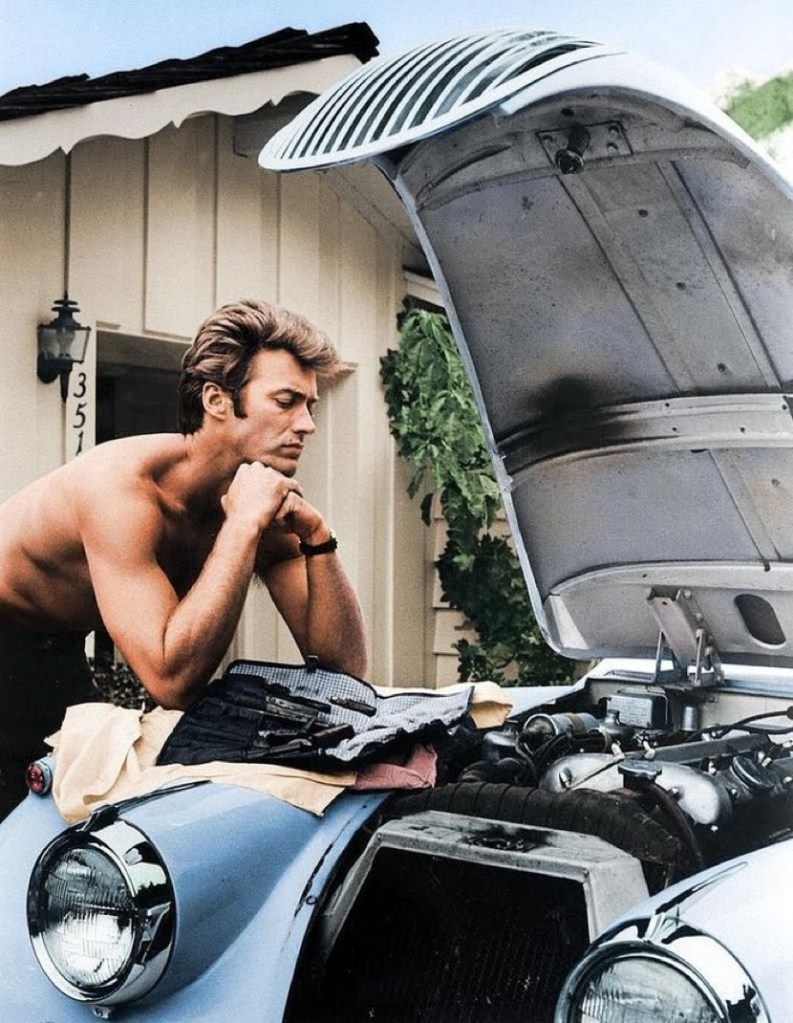
Clint Eastwood: Still the Leading Man

The legendary Clint Eastwood is still producing, directing, and starring in films at the thriving age of 91.

His latest movie is set to be released in mid-September, and a concurrent release is headed to HBO Max.

The Warner Bros. movie, titled “Cry Macho,” is an adaptation of the 1975 novel of the same name.

Eastwood portrays former rodeo star and horse breeder Mike Milo, who takes a job from ex-boss Howard Polk, played by actor-country music singer Dwight Yoakam.

Mike’s job is to bring Howard’s young son Rafo safely home from Mexico and shield him from his alcohol addicted mother.

The improbable duo of Mike and Rafo face a challenging journey through which Mike experiences a transformation that sets him on a course toward redemption.

Interestingly, Eastwood was able to snag the project after a list of big-name actors, who had been attached to the project as leads, were unable to make a go of it, including Burt Lancaster, Roy Scheider, Pierce Brosnan, and Arnold Schwarzenegger.

The recently released official trailer features the Hollywood icon portraying an appropriately aged character that is perfectly suited to Eastwood’s classic style and inimitable brand.

Through the eyes of the heart, viewers of the film accompany Eastwood’s character on a journey of exploration into some of life’s intensely introspective issues: human relationships, masculinity, and inner conflict.

When a screenwriter someday pens the script for an Eastwood bio, the writer will find that his life is much like the films he has graced, filled with uniquely captivating themes.

Eastwood is a legend among legends. He possesses the kind of star quality that is associated with actors of the Golden Age of Cinema. Yet he continues to retain an air of approachability, along with the much-admired quality of a loyal truth-telling friend.

He has an amazing body of work, which spans more than six decades and credentials him in the multiple categories of acting, directing, and producing. Accolades include four Academy Awards and four Golden Globes.

His career began with a role in a 1955 sequel to the cult monster movie “Creature from the Black Lagoon.” The debut film carries the title “Revenge of the Creature.”

He achieved a high degree of fame in 1958, when he starred in the CBS hour-long western series “Rawhide,” which ran for eight seasons.

In the mid-1960s, fame made its leap to the international level. He secured the lead role as the “Man with No Name” in a series of movies made by Italian filmmaker Sergio Leone. The films garnered the enduring nickname of “Spaghetti Westerns.”

It would be his role as discontented police officer Harry Callahan, a.k.a., Dirty Harry, that would make Eastwood a genuine Hollywood superstar and unmitigated cultural icon.

The Dirty Harry movies became a successful franchise with five hit films in the 1970s and 1980s.

As an artist, Eastwood seems to have followed the advice of Dirty Harry himself from the 1973 film “Magnum Force.”

“A man has to know his limitations,” Callahan says.

In life, if you are aware of your limitations, you tend to capitalize on your strengths. This is Eastwood at his best.

Throughout his career, he appears to have applied this adage to perfection. I would sum up this methodology, relative to his career, in one word – minimalism.

It is an understated approach to the art of acting, which frequently involves another rare attribute, that of humility.

Eastwood illustrated the minimalism approach in his decision to forego involvement in the “James Bond” franchise. After longtime “Bond” actor Sean Connery announced that he would no longer play the lead, Eastwood was offered the starring role, an opportunity that most actors would have found extremely difficult, if not impossible, to turn down.

However, he felt strongly about the necessity for the “Bond” character to be portrayed by a British actor. He ended up passing on the role.

As a fellow musician, I have the sense that across his career Eastwood’s musical proficiency has helped to draw him into the minimalism realm, where the apparent limitations of space and silence actually assist in magnifying the surrounding notes, words, and/or visuals.

It turns out that Eastwood was originally going to pursue a career in music and is a longtime aficionado of jazz and country and western music. His love of jazz appears to have been passed on to his son Kyle, who is a talented jazz bassist and composer in his own right.

Eastwood composed the film scores for a host of his movies, including “Mystic River,” “Million Dollar Baby,” “Flags of Our Fathers,” “Changeling,” and “Hereafter.” He wrote original piano compositions for “In the Line of Fire” as well as the song heard over the credits of “Gran Torino,” which features the actor singing.

In his honor, the scoring stage at Warner Bros. Studios was renamed the “Eastwood Scoring Stage.”

Many actors talk the talk of politics, but Eastwood dares to enter the arena. He made the decision to run for Mayor of California’s Carmel-by-the-Sea, a city with an equal number of Republicans and Democrats.

His campaign staff did a measure of the city, and it turned out to be a 50/50 split along party lines.

“I was a Republican, but people never thought about their parties except at the national level,” Eastwood told the Wall Street Journal.

His campaign strategy was simple and direct, much like the movie characters he portrays.

“I drank a lot of tea and chatted with people,” he said. “I told people ‘I’ll fix this, and I’ll fix that.’”

He ended up the victor in the contest, with 2,166 votes to 799 votes, and served a single two-year term, choosing not to seek re-election.

With words reminiscent of his iconic alter-ego Dirty Harry, Eastwood shed some light on his decision not to run again:

“You can’t have the same old people in office all the time.”