High Court Lets Anti-Christian Ruling Stand

ap_19236607035722-f8c39ac5d7bc85671f711e6587d7fa86f4e349d5-s800-c85

The U.S. Supreme Court recently ruled on a profoundly significant case involving the religious rights of all Americans, and more specifically, the rights of our nation’s schoolchildren, which are safeguarded and secured by the all-important words contained in the First Amendment of the U.S. Constitution.

The High Court declined to review an appeal submitted on behalf of a public high school student and a Christian, Caleigh Wood, who refused to compromise her religious beliefs by participating in a class assignment that was overtly anti-Christian in nature.

What conflicted with young Caleigh’s deeply held tenets of faith was a Muslim conversion prayer, which was part and parcel of the curricular assignment of a required course.

“There is no god but Allah and Muhammad is the messenger of Allah.” This statement happens to be the Islamic conversion creed, i.e., the declaration that an individual professes when converting to the Islam faith. It is also the prayer that a practicing Muslim recites during the Muslim “call to prayer” practice.

Caleigh had enrolled in the above described course because it was a mandatory requirement that had to be completed before she would be allowed to graduate from high school.

In an attempt to abide by the school’s conditions with regard to the academic coursework and still not violate her own personal religious conscience, Caleigh offered to complete an alternative assignment.

However, the school refused to provide her any options that were non-violative of her Christian beliefs, despite the fact that the educational institution could have easily done so. Instead Caleigh was informed that if she did not participate in the Islamic conversion prayer she would be given a failing grade.

The eleventh-grade student was additionally compelled to view pro-Islamic material in the form of PowerPoint slides. One of the slides contained the following caption: “Most Muslim’s [sic] faith is stronger than the average Christian.” The lesson also included the following description regarding gender roles within the faith context: “Men are the managers of the affairs of women” and consequently “righteous women are therefore obedient.”

The approach taken within the class to the Christian faith stood in stark contrast with the one taken with regard to the Islamic faith. Islamic principles were presented under the auspices of “fact”; however, Christian principles were not afforded the same designation.

Regarding the comparison statement on strength of faith, Jack Tuttle, content specialist for the public schools in the county, testified that in his assessment the comparison reference was “inappropriate,” adding that he would have advised that it not be used in schools.

After Caleigh filed a lawsuit that pinpointed the violations of her Christian convictions, the Fourth Circuit Court of Appeals judge in the case proceeded to ignore legal precedent, essentially sanctioning the promotion of the religion of Islam in public schools.

However, requiring a student to say a prayer, whether contrary or not to a student’s personally held beliefs, is a blatant violation of constitutional principles and precedents.

The U.S. Supreme Court should have weighed in on the Fourth Circuit’s decision. In failing to do so, the High Court permitted a lower court to ignore precedent as well as a citizen’s concerns about having to recite a prayer of a different faith, and additionally having to write such, which was a clear violation of religious conscience. The presence of government coercion in this case is patently clear, since the religious activities in question were part of a required course and no alternative accommodations were provided.

The Fourth Circuit’s opinion flies in the face of the legal mandate that public schools must not disparage a student’s faith and/or require students to engage in prayer or religious exercises contrary to personally held religious convictions. Public schools are constitutionally bound to remain neutral in their approach to faith-related subjects.

The Supreme Court has historically provided greater constitutional protection with regard to freedom of conscience as it pertains to the nation’s younger demographic. This is partially due to the fact that public school attendance is statutorily compelled, and the school administration wields considerable power.

To this end, the U.S. Supreme Court has upheld the opening of legislative sessions with prayer, yet declared unconstitutional the opening of school sessions with prayer. Similarly, the High Court has upheld the legality of creche and menorah displays, while noting that it would be a different result if the displays arose in a school setting.

The High Court precedent requires lower courts to apply a heightened standard for coercion in the public school context. Unfortunately, the Fourth Circuit egregiously cast this heightened standard aside.

The refusal by the U.S. Supreme Court to take up Caleigh’s case not only allows the lower court ruling to stand, but it leaves the existing double standard in place, which is likely to wreak further havoc on our cherished First Amendment.
Quentin Tarantino Pushes Back on China

quentin-tarantino-and-once-upon-a-time-in-hollywood-cast

Someone in Hollywood is finally standing up to China.

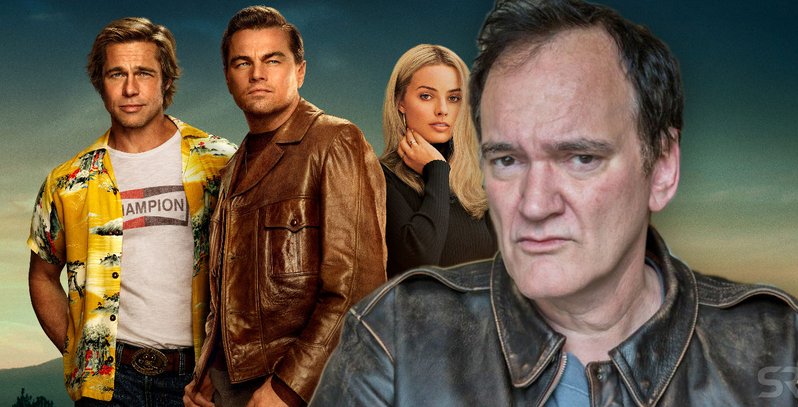
Bucking the trend of the big studios, which have been routinely allowing Chinese censors to dictate movie content, Quentin Tarantino has made it clear that he will not alter his latest film, “Once Upon a Time in Hollywood,” as Chinese officials had demanded.

As a result, China has cancelled the release of Tarantino’s fantasy-dramedy, which stars Leonardo DiCaprio and Brad Pitt. The homage to 1960s Hollywood had originally been scheduled to hit Chinese movie screens on October 25.

Chinese officials have not publicly revealed exactly what they found to be objectionable in the movie. Reportedly, the reason that the demand to modify came about was because of the filmmaker’s depiction of legendary martial arts practitioner and actor Bruce Lee.

Lee’s daughter Shannon had reportedly requested that the National Film Administration of China intervene over the portrayal of her father in the movie as a conceited braggart.

In a recent interview with The Wrap, Shannon inserted a broader controversy into her objections concerning the film.

“I can understand all the reasoning behind what is portrayed in the movie, I understand that the two characters are antiheroes and this is sort of like a rage fantasy of what would happen… and they’re portraying a period of time that clearly had a lot of racism and exclusion. I understand they want to make the Brad Pitt character this super bad-a** who could beat up Bruce Lee,” Shannon stated.

“But they didn’t need to treat him in the way that white Hollywood did when he was alive,” she added.

When the subject came up at a recent press conference in Moscow, Tarantino defended the depiction of Lee in the film, telling reporters the following:

“I heard him say things like that, to that effect. If people are saying, ‘Well he never said he could beat up Muhammad Ali,’ well yeah, he did. Not only did he say that, but his wife, Linda Lee, said that in her first biography I ever read… She absolutely said it. Bruce Lee was kind of an arrogant guy. The way he was talking, I didn’t just make a lot of that up.”

Media content is routinely and strictly controlled by communist bureaucrats in China as has been recently observed with the banning of Winnie the Pooh, the animated series “South Park,” and the NBA pre-season games.

It is yet to be seen whether Tarantino will hold the line and remain solid in his refusal to bend to the Chinese powers that be. In the past, the filmmaker made cuts to scenes in the movie “Django Unchained” after Chinese censors exerted pressure and the film’s release was cancelled.

After “Django Unchained” was re-edited and released in China, it ended up flopping, taking in a meager $2.7 million, despite a global box office of $425 million. However, Tarantino’s current offering, “Once Upon a Time,” features DiCaprio, an actor fave of Chinese audiences. Expectations were that the film was going to do much better than the above described re-edit debacle.

A critics’ favorite, “Once Upon a Time in Hollywood” has increasingly become a part of the buzz surrounding next year’s Academy Awards. The movie’s performance has been a solid one at the box office, with a $367 million take. Its profit margin has been even more impressive, thanks to a budget of a mere $90 million.

If it were solely up to the studio, which is Sony Pictures, the Chinese censors might have had an easier time getting their way. However, Tarantino was able to obtain the contractual right to the final edited version of the movie, and that puts the filmmaker in the catbird seat in terms of decisions regarding any modifications to the final cut.

China Attempts to Censor the World

south_park_banned_china_-828x435

The People’s Republic of China has been busy stopping its own people from seeing, listening to, and otherwise engaging in informational and entertainment media of all sorts, including movies, television, books, newspapers, magazines, music, video games, and the Internet.

The Communist Party of China, the nation’s single ruling party, heavy-handedly mandates so. Notably, since 2012, when Xi Jinping became the General Secretary of the Communist Party, censorship has increased significantly.

A Hollywood case in point. Richard Gere, by all measures, had in the past been considered to be a bona-fide superstar. But something curious happened after he made a pro-Dalai Lama speech at the 1993 Academy Awards.

In what he likely assumed was a free speech prerogative, the actor went about sharing with others that he was a follower and even a defender of someone the Chinese government abhors. He soon found himself being shunned by the major studios, and he has been noticeably absent from Oscar ceremonies ever since.

“There are definitely movies that I can’t be in because the Chinese will say, ‘Not with him,’” Gere told the Hollywood Reporter.

Apparently, tech giants Google, Facebook, Microsoft, and Yahoo have been voluntarily self-censoring their content for Chinese markets in order to continue conducting business with the country. Other companies and individuals have not been afforded the same opportunity.

China has banned a host of musical artists over time including Maroon 5, Lady Gaga, Guns N’ Roses, and Kylie Minogue.

Zedd, the international Grammy-winning DJ, found himself permanently banished from China. The mistake he made was that he “liked” a tweet posted on the “South Park” Twitter account. The tweet in question referred to the 300th episode of the successful animated television program. Perhaps surprisingly for Zedd, the government of China had just banned “South Park” over an episode that lampooned China along with the NBA.

The Chinese state broadcaster CCTV made the decision to ban NBA pre-season games after a tweet was posted by Daryl Morey, general manager of the Houston Rockets, which lent support to the anti-government demonstrations in Hong Kong.

Using their show to poke China, “South Park” creators Trey Parker and Matt Stone aired an episode titled “Band in China,” which sent a delightfully satiric message to tech, entertainment, and sports institutions about some of the current practices of dutifully complying with China’s censors.

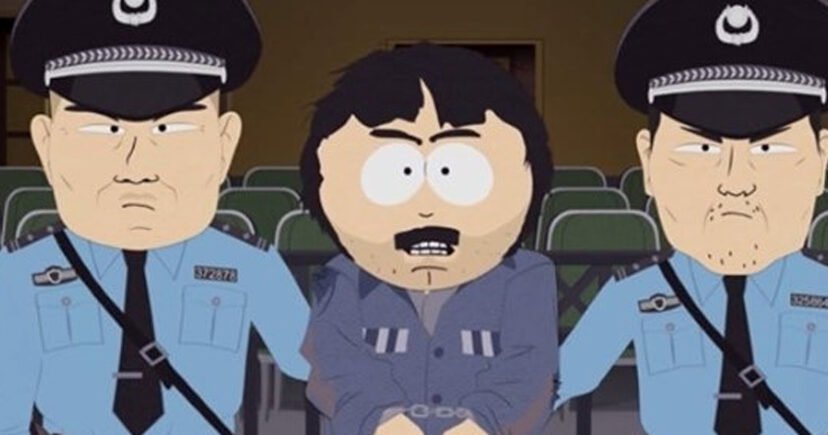
In the episode, one of the “South Park” characters is arrested in China and subsequently observes the brutal treatment that some of the Chinese prisoners are forced to endure.

Which prisoners suffer the abuse? Two banned characters from one of the world’s most beloved literary faves – Winnie the Pooh and his best friend Piglet, who were eliminated because Chinese dictator Xi was said to resemble Pooh in online memes.

A cartoon version of an entertainment executive who appears in the episode states that Pooh cannot be the subject of a film because the literary and Disney character is “illegal,” due to the fact that “some Chinese students said he looked like the Chinese president.”

Real life entertainment executives have been bending to China’s will for years. Disney’s movie “Christopher Robin” was not shown in the communist nation because Winnie the Pooh had a starring role in the film.

Brad Pitt’s “World War Z” had to be altered because the plot originally had the zombie outbreak originating in China and subsequently spreading throughout the world.

The remake of “Red Dawn” was re-shot and digitally altered to switch the ancestral heritage of the invaders of the U.S. from Chinese to North Korean. Despite the modifications, it still ended up not being released in China.

The James Bond movie “Skyfall” could only be shown in China after scenes were edited out, ones that depicted the existence of prostitutes in a part of China known as Macau. Additionally, references to torture that was being carried out by Chinese police had to be eliminated.

The film “Pirates of the Caribbean: At World’s End” had footage taken out, which featured Hong Kong actor Chow Yun-fat’s character, in order to please the Chinese powers that be.

“Mission Impossible III” edited out a car chase that took place in Shanghai because underwear could be seen hanging on clotheslines.

“The Departed” was banned because of an implication that the Chinese communists planned to use nuclear weapons on Taiwan.

The Bond film “Casino Royale” could only be screened after references to the Cold War were removed.

Parker and Stone issued a biting “official apology” panning China’s ban of “South Park” and jabbing the NBA while they were at it.

“Like the NBA, we welcome the Chinese censors into our homes and into our hearts. We too love money more than freedom and democracy. Xi doesn’t look just like Winnie the Pooh at all. Tune into our 300th episode this Wednesday at 10! Long live the Great Communist Party of China! May this autumn’s sorghum harvest be bountiful! We good now China?”

As slippery slopes would have it, the stifling of free speech is not being confined within China’s borders. Rather, it looks as if the freedom-denying activity has become one of China’s biggest exports.

D-List Celebrities Join So-called Impeachment Task Force

celebs-task-force

Since 2016, a left-wing organization called “The Democratic Coalition” has been working against President Trump’s efforts to put the country back on a prosperous track.

The bitterly partisan group initially had as its primary goal, according to its website, “making sure that Donald Trump never became President.”

After the monumental failure, the group expanded its scope of attack to include “Republican elected officials and candidates who support him [Trump],” and its strategic approach to include the use of “aggressive digital and traditional advertising, grassroots action, in-depth opposition research, and a nationwide rapid-response team.”

It additionally created an app promoting boycotts along with an anti-Trump hashtag and artists’ movement.

The group recently announced the latest way in which it would try to hinder the president’s endeavors for the country.

The Democrat Coalition’s present plan relates to the so-called impeachment inquiry that is being spearheaded by House Speaker Nancy Pelosi and Chairman of the House Permanent Select Committee on Intelligence Adam Schiff.

The group has put together a team of spotlight-seeking celebrities with the supposed purpose of educating the public on the necessity for President Trump to be investigated for his suitability to continue serving in office.

In reality, the far-left organization’s current effort may be part of a much broader plan to ultimately undermine the 2020 elections and shift the outcome in the Democratic Party’s favor.

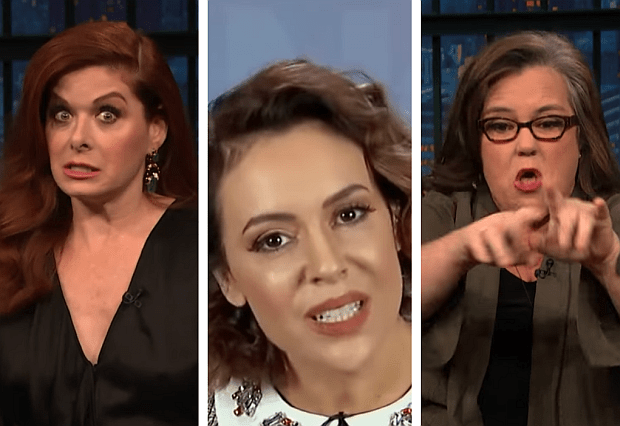
The Democratic Coalition has infused its official-sounding Impeachment Task Force with vociferous leftist activists, including Alyssa Milano, Debra Messing, Tom Arnold, George Takei, Rosie O’Donnell, and Ron Perlman. The Hollywood celebrities plan to team up in order to ostensibly hold President Trump “accountable.”

The Democratic Coalition’s co-founder Scott Dworkin told Newsweek that the celebrity component of the group’s task force will handle rapid responses to the president during the inquiry process.

The task force’s purported action plan is “to spread hashtags to streamline impeachment information, combat disinformation and reach out to Congress through letters and phone calls.”

Celebrities will reportedly engage in video conferences and conference calls with the goal of amplifying the message to a sufficient level to be able to compete with the president on Twitter.

Dworkin shared with Newsweek that, in addition to the celebrity presence, the task force will have “1,000 other members” to fill the social media with responses to the president’s posts.

The Hollywood messaging will be in the form of hashtags, keywords, and what has become the entertainment industry’s trademark style, profanity laced rants.

The celebrities named by Dworkin have all had tweets that are riddled with rage exhibiting an irrational hatred for the president and for the millions of people who support him.

Dworkin and his cohorts have apparently forgotten that a slew of celebrities were unleashed to support the candidacy of 2016 Democratic presidential candidate Hillary Clinton, including Bruce Springsteen, Robert De Niro, Lady Gaga, Jon Bon Jovi, Meryl Streep, Beyoncé, Jay Z, Katy Perry, Demi Lovato, and Miley Cyrus.

A salient and delightful reminder, Hillary still lost.