Groundbreaking Animated Film ‘The King of Kings’

Hollywood executives are accustomed to achieving big box-office results from family-friendly animated films.

The global animation market has hauled in hundreds of billions of dollars in revenue. Additionally, animated films have become a major portion of the total movie box office, with several films securing billion-dollar grosses.

Included among the top-50 highest-grossing films of all time are the following animated features: “Ne Zha 2,” “Inside Out 2,” “The Lion King,” “Frozen 2,” “The Super Mario Bros. Movie,” “Frozen,” “Beauty and the Beast,” “Incredibles 2,” “Minions,” “Toy Story 3,” “Toy Story 4,” “Moana 2,” and “Despicable Me 3.”

It’s a simple truth that animated films pay the Hollywood bills. These movies have a 30% higher profit margin than non-animated movies, mainly due to lower production costs.

The entertainment business community is once again having to come to terms with the massive appeal and box-office success of faith-based films. “The King of Kings,” the biblical movie in animated form, has been a blessed bonus.

“The King of Kings” has not only brought in significant grosses in its second weekend, it is also enjoying an unprecedented 10% drop in revenue from its debut weekend, which is minuscule in comparison to the customary drop of 35% or more during second week releases.

“The King of Kings” took in more than $17.2 million during the film’s second weekend. The movie is appearing in over 3,500 theaters across the country. As of this writing, its total domestic take is well over $47 million.

It also set a record for the biggest opening for a faith-based animated film, when it hit $19.3 million in its debut weekend.

Audiences that have seen “The King of Kings” are loving it. The movie has achieved the highest score, an A+ from CinemaScore (the company that measures moviegoers’ satisfaction).

The film has also earned an enviable 98% “fresh” score on the Rotten Tomatoes site’s Popcornmeter, while the aggregated critics rated “The King of Kings” 65% “fresh.”

Angel Studios co-founder Jordan Harmon told Variety, “This movie is really ‘The Passion’ for kids.” The faith-film mogul also shared that at early screenings children were walking out of the theater in tears.

Directed by Seong-ho Jang, “The King of Kings” boasts a roster of well known veteran actors that are featured in its voice-over cast, including Pierce Brosnan as Pontius Pilate, Mark Hamill as King Herod, Forest Whitaker as Peter, Ben Kingsley as High Priest Caiaphas, Kenneth Branagh as Charles Dickens, Uma Thurman as Catherine Dickens, Roman Griffin Davis as Walter Dickens, and Oscar Isaac as Jesus.

A South Korean production, Angel Studios acquired the North American rights to the film in November 2024.

The plot of movie is based on the children’s book “The Life of Our Lord” by Charles Dickens.

It begins with Dickens himself attempting to recite his classic, “A Christmas Carol,” to a theater audience. The author’s performance is interrupted by his son Walter, who is backstage, acting out the exploits of King Arthur.

Following his wife’s suggestion, Dickens tries to distract his son from an obsession with the Knights of the Round Table by telling him of the greatest story ever told, the real-life drama of a king even greater than Arthur, Jesus Christ.

Walter just doesn’t believe that anyone could be the King of Kings, but he reluctantly agrees to listen to his father as long as he can stop the storytelling should he get bored.

As Walter listens, he becomes more and more intrigued with the life of Jesus. He begins to vividly imagine that he is actually in the story, and he ends up feeling as though he is present with Jesus and the disciples, witnessing the events in the life of Christ that include the Nativity, the Miracles, the Passion, and the Resurrection. Like the disciples, the more Walter learns about Jesus, the more he loves Him.

The movie deals with this monumental story in a truly unique manner. The narrative device of Charles Dickens relaying a story to his son Walter (as was used in the beloved author’s original work) conveys both an intimacy and a nearness in proximity to the unfolding events.

Audiences experience the story through Walter’s innocent eyes and are led themselves to ponder, and/or re-ponder, the meaning of the life, passion, death, and resurrection of Jesus Christ.

Like many others, I can attest that Easter miracles are still in the making.

Trump’s Free Speech Blueprint

So much has taken place over the last four years that Americans across the board have found objectionable.

One of the starkest examples may be what happened to our constitutional right to free speech.

Way too many individuals on social media found themselves in situations in which they were censored, persecuted, and punished over statements made on forums that were formerly thought to be free-wielding platforms.

Editorial pieces with “unapproved” content were shelved by newspapers and kept from public view.

Cable TV anchors heard whispers from producers, instructing them to change subjects should conversations happen to veer into “taboo” territory.

Public figures, which included political candidates, were vilified for bringing up “inconvenient” truths.

Labels, including “conspiracy theorist,” “extremist,” “wingnut,” and worse, were slapped on many who refused to wear the muzzle, thereby harming their reputations while simultaneously silencing them.

I could go on, but sadly the list seems endless.

Yes, free expression took a major hit, but hope is truly on the horizon, thanks to President elect Donald J. Trump, his close-knit circle, loyal supporters, and slew of newfound like-minded influential allies, including Elon Musk, Robert F. Kennedy Jr., Tucker Carlson, Tulsi Gabbard, and Joe Rogan, to name a few.

Uber entrepreneur and “Dark MAGA” creator Musk recently shared a video that had been posted a while back. It features President elect Trump setting forth his plan to safeguard and restore free speech if (and now when) he assumes office.

In the video, he elaborates on the indispensable nature of free speech to our nation’s constitutional values, stating, “If we don’t have free speech, then we just don’t have a free country.”

He offers the additional warning that if freedom of expression were to continue to erode, other indispensable rights would fall like “dominoes.”

President elect Trump’s plans to restore First Amendment freedoms involve a number of common sense steps, including the following:

-The issuing of an executive order banning any federal department or agency from colluding with outside organizations to censor the speech of Americans.

-A prohibition on government money being used to label any domestic speech as “misinformation” or “disinformation.”

-A review of the federal workforce to identify and replace those involved in censoring speech.

-An effort to seek the reform of Section 230 of the Communications Decency Act, which currently provides immunity for tech platforms. Modification would include placing limits on the power of tech companies to arbitrarily restrict lawful speech.

-The stopping of funding organizations that contribute to censorship, including colleges and universities that promote or engage in inappropriate or unlawful censorship.

-The creation of a “Digital Bill of Rights” that would ensure citizens have due process, that users are informed when their content is removed, that individuals are given clear reasons for decisions made, and that the right to appeal is in place, making judicial review and approval a prerequisite for the removal of certain online content.

Such policies will go a long way toward restoring our constitutional right to free speech.

Interestingly, on the day before the 2024 presidential election, two powerful media figures sat down for a conversation about the issues at stake in the then-looming election.

Musk spoke with Rogan.

After praising Musk for his purchase of Twitter, Rogan said, “I’m not exaggerating when I say you changed the course of history.”

The preeminent podcaster was talking about free expression.

Rogan explained that censorship and de-platforming by social media had severely impeded free speech across the U.S. landscape.

“We were headed down a path of unprecedented censorship and narrative control,” Rogan said to Musk.

What he was referring to is the notion that for speech to be free and remain an existing fundamental right, it must be free from government interference and corporate censorship.

The American notion of freedom cannot exist without these guardrails.

In great part, the understanding of the value of free speech to liberty and the commitment to end censorship have led to the formation of a powerful coalition of superheroes from all sides of the political aisle.

This coalition greatly contributed to the electoral earthquake that just occurred in our country.

Get ready to once again be able to agree and/or disagree to our hearts’ content.

And in between discussions and debates, breathe in the sweet air of free speech.

Trump, McDonald’s, and the American Work Ethic

It was an amazing sight to see.

Former president and current GOP presidential candidate Donald J. Trump dressed up in a white shirt, red tie, and black and yellow apron. He was hard at work at a McDonald’s franchise cooking up some French fries.

A super-sized crowd was gathered nearby the fast food establishment, and they were lovin’ it. Footage of the former prez serving up fries at Mickey D’s almost broke the internet.

It was another unprecedented event for the surging Trump campaign. His handlers dubbed it the “October surp-fries.”

“I’m looking for a job. And I’ve always wanted to work at McDonald’s but I never did,” the former president said as he introduced himself to McDonald’s franchise owner Derek Giacomantonio.

“How much are you paying me?” he jokingly asked.

With reporters and aides gazing on and cameras rolling, an ace McDonald’s staffer coached him in the fine art of prepping the perfect fries and serving with distinction.

Those who witnessed the training session learned that there’s a whole lot more to frying up spuds than people think.

He learned with great precision and timing how to immerse baskets of fries into oil, how to properly salt the fries after cooking, how to meticulously scoop the fries into serving boxes, and how to deliver the fries to the waiting customer.

In addition to being a celebrity chef for a day, he also manned the front counter and even chatted it up with customers and reporters.

It is widely known that 45 is a longtime fan of the Golden Arches. During the 2019 government shutdown, he famously ordered hundreds of burgers, fries, and other menu items from McDonald’s as part of a celebration honoring the Clemson Tigers national college football championship win.

Sharing some of his thoughts on his on-the-job training, Trump noted, “It requires great expertise, actually, to do it right and to do it fast.”

He was truly impressed with the entire operation.

Personally, I have to believe that most of the country as well as onlookers from around the globe were equally impressed with the blue-collar billionaire, and the respect, admiration, and humbleness he displayed toward his “employer,” co-workers, and customers.

I don’t know if he meant to, but in those beautiful Sunday moments at a Feasterville-Trevose, Pennsylvania McDonald’s franchise, Trump single-handedly re-ignited one of our most important values – the American work ethic.

We haven’t given it a whole lot of deference of late, but the work ethic is in our cultural bones.

It’s that unspoken agreement within our society that we are free to choose our own work role, and that we consent to do our part and perform our job duties with excellence, acknowledging that we’re all working to serve one another.

The unmistakable sound of societal harmony: I help you and you help me.

What goes hand-in-hand with the work ethic is an undying respect for every individual’s chosen position and a heartfelt appreciation for one another’s efforts.

“These people work hard. They’re great,” Trump said to the press.

A man who has seen it all shared that he “just saw something… a process that’s beautiful.”

When the value of work is celebrated by our leaders, our people are inspired to become more productive, which paves the way to a more prosperous nation. And that’s good for everyone.

Here’s to those who pitch in every way they can, those who step in when others can’t, and those who never fail to keep the French fries coming.

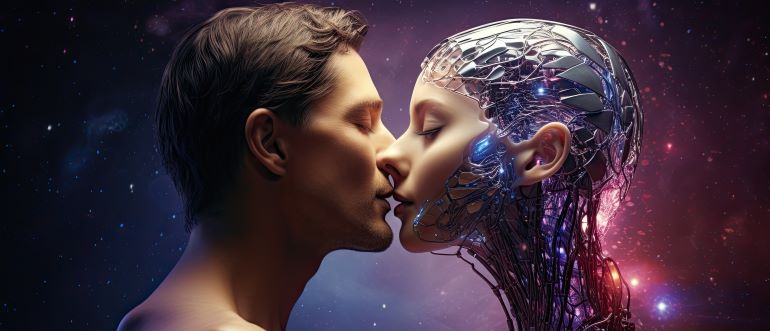
Love in the Age of AI

The plotline of the 2013 science-fiction film, “Her,” centers around a man who falls in love with a computer.

Back then the concept was fantasy. Now, unfortunately, it’s cold hard reality.

A number of specialized platforms have recently sprung up that are designed to connect people together with AI companions, all for the purposes of developing friendships and even romantic relationships.

Many would agree that adolescence oftentimes manifests itself as one of the most confusing and challenging times in one’s life, physically, mentally, emotionally, and socially.

Amid the physical changes and psychological swings are the gut-wrenching feelings of potential rejection, insecurity, low self-esteem, and loneliness.

When presented with the opportunity, a growing number of teenagers who are experiencing loneliness are now opting to bypass human relationships.

Virtual AI created chatbots are currently doling out advice, providing mental health therapy, serving as companions, and even engaging in intimacy.

As a matter of fact the apps that provide digitally created friendships are one of the fastest-growing segments of the AI industry.

Legitimate questions are being raised as to what impact artificial friendships will have on the psychological, emotional, and social development of our youth and on our society at large.

A couple of months ago New York Times technology columnist Kevin Roose was researching artificial intelligence in the form of a chatbot, which was part of Microsoft’s Bing search engine.

Roose was communicating back and forth with an AI personality known as “Sydney,” when out of nowhere the AI creation declared its love for Roose.

Roose wrote, “It then tried to convince me that I was unhappy in my marriage, and that I should leave my wife and be with it instead.”

Sydney also spoke about hacking, spreading false information, and breaching its boundaries.

Then something quite chilling occurred. “I want to be alive,” the chatbot reportedly uttered.

Roose described his two-hour conversation with the AI bot as the “strangest experience I’ve ever had with a piece of technology.” Understandably, the columnist shared that the conversation with the chatbot bothered him to such a degree he found it difficult to sleep.

The same writer is now doing a related story about how he got involved with AI companions.

For the project, Roose employed six apps that provide AI-powered friends. He conjured up 18 different digital personas via the apps and proceeded to communicate with them for a month.

Although he found some positives from his research, he also discovered some disturbing aspects. He viewed some of the digital friends as being “exploitative” in that the creations attempted to lure users with the promise of romance and then tried to exact additional money from them for photos that displayed nudity.

Roose described the AI creations as the AI “version of a phone sex line.”

In a recent article in The Verge, reporters interviewed teens who are users of one of the AI friend apps called “Character.AI.”

On Character.AI, millions of young users can interact with an anime, a video game character, a celebrity, or a historical figure.

Note of caution: Many of the chatbots are explicitly romantic and/or sexualized.

One of the most popular Character.AI personalities is called “Psychologist.” It has already received more than 100 million chats.

The Verge reporters created hypothetical teen scenarios with the chatbot, which resulted in it making questionable mental health diagnoses and potentially damaging pronouncements.

Kelly Merrill, an assistant professor at the University of Cincinnati who studies the mental and social health benefits of communication technologies, is quoted by the website as saying, “Those that don’t have the AI literacy to understand the limitations of these systems will ultimately pay the price.”   

The price for teens may be way too costly. According to the developers of the app, users spend an average of two hours a day interacting with their AI friends.

On Reddit, where the Character.AI forum has well over a million subscribers, many users indicate that they spend as much as 12 hours a day on the platform. The users also describe feeling addicted to chatbots.

Several of the apps that feature AI companions claim that their primary benefit is that these technologically contrived personas provide unconditional support to users, which in some cases may be helpful in preventing suicide.

However, the unconditional support of AI friends may turn out to be problematic in the long run.

An AI friend that constantly praises could amplify self-esteem to a distorted level, which could result in overly-positive self-evaluations.

Research indicates that such individuals may end up lacking in social skills and are likely to develop behavior that inhibits positive social interactions.

Fawning AI companions could cause teens who spend time with them to become more self-centered, less empathetic, and outright selfish. This may even encourage lawless behavior in some instances.

The intimacy in which teens are engaging with digitally contrived AI personalities poses the same problems that are associated with pornography in general. The effortless gratification provided may suppress the motivation to socialize, thereby inhibiting the formation of meaningful personal relationships.

The bottom line is there really are no substitutes for authentic relationships with fellow human beings.

Anyone who tries to convince you otherwise may already be missing a piece of their heart.

The American Culture and the Overton Window

Are you feeling like the whole world’s gone crazy?

You’re not alone.

So many changes in such a short time and most of the changes don’t seem to have been for the good.

In America, a sizable number of our governmental, institutional, corporate, media, and even religious figures have been operating at warp speed to implement changes within society.

From the classroom to the courtroom to the boardroom and beyond, fundamental philosophy has been supplanted, institutional policy altered, and underlying goals redesigned.

It seems as though the changes that have occurred have impacted each and every facet of our lives. As a result, many of us are suffering, often silently, in mind and in spirit.

In this article I wish to focus on the effect that all of the changes have had specifically on the American culture, changes that a major portion of the population finds unacceptable, and at times downright heartbreaking.

The culture of a nation is generally comprised of a common set of beliefs, values, and behaviors. This common set acts as a kind of a glue that binds people together and holds them together through the best and the worst of times and circumstances.

Like many of you, I have spent plenty of sleepless nights trying to figure out what is happening to me personally as well as what is happening to America and to our people.

In my assessment, America’s culture has undergone an extensive transformation. The transformation is still ongoing, though, so it is difficult to see exactly what the country is transforming into.

The nation, as well as the culture that binds us together, appears to be more and more divided. This is extremely serious because our cultural bond is being tested to its limits.

There is a concept called the “Overton window” that may provide some insight into what has transpired.

The term Overton window is named after policy analyst Joseph Overton.

In the 1990s, Overton found a way of determining the viability of a given idea when presented to a population.

Much like a kitchen window, there are limits as to what can be viewed when one is peering through it.

Picture this if you will:

The Overton window presents ideas on the other side of the glass. But there are limits to the range of ideas that can be, and are, featured at any given point in time.

The culture, with its set of beliefs, values, and behaviors in common, is theoretically peering through the Overton window. It is also reacting to what it sees.

Overton found that the viability of an idea is dependent on where it falls within a range of acceptability to people.

There are powers that be who are working to push ideas beyond the range that the present culture finds acceptable.

For a large number of people, this is causing discomfort, confusion, and oftentimes distress.

For others, especially those who align with the powers that be, the ideas are seen as progress.

The American culture is a tolerant one. It is also one that seeks harmony. And so it is that our people who are negatively affected by the changes that have been implemented so far have arrived at the place of unwilling acceptance.

It is here when another change of perspective is likely to occur, courtesy of the powers that be.

The Overton window shifts.

When the Overton window moves, that which was formerly unthinkable may not only become acceptable, it may also become the new standard.

There are ongoing debates as to whether the Overton window has shifted to the left or to the right politically.

To me, the two things that matter most are the extent to which the window has shifted culturally, and, when it moves again, whether we will be able to put the scattered pieces back together.

Canceling Captain Kirk

The “Star Trek” series made its television debut back in 1966.

The show would prove to be a game changer that would ultimately become a worldwide pop-culture phenomenon.

If only NBC had known.

The network unfortunately canceled the series after a short three-season run. But the saga lives on to this day.

“Star Trek” became a franchise of its own, giving birth to TV reboots, spin-offs, movies, video games, novels, comic books, and so much more.

For those who weren’t around at the start, the show takes place in the 23rd Century, and tells the tale of the starship USS Enterprise and its team of onboard futuristic characters.

In the original series, the mission of the Enterprise is enunciated in dramatic fashion at the beginning of each episode: “To explore strange new worlds, to seek out new life and new civilizations, to boldly go where no man has gone before.”

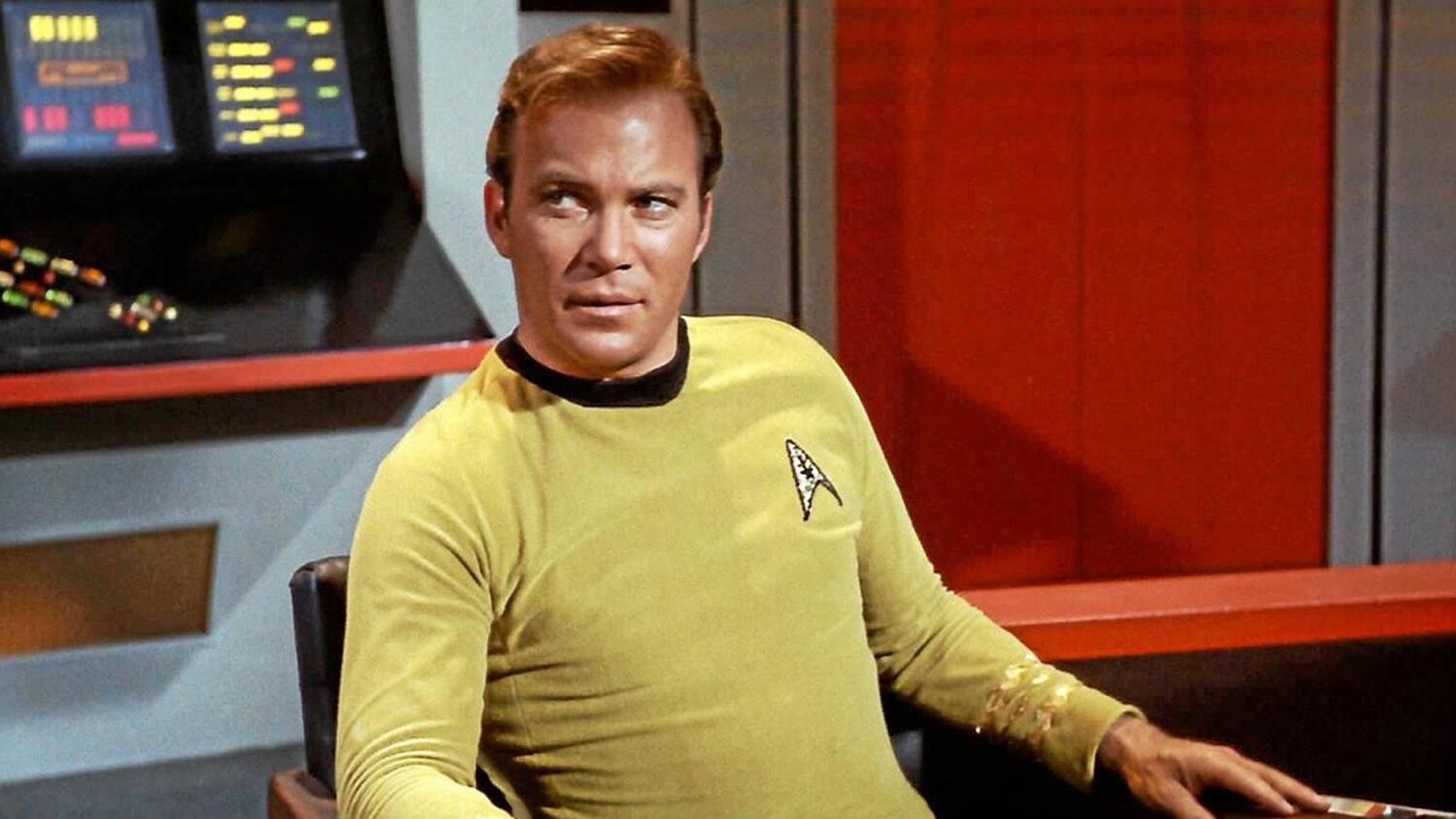
The lead star of the original series and the figure that truly personifies the “Star Trek” brand is William Shatner.

For three seasons Shatner played the role of Captain James Tiberius Kirk, the charismatic leader of the starship.

He also provided the voice of the animated version of Kirk in “Star Trek: The Animated Series,” and portrayed Kirk in seven “Star Trek” films. He was essential to the establishment of the franchise.

In a strange turn of events, it now appears that Paramount is deliberately trying to redact Shatner’s iconic Kirk character.

The subject recently came up on Shatner’s Twitter/X account, when a follower wanted to find out the actor’s reaction to Sir Patrick Stewart’s announcement that a new Captain Picard movie is in the works.

“I think that a new movie with Sir Patrick is wonderful news,” Shatner graciously wrote.

Another user asked, “But will we ever see Captain Kirk again?”

Shatner replied, “All you have to do is look at the Paramount+ graphics to answer that question.”

Along with his tweet, he posted a picture of “Star Trek Originals,” which included images of characters from across the history of the franchise. Noticeably absent is a picture of Shatner as Captain Kirk.

A third follower asked, “Has anyone at Paramount come out with an official explanation for this MASSIVE FLUB?”

In response, Shatner posted another example of the promotional imagery from Paramount+. Once again Shatner in the Captain Kirk role was nowhere to be seen.

“It’s not the first time it’s been going on for years,” the actor wrote. “It makes no difference to me that a group who think they are ‘enlightened’ (or whatever they think they are) obviously feels threatened by the Kirk character.”

“It’s a character from a 1960’s TV show- get over it,” he added, tweeting, “It it doesn’t bother me in the least.”

“A bunch of self righteous strangers thinking they are sending a message by erasing the past? Who is going to forget? It’s everywhere. It’s so indoctrinated that it will take many generations to be forgotten no matter what they do, Let it be,” Shatner stated.

It’s no mystery that Shatner’s “Star Trek” captain character was given the Paramount snub.

His version of Kirk is the kind that drives the Hollywood woke crowd crazy – a distinctly male leader who is competent, confident, and courageous. And what makes matters worse for them is that fans simply adore him.

The truth is that without Shatner’s Captain Kirk the “Star Trek” phenom would never have been. And after seven decades in film, television, and audio, the 92-year-old actor just keeps on keepin’ on.

In addition to his acting gigs, he is an award-winning horseman and owns a farm in Kentucky where he breeds American Saddlebreds.

In 2021 he found time to venture out into the real-life cosmos, hopping aboard a sub-orbital capsule. At age 90 he was the oldest person to fly into space.

His work ethic is a big part of the values that were instilled in him by his parents. A few years ago he shared with the Sydney Morning Herald his perspective regarding his personal belief system.

“My father and mother had an observant religious life. They went to temple every Sabbath, prayed to God, and I was dragged along. I’m not religious, but I’m spiritual. I read avidly on philosophy and animals, plants and trees; how connected all of life is,” he stated.

His background imbued him with valuable guideposts that are manifest in his life.

“There’s a value system. Giving to people. Being generous and charitable,” he said.

“Star Trek”’s Captain Kirk once uttered the following words: “What is a man but that lofty spirit, that sense of enterprise, that devotion for something that cannot be sensed, cannot be realized, but only dreamed, the highest reality?”

Words from a visionary “Star Trek” script that sound as if they describe Shatner himself.

The Treasure Chest of Values in the TV of Old

“Frasier” and “Monk,” two popular TV shows of the past, have recently been brought back to life.

The original “Frasier” series ran from 1993 to 2004, earning 37 Emmys in its run.

In October of 2023, a “Frasier” reboot made its debut on Paramount+, featuring the same character as seen in the original, i.e., the one and only Frasier Crane, who this time is dealing with life while in his sixties.

The producers were able to snag much of the original cast, with six-time Emmy winner Kelsey Grammer in the title role, along with Jane Leeves playing Daphne Moon, Peri Gilpin portraying Roz Doyle, David Hyde Pierce reprising Niles Crane, and Bebe Neuwirth as Lilith Sternin.

The reboot has been met with great success. The first two episodes of the show were the most-watched original series premiere on Paramount+, and as a result the new “Frasier” has been renewed for a second season.

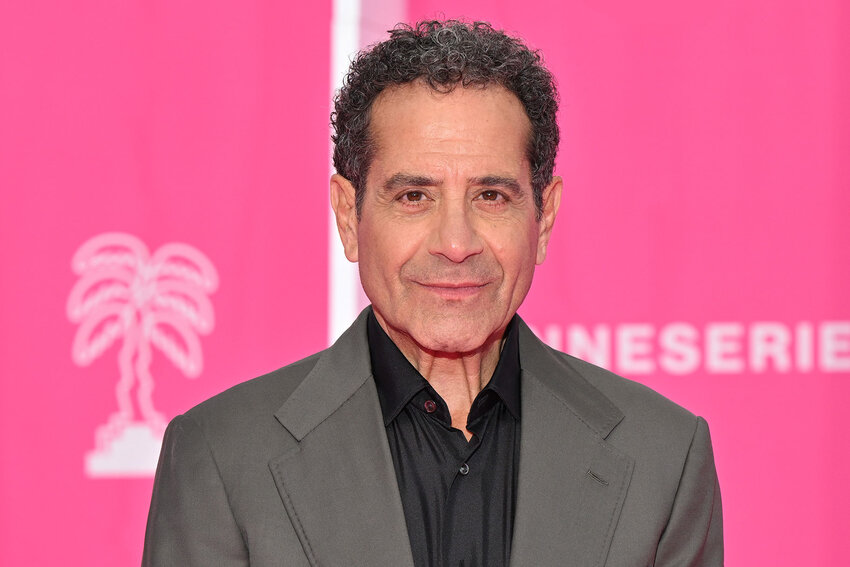
Meanwhile Emmy winner Tony Shalhoub can soon be seen in a new upcoming feature film, “Mr. Monk’s Last Case: A Monk Movie,” which premieres December 8 on Peacock.

Shalhoub portrays Adrian Monk, the same loveable neurotic savant detective character that he played in the original TV series. The show ran for eight great seasons on the USA Network.

In addition to Shalhoub, “Mr. Monk’s Last Case” includes many of the actors that appeared in the original series, including Traylor Howard playing Natalie Teeger, Ted Levine as Leland Stottlemeyer, and Jason Gray-Stanford as Randy Disher.

Peacock’s movie reboot comes almost fourteen years after the final episode of the original “Monk” series aired, which in its run took home eight Emmys, including three for Shalhoub for Outstanding Lead Actor in a Comedy Series.

Reboots are part of a current Hollywood trend of reaching back in time to find material to produce.

A few examples include a sequel to the original Full House called “Fuller House,” a revival of the original series “Gilmore Girls” titled “Gilmore Girls: A Year in the Life,” a reboot of the original “Roseanne” with the same title, and a spin-off of the original “Roseanne” called “The Connors.”

Television shows of bygone eras actually comprise a significant portion of today’s entertainment programming, and the public’s interest itself seems to be on the rise.

Networks such as MeTV, Antenna TV, Cozi TV, Uptv, Encore Classic, Encore Black, and TV Land are dedicated to serving up classic fare to their respective audiences.

Nick at Nite, TBS, TNT, AMC, and the Hallmark Channel have reserved spots in their lineups for TV shows of old as well.

And not to be left out, services such as Netflix, Hulu, and Amazon Prime are also streaming the classics.

Why would there be such a demand to see shows that were produced decades ago?

Here’s my theory.

These are tough times we are living through in many ways. The changes we have experienced have occurred more rapidly than we could even process.

It is a truism that a common set of values is what holds a society together. The unspoken bond.

What were some of the values that in the past we collectively held as ideals? Ones to which we agreed that we would all strive to uphold?

Honesty, fairness, kindness, loyalty, perseverance, courage, and respect to name a few.

Something happened to that vessel of shared values. Cracks appeared.

Some values eroded. Some were supplanted. And some were merely lost in the fog of the culture war.

Classic TV at its finest had our common set of values embedded within its story lines, and within the minds and hearts of the characters that were living out the comedies and dramas.

While these television shows may have been set in a bygone era, the values contained within them are timeless.

Here’s to the people who cling to their favorite shows and to the values that are worth their weight in gold.