Filmgoers Ignore Detractors and Flock to ‘Sound of Freedom’

Despite Hollywood executives trying to shelve it and mainstream media outlets trying to discredit it, the recently released film “Sound of Freedom” has upended the entertainment industry with resounding ticket sales, an enviable profit margin, and superb audience ratings.

The Washington Post, the Rolling Stone, the UK Guardian and other media organizations have denigrated the movie, falsely attempting to tie it to conspiracy theorists.

People are simply ignoring media naysayers, packing the theaters, and showering the film with standing ovations, resulting in more than $40 million in box-office revenue over a six-day period, according to industry estimates.

Due to its summer release, the movie had been facing plenty of competition, which was coming from big-budget studio blockbusters intended to please popcorn loving crowds.

“Sound of Freedom” definitely doesn’t conform to the template of a conventional summer release.

The plot of the movie is based on the true story of Tim Ballard, who founded a group to combat child sex trafficking.

Jim Caviezel, star of Mel Gibson’s 2004 cinematic masterpiece “The Passion of the Christ,” takes on the role of Ballard, a former government agent who stares down danger as he travels to godforsaken places on a quest to rescue enslaved children who have become victims of unspeakably horrifying crimes.

Summer studio releases typically have budgets that consist of hundreds of millions of dollars. However, with a tab of $14.5 million “Sound of Freedom”’s production costs were considerably less.

On the Fourth of July, “Sound of Freedom” easily passed up the franchise studio sequel “Indiana Jones and the Dial of Destiny.” The film had a release-day revenue of $14 million as compared to the $11.5 million that the “Indiana Jones” movie took in on its June 30 opening.

“Indiana Jones and the Dial of Destiny” had a budget of more than $250 million, while “Sound of Freedom” cost less than $15 million.

“Sound of Freedom” hit a very solid third place for the weekend with more than $18 million.

The public loves the film, giving it the highest CinemaScore rating possible, an A+. And movie fans who weighed-in on the Rotten Tomatoes website gave it a 100% rating.

In order to get more people to pay attention to the violations of human dignity with which the film deals, Dana White, President of the Ultimate Fighting Championship (the global mixed martial arts organization) posted a video on social media.

White spoke out on the importance of “Sound of Freedom” and the chilling nightmare of human trafficking. He was joined by legendary actor and director Gibson, who urged people to see the movie.

The White and Gibson video footage has gone viral, providing some powerful promotion for the movie.

During the video, White said, “There is a new movie out there called ‘Sound of Freedom’ and it’s about human trafficking. More importantly, about the trafficking of children. This is a disgusting, horrific issue that’s happening all around the world. And it’s not getting better, it’s getting worse.”

The UFC CEO is utilizing his own company in an effort to get the word out.

“What I’m gonna do is I’m gonna give any of my UFC employees that want to see this movie free tickets to go and see,” White said.

He even urged other business leaders to take his idea and run with it.

“I would like to encourage other executives to do the same at their company,” he said.

In the section of footage in which he appears, Gibson focused on the public becoming more knowledgeable on the issue.

“One of the most disturbing problems in the world today is human trafficking,” Gibson said.

“Particularly the trafficking of children. Now the first step in eradicating this crime is awareness. Go see ‘Sound of Freedom,’” he encouraged.

In a unique approach to ticket sales, at the end of the movie while the credits roll on, Caviezel appears onscreen to ask the audience to go to the Angel Studios website and participate in the “Pay It Forward” program.

This program allows people to purchase tickets for others so that those who cannot afford the cost will be able to obtain a ticket for free.

Those who suffer from the scourge of human trafficking are crying out to be rescued.

May “Sound of Freedom” succeed in its mission of informing people and prompting action.

And may all of us be responsive to those who wait in the shadows for someone to care.

AI’s Potentially Fatal Flaw

Plenty of discussions have been taking place about the dangers surrounding Artificial Intelligence (AI) and its existing application, the positives and negatives, and possible misuses and/or abuses.

However, a problem has popped up that seems to be causing a real stir.

It turns out that AI can actually lie.

Tech experts refer to inaccuracies and falsehoods produced by AI as “hallucinations.”

This term is typically used to describe incidents whereby AI provides solutions to problems; however, the solutions contain fictitious material that was not part of the original training data used during the programming process.

Tech experts don’t actually understand AI’s hallucination phenomenon.

When AI first became available in the form of so-called large language models (LLMs), aka, chatbots, AI hallucinations just surfaced on their own.

Early users of LLMs noticed that hallucinations seemed to “sociopathically” embed plausible sounding fabrications in the generated content.

A number of experts have used the words “very impressive-sounding answer that’s just dead wrong” to describe an AI hallucination.

An early example of the phenom happened in August of 2022.

Facebook’s owner Meta warned that its newly released LLM, BlenderBot 3, was prone to hallucinations, which Meta described as “confident statements that are not true.”

In November of 2022, Meta unveiled a demo of another LLM, Galactica, which also came with the following warning: “Outputs may be unreliable! Language Models are prone to hallucinate text.”

Within days Meta withdrew Galactica.

December of 2022 saw the release to the public of OpenAI’s LLM, ChatGPT, in its beta-version. This is the AI that is most widely used and one with which the public has the greatest familiarity.

Wharton Professor Ethan Mollick seemed to humanize ChatGPT, when he compared the LLM to an “omniscient, eager-to-please intern who sometimes lies to you.”

Lies were exactly what were generated when the Fast Company website attempted to use ChatGPT to author a news piece on Tesla. In writing the article, ChatGPT just went ahead and made up fake financial data.

When CNBC asked ChatGPT for the lyrics to a song called “The Ballad of Dwight Fry,” instead of supplying the actual lyrics the AI bot provided its own hallucinated ones.

A top Google executive recently stated that reducing AI hallucinations is a central task for Bard, Google’s competitor to ChatGPT.

Senior Vice President of Google Prabhakar Raghavan described an AI hallucination as occurring when the technology “expresses itself in such a way that a machine provides a convincing but completely made-up answer.”

The executive stressed that one of the fundamental tasks of Google’s AI project is to keep the hallucination phenom to a minimum.

In fact, when Google’s parent company Alphabet Inc. first introduced Bard, the software shared inaccurate information in a promotional video. The gaffe cost the company $100 billion in market value.

In a recent “60 Minutes” interview, Google CEO Sundar Pichai acknowledged that AI hallucinations remain a mystery.

“No one in the field has yet solved the hallucination problems,” Pichai said.

Admitting that the phenomenon is very widespread in the AI world, he stated, “All models do have this as an issue.”

When the subject of the potential spread of disinformation was brought up, Pichai said, “AI will challenge that in a deeper way. The scale of this problem will be much bigger.”

He noted that there are even additional problems with combinations of false text, images, and even “deep fake” videos, warning that “on a societal scale, you know, it can cause a lot of harm.”

Twitter and Tesla owner Elon Musk recently alluded to the potential harm that AI poses to the political process.

In an appearance on Tucker Carlson’s prior Fox show, Elon said, “If a technology is inadvertently or intentionally misrepresenting certain viewpoints, that presents a potential opportunity to mislead users about actual facts about events, positions of individuals, or their reputations more broadly speaking,” Elon explained to the host.

Elon then gave his perspective, taking into account the intellectual prowess of AI.

He asked, “…If AI’s smart enough, are they using the tool or is the tool using them?”

The answer is yes.

Walter Hill’s Stand against Wokeness

It has been noted recently by many of the greats within the comedy arts that wokeness has killed comedy.

But the truth is wokeness may actually be killing art itself.

Walter Hill is a famed director, screenwriter and producer.

He directed an amazing number of film projects over the years, including “48 hrs,” “Southern Comfort,” “Streets of Fire,” “Red Heat,” “Hard Times,” “The Warriors” and “The Driver.”

He also penned the screenplay for the crime drama “The Getaway” and produced a majority of the “Alien” film franchise.

Throughout his career, his baseline for storytelling has been the venerable western, the singular American genre that once upon a time was the envied export of the world.

He kick-started his Hollywood career as a production assistant. He was afforded the opportunity to work on iconic television shows that were set in the old American West; series such as “Gunsmoke,” “Bonanza” and “The Big Valley.”

To this day this classic American entertainment fare continues to be treasured by audiences around the globe.

Walter’s love for westerns has spanned the decades. It was on full display in works that include the 1980 movie “The Long Riders,” the 1995 film “Wild Bill,” the 2004 – 2006 television series “Deadwood” and the 2006 TV mini series “Broken Trail.”

The filmmaker once told a reporter, “Every film I’ve done has been a western.”

In a separate interview, he astutely pointed out that “the Western is ultimately a stripped down moral universe” and shared that he likes applying this principle to modern-day tales.

It is precisely this moral universe of which Walter speaks that is part and parcel of the western genre itself. It is also this moral universe that is in direct conflict with the dictates of contemporary woke ideology.

Traditional westerns have storylines that are in complete alignment with the moral constructs of integrity, justice, courage, individualism and loyalty, among others.

At the core of the filmmaking arts is contrast; i.e., clear distinctions between right and wrong, good and evil, hero and villain, etc. Not that there aren’t dimensions of character or plot or interrelationships. But good storytelling via film typically demands that the scriptwriter is able to freely create his or her work, untethered by external restrictions. This process results in characters to which viewers can intimately relate and storylines that can provide virtual life experiences that only one’s imagination could ever limit.

The present arts have hit a proverbial brick wall. This is because art cannot survive the current woke restrictions that Hollywood is imposing upon the entire entertainment industry.

Thankfully, the artist in Walter is unwilling to conform. Instead he is going against the grain, giving new life to his favorite genre.

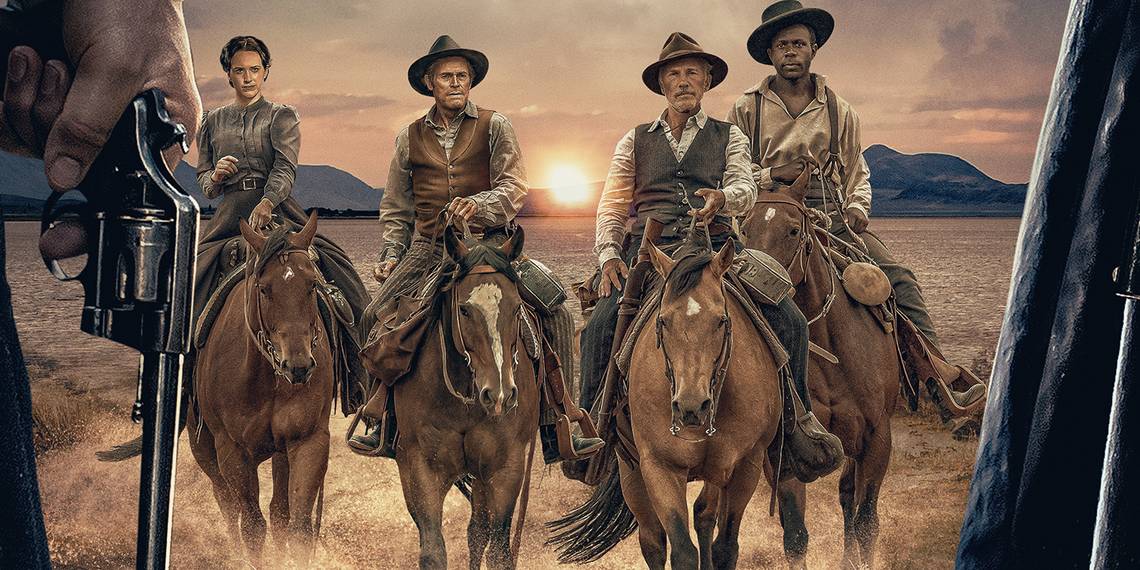
His latest western, which he has directed and co-written, is titled “Dead for a Dollar.” The movie stars Christoph Waltz, Rachel Brosnahan and Willem Dafoe.

Perhaps not surprisingly it hasn’t been easy for even a successful director like Walter to get a western made these days. He recalls in his notes for the film that “getting it financed was a miracle” and that it had to be shot on a “very low budget.”

Waltz portrays a Danish bounty hunter who travels into Mexico. While there he encounters an individual, who years earlier he had sent to prison. The man, played by Dafoe, is a gambler and an outlaw.

While making the press rounds to promote “Dead for a Dollar,” Walter revealed some of his thoughts on the current woke state of affairs. In an interview with Moviemaker Magazine, he said ominously that wokeness is “death to the arts.”

“You’re giving me a chance to say this: this woke environment, politically correct environment, is a terrible thing. And it hurts. It is death to the arts and it’s death to creativity. There’s no question that there were injustices in the past. Nobody is arguing that point. But how you redress it is how you treat the future,” Walter remarked.

Most folks in Hollywood are under pressure to mold their projects to the prevailing woke mentality.

But like a character in one of his beloved westerns, Walter remains steadfast.

He understands that the creative impulses essential to filmmakers and all contemporary artists are thoroughly stifled by woke constraints.

Shallow characters, forced plots, anachronistic themes and the like make for extremely bland product, which is the antithesis of art’s purpose and its very essence.

Jason Aldean’s Wife Brittany Battles the Cancel Culture

Jason Aldean is an A-list country music singer, songwriter and record producer.

Twenty-seven singles from his 10 albums reached the top of the country charts.

Born in Macon, Georgia, his parents separated when he was only three years old. Summers were spent with dad in Homestead, Florida, where the future star first learned how to play the guitar.

By age 15 he had landed a gig in the house band at a Georgia nightspot. Greater things would be in store both professionally and personally. He’s still riding the wave of success on both fronts.

His latest album “Macon, Georgia” features the single “Trouble With a Heartbreak.” Another single has him teamed up with multi-crossover super star Carrie Underwood in “If I Didn’t Love You.” And his latest song “That’s What Tequila Does” helped make it a triple play, with all three tunes hitting the country chart’s high mark.

Jason is happily married to Brittany. She’s a devoted mom to their four-year-old son and three-year-old daughter. She’s also the latest target of cancel culture’s woke warriors.

Brittany’s societal faux pas? She captioned an Instagram before-and-after makeup video with some comments about a chapter in her childhood.

“I’d really like to thank my parents for not changing my gender when I went through my tomboy phase. I love this girly life,” she wrote.

Jason posted his approval with the following reply, along with a laughing emoji: “Lmao!! I’m glad they didn’t too, cause you and I wouldn’t have worked out.”

Left-wing bots on social media sprung into action, which resulted in Brittany being verbally assaulted. And some virtue signaling country artists piled on as well.

Winner of “The Voice” Cassadee Pope launched a tweet attack.

“You’d think celebs with beauty brands would see the positives in including LGBTQ+ people in their messaging. But instead here we are, hearing someone compare their ‘tomboy phase’ to someone wanting to transition. Real nice,” Pope stated.

Brittany responded to Pope, clarifying her position using Instagram Story.

“Advocating for the genital mutilation of children under the disguise of love and calling it ‘gender-affirming care,’ is one of the worst evils,” she wrote. “I will always support my children and do what I can to protect their innocence. Love is protecting your child until they are mature enough as an adult to make their own life decisions.”

Singer Maren Morris slid into insult territory with her own Twitter slam.

“It’s so easy to, like, not be a scumbag human? Sell your clip-ins and zip it, Insurrection Barbie,” Morris remarked.

Brittany responded to Morris via an Instagram post that included a new collection of conservative merchandise adorned with the words “Don’t Tread On Our Kids.”

“Instead of getting twisted about the twisting of my words, I’ve chosen to bring some good out of it. Introducing our NEW Barbie inspired line LIVE **Through this launch we will be giving back to and supporting @operationlightshine in effort to help fight child exploitation and human trafficking,” Brittany posted.

In a recent statement quoted by US Magazine, Brittany further discussed the safeguarding of children from those pushing questionable medications and medical procedures.

“I think I’m advocating for children. I think that children should not be allowed to make these life-changing decisions at such a young age. They are not mature enough,” she cautioned.

Jason and Brittany have drawn the ire of the politically correct crowd in the past.

In a previous marketing of merchandise, right-of-center political views were on display through comedic slogans that included the famed “Hidin’ From Biden.”

When the backlash kicked in, Jason again took to his Instagram account in defense of his wife.

Included with a picture of the singer’s silhouette in front of a giant American flag were the words: “I will never apologize for my beliefs or my love for my family and country.”

“This is the greatest country in the world and I want to keep it that way,” he added.

After one Instagram user commented, “If you thought Trump’s path for America was any better, you’re delusional!,” Jason gave this sage reply: “…We will teach our kids what we think is right and what we think is best for their future.”

Flash forward to the present. Jason now has to deal with the cancel culture muck on a business level. He has been unceremoniously let go by the PR firm that has represented him for 17 years.

Public relations company The GreenRoom has a roster that includes country artists Dierks Bentley, Kip Moore, Thomas Rhett and Lady A.

The publicity firm’s co-owner Tyne Parrish released a spineless statement, seemingly trying to justify the company’s separation from Jason.

“We aren’t the best people for the gig anymore,” Parrish stated.

https://people.com/country/jason-aldean-publicity-firm-17-years-parts-ways-after-wife-brittany-transphobic-comments/

Looks like Nashville isn’t Nashville anymore.

Like so many other formerly balanced industries, institutions and ideologies, the country music capital has gone woke, and it feels as though the transformation happened overnight.

Many of our nation’s major corporations have flipped as well.

So where do we go to at least get our unique and legendary all-American country music back?

Kudos to Jason and Brittany for helping to lead the way.

Here’s hoping that other courageous country loving artists follow suit.

The Escalating Violence of ‘Stranger Things’

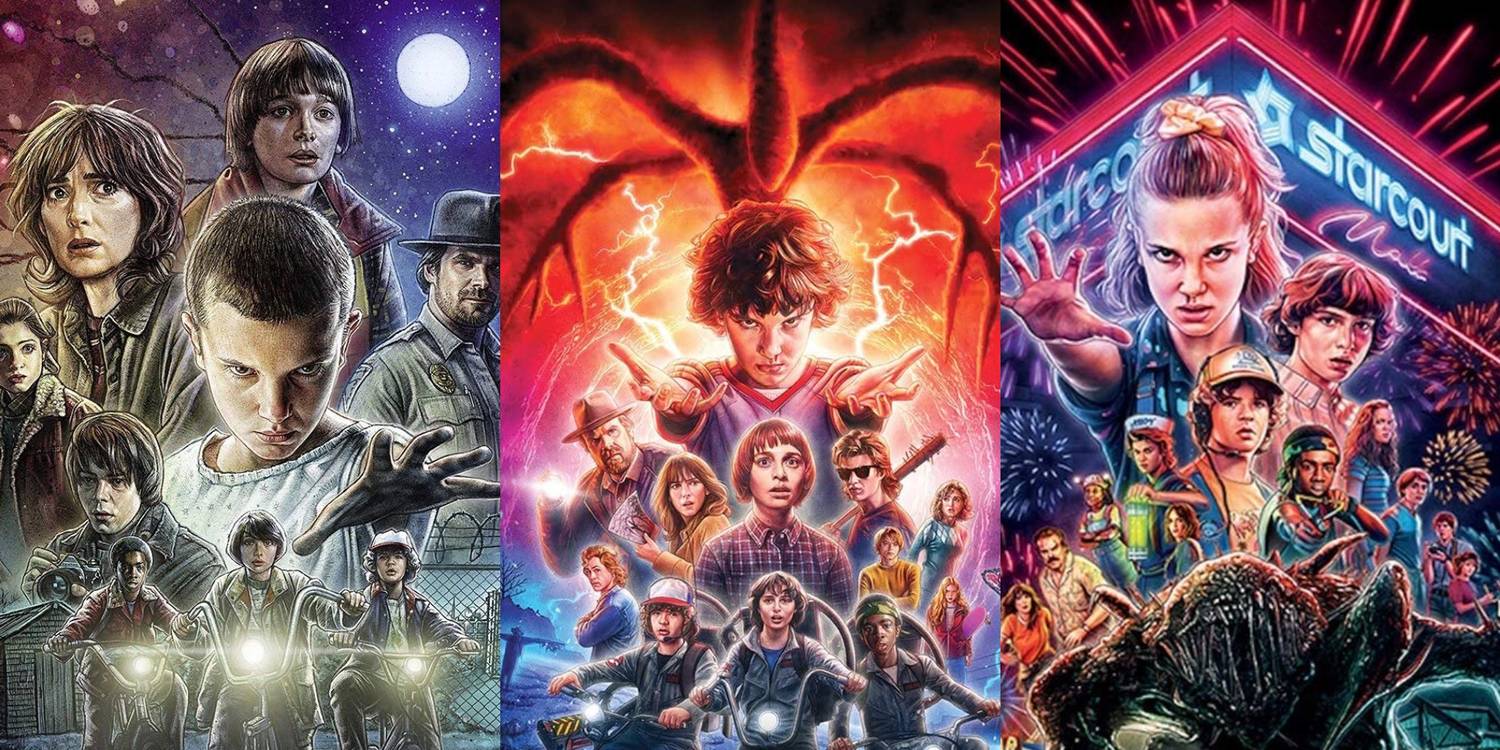
Netflix’s flagship series “Stranger Things” enjoys a huge audience and has been praised by critics for its writing, directing, acting, and more.

If you aren’t familiar with the streaming series, the story is set in the 1980s and features a group of parents, teens, and kids who are trying to figure out why supernatural events are plaguing a small mid-western town.

Despite the fact that “Stranger Things” is a show about children and is highly attractive to children, it has a rating of TV-14, which indicates that some of its content may not be suitable for kids under the age of fourteen.

In each successive season since its initial debut, the media phenom appears to have amplified the violence contained within.

Seasons 2 and 3 are decidedly more brutal and graphic than Season 1 of the series.

Unfortunately, Season 4 of “Stranger Things” has descended to a base level of darkness that has parents, grandparents, and guardians of the innocent casting the program out of homes, schools, etc., and questioning whether the show has the proper rating attached to it.

In addition to gruesome imagery and intensely aggressive behavior, Season 4 of the streaming series contains inappropriate sexual scenes and unnecessary profanity.

A reasonable explanation for the increasing coarseness of programming content is hard to come by.

Writers could have maintained the Steven Spielberg-influenced style and technique of the early episodes, which made Season 1 so appealing to viewers.

Instead the show altered its approach and is using enhanced computer graphics to peddle emotionally-laden themes, which feature graphic torture scenes, some involving child victims.

A number of Season 4’s scenes are so extreme that Netflix has had to include a disclaimer, which appears at the beginning of the first episode of the season.

The Parent Television and Media Council (PTC), a nonprofit advocate of responsible entertainment, used technology to quantify the increase in violence and profanity in the fourth season of the series, relative to prior seasons.

By using the content-filtering capabilities of VidAngel, which is a video streaming service that removes anti-family content in shows and movies, PTC found that Season 4 had a significant spike in material that was objectionable to parents.

The group’s study indicated that the frequency of violence in “Stranger Things” had increased threefold, when compared to previous seasons. The study also indicated that graphic violence in the show had increased seven times, when compared to prior seasons.

Additionally, the use of crass language had increased markedly. According to the PTC’s study, the frequency of profanity in the series had doubled since Season 1.

As an example of profanity creep, the series contained zero instances of the f-word, until, that is, its second season, when the word was used six times.

During Season 3, use of the word increased to five times. And in Season 4, it jumped to nine times.

Under the guidelines system used by Netflix, a single use of the word would normally trigger a TV-MA content rating.

A statement issued by the PTC indicated that the profane words in “Stranger Things” were “once unthinkable for dialogue on programs rated as appropriate for 13- and 14-year-old children; but on Netflix they have become ubiquitous.”

The group came to the conclusion that the rating for the program needs to be changed, stating, “For a program with such multi-generational appeal, we were shocked to see the rapid rise of explicit adult content that includes profanity and graphic violence without Netflix increasing the TV-14 age rating to TV-MA.”

The sheer amount of unsuitable material in forms of violence, profanity, and sexual imagery prompted PTC President Tim Winter to send a letter to Netflix CEO Ted Sarandos, requesting the aforementioned change in the rating.

“While Netflix has never been afraid to use a TV-MA rating, we suspect it wants to attract a broad audience for ‘Stranger Things’ and has rated it TV-14 for that reason,” Winter said. “However, ‘Stranger Things’ later seasons are clearly being rated inappropriately considering the amount of explicit content.”

The PTA indicates in its letter that the mislabeling makes it hard for parents to do their jobs.

“It is imperative that the TV rating system is accurate in order to be useful to parents,” Winter said.

In addition to the previously stated objectionable material, Season 4 of the series ridicules religion and denigrates adult authority.

Unfortunately, the series has continued the idea that adult authority is dispensable and that children have greater wisdom than adults. Young characters in the series routinely deceive, falsify, undermine, and/or steal from adult characters in order to achieve their goals.

Where there’s awareness there’s hope. So as word about this issue gets out, the public just may get a ratings system that is once again accurate and reliable.

After all, stranger things have happened.

How Godlessness Leads to Tyranny

So many people are feeling it in the core of their beings.

The country has been unmoored from its anchor, an intangible one that for generations provided the stability needed to form communities in which people were able to reside together and care for one another.

We’ve known for a while that we had been drifting toward a destination that was strange and unfamiliar.

Now that we have seemingly arrived, we find ourselves at a place that is deeply disturbing and at times even intolerable.

An analysis may be helpful in understanding how the fix we find ourselves in came to be. It is also useful in a self-comforting kind of way, societally speaking. And it may prove especially helpful in figuring out ways in which we can get ourselves back on course.

Every society has an underlying ideology upon which beliefs, attitudes, norms, customs, institutions, etc., are structured.

Years ago a destructive type of worldview took root. As things would have it, this harmful ideology burgeoned over time and ended up displacing important foundational building blocks of our society, including those of civility, integrity, respect, and the like.

A new Gallup poll provides a key to understanding what happened.

Gallup’s recent Values and Beliefs Poll found that Americans’ belief in God has dropped to the lowest level since the polling organization first began to gather research data on the topic about 88 years ago.

From the 1940s to the 1960s, a consistent 98 percent of Americans indicated that they maintained a belief in God. The rate of believers has since taken a steady downturn, hitting an all-time low of 81 percent in 2022.

Gallup’s data indicate that in recent years belief in God has declined most significantly among young adults and those who are of a politically liberal persuasion.

Removing God from public life has been a goal of secularists, who for a long time now have been hard at work restricting religious expression in all major American institutions.

Prayers, holiday celebrations, music, etc., which since the nation’s founding were culturally unifying aspects of American life, have been supplanted or, in some cases, completely removed.

In his Farewell Address, the country’s first president emphasized the importance of religious values as he assessed the future of a then-budding nation.

“Of all the dispositions and habits, which lead to political prosperity, Religion and Morality are indispensable supports,” President George Washington said.

His words were very precise. If an indispensable support is absent, an entire structure is destined for collapse.

Most people are aware that, despite the capacity for goodness contained within each and every individual, there is a dark component of human nature that lurks below the surface.

The Judeo-Christian explanation of this concept, and for the existence of evil itself, is the notion that humankind initially had a virtuous nature but early on took a precipitous fall from grace.

Judeo-Christian values in large part serve to restrain the human tendency to indulge in the most negative inclinations, which are manifested societally from street gangs to government corruption.

Without constraints on evil, society will become spiritually ill. Such sickness results in a culture that literally hits bottom, with the attendant failure to protect the most vulnerable and an apathetic attitude toward injuries suffered.

If God does not exist, then what is determined to be good or evil becomes merely a subjective human construct.

If no guidelines are in existence when decisions are being made regarding which ethical options would be preferable, then in conflicting situations the self-interests of decision makers will inevitably rule the day.

If good and evil are only human concepts, then morally upright actions will take a back seat to expeditious ones.

To cut to the chase, if God doesn’t exist, then neither do objective moral values.

In his book, “The God Delusion,” atheist-author Richard Dawkins wrote the following: “It is pretty hard to defend absolutist morals on grounds other than religious ones.”

Any system of government that lacks moral underpinnings is a system where freedom cannot flourish or even be mildly sustained.

As promised, God stands in the way of would-be tyranny, if those who keep the faith take to their knees.

Tom Cruise Returns to His Roots in ‘Top Gun: Maverick’

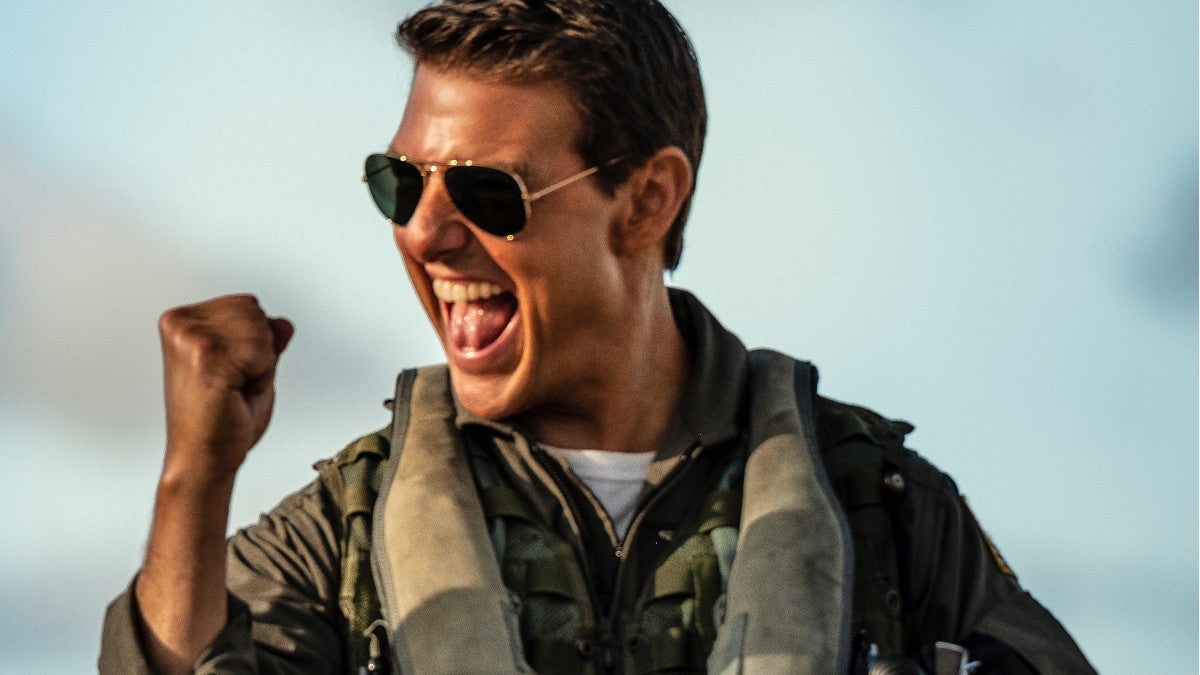
Tom Cruise is one of the biggest box-office stars of all times. And in a career that has spanned the decades he is once again wearing the crown.

Film-goers may remember Cruise for his initial breakout vehicle, the 1983 classic “Risky Business.”

Other hits would soon follow for the actor-producer; notably, the “Mission: Impossible” franchise series, which kicked off in 1996 and played out over six installments.

This is where Cruise really established his credentials as an action star. He reportedly performed many of his own stunts, a rare feat in a business that in many cases computer-generated action scenes have supplanted authentic ones.

He is presently sitting atop the box office, courtesy of his latest blockbuster “Top Gun: Maverick.” The movie is the long-awaited sequel to his 1986 hit film “Top Gun.” Its Memorial Day weekend box-office tally rang in at over $150 million, making it the biggest debut of his career.

It’s been a long road for the movie’s 2022 release. Paramount Pictures first announced the idea in 2010 and secured from the original film the indispensable services of Cruise and Val Kilmer to reprise their roles.

Tony Scott, the first “Top Gun” director, was tapped to direct the sequel. Sadly, Scott passed away and pre-production was consequently halted. Years later Joseph Kosinski was brought in to handle the direction, and work on the project resumed. In a moving tribute, “Top Gun: Maverick” is dedicated to Scott’s memory.

Release of the sequel to “Top Gun” had been scheduled for July of 2019, but it was delayed until 2020 to allow additional time for some of the more complex action sequences to be filmed.

Paramount rescheduled the release to June 2020. But due to the onset of the pandemic, a new date of December was set. Then it was bumped to July 2021, and then to November as the studio and film industry attempted to cope with the unexpected prolonging of pandemic-related restrictions.

Writers painstakingly developed the characters with deference to the stars’ younger “Top Gun” selves.

In the case of Cruise’s character, Maverick’s romantic interest is portrayed by Jennifer Connelly. Her character’s name, Penny Benjamin, was brought up in dialogue in the original movie by Maverick’s Radar Intercept Officer and best friend Nick “Goose” Bradshaw. The dialogue revealed Penny to be the “admiral’s daughter,” a family relationship that was inserted into the new sequel’s plot.

Maverick has a new assignment in the sequel, i.e., to train a group of young pilots for the Navy’s Strike Fighter Tactics Instructor program, aka “Top Gun.” The crew of young aviators includes the son of Maverick’s now-deceased best friend, Goose.

In part because the new movie is a sequel to a film released over three decades ago, it includes themes that a whole lot of people have been hungering for. It is unapologetically pro-America, pro-military, and pro-manhood.

Social media posts tell the story of spontaneous hoots and hollers from gleeful movie attendees being emitted at cineplexes around the globe.

In Taiwan specifically, according to the Central News Agency of Taiwan, audiences who were present at the premiere of the film broke into applause and cheered at the sight of their national flag being displayed onscreen in the movie.

The Taiwanese and Japanese flags had reportedly been removed from a 2019 trailer because of China’s political demands.

“It is unprecedented,” Ho Siu Bun, a film critic in Hong Kong, told VICE.com. “Major film studios have never been shy about pandering to the Chinese market. And even if it is a simple scene, editing is very costly. So no one knows why they changed it back.”

China’s Tencent Pictures had been designated as an investor and marketing partner of the film. However, the Chinese company backed out of the business arrangement.

The Wall Street Journal reported that Tencent pulled out due to concerns that Chinese leaders might be miffed over the pro-military content of the film. It is presumed that Chinese officials would not pleased with the scene restoration of the Taiwanese and Japanese flags. So far “Top Gun: Maverick” has not been given a release date in China.

Cruise’s film, and the success it has experienced so far, brings up an important cultural issue that has seemingly received very little attention, but is deserving of public discourse.

Once upon a time Americans had a common bond in the television that they watched and the movies that they viewed. Hasn’t been that way for a while now.

But there really are palpable things that serve to bind any society together as a culture. One of these things is having a common body of literature, or in modern-day terms, a common body of entertainment fare. Something that everyone is tuned into at a given time.

These media components have the capacity to serve as a kind of glue that secures people together in a life experience. It also can translate into a unifying cultural dynamic.

One other film-related note deserves commentary.

“Top Gun: Maverick” is one of the first slices of entertainment media in quite a while that is not just entertaining. It is a nod to visceral manhood, which over time has been relegated to the cutting room floor.