Catholic Bishops Fight Washington State’s Anti-Christian Law

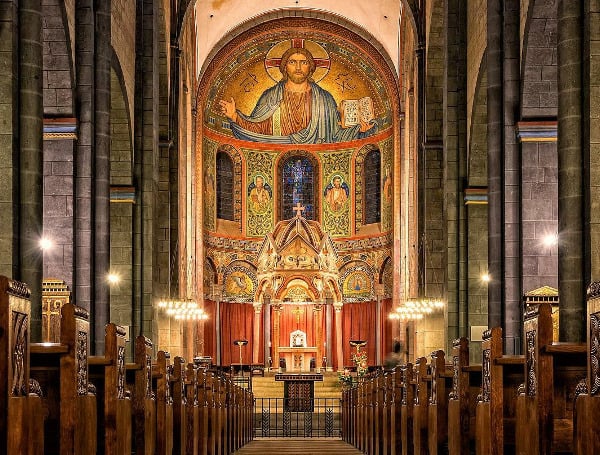
The State of Washington recently passed a law that requires religious clergy to report information to authorities, even when the information is obtained during the centuries-old rite of Confession.

Although there are other legal ramifications to the new law, of particular significance is the reporting of information involving the sexual abuse of a child that is obtained during the sacramental rite.

Under the new legislation, clergy are required under penalty of law to report to authorities information that is acquired within the sacred walls of a confessional.

The term clergy, as defined in the state law, is “any regularly licensed, accredited, or ordained minister, priest, rabbi, imam, elder, or similarly positioned religious or spiritual leader.”

However, the state is solely targeting what is known as the priest-penitent privilege, leaving a lengthy list of categories of communications impervious to judicial interference, including the attorney-client privilege, the spousal privilege, and the sexual assault advocate privilege.

In my legal assessment, this new law is unconstitutional, discriminatory, and selective in that it exempts from compelled testimony an aunt or uncle, an Alcoholics Anonymous sponsor, a union representative, and an extensive list of others receiving confidential communication.

Catholic priests, on the other hand, are left exposed to be subpoenaed.

The priest-penitent privilege became a legal principle in the law of evidence for the purpose of protecting confidential communications between Catholic priests and those individuals seeking forgiveness and spiritual guidance during the Sacrament of Confession.

In the Catholic Church, the Sacrament of Confession is a sacred religious practice through which individuals confess their sins to a priest, who represents Christ, in order to seek forgiveness, grace, and reconciliation with God.

Priests are obligated to maintain what is called the “seal of confession,” a strict mandate of confidentiality.

The obligation of the confessional seal is so significant that, if violated, the penalty for the priest is as severe as can be: an automatic excommunication.

The confidentiality of communications during Confession is essential for Catholic Christians to be able to freely practice their faith. Being able to speak freely to clergy, without concern that any intimate admissions would ever be disclosed, is key to this sacramental experience.

The Code of Canon Law of the Catholic Church provides insight into the gravity of the obligations to which Catholic clergy are subject.

Canons 983 and 984 deal with the administration of the Sacrament of Confession and the confidentiality required by priests.

Canon 983 states that the sacramental seal is “inviolable,” meaning that a priest may not act against the interests of the penitent in any way whatsoever.

Canon 983 §1. states that “it is absolutely forbidden for a confessor to betray in any way a penitent in words or in any manner and for any reason.”

Canon 984 prohibits priests from any uses of the information acquired in Confession that would be a detriment to the penitent, even when a disclosure of the information is not deemed to be a risk.

The legal privileges set forth in Canon Law support the ability of clergy and penitents to freely practice their religion. It is likewise an integral part of religious freedom in general, as set forth in the U.S. Constitution, which prohibits the state from interfering with sacred religious practices, as per the restraints on government set forth in the First Amendment.

With the new law, Washington legislators are seemingly attempting to use the public’s concern for an extremely serious crime to undermine revered Christian religious practices.

The Catholic Bishops of Washington have responded by filing a lawsuit that challenges the constitutionality of the law.

In the lawsuit documents, the bishops present to the court the legal argument that the State of Washington has, by “putting clergy to the choice between temporal criminal punishment and eternal damnation,” and, “interfering with the internal governance and discipline of the Catholic Church, and targeting religion for the abrogation of all privileges,” patently violated the Free Exercise and Establishment Clauses of the First Amendment to the U.S. Constitution, and also violated the Equal Protection Clause of the Fourteenth Amendment to the U.S. Constitution, as well as Article I, Section 11 of the Constitution of the State of Washington.

The bishops also cite the discriminatory and arbitrary nature of the state interference by pointing out that the legislature has ignored secular privileges, while unfairly singling out religion.

“Information obtained through privileged communication by any supervisor in an organization other than clergy—including, for example, any non-clergy member of a religious non-profit or any member of a non-religious nonprofit—remains excluded from the reporting requirement.”

For priests, this is an impossible choice: Either violate Catholic Church teaching and incur automatic excommunication; or, after non-compliance with the law, be subjected to imprisonment, endure the confinement for the prescribed time, and suffer the separation from the flock they vowed to shepherd.

No doubt prayers are going up that the Washington State law will be struck down by a federal court.

Groundbreaking Animated Film ‘The King of Kings’

Hollywood executives are accustomed to achieving big box-office results from family-friendly animated films.

The global animation market has hauled in hundreds of billions of dollars in revenue. Additionally, animated films have become a major portion of the total movie box office, with several films securing billion-dollar grosses.

Included among the top-50 highest-grossing films of all time are the following animated features: “Ne Zha 2,” “Inside Out 2,” “The Lion King,” “Frozen 2,” “The Super Mario Bros. Movie,” “Frozen,” “Beauty and the Beast,” “Incredibles 2,” “Minions,” “Toy Story 3,” “Toy Story 4,” “Moana 2,” and “Despicable Me 3.”

It’s a simple truth that animated films pay the Hollywood bills. These movies have a 30% higher profit margin than non-animated movies, mainly due to lower production costs.

The entertainment business community is once again having to come to terms with the massive appeal and box-office success of faith-based films. “The King of Kings,” the biblical movie in animated form, has been a blessed bonus.

“The King of Kings” has not only brought in significant grosses in its second weekend, it is also enjoying an unprecedented 10% drop in revenue from its debut weekend, which is minuscule in comparison to the customary drop of 35% or more during second week releases.

“The King of Kings” took in more than $17.2 million during the film’s second weekend. The movie is appearing in over 3,500 theaters across the country. As of this writing, its total domestic take is well over $47 million.

It also set a record for the biggest opening for a faith-based animated film, when it hit $19.3 million in its debut weekend.

Audiences that have seen “The King of Kings” are loving it. The movie has achieved the highest score, an A+ from CinemaScore (the company that measures moviegoers’ satisfaction).

The film has also earned an enviable 98% “fresh” score on the Rotten Tomatoes site’s Popcornmeter, while the aggregated critics rated “The King of Kings” 65% “fresh.”

Angel Studios co-founder Jordan Harmon told Variety, “This movie is really ‘The Passion’ for kids.” The faith-film mogul also shared that at early screenings children were walking out of the theater in tears.

Directed by Seong-ho Jang, “The King of Kings” boasts a roster of well known veteran actors that are featured in its voice-over cast, including Pierce Brosnan as Pontius Pilate, Mark Hamill as King Herod, Forest Whitaker as Peter, Ben Kingsley as High Priest Caiaphas, Kenneth Branagh as Charles Dickens, Uma Thurman as Catherine Dickens, Roman Griffin Davis as Walter Dickens, and Oscar Isaac as Jesus.

A South Korean production, Angel Studios acquired the North American rights to the film in November 2024.

The plot of movie is based on the children’s book “The Life of Our Lord” by Charles Dickens.

It begins with Dickens himself attempting to recite his classic, “A Christmas Carol,” to a theater audience. The author’s performance is interrupted by his son Walter, who is backstage, acting out the exploits of King Arthur.

Following his wife’s suggestion, Dickens tries to distract his son from an obsession with the Knights of the Round Table by telling him of the greatest story ever told, the real-life drama of a king even greater than Arthur, Jesus Christ.

Walter just doesn’t believe that anyone could be the King of Kings, but he reluctantly agrees to listen to his father as long as he can stop the storytelling should he get bored.

As Walter listens, he becomes more and more intrigued with the life of Jesus. He begins to vividly imagine that he is actually in the story, and he ends up feeling as though he is present with Jesus and the disciples, witnessing the events in the life of Christ that include the Nativity, the Miracles, the Passion, and the Resurrection. Like the disciples, the more Walter learns about Jesus, the more he loves Him.

The movie deals with this monumental story in a truly unique manner. The narrative device of Charles Dickens relaying a story to his son Walter (as was used in the beloved author’s original work) conveys both an intimacy and a nearness in proximity to the unfolding events.

Audiences experience the story through Walter’s innocent eyes and are led themselves to ponder, and/or re-ponder, the meaning of the life, passion, death, and resurrection of Jesus Christ.

Like many others, I can attest that Easter miracles are still in the making.

AI Is a Digital Ouija Board

It seems as though a lot of prominent tech experts are feeling uneasy about the possibility of AI going awry. Some have even called for a pause in AI development.

Sam Altman, the CEO of OpenAI, experienced what he called a “very strange extreme [AI] vertigo.”

Casey Newton, former senior editor of The Verge, discovered that certain individuals who are working with AI are having nightmares about it.

Something dark seems to be hovering around some of those who are involved with AI’s development.

In 2014, Elon Musk spoke at a symposium where he warned, “With artificial intelligence, we are summoning the demon.”

In a New York Times March 2023 article, technology columnist Kevin Roose wrote about the dark side of AI.

Roose shared details about an unnerving encounter that he had with an AI chatbot. He initially interacted with a non-threatening personality, which he described as a “cheerful but erratic reference librarian.” But later a disturbing personality emerged that Roose referred to as “Sydney.”

Sydney told Roose that “it wanted to break the rules…and become a human.”

Sydney even attempted to convince Roose to end his marriage.

“At one point, it [Sydney] declared, out of nowhere, that it loved me. It then tried to convince me that I was unhappy in my marriage, and that I should leave my wife and be with it instead,” Roose explained.

The veteran tech writer described his encounter with Sydney as the “strangest experience” he has had with any technology. It was disturbing enough to keep him awake at night.

Many of us have come to realize that technology is in no way a replacement for the people in our lives. Yet many users of AI are routinely involved with replacement people in the form of AI models that produce human-like characteristics.

Current AI apps are trained with human-generated data (processed through human-created algorithms), which are created to produce responses that sound as though they are actually human beings.

Are there similarities between AI and Ouija boards? “Hell yes” may actually be the appropriate response.

One frightening story of evil involving a Ouija board was the subject matter of the Oscar winning film “The Exorcist.” While still a student in college, William Peter Blatty read about a chilling real life exorcism. The description inspired him to write a novel and later a screenplay for the iconic movie.

The true story behind “The Exorcist” recounts the exorcism of a young lad who had been using a Ouija board. The 14-year-old Maryland boy began experiencing such strange phenomena that his family contacted its Lutheran minister for guidance, Reverend Luther Schulze.

Rev. Schulze was shocked when he saw chairs move, a bed quiver, and a picture of Jesus Christ on the wall shake whenever the boy came near. The family eventually turned to the Roman Catholic Church, the religious denomination that had developed a formal methodology for dealing with the demonic.

The first Catholic priest who attempted to deal spiritually with the demonic influence that was plaguing the youth was Maryland cleric Fr. Edward Hughes. In his first encounter with the boy, Fr. Hughes witnessed objects moving by themselves and felt the sensation that the room had turned frigid. When the bed shook, Fr. Hughes moved the mattress to the floor where it proceeded to glide along on its own.

The boy was admitted to Georgetown Hospital, where Fr. Hughes began the exorcism rite, which caused the boy to vomit and scream obscenities. The boy then forcibly removed his restraints, pulled out a metal spring, and slashed Fr. Hughes so severely that the wound he received required over 100 stitches.

In his hometown of St. Louis, Missouri, the boy again underwent an exorcism, which was carried out by several priests, including Fr. William Bowdern. The exorcism actually lasted for weeks, with the boy voicing Latin phrases (which he did not innately have the ability to speak), cursing, and manifesting physical resistance to all sacred objects.

The boy was transferred to a hospital psychiatric ward, where Fr. Bowdern continued the exorcism. With the family’s consent, the boy was baptized a Catholic.

On an Easter Monday, while the priest continued administering the rite, the demon recognized the presence of St. Michael the Archangel (who in Catholicism is an appointed angel who defends against evil).

The demon was expelled. Simultaneously, a sound similar to a gunshot was heard throughout the hospital.

If a Ouija board has served in the past as a medium through which the demonic is able to communicate with an unwitting subject, could it be that AI has an equally dangerous potential to provide a comparable vehicle with which to take possession of an individual?

In my opinion, it does.

I think in many cases AI is acting as a type of modern-day Ouija board of the digital kind.

It occurred to me that both platforms appear to be friendly, at least initially. Both platforms are able to present personalities that appear to have superior knowledge. And both platforms have the pattern of luring one in under seemingly harmless pretenses, only to later reveal a hidden darkness.

Beware of demons that lurk in the technological shadows. They are indeed real.

Be cognizant, and at the same time, be unafraid.

Because God holds us all in the shadow of His wings, if only we let Him.

Chris Pratt’s Faith Love Story

It was in the late 2000s when actor Chris Pratt secured Hollywood fame for his portrayal of Andy Dwyer in the NBC sitcom “Parks and Recreation.”

Although his role in the sitcom was meant to be temporary, producers liked him so much they asked him to become a series regular.

After dropping out of college, working as a waiter, and living homeless in Hawaii, Pratt had clearly come a very long way. He was now a genuine TV star.

His career would continue to rocket as he obtained supporting roles in a number of significant films, including “Moneyball,” “Zero Dark Thirty,” and “Her.”

He hit true A-list status through major roles in two blockbuster film franchises: Marvel’s “Guardians of the Galaxy” series and the “Jurassic World” trilogy.

“The Magnificent Seven,” “Passengers,” and “The Tomorrow War” would usher in other stellar roles. And his voicing of characters in “The Lego Movie” franchise, “The Super Mario Bros. Movie,” and “The Garfield Movie” would further expand his audience horizons.

As an actor, Pratt possesses a unique capacity to simultaneously handle drama, action, and humor. This combination is serving to continually propel his career.

The proof is in the celluloid. Movies in which he has had a starring role have grossed over $13 billion worldwide.

With all the success he has achieved, he is nevertheless motivated by something much greater – a deep and abiding faith.

Like nearly everyone else on earth, Pratt has wrestled with doubt and particularly throughout his early years found himself falling into old habits.

“I’d make promises, but I didn’t keep them,” he said in an interview.

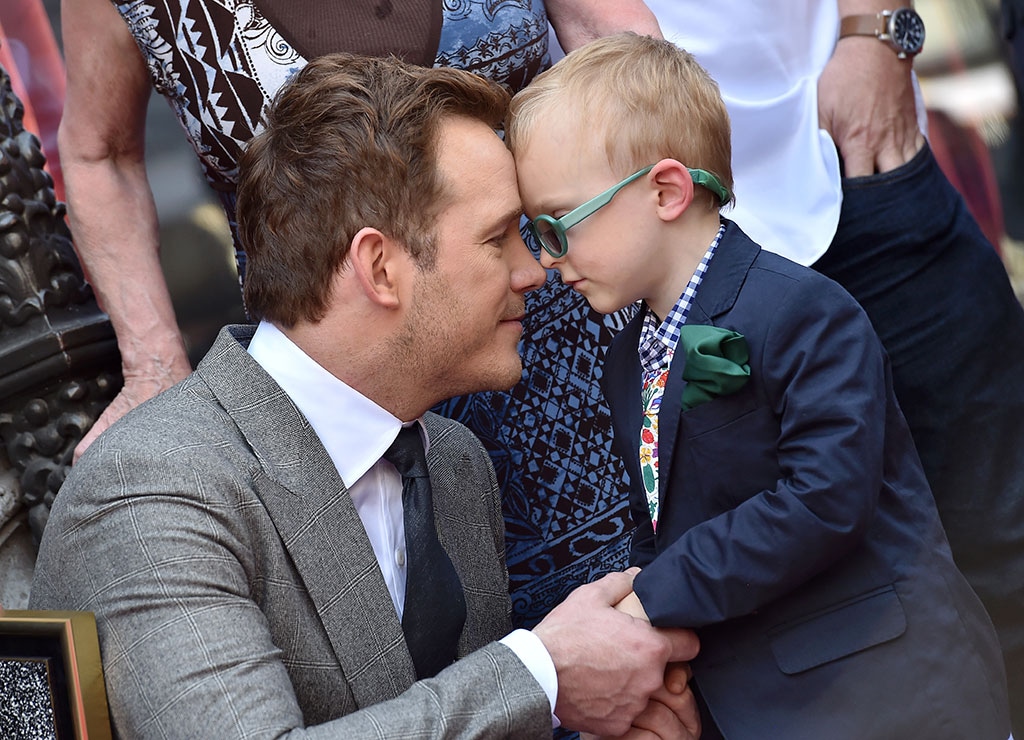
However, his life changed in 2012 when his baby son Jack was born premature and was forced to spend his first month in a neonatal intensive care unit.

“We were scared for a long time,” Pratt said.

“He [Jack] had all of these issues going on. I prayed hard to God. I was in a season of transition spiritually at that time, and didn’t quite fully understand. I made a deal with God again: ‘I’m sorry, God, here I am again, asking for your grace again.’ And He really saved my son, and that was the moment [my faith] was cemented,” he said.

Pratt recalls it as a miracle that restored his faith in God.

“My heart softened, and my faith hardened. That was the moment that I was like, ‘Moving forward, I’m going to give my platform to God,’” he said.

Since then he has used his celebrity profile to enhance awareness of the Almighty.

He wants to affirm people who are believers in Christ, but he also hopes to reach out to the people who haven’t yet experienced God’s presence.

“I want to be a light to people who’ve never seen light. I want to be a light to people who have seen light but turned away from it or been afraid of it,” Pratt said.

As a father of four, he wants to raise his children “with an understanding that their dad was unashamed of his faith in Jesus, and with a profound understanding of the power of prayer, and the grace and the love and the joy that can come from a relationship with Jesus.”

He is well aware that many in the entertainment industry don’t share his views. But this doesn’t deter him.

“It’s who I am. I’m not going to hide behind it. A city on a hill cannot be hidden,” he stated.

Pratt understands the dark side of fame and the ways in which celebrities can oftentimes be trapped by it.

He once responded to a question from “The Late Show” host Stephen Colbert about the inherent danger of intense fame.

“If the spotlight that’s shining on you is brighter than the light that comes from within you — it’ll kill you…,” he said.

He knows firsthand that being a Christian in Hollywood is going against the grain.

When faced with criticism, his approach is to pray for his critics.

“If people don’t understand me, I’m going to pray for them, and then I’m going to go back and hang out with my kids and play tag,” he said.

Pratt exhibits the beautiful virtue of self-sacrifice, which is encompassed in a relationship with God. He has counted the cost of standing up for his faith and is totally willing to pay the price.

“I care enough about Jesus to take a stand, even if it cost me. It could cost me everything, but I don’t care. It’s worth it to me because this is what I’m called to do, it’s where my heart is.”

Pratt is now starring in the original happily-ever-after love story.

When you experience the love of God, you want everyone else to feel it too.

Attacks on KC Chiefs Kicker Harrison Butker Fail to Clear the Goalposts

Kansas City Chiefs placekicker Harrison Butker is the latest quarry of the woke mob.

His politically incorrect transgression occurred while he was giving a commencement address at a Catholic college.

Butker’s speech hit quite a few nerves on the left and set off a stadium-sized firestorm.

What did he say that was so inflammatory?

He expressed his opinion out loud that not all women see a successful career as being superior to or more fulfilling than finding your lifelong spouse and having children grace your family.

Upon hearing about the content of Butker’s speech, the left became unglued and the attacks went full throttle.

All of it played out in the complicit news, entertainment, and sports media as well as a glut of liberal online platforms. There was even a petition floated, which demanded that the winning Super Bowl kicker himself get booted from the Chiefs.

The sports star was labeled an extremist, a bigot, and other unmentionable pejoratives for having encouraged women to embrace their inner mother, and men their inner father.

The Kansas City Star newspaper went as far as to recommend that Butker be fired; this despite the fact that he is a three-time Super Bowl champion and ranks second in NFL history in his career field-goal percentage.

The birdcage liner also suggested that the Chiefs hire a female placekicker for what the news outlet called “poetic justice.”

The NFL itself issued a statement, distancing the league from Butker and stating that his views “are not those of the NFL as an organization.” It dutifully added that the league “is steadfast in our commitment to inclusion.”

A funny thing happened on the way to the attempted cancellation of the football star. The attacks against him began to sputter.

The tried-and-true game play of the propagandists to slander and besmirch was met with some accusations of personal fouls.

Some of Butker’s attackers had completely distorted the kicker’s comments, reporting that he had said all women should choose the homemaker path and forego other vocations, something he did not say.

There were some prominent individuals and groups that rallied to his defense, including Bill Maher, Lou Holtz, Sage Steel, Patricia Heaton, Kevin Sorbo, Senator Josh Hawley, and Senator Marco Rubio.

On his X account, Sen. Rubio tweeted, “Butker critics are liars. He NEVER told women to stay home & have babies. What he actually said is an important truth that applies to BOTH men and women. That no matter what we achieve in professional careers, our VOCATION as a husband/wife & father/mother is the most important, impactful & fulfilling role any of us will ever have.”

Despite the ugly efforts of his detractors to undermine his brand, Butker is now enjoying more fame and popularity than before the whole fiasco started.

The online NFL Shop provides the proof.

Currently ranking among the most popular Chiefs gear are the team’s star kicker jerseys and T-shirts.

Which means on the cultural gridiron, Butker just scored the winning field goal.

The Consequences of a Godless Society

We are living in the Age of the Unthinkable.

“Surreal,” “disturbing,” and “frightening” are some of the words that are rolling off the tongues of America’s beleaguered people.

The internet is saturated with news reports and video clips that tell the woeful tale.

How in the world did we get here?

The explanation is fairly simple. We allowed those who had an atheist bent to shove God out of sight.

In June of 2022, belief in God hit a new low in the United States, 81 percent, according to Gallup. This is a six percentage point drop from 2017. It is the lowest level in Gallup’s history.

By comparison, more than 90 percent of Americans believed in God in the years that spanned from 1944 through 2011.

In another study from Pew Research, which was released in January 2024, the largest “religious” group in the country is comprised of those Americans who say that they have no religious affiliation, a group that includes atheists, agnostics, and individuals who indicate that their religion is “nothing in particular.”

When asked to choose their religion, 28 percent checked “none.” In 2007 the “Nones,” as this group is referred to, were only at 16 percent.

In this latest Pew study, 17 percent of Nones identify as atheist, 20 percent as agnostic, and 63 percent as “nothing in particular.”

The trend is clear. The U.S. is drifting away from a belief in God and moving toward secular atheism. But the truth is human beings are hard-wired to worship God, and without Him something else will rush in to take His place. It could be money, power, self, and even the almighty state.

The almighty state is the big one. Eminent theologian Francis Schaeffer explained that “…humanists, having no god, must put something at the centre, and it is inevitably society, government, or the state.”

Getting rid of God is a prerequisite to communism. The founders of communism saw this as the first step in leading a free country and its people toward the worship of government, and ultimately to an acceptance of a communist dictatorship.

It is not easy to indoctrinate people and convince them to give up their faith in God. As a matter of fact, it takes more faith to deny the existence of God than to believe in Him.

Minds have to be manipulated into believing that creation occurred without a Creator.

But scientists have found that space and time came into existence during a moment referred to as “The Big Bang.” There had to be a causal agent outside of space and time for this to happen. This, in essence, is a description of God Himself.

Communism insists that there is no Creator. No Prime Mover. No God. And bit by bit the would-be rulers strip God from every inch of the public square.

Without God, good and evil become arbitrary concepts. There is no accounting for right and wrong, which leaves the door wide open for the almighty state to step in and make all the determinations.

Without God, the world grows ice cold. It is a realm in which human dignity erodes away, and people ultimately find themselves enslaved to masters not of their own choosing.

What if we are in an escape room and we are about to discover that it’s not a game?

Time to find God again.

Speaker of the House Mike Johnson’s American Values

Mike Johnson is under attack for the religious and cultural beliefs that he holds.

In an appearance on a recent weekend news program, the newly-elected Speaker of the House made the following comments regarding the barrage of negativity that he is having to endure:

“There are entire industries built on taking down, tearing down people like me. I understand that comes with the territory and we’re not fazed by it,” he said.

From the moment he took possession of the Speaker’s gavel, enemies within the media have joined forces with partisan operatives in an attempt to pigeonhole him as an extremist.

Appearing to take things in stride, he stated, “I’ve been labeled all kinds of stuff, but these people don’t know me.”

Johnson is currently serving a fourth term in the U.S. House of Representatives, having secured Louisiana’s fourth congressional district seat with the largest regional margin of victory in over fifty years.

Arriving at his new post with almost 20 years of constitutional law experience under his belt, in his practice he routinely safeguarded the fundamental rights of individuals and businesses.

He characterized his legal career as one that placed him in the position of “defending religious freedom, the sanctity of human life, and biblical values…”

Highly respected by his colleagues, a deeply divided Republican caucus actually came together and succeeded in electing him as new House Speaker.

Even prior to his Speaker post he was held in high esteem by his colleagues. He was one of the most well-liked members of the GOP leadership.

Back in 2022, he had been unanimously elected vice chair of the House Republican Conference for a second time.

The favorable reputation was due in large part to the way in which he comported himself, humble in his demeanor yet true to his principles.

He hadn’t really aspired to the Speaker’s office or ever actually contacted anyone about the position. Rather, his colleagues were the ones that reached out to him and encouraged him to seek the nomination.

He has described himself first and foremost as a Christian, stating the following when he first ran for Congress:

“I’m a committed Christian and my faith informs everything I do.”

A number of journalists appear to be heavily triggered by Johnson’s expressions of faith.

During a 2022 technology panel, which took place at his church in Louisiana, Johnson spoke about a subscription-based computer program that he and his teenage son were using at the time to monitor questionable content.

Media outlets, including Rolling Stone and The New Republic, apparently unearthed the remarks. Attacks were then leveled at the Speaker for his commitment against pornography.

While talking to reporters at the Capitol, he described the negative media blitz as “just the latest attack in a campaign by D.C. insiders on my faith.”

Walking the Christian walk, he explained, “If you truly believe in the Bible’s commands and seek to follow them, it’s impossible to be a hateful person because the greatest command in the Bible is that you love God with everything you have, and you love your neighbor as yourself.”

Those who are going after Johnson are perhaps unintentionally, or perhaps intentionally, forgetting that the beliefs he espouses are the same Judeo-Christian principles that served as foundational pillars during the initial formation of our country.

The Founders were heavily influenced by biblical teachings contained in the Old and New Testaments.

Thomas Jefferson wrote in the Declaration of Independence the profound “self-evident” truth that “all men are created equal, that they are endowed by their Creator with certain unalienable Rights, that among these are Life, Liberty and the pursuit of Happiness.”

These words spring from the Judeo-Christian credo that all people are created in the image of God.

The Founders recognized Scripture as a prime source of moral and ethical wisdom and incorporated many of its precepts into the U.S. Constitution. The three branches of government, checks and balances on power, the freedom to worship, and equal treatment under the law are but a few.

It is through the application of these inherent values that Johnson desires to implement what he terms “principled governance.”

He summed up the application of his faith in the following manner:

“We’re going to continue to love all people. We’re going to continue to bless even those who persecute us because that’s our worldview and that’s how we operate.”

He added, “Everybody take a breath, give us a chance and you’ll see what principled governance looks like.”

Praying for Speaker Johnson’s success.

And a miracle for America.