Shia LaBeouf’s Faith Enhancing Film Role

Shia LaBeouf is a changed man. And it looks as though the spiritual prep for his latest movie role deserves a lot of the credit.

Playing the lead in the upcoming biopic “Padre Pio” appears to have guided the actor toward a new commitment to Christianity.

The film relays the real life story of one of the most beloved Catholic priests and humanitarian figures, an individual who within Catholicism has been given the designation of “Saint.”

Padre Pio was an Italian Franciscan Capuchin friar who was canonized by Pope John Paul II in 2002 and has been venerated in the Roman Catholic Church ever since.

He was known around the globe for manifestations that many believe could only have emanated from above.

Over the course of his lifetime in shepherding his flock, he exhibited numerous supernatural phenomena and miraculous occurrences, including the marks of stigmata (wounds on the body that correspond to those suffered by the crucified Christ), visions, healings, and the ability to bi-locate and prophesy.

The Sanctuary of Saint Pio of Pietrelcina is located in the Province of Foggia, Italy, the southern Italian region (Puglia), where much of the filming of the “Padre Pio” movie took place.

Shia accepted the starring role of the film in the summer of 2021 and immediately arranged to spend time with a group of Capuchin Franciscan friars who resided in Northern California.

Traveling later to Rome, he went to stay at a monastery in southern Italy, the same locale in which the movie had initially been filmed. He even chose to sleep in the same bed where Padre Pio had rested his head.

In a recent conversation with Bishop Robert Barron, Shia revealed how he was led to become a Catholic Christian.

Referring to the time spent at the California monastery, he said, “When I walked into this, my life was on fire.”

The “fire” of which he spoke related to the personal tribulation he was going through, not only dealing with feelings of shame and depression, but even thoughts of ending it all. This was because back in 2020 his former girlfriend had sued him, accusing him of sexual assault.

In the aftermath of the debilitating experience, Shia parted with his agency and made the decision to take time off from his career.

He described a moment where serious suicidal thoughts were flooding his mind.

“I had a gun on the table. I was outta here,” he said. “I didn’t want to be alive anymore when all this happened.”

He also described the depth of emotion that had overtaken him.

“Shame like I had never experienced before — the kind of shame that you forget how to breathe. You don’t know where to go…,” he said.

He came to a point where his past actions made him feel as though he wasn’t worthy of being loved by God or of being received into a faith community.

He would soon be in for a blessed surprise. Living with the friars, he got to experience the love and support his heart and soul were aching for.

As Shia interacted with the friars and immersed himself in the Bible, he felt an “invite” to “let go” of obstacles.

Learning about the gifts of repentance, redemption and forgiveness convinced him of that all-important truth – in God’s eyes he is, as we all are, precious, worthy, and yes, loved beyond measure.

“It was seeing other people who have sinned beyond anything I could ever conceptualize also being found in Christ that made me feel like, ‘Oh, that gives me hope,’” he explained. “I started hearing experiences of other depraved people who had found their way in this, and it made me feel like I had permission.”

A transformational event in Shia’s personal journey was experiencing the Catholic Mass in its traditional Latin form.

“While we were practicing Latin Mass, I was having genuine emotional experiences,” he said.

Shia thought he had taken on the “Padre Pio” movie part for career reasons. However, he eventually came to realize that the Ultimate Director was working on a most beautiful subplot.

“I know now that God was using my ego to draw me to Him. Drawing me away from worldly desires. It was all happening simultaneously,” he said. “The reach-out had happened. I was already there, I had nowhere to go. This was the last stop on the train. There was nowhere else to go—in every sense.”

No doubt Shia’s spiritual path has been a unique one. His mother is Jewish and his father is a Christian. Both a bar mitzvah and a baptism graced his childhood.

As his first religious denomination, he chose his mother’s Jewish faith. Then in 2004 he shared that he had a “personal relationship with God that happens to work within the confines of Judaism.”

He later discovered his father’s Christian conviction while filming a movie. He said in an interview in 2014, “I found God doing [the film] Fury. I became a Christian man. Brad [Pitt] was really instrumental in guiding my head through this.”

In June of 2022, while at a park in Pasadena, California, he was seen reuniting with his estranged father, where the two read from Bibles as they sat next to one another.

Shia sees his religious pilgrimage as analogous to his method acting approach.

“I like to be immersive,” he said. “I like all immersive experiences, not just acting. That’s probably why I like Catholicism as well. I like adventure, and that requires full immersion.”

It seems to me that we could all use an immersive experience in faith these days.

“Padre Pio” is scheduled to premiere at the 2022 Venice International Film Festival, which runs from August 31 to September 10.

Woke Hollywood Passes on Pro-life Film despite Top Name Involvement

Kendrick brothers Alex, Stephen, and Shannon have been the creative forces behind many a faith-based box-office hit, including the successful “Facing the Giants,” “Fireproof,” “Courageous,” “Overcomer,” and “War Room.”

“War Room” was actually the No. 1 movie in the country on the second weekend of its release. It was also one of highest-grossing Christian films ever made.

The Kendrick brothers recently teamed up with actor Kirk Cameron to produce “Lifemark,” a movie that deals with some of the most central and poignant themes of our times – relationships, forgiveness, and the film’s primary focus, adoption.

Inspired by a true story, a movie such as this would typically have had Hollywood studio executives competing for the project.

It goes a long way to prove that these are anything but normal times.

Alex is one of the executive producers, as are Stephen and Shannon. But Alex has also co-written the film, and he has an acting part in it as well.

The adoption storyline is particularly meaningful for the Kendricks and Cameron.

Stephen Kendrick and his wife welcomed a daughter from China via adoption.

Cameron’s wife Chelsea was adopted by her parents, and four of Kirk and Chelsea’s six children were also adopted.

For those who haven’t yet noticed, contemporary Hollywood has given itself an extreme makeover in both form and substance.

All of this seems to have happened fairly quickly and also quite craftily. It went from “The Entertainment Capital of the World” to “The Woke Capital of the World,” with the end result being that the largest and most powerful entertainment companies are now haplessly out of touch with the beliefs, attitudes, and values of a large portion of their customer base.

Consequently, despite the viable track records of “Lifemark”’s filmmakers, both its star and its executive producer revealed that Hollywood studios, even those that had worked with the Kendrick brothers in the past, rejected the distribution of the film and did so because of the movie’s pro-life message.

Lead actor Cameron called the rebuff by Hollywood studios “good old-fashion cowardice.”

“Even the so-called faith divisions of studios would rather pass from tens of millions of dollars and support horror, violence, and drag queen movies than risk doing anything that celebrates life,”

Cameron said.

According to Alex, the studios stated that they were not releasing the film because they were “scared of the response,’”

Alex additionally revealed the following: “Several of the studios that have courted us in the past, and wanted us to go with them as distributors, they all turned down this film.”

The studios apparently wanted something else, anything else but this film.

Alex added, “We said, ‘Well, we cannot be ashamed or afraid to share the truth regarding this subject, to share a true story.’ It’s hard to argue with a true story.”

Still, the lack of independent thought displayed by a sizable number of Hollywood executives makes it seem as though they are impervious to the truth.

Fortunately, Fathom Events, a distribution company, was able to make a rational business decision and is going to arrange to have the film displayed in more than 1,400 theaters.

Alex acknowledges that the subject matter of “Lifemark” is a sensitive one.

“It’s become a political battleground in our country,” he remarked, adding, “We are acknowledging both sides, we’re acknowledging the difficult decision to choose to place your baby for adoption, but it is the better decision.”

“This whole path is not always easy. It is often difficult, but it is beautiful. And so this true story was a perfect example of showing how it could go…,” he said.

The movie project began with a telephone call.

While still in the process of wrapping up a previous film, the Kendricks received an unexpected call from Cameron, who had just watched what he described as “one of the most powerful and moving documentaries I’ve ever seen.”

The documentary was titled “I Lived on Parker Avenue,” and it dealt with the story upon which the “Lifemark” film is based.

The plotline centers around a teenage boy who is contacted by his birth mother, a woman who eighteen years prior had chosen adoption over abortion for her then-tiny son.

Alex believes that the movie can play a role in informing and educating people.

“We’re hopeful that churches, crisis pregnancy centers, ministries, all jump on this as a real-life tool to reach people… who are trying to determine ‘is this baby worth saving?’” Alex explained.

His objective in making and promoting this movie project is “to change the heart of the nation.”

To this end, the desire on the part of the filmmakers is for life itself to be ultimately viewed as “precious, beautiful, and worth protecting.”

“Lifemark” is set to make its mark in theaters nationwide on Sept. 9.

How Godlessness Leads to Tyranny

So many people are feeling it in the core of their beings.

The country has been unmoored from its anchor, an intangible one that for generations provided the stability needed to form communities in which people were able to reside together and care for one another.

We’ve known for a while that we had been drifting toward a destination that was strange and unfamiliar.

Now that we have seemingly arrived, we find ourselves at a place that is deeply disturbing and at times even intolerable.

An analysis may be helpful in understanding how the fix we find ourselves in came to be. It is also useful in a self-comforting kind of way, societally speaking. And it may prove especially helpful in figuring out ways in which we can get ourselves back on course.

Every society has an underlying ideology upon which beliefs, attitudes, norms, customs, institutions, etc., are structured.

Years ago a destructive type of worldview took root. As things would have it, this harmful ideology burgeoned over time and ended up displacing important foundational building blocks of our society, including those of civility, integrity, respect, and the like.

A new Gallup poll provides a key to understanding what happened.

Gallup’s recent Values and Beliefs Poll found that Americans’ belief in God has dropped to the lowest level since the polling organization first began to gather research data on the topic about 88 years ago.

From the 1940s to the 1960s, a consistent 98 percent of Americans indicated that they maintained a belief in God. The rate of believers has since taken a steady downturn, hitting an all-time low of 81 percent in 2022.

Gallup’s data indicate that in recent years belief in God has declined most significantly among young adults and those who are of a politically liberal persuasion.

Removing God from public life has been a goal of secularists, who for a long time now have been hard at work restricting religious expression in all major American institutions.

Prayers, holiday celebrations, music, etc., which since the nation’s founding were culturally unifying aspects of American life, have been supplanted or, in some cases, completely removed.

In his Farewell Address, the country’s first president emphasized the importance of religious values as he assessed the future of a then-budding nation.

“Of all the dispositions and habits, which lead to political prosperity, Religion and Morality are indispensable supports,” President George Washington said.

His words were very precise. If an indispensable support is absent, an entire structure is destined for collapse.

Most people are aware that, despite the capacity for goodness contained within each and every individual, there is a dark component of human nature that lurks below the surface.

The Judeo-Christian explanation of this concept, and for the existence of evil itself, is the notion that humankind initially had a virtuous nature but early on took a precipitous fall from grace.

Judeo-Christian values in large part serve to restrain the human tendency to indulge in the most negative inclinations, which are manifested societally from street gangs to government corruption.

Without constraints on evil, society will become spiritually ill. Such sickness results in a culture that literally hits bottom, with the attendant failure to protect the most vulnerable and an apathetic attitude toward injuries suffered.

If God does not exist, then what is determined to be good or evil becomes merely a subjective human construct.

If no guidelines are in existence when decisions are being made regarding which ethical options would be preferable, then in conflicting situations the self-interests of decision makers will inevitably rule the day.

If good and evil are only human concepts, then morally upright actions will take a back seat to expeditious ones.

To cut to the chase, if God doesn’t exist, then neither do objective moral values.

In his book, “The God Delusion,” atheist-author Richard Dawkins wrote the following: “It is pretty hard to defend absolutist morals on grounds other than religious ones.”

Any system of government that lacks moral underpinnings is a system where freedom cannot flourish or even be mildly sustained.

As promised, God stands in the way of would-be tyranny, if those who keep the faith take to their knees.

Dog the Bounty Hunter’s Supernatural Assist

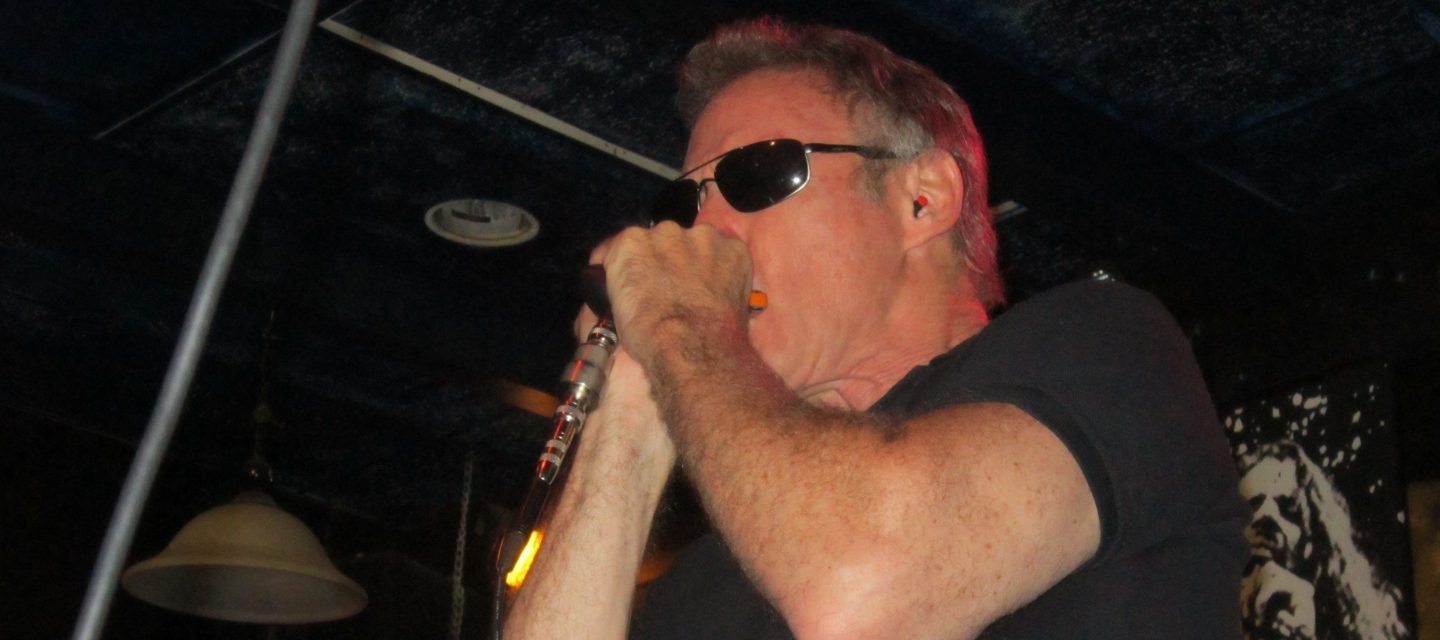
Most folks know Duane Chapman by his stage name, Dog the Bounty Hunter. He worked as a professional bounty hunter in the past, and he’s still at it.

Duane was ultimately able to parlay his work experience into TV stardom through a realty show based on his unique creds.

He became an international news item in 2003, when he apprehended Max Factor heir Andrew Luster. The keen interest and revved up publicity in the Luster story paved the way for his first reality series “Dog the Bounty Hunter,” which ran for eight years on the A&E network.

After the show completed its run, Duane jumped into another reality show, along with his wife Alice Elizabeth, best known as “Beth.” The show, “Dog and Beth: On the Hunt,” was part of the CMT lineup. Another series, “Dog’s Most Wanted,” aired on WGN America.

In a sad turn of events, Beth lost her battle with throat cancer in 2019. Her health struggles were chronicled in an A&E series titled “Dog and Beth: Fight of Their Lives.”

Most recently, Duane appeared, via a vocal performance, on the hit television show “The Masked Singer.” Dressed in gold armadillo attire, he presented The Clash’s “I Fought The Law.”

Although voted off the show, he didn’t skip a beat. He immediately moved on to his next task, which involved a manhunt over a reported double murder in Moab, Utah.

Duane knows exactly what it’s like to be on the opposite side of the law. At age 15, he ran away from home and joined a biker gang. It was back in the 1970s, when he was manning a getaway car, that his friend shot and killed a man during a struggle that involved an illegal marijuana buy.

Convicted of first degree murder, Duane was sentenced to five years in a Texas prison and wound up serving 18 months at the State Penitentiary. Through it all, the future bounty hunter was guided to a deeper relationship with God.

In a recent appearance on “The Prodigal Stories Podcast,” he revealed some of the details of his faith journey. Duane’s mother was an Assemblies of God minister who believed in the power of prayer.

“She was a pastor. My mother … all day long, her whole life, all she did was pray for us,” he said.

Going to church was a routine part of his early life.

“We had to go to church,” he shared.

If he didn’t, his mom would take away the keys to his wheels.

Like many who are raised in a faith-filled home, at one point he fell away from his faith. It happened during his youthful tumultuous years.

Rationalizing, he thought, “[God is] not going to care really what I do as long as I say the blessing and keep God kind of first.”

Soon he discovered that trying to fool yourself about your relationship with your Maker can lead you down a very dark path. In Duane’s case, it was a crime-ridden one.

“After going to prison in the ‘70s in Texas for 18 months, I realized right then that, at the end of this rainbow of crime and all that, is not a bucket of gold, it’s a cell,” he said.

Despite his criminal conviction and prison sentence, Duane’s mother never gave up on improving her son’s spiritual standing. After serving his time and being released from jail, his mom found a way to minister to him during his sleeping hours.

“As I slept, my mom put on a recording of the Bible, and every morning, when I woke up, I’m like, ‘Mom, why did you?’ She’s like, ‘I don’t know who turned that on,’” Duane said.

As time passed, his mother’s efforts and prayers began to produce miraculous results.

“I started acting nice,” he said, understanding that it would be difficult to sustain.

“I’m an Indian outlaw, so I started acting like I wasn’t [nice]. Then I started thinking, ‘What would Jesus do right now?’”

Duane found out that virtue can actually become a habit.

“I started pretending to be good and, all the sudden, I started being good.”

During his long and successful career as a bounty hunter, he has captured thousands of fugitives. The hardships that he suffered enable him to help others in a way that very few can – a vessel of saving grace delivered to a fellow wayward traveler.

“I would capture guys and tell them, ‘Listen, man, I’ve been there, done that … we need supernatural help,’” he said.

The Prodigal Son who shows others how to get back home.

Microchip Implants in Human Hands Already Underway in Europe

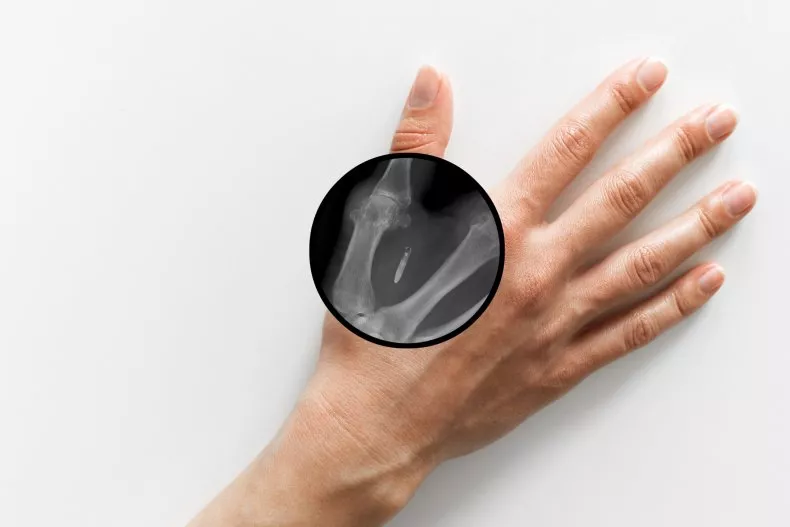
British-Polish company Walletmor has come up with a microchip that is designed for implantation into the hands of human beings.

When purchasing goods or services, microchipped hands are able to be used by individuals in the same manner in which many people are currently using their credit and debit cards. A simple tap of the hand is all that is needed to tabulate and complete a transaction.

The subcutaneous implantable payment chip is inserted under the skin via an incision. This method of buying is presently being employed by participants in Europe to meet their everyday shopping needs.

This whole concept deserves some major moments of pause and a ramped up level of societal and spiritual consideration.

The above description denotes the first instances in human history that implanted microchips have been employed for average everyday consumer purchases.

Scary stuff for a whole lot of reasons.

“This is a revolution for the cashless and contactless payments market. Until now, the race for cardless payments has been theoretical,” Walletmor stated in a press release.

The company also indicated that so far at least 200 people have been chipped, but many more are receptive to the idea. A 2021 survey of more than 4,000 people across the UK and the European Union found that 51 percent would consider it.

Sweden was one of the earliest adopters of this type of technology. Thousands of Swedes already have their medical records stored on implanted microchips. However, this application does not involve the buying of goods and/or services.

Currently, the implant-in-hand procedure is only being offered to residents of a European Union country, Switzerland, and the United Kingdom. But the practice is no doubt poised to make its way around the globe.

Legitimate concerns about privacy, individual rights, and identity theft have been dismissed by much of the corporate media and by many of the so-called fact-checkers as being overblown or unfounded.

Up until now people of faith, and Christians in particular, have been the ones who were most concerned about the concept of modifying the human body for the purposes of convenience and/or heightened security.

Bible adherents who are Christian believe that The Word of God contains prophecies within the Books of Revelation and Daniel, which provide a description of a future time in which a single global government will assert control over a world economy.

Not all Bible believers view prophecy in a literal sense, but a sizable number do. Such individuals give greater weight to the Scripture passage in which a malevolent world leader forces “…all people, great and small, rich and poor, free and slave, to receive a mark on their right hands or on their foreheads.”

The Bible passage goes on to state that the people oppressed by this evil leader would be unable to “… buy or sell unless they had the mark…”

The demand that one’s hand or forehead be marked, in order to purchase or otherwise engage in trade, is commonly referred to by Scripture scholars and Bible adherents alike as the “Mark of the Beast.”

In order to conform to Biblical predictions, the above described hand implant technology would have to be implemented through coercion.

This is not nearly as far-fetched as it used to seem; that power hungry elites would actually mandate the microchipping of the population at large.

The notion of our economy being transformed into a cashless society, where governing authorities have the power to turn microchips on and off at will, is a nightmare scenario. Freedom itself would be snuffed out.

With many countries working on a central bank digital currency system, the implanted chip technology could be programmable so that individuals would only be able to buy and sell in accordance with algorithms set by the issuers of the digital currency.

Implanted devices would likely contain everything that is trackable, including health data, social media information, an individual’s search data, previous purchase patterns, etc.

Put this together with the fact that these technological developments are occurring at the same time that multilateral organizations are seeking to construct a global vaccine passport system.

The government’s Defense Advanced Research Projects Agency (DARPA) has already worked with a private company to develop an implantable biosensor to be injected under the skin to track biochemical reactions inside your body.

“These sensors make it possible to detect, in ‘real time’ and over long periods of time, changes in the body’s chemistry,” Jared Adams, DARPA chief of communications said.

The ability to track such personal medical information is likely to obliterate all health-related privacy, as well as what’s left of the longstanding medical code of ethics that has safeguarded the life and health of the individual.

When you think about it, if all of your personal data were to be stored in your hand, it would be way too easy for that information to be misused and abused.

Bottom line: If you allow yourself to be chipped, you may find that you have handed over your life to the powers that be. And possibly even your soul.

Christians Respond to the ‘New’ Disney

Executives at Disney should have seen it coming.

Recent statements and reactions to the Florida parental rights bill by Disney’s higher-ups have prompted people of faith to take action. And they are clearly a force to be reckoned with.

Individuals who adhere to Judeo-Christian principles have been influential in shaping policies in the past. But it’s a different atmosphere in which we find ourselves now, one that is Orwellian in nature and intimidating in its effect. Still, some folks are stepping forth, and they appear to be up to the challenge.

Despite the aggressive secularization attempts that have occurred over the years in American institutions, the vast majority of the country continues to self-identify as “Christian.”

A 2020 survey by the Pew Research Center found that 65 percent of adults in the United States identified as Christians. And according to a 2021 report from the Cultural Research Center at Arizona Christian University, the number of people who embrace the Christian identity is even higher, 69 percent.

Following the recent rhetoric and behavior displayed by Disney’s management, the distress that Christians in particular were experiencing is being channeled in a positive direction.

Sean Feucht is one member of the Christian community who has taken a leadership stance. He recently organized a worship gathering and public expression event at the Disney Studio Lot in Burbank, California.

Video footage of the gathering, which is posted on Twitter, has received more than 1.2 million views to date.

Sean’s list of credentials is lengthy.

He served as a worship leader at Bethel Church.

He ran for a House seat in California’s 3rd Congressional District.

In 2020, he organized worship concerts to bring revival and hope to Americans while simultaneously protesting government restrictions, which were being imposed at the time. He dubbed the movement “Let Us Worship.”

He is the founder of “Hold the Line,” which, according to the website, is “a new movement focused on engaging with the church and young people across the country.”

Sean gave the title “Hold The Line for Our Kids” to the Disney rally. He and other presenters spoke to the crowd about Disney’s vociferous political opposition to the Florida law, which safeguards the rights of parents and the innocence of children.

Participants at the Burbank rally held up signs that conveyed strongly worded messages, including the following: “Boycott Disney,” “Dis-Needs to STOP,” “Stop mousing around with our kids,” and “God gave kids to parents, not government.”

He himself tweeted, “Parents Fight Back—We sent a message: DON’T MESS WITH OUR KIDS.”

Using a flat bed truck for a stage, Sean and his fellow musicians played worship songs for attendees who were strategically located in front of the Alameda gate of the Disney Studio Lot, where Disney’s headquarters is located.

Sean’s commitment is similar to one that Christians adhere to across the country.

“They can call us white nationalists. They can call us racist. They can call us homophobic,” he said. “They can call us whatever…but they’re never gonna get me to stop fighting for my kids! Nothing is gonna get me to stop fighting for my kids!”

Having already proven that he is able to draw tens of thousands of people to his events, he declared, “I think we’re going to do this in Orlando, we’re going to do this in Anaheim, we’re going to do this until things change.”

Anaheim happens to be the location of Disney’s other major theme park, the original Disneyland.

Sean compared the fight against Disney to the biblical battle between David and Goliath.

“If parents in America would realize the power and the authority that they have, they could shift the economy of this place in one day,” he said.

The Burbank protest also featured Pastor Rob McCoy from Godspeak Calvary Chapel in Newbury Park, California, and Pastor Samuel Deuth from the Awakened Church in San Diego.

The reaction to Disney’s political and societal stances has prompted many prominent religious figures to speak out. Perhaps one of the most worrisome for The Mouse House is the recent statement by highly influential Samaritan’s Purse president Franklin Graham.

“When I was young, my father @BillyGraham took me to visit Mr. Walt Disney,” Franklin recently stated in a tweet.

“We weren’t allowed to watch many TV programs growing up, but because of Mr. Disney’s commitment to wholesome entertainment, parents had confidence in their content. That has sure changed!” he said, adding, “Today, Disney is indoctrinating children w/the LGBTQ agenda—& they don’t try to hide it. I hope parents wake up to what Disney is trying to do & protect their children & grandchildren from the lies this once-great company is now so willing to promote.”

Although the protection of children has traditionally been held up as a universal value, people of faith really take the precept to heart, based on the Good Book’s many admonitions.

Sean called upon God at the rally to “…bring everything that’s been hidden into the light.”

At this holiest time of year, believers take solace in knowing that the Light of Truth dispels all darkness.

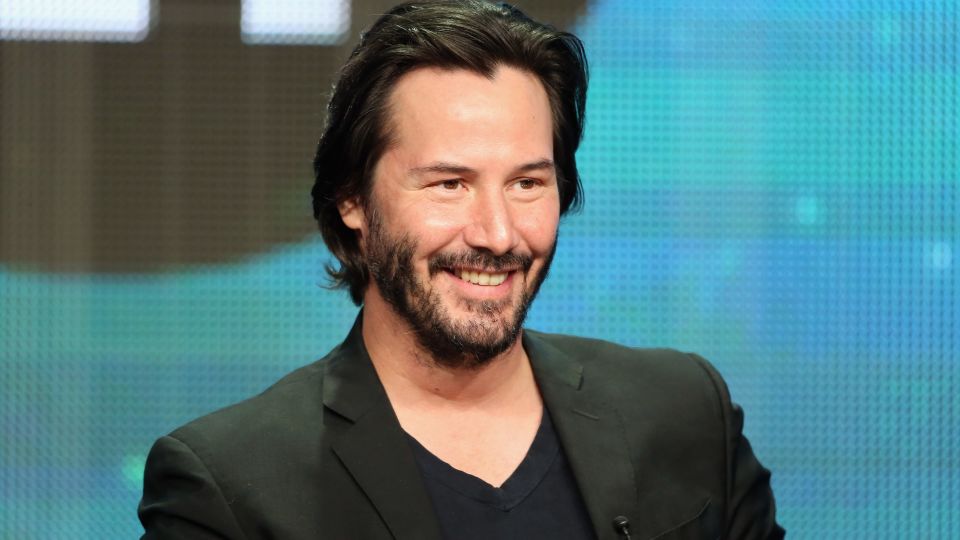
China Cancels Keanu Reeves

Keanu Reeves had his breakthrough role in 1989, when he starred in the sci-fi comedy “Bill & Ted’s Excellent Adventure.” Two movie sequels and two television series based on the film soon sprang forth.

The more serious side of the actor’s artistry emerged in dramas that included “My Own Private Idaho” and in action films such as “Point Break” and “Speed.”

Keanu, however, was destined for super stardom. He achieved this high watermark when he landed the role of Neo in a film that would ultimately become the “Matrix” franchise series.

In a realm that few celebrities experience, he was able to continue to sustain his fame with yet another cinematic franchise, the “John Wick” film series.

In terms of his ancestry, Keanu is the personification of diversity. His father is Native Hawaiian, Chinese, English, Irish, and Portuguese. His grandmother on his father’s side is Chinese Hawaiian, a woman who imbued a young Keanu with Chinese culture and philosophy. His mother is from Beirut, Lebanon, the place where the actor was actually born. His father left when Keanu was only three years of age, but a reunion with his dad occurred when he was thirteen. It took place on the island of Kauai.

Despite his Chinese heritage, his years of collaboration with Chinese film entities, and his mega-star status with the Chinese population, Keanu was recently severely censored by Chinese authorities for his participation in a benefit concert for Tibet House, a non-profit organization affiliated with the exiled spiritual leader, the Dalai Lama.

Previous entertainment figures that were canceled by communist officials for their expressions of support for Tibet include Richard Gere, Selena Gomez, Lady Gaga, and Brad Pitt, who was canceled and then brought back.

In a predictable development, China’s streaming platforms have now erased almost all of Keanu’s works from their catalogues as well as from search results in the Chinese language that appear under his name. His most well known movies that have been wiped away include “Bill & Ted’s Excellent Adventure,” “Speed,” and “The Matrix” films.

Bizarrely, “Toy Story 4,” for which Keanu voiced a character, has been left online. However, the actor’s name has been purged from the credits.

Keanu’s newfound redacted status in China at a time of heightened geopolitical tension is a strong indication that Beijing censors will prohibit his upcoming projects from being distributed.

Unlike a host of other creative artists in Hollywood, Keanu appears to be the complete opposite of a self-centered celeb. Known to be a dedicated team player as well as an individual who actually safeguards his privacy, Time magazine once characterized him as “Hollywood’s ultimate introvert.”

A special part of his appeal is a humility that he exudes when the cameras aren’t rolling. He has demonstrated a genuine goodness in many a real life circumstance. The internet is replete with stories, interviews, and pictures of Keanu in virtuous action.

The first of his good deeds to go viral occurred when video footage emerged of him offering his New York subway seat to a fellow passenger who was carrying a heavy bag.

Another incident that spread like wildfire on social media was one involving a United Airlines flight from San Francisco to Los Angeles, which was forced to make an emergency landing in Bakersfield, California. Keanu spent time reading to fellow passengers, dining with them on fast food, and entertaining them with his country music performances. He generously posed for photos with his traveling companions, took the lead in helping them deal with the stress of an emergency landing, and assisted others in getting to their destination.

Additionally, in an unusual sort of re-negotiation of a contract for the “Matrix” sequels, Keanu took a pay cut so that more money might be available for use on special effects and costumes.

After his sister Kim was diagnosed with leukemia, he reportedly gave 70 percent of his $35 million compensation for the first “Matrix” film to leukemia research.

Every stunt man in “John Wick 3” received a Harley-Davidson motorcycle courtesy of Keanu, following a difficult stunt-oriented filming session.

He told Esquire, “That fight was 17 shooting days. We trained every day for seven hours for three weeks going through all the motions. We learned the term ‘super-perfect.’ You want to go for super-perfect. So, obviously I was getting paid well. And so, you know, just as a thank you to those guys. Got them some gifts.”

After hearing that Al Pacino was not going to be a part of “The Devil’s Advocate” due to a shortfall in the movie’s budget, he took a pay cut to bring the legendary Pacino back in.

More than a billion kids around the globe have benefited from a leading children’s charity that Keanu set up.

Consistent with his low-key persona, he generally keeps his religious convictions under the vest. On one occasion, when an interviewer asked permission to inquire about his religious beliefs, he politely replied, “Please don’t. I think it’s personal and private.”

In a separate interview, when asked whether he was a spiritual person, he revealed that he is indeed very spiritual and a believer in the Almighty.

“Do I believe in God, faith, inner faith, the self, passion, and things? Yes, of course! I’m very spiritual … Supremely spiritual … Bountifully spiritual … Supremely bountiful,” he said.

When it comes to Keanu, in art and in life China’s loss is the rest of the world’s gain.