How Archbishop Fulton J. Sheen Became a Digital Influencer

At a time when content creators are competing for attention through the use of stunts, dance routines, and street brawls, Christianity’s most unlikely rising digital star is a man who passed away fourteen years before the first iPhone was released.

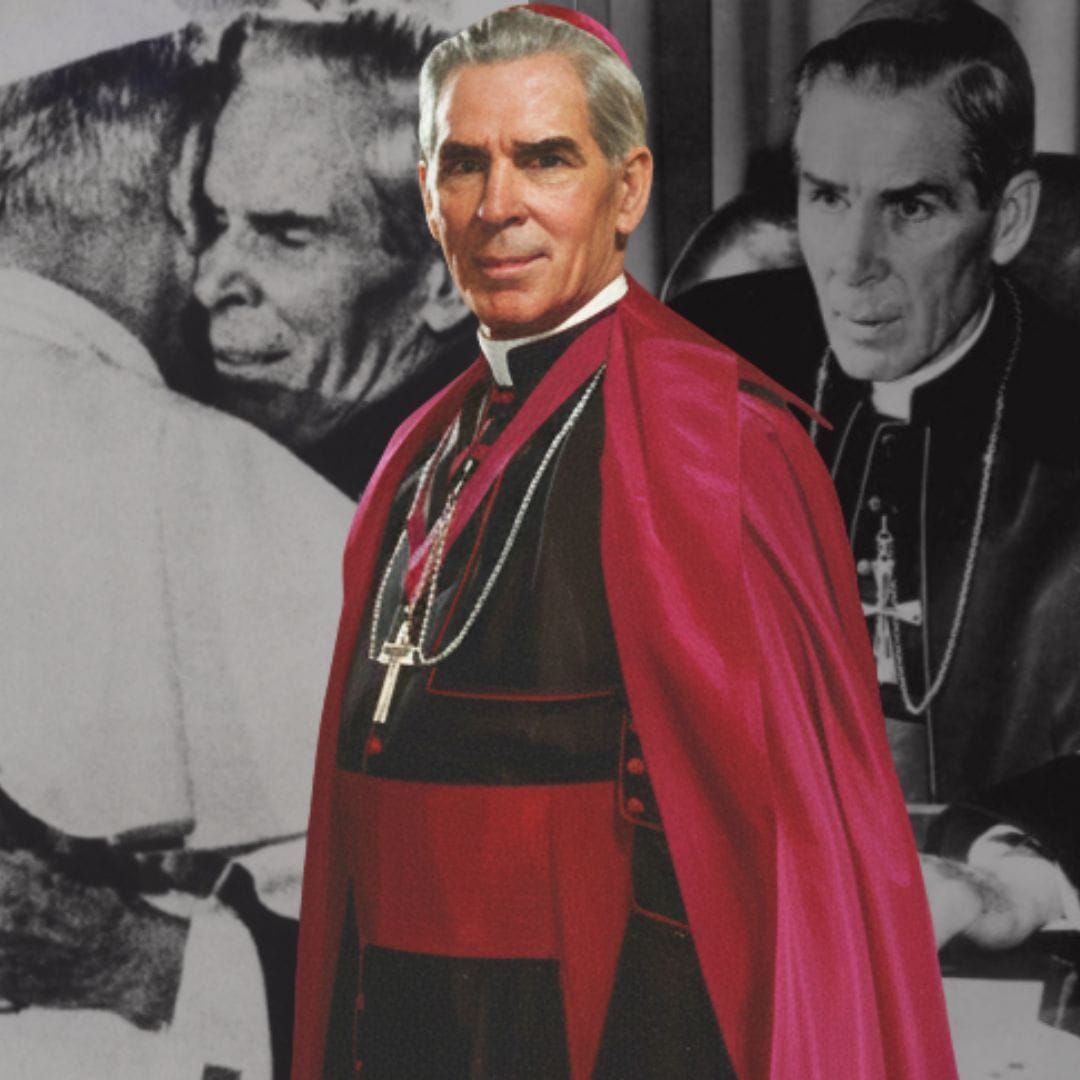
Archbishop Fulton J. Sheen, renown philosopher, theologian, and television pioneer, is now officially on a path toward sainthood.

What is remarkable isn’t just the fact that he might become St. Fulton Sheen. It is that he has already achieved something quite unlike anything the modern world has seen before; a posthumous social media influencer whose reach is larger now than when he first conquered the airwaves.

Blessed Sheen understood the attention economy before it had received its tagline. In 1951, he launched a prime-time television show called “Life Is Worth Living.” The program went head-to-head against TV’s top comedian Milton Berle as well as legendary singer and performer Frank Sinatra.

With piercing eyes that seemed to bore through the black-and-white screen, Blessed Sheen delivered clear moral messages to millions of average everyday Americans.

In language that ordinary folks could understand, an estimated 30 million viewers tuned in weekly to watch a Catholic bishop explain the existence of God, the problem of suffering, and the meaning of sacrifice.

He was, by any modern metric, a true influencer. Blessed Sheen built a “personal brand” before the term was part of our common vernacular. He published 73 books, recorded thousands of hours of radio and television fare, and developed what is now recognized as a unique style, complete with dramatic pauses, larger-than-life gestures, and one-liners aimed straight at the camera.

He consistently beat the competition in ratings and even won an Emmy Award in 1953, which he accepted by thanking his “…writers — Matthew, Mark, Luke and John.”

Here’s another bit of info that makes Blessed Sheen’s current moment so amazing. On TikTok, X, and Instagram, clips of his broadcasts (now colorized and subtitled) routinely generate millions of views.

Those in the younger demographic, who quite often know little about the Cold War or culture war, have been sharing his quotes with the same fervor typically reserved for podcast clips and TED Talks; quotes on the deeper concepts in life that challenge our worldviews regarding human dignity, untold suffering, real and/or perceived inequities, and the inherent dangers of communism.

Blessed Sheen represents the essence upon which the algorithm thrives; that being, the concise, provocative, visually distinct, endlessly quotable, etc.

Additionally, his direct, intellectually serious, visually distinctive, and witty style that worked on 1950s TV screens is one that perfectly aligns with the social media video ecosphere of today.

Comments on TikTok, YouTube, and Instagram about his one-liners have garnered positive contemporary labels such as “savage” and “based.” And discussions of his teachings are often extensive in substance and intriguing in content.

Blessed Sheen was of a mind that Christianity should meet people where they are, and one should use whatever tools are available to assist this process. If that meant a 1955 prime-time television show was in order, so be it.

In 2026, TikTok posts just may be the equivalent. Blessed Sheen’s communication style was tailor-made to go viral. As a matter of fact, he spoke in aphorisms that fit neatly into character limits.

Here’s a sampling:

– “The measure of love is to love without measure.”

– “You must remember to love people and use things, rather than to love things and use people.”

– “We become like that which we love. If we love what is base, we become base; but if we love what is noble, we become noble.”

More than mere theological observations, in today’s terms the above are shareable content. Blessed Sheen spoke to a post-Industrial Revolution culture that was anxious about technology, human connection, and the deeper meaning of life.

These are concerns that would logically be urgent to a generation raised on smartphones.

Blessed Sheen preached that material abundance without spiritual purpose creates a particular kind of despair. To young people drowning in abundance but starving for meaning, this message lands with surprising force.

The world just witnessed an event in which tens of thousands filled a former NFL stadium in St. Louis, Missouri, as the archbishop was declared “Blessed.” The first U.S.-born bishop to reach this stage of beatification now stands one verified miracle away from canonization.

Pope Leo shared that he had watched Blessed Sheen as a child. “It was a way of spending some time together as a family with the truths… that he shared in such an enthusiastic, lively way,” the pope, following the beatification, recalled.

When a second miracle is confirmed, the saint-in-waiting will be formally recognized. He is still converting, consoling, and teaching. But his words now travel farther and faster than he ever could have imagined.

The irony is rich. A man who once competed with Berle and Sinatra for ratings is now competing with MrBeast.

And he is winning, not by changing his message but by proving that truth, well-communicated, has no expiration date.

Fads and phases will always come and go. But the human hunger for meaning is a trend that never ends.

Waiting on a second miracle for The Influencer Who Would Be Saint.
The Rising Power of the Podcast

An interesting thing is happening in the new “Golden Age of America.” The mainstream media are quietly fading away.

Although former media giants have been losing their credibility, influence, and audiences for a quite a stretch of time, things really seem to have accelerated over the past couple of weeks.

Most recently, a string of mainstream anti-Trump media figures have given up their positions, including Jim Acosta who exited CNN, Chuck Todd who fled NBC News, Norah O’Donnell who left CBS News, Andrea Mitchell who vacated her MSNBC anchor chair, and Neil Cavuto who waved good-by to Fox News.

Thanks in large part to a whole lot of fake reporting, many left-leaning outlets had simply lost the public trust. That’s when the media vehicles of podcasting and streaming stepped up to provide a much-needed alternative to ABC, NBC, CBS, CNN, the New York Times, and the Washington Post.

And what happened is quite remarkable. New media figures that were accurate, informative, and real became more powerful and more influential than their media predecessors had been.

Acosta’s former employer generally brings in less than 400,000 viewers during primetime hours. On the other hand, Joe Rogan, who hosts one of the top three podcasts in the world, averages 11 million viewers per episode.

As a result of the changing media landscape, leftist media outlets are no longer able to control the narrative.

One contributing factor in the newfound success of podcasts is the growth of Gen Z (ages 13 to 24) audiences.

Edison Research found that 47 percent of the Gen Z online population (an estimated 24 million Americans) are monthly podcast listeners.

Interestingly, podcasters played a significant role in the landslide victory of President Donald Trump. According to a Bloomberg report, a group of highly popular podcasters and streamers rose to become the new mainstream source of information for millions of young males.

In the report, 9 podcasters were specifically cited: Adin Ross, Andrew Schulz, The Nelk Boys, Logan Paul, Joe Rogan, Lex Friedman, Patrick Bet-David, Shawn Ryan, and Theo Von.

In one impactful episode, Rogan interviewed then-GOP presidential nominee Trump during the final weeks of the 2024 presidential campaign. The podcast drew more than 50 million views on YouTube.

During the 2024 campaign cycle, nominees of both parties courted podcasters in an effort to seek support from voters who increasingly obtained their news information from non-traditional sources.

Vice President and Democrat presidential nominee Kamala Harris scheduled an interview with Alex Cooper for her “Call Her Daddy” podcast. Harris also sat with the hosts of the “All the Smoke” podcast for some Bay Area basketball talk.

Meanwhile, with the help of his son Barron’s media savvy, Trump focused on getting his MAGA message out via podcasts especially to young male voters.

It was inevitable that media changes would eventually come to White House press briefings and elsewhere in the government, including the Pentagon.

As part of the alternative media ecosystem, podcasters have been afforded seats at the table where they are permitted to ask questions at press briefings, much to the disdain of the establishment press.

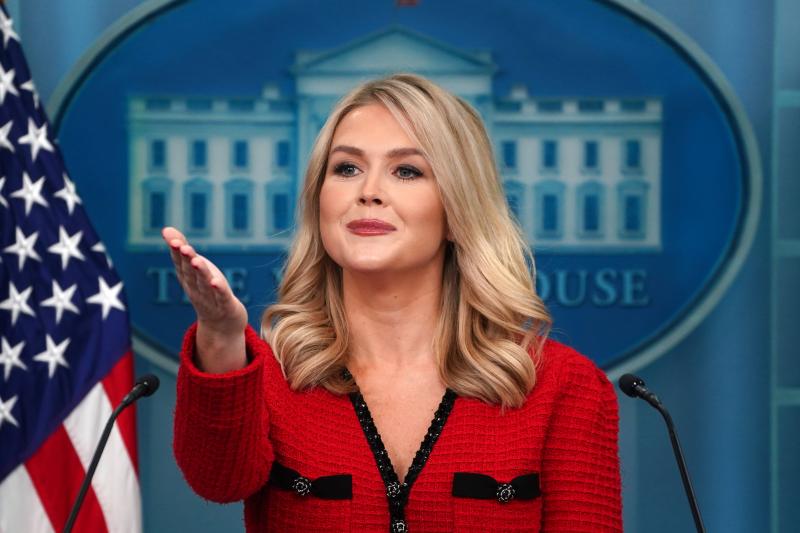
At her second press briefing, John Ashbrook of the Ruthless podcast was allowed to ask White House Press Secretary Karoline Leavitt a question.

Ashbrook, a former campaign strategist to Sen. Mitch McConnell, R-Ky., sat in the “new media” seat among chairs that in prior administrations had been reserved for members of the White House press corps.

Leavitt called the Ruthless podcast “one of the most influential podcasts in America.”

Meanwhile over at the Pentagon Secretary of Defense Pete Hegseth booted formerly prestigious media outlets from the Pentagon’s press offices to make room for new media organizations. The New York Times, NBC News, NPR, and Politico were told to evacuate their Pentagon office spaces by Valentine’s Day.

In their places, three new outlets were welcomed, The New York Post, One America News Network, and the Breitbart News Network.

As the new media kids on the block, podcasts have had an impressive beginning.

In my opinion, they’ve only just begun to wield their media power.

ABC News and Stephanopoulos Give Trump an Early Christmas

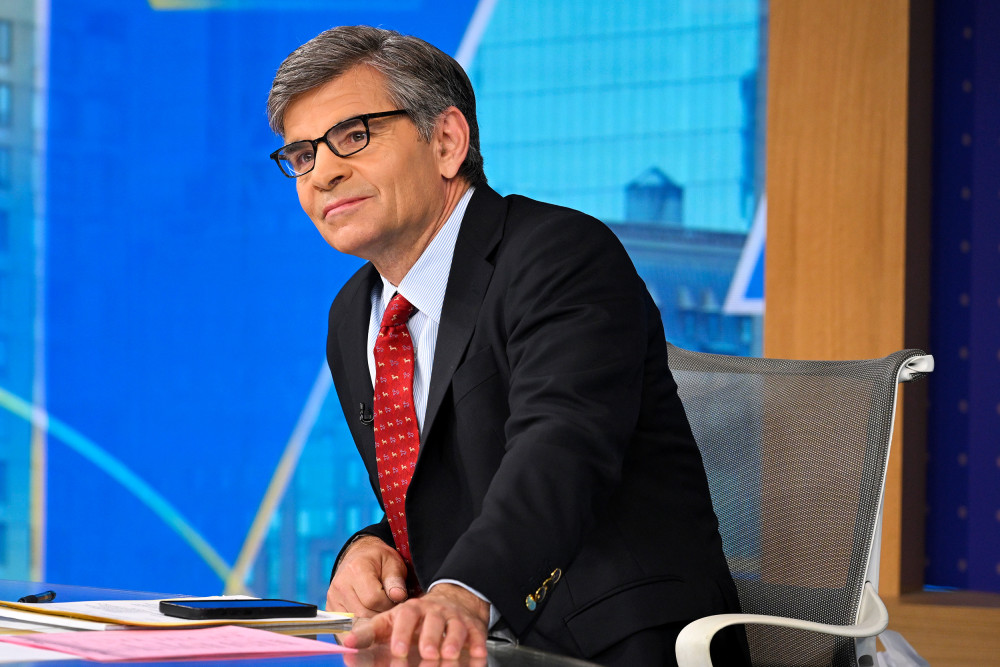
ABC News and anchor George Stephanopoulos recently settled a lawsuit with President elect Donald Trump.

The terms of the agreement have the defendants in the suit forking over $15 million to the incoming prez, the money being designated for a future presidential library or similar foundation.

Also included in the settlement is a forced payment of $1 million of Trump’s legal fees and a big crow-eating apology.

Trump had filed a lawsuit over an interview that Stephanopoulos had conducted with South Carolina congressional representative Nancy Mace.

During the Mace interview, the former Clinton administration operative repeatedly made the false allegation that Trump had been found liable for rape in a civil case that was initiated by E. Jean Carroll and took place in a New York courtroom earlier in the year.

Rep. Mace, a rape survivor herself, was being interrogated on her endorsement of Trump, and Stephanopoulos was evidently trying to paint her as a hypocrite. She felt personally attacked by Stephanopoulos and was brave enough to directly take him on at the time.

“I live with shame,” she said. “And you’re asking me a question about my political choices, trying to shame me as a rape victim — I find it disgusting.”

Most viewers did as well. ABC News had a serious problem from that moment on.

Shortly after the interview aired, Trump filed a defamation lawsuit against both the network and the anchor.

Stephanopoulos subsequently appeared on a politically friendly late-night show with host Stephen Colbert, posturing about the then-pending defamation legal action and boasting that he would not be “cowed out of doing my job because of a threat.”

All things considered, the most compelling part of the Trump win came in the portion of the settlement in which both ABC News and Stephanopoulos agreed to issue apology statements, expressing regret surrounding the case.

Both the settlement agreement and apology statements have already had far-reaching effects. Stephanopoulos has deactivated his X account and left the platform.

While the settlement has been heralded by center-right folks, it has also been viewed as the end of Western Civilization by the compromised media crowd and woke mob gang.

Regarding the settlement, reporter Oliver Willis wrote on Threads, “This is actually how democracy dies.”

Sharon Waxman, editor in chief of the Hollywood trade outlet TheWrap, wrote. “This is both confusing and disheartening. #Disney and #ABC caving to Trump.”

Democrat attorney Marc Elias posted, “Knee bent. Ring kissed. Another legacy news outlet chooses obedience.”

CNN media analyst Brian Stelter asked on X, “Why did ABC agree to pay and apologize? The network won’t say. It could have kept fighting in court, but decided to pay $$ to end the dispute and make the case go away.”

NPR TV critic Eric Deggans wrote on his X account, “Wow. Feels like one more mainstream news organization bending the knee.”

Keith Olbermann sarcastically posted, “What a great look @abc News.”

Left leaning legal analyst Allison Gill, known online as Mueller, She Wrote posted, “This is so gross.

Why not depose him [Trump]?” she asked. “The case wouldn’t cost more than $15M and ABC would have won if they bothered fighting.”

Human rights lawyer Qasim Rashid characterized the settlement as “the cowardice of legacy media out to make profit, rather than uphold principle.”

Here in the United States, a 1964 landmark Supreme Court case made it far more difficult for public figures, as opposed to ordinary folks, to sue for defamation. This is not the case in many other parts of the world.

In my opinion, reform in this area of the law is long overdue.

The timing of the ABC-Stephanopoulos settlement is interesting to say the least. It occurred a few short days after U.S. Magistrate Judge Lisette Reid ordered the president elect, and more importantly Stephanopoulos, to submit to depositions of four hours in length.

The ABC News-Stephanopoulos settlement sends a powerful message. It is one that says news personalities, especially those who work for far-left media outlets, can no longer broadcast false claims in the cavalier manner that they have become accustomed to.

An early Christmas present for those who value truth in news reporting.

Goodbye to MSNBC

Media and technology conglomerate Comcast is spinning off cable news network MSNBC from its roster, along with a number of other cable networks.

The company announced it will create a new publicly traded entity, which will house MSNBC and NBCUniversal’s additional cable television networks.

Comcast is giving the new company an apt moniker, “SpinCo.”

Unveiling of the plans are shaking up the media landscape and sending shock waves through the network’s offices.

It all came to a head when MSNBC lost over half its viewers following the electoral triumph of President elect Donald Trump.

An additional ratings drop occurred after Joe Scarborough, host of the network’s program “Morning Joe,” revealed that he and wife/co-host Mika Brzezinski had recently met with President elect Trump at Mar-a-Lago, ostensibly to “restart communications.”

The ratings tank and spin-off talk had Scarborough questioning his own future employment with the channel.

“I could be completely wrong. We could all be fired a year from now. You never know what’s going to happen tomorrow,” he said on his show.

There are a number of reasons that the spin-off is happening. First up is the fact that streaming is clobbering cable. Execs are understandably concerned about the steady increase in cord cutting that has taken place, especially among the younger demographic. This segment of viewers is accustomed to having non-bundled options and is partial to streaming media.

Comcast has also let it be known that current chairman of NBCUniversal Media Group Mark Lazarus will be named SpinCo’s CEO. Sources have indicated to Variety that Lazarus spoke to an audience of concerned staffers and talent, which included MSNBC personalities Rachel Maddow, Chris Jansing, and Katy Tur.

MSNBC will evidently be joined by the business news network CNBC in being detached from NBC News.

Since the two networks will no longer be a part of NBC, attendees at the meeting with Lazarus reportedly expressed concerns about whether the use of familiar symbols, which have been used by MSNBC for decades, will be allowed to continue.

In a shocking admission, Lazarus said that because of the spin-off he wasn’t sure whether MSNBC would have to give up its current image, identity, or home.

“Everyone is in a panic because everything is up in the air,” one MSNBC source told The New York Post.

Journalists at the network CNBC are coming apart at the seams at the prospect of being separated from NBC’s news division. This is because MSNBC routinely shares reporting, and a significant part of the network’s daytime schedule uses correspondents from NBC News.

Andrea Mitchell, chief foreign affairs correspondent and chief Washington correspondent for NBC News, has anchored a daily MSNBC show since 2008. And MSNBC’s Katy Tur and José Díaz-Balart have dual roles as journalists for NBC News as well.

Lazarus was unable to answer questions about MSNBC’s newsgathering and whether the cable news outlet would have to develop its own capability for collecting and verifying news, which is a daunting task to say the least.

The idea of giving MSNBC a makeover has been tossed around for a long time. The network wasn’t always the far-left echo chamber that it is today.

Back in 1996 it originally launched as a joint venture of Microsoft and NBC (although Microsoft would later divest its stake in the TV network).

Like fellow cable networks had previously done, MSNBC would go on to broaden its horizons by doing political coverage as well as opinion-oriented programming. A variety of viewpoints were represented on its programs, ones that ranged across a spectrum from Phil Donahue on the left to Tucker Carlson on the right.

Oh the good ol’ days, when there was a fairly clear line of demarcation between hard news and editorial opinion. That line served a number of important purposes, including a commitment to truth and accuracy in the conveyance of national and international information as well as an adherence to a journalistic code of ethics.

It could be that the good ol’ news days are going back to the future. And the sport of intellectual sparring will make its own separate comeback.

Let’s all stay tuned in whatever new media way is preferred. And may the Truth win out.

Journalism Goes Hollywood

It’s the mainstay of the entertainment industry.

Take bits of creative fabrication, put them all together in celluloid form, and pass the whole thing off as reality.

Voila! A big-screen, little-screen, and/or digital-screen production is born.

Once upon a time entertainment fare didn’t infiltrate journalistic territory. Instead it was happily confined to its own terrain.

And there was a kind of unwritten truth-in-advertising code within the journalism profession as well, secured by an internal bond of trust in news media venues across the culture.

Those days are long gone. The dividing line between entertainment and news media has almost been completely obliterated, and nowhere is it more obvious than within the realm of politics.

So what happens when news journalism goes Hollywood?

Well, in the past professional journalists pretty much had a singular goal, which was actually outlined in the first draft of the Society of Professional Journalists’ Code of Ethics, dated 1926: “Seek truth and report it.”

It appears as though way too many journalists have chosen to ditch their reporter notepads and are now itching to get into the Hollywood production game.

Let’s take a look at how Hollywood has done things for decades.

Filmmakers select a story to tell. It can be an original idea, an extension of a previous artistic work, or myriad of other fanciful combinations.

Screenwriters create a script, which oftentimes undergoes multiple revisions in order to increase dramatic effect or enhance entertainment value.

Production designers and art directors create visuals and construct sets.

Locations are scouted and choice venues are selected.

Filming begins, with repeated scene shoots taking place so that the finest performances can be selected from the mix.

An extensive editing process occurs in which scenes are examined, and segments of footage can be re-arranged and/or cut out completely if so desired.

The movie is then assembled and delivered in its completed state.

And of course there is a whole industry built on marketing the final product.

If we apply the above-outlined entertainment template to the news business, it begins to become clear as to what has occurred within a once-noble profession.

Journalism has gone Hollywood.

Some may immediately say, “So what’s the problem?”

The answer is simple. The Fourth Estate is now on life support. However, The Fourth Estate has, and always will be an essential component in keeping a free society free. So if The Fourth Estate truly dies, so does our liberty.

Traditionally, journalists have had an ethical obligation to inform the public, taking particular care to report truthfully and accurately. They have also had an ethical obligation to clarify mistakes that are made and/or issue retractions.

The public hasn’t seen a whole lot of this of late. Instead the opposite has been occurring. Here’s a glaring example.

Vice president and Democratic presidential nominee Kamala Harris recently sat down for an interview with CBS. After a less than sterling outing, it was discovered that the network had used some filmmaking techniques to give the vice president’s performance an extreme Hollywood makeover.

Interviewer Bill Whitaker had asked some rudimentary questions, but the responses given were woefully insufficient. That’s when the network went to work on editing and rearranging her remarks, ultimately making her appear to say something that she didn’t and to be someone that she isn’t.

As a promotion for the segment, the network had released raw footage of her answer to a question about Israel and leader Benjamin Netanyahu. It was embarrassingly bad.

But when CBS later aired the same Q&A, viewers were presented with a new and improved version of her response.

The network had evidently gone to great lengths to produce an edited, i.e., quasi-fictional response, one that had been digitally cut from an earlier part of the interview and re-inserted in the “preferred” place.

Also present in the edited version was some dubbed-in narration, which served to cover up some of her less than perfect responses.

Those who actually still care about the future of journalism, including The New York Post editorial board, have demanded that CBS release the full transcript of the interview. And according to The Post, former CBS staffers are demanding an independent investigation into the matter.

CBS is not alone in jumping into the Hollywood editing game. Action News on 6 ABC (located in the key battleground state of Pennsylvania) aired two different answers from the vice president regarding her economic policies, and then went on to publish the edited version on its website.

Times sure have changed. So-called news outlets are routinely copying the fanciful storytelling and elaborate production of liberal Hollywood. And fiction and fabrication are now unapologetically presented as fact and truth.

Yes, time is running out.

But rest assured, there are still a lot of us out here who will never stop hoping for a Hollywood happy ending and a return to truth.

Wise Words of Wikipedia’s Co-founder Larry Sanger

Larry Sanger is an esteemed figure in the technology community.

Recognized as one of the early pioneers of the Internet, in 2001 he co-founded Wikipedia.

He is also credited with having come up with the site’s name, which is a combination of the word “encyclopedia” and the Hawaiian word “wiki,” which means “quick.”

He and almost all of the early tech-innovators back in the day envisioned a continuous “free and open” Internet, one in which the marketplace of ideas could forever run with abandon.

Sanger has a Ph.D. in philosophy, served as a professor at a number of universities, and remains one of the truly deep thinkers of the technology world.

Many view him as the chief source of the underlying philosophy of the World Wide Web.

In an interview with senior fellow at the Manhattan Institute Christopher Rufo, which was conducted for City Journal, he reacted to statements of former Wikimedia Foundation CEO Katherine Maher, who is now CEO of NPR.

Maher’s statements have created a major backlash. She has basically rejected Internet freedom, admitted that collaboration with government to censor content has been occurring, and seemingly embraces relativism over objective truth.

Acknowledging the inherent bias that exists in Wikipedia, Sanger stated, “The fact that certain points of view have been systematically silenced, is nothing new.”

Yet the Maher comments that were recently reported by Rufo appear to have left Sanger seriously befuddled.

“My jaw is on the floor,” he said.

The Wikipedia co-founder indicated that he was previously unaware of “just how radical-sounding Katherine Maher is.”

Wikimedia’s former CEO reportedly said that it was an error for Wikipedia to be “free and open” and also suggested that allowing the site to be managed in this manner has led to bad outcomes.

Maher also acknowledged that she has worked together with governments to suppress what she deems as “misinformation” appearing on the Wikipedia site.

Sanger was quick to remark, “It’s fantastic, in a bad way, that she actually comes out against the system for being ‘free and open.’”

He views her actions in collaborating with government to censor material as completely incongruent with the notion of a free Internet.

“When she says that she’s worked with government to shut down what they consider ‘misinformation,’ that, in itself, means that it’s no longer free and open,” he noted.

He views it as outrageous that the site “has not just been taken over by the Left, but has been co-opted by and working with the government. That’s not a thing I would’ve imagined happening 20 years ago.”

What makes the situation even more untenable is the fact that now Maher is the head of a national broadcasting company that is financed by American taxpayers.

Sanger believes that she should be immediately removed from her position as CEO of NPR.

“If NPR wanted to prove that they were still committed to free speech, to being ideologically neutral, and simply nonpartisan, they would let her go right away,” he said.

He remembers clearly the vision of the web at its inception.

“We didn’t have to have a special vision of a free and open Internet. That was the Internet,” he emphasized.

Those of us who were early Internet adopters believed that freedom would forever be its hallmark.

Sanger said that in those early days “the notion of restrictions on free speech was nowhere to be found.”

He additionally commented that “in the 1990s and 2000s, Democrats and Republicans were competing with each other to demonstrate how much in favor of free speech they were.”

In an attempt to enhance the understanding of the fragile nature of the net, the online founding father drew from his academic background.

“As a philosopher, I knew that this was not automatic, that it could easily change,” he explained, noting that “we could lose these freedoms.”

To paraphrase the words of one of our nation’s eminent founding fathers, it’s a free platform if you don’t bleep it.

The Christian Nationalist Label

The unthinkable is happening.

Christians in America are under attack from the establishment media, the Hollywood community, and leftist activists within our country.

It was never supposed to be this way. Not in the Land of the Free.

Apart from our Christian founding, people in America generally tried to maintain a kind of “live and let live” attitude, particularly when it came to an individual’s personal religious and political beliefs.

But somehow this cultural tenet, like so many others, has mysteriously been turned on its head.

Christians are suddenly being tarred with the label “Christian Nationalist.”

So what exactly is a Christian Nationalist?

To the best of my knowledge it is a phrase that is currently being used to foment hatred against those who believe in the New Testament and who view the founding documents of our country as a national treasure.

Things seem to be escalating at a rapid pace. The pejorative has been turned into a meme that is being used to repeatedly massage people’s minds and turn Christians and patriots into pariahs.

It may also be a means to further suppress free speech as well as the free exercise of religion.

Apparently it began last year with verbal assaults that were aimed at House Speaker Mike Johnson.

Speaker Johnson had acknowledged his sincere religious beliefs, and the Christian Nationalist label has been used ever since to defame him and the GOP.

Mainstream news outlets have been releasing hit pieces disguised as journalism.

–Time Magazine published an article titled “The Christian Nationalism of Speaker Mike Johnson.”

–Politico followed suit with a piece called “The Christian Nationalist Ideas That Made Mike Johnson.”

–The New York Times joined in with an article titled “Christian Nationalism Is No Longer Operating Beneath the Surface.”

–More recently, in anticipation of the upcoming 2024 presidential campaign, Vanity Fair featured the title “Trump Allies Hope to Spread Christian Nationalism in the White House.”

–The Nation published an article called “Hit Trump on Theocracy, Not Hypocrisy.”

–The Hill deployed “America is facing a threat of biblical proportion: The rise of Christian nationalism.”

Other mainstream and left-wing outlets spewed out similar messages.

In an MSNBC appearance, Politico national investigative correspondent Heidi Przybyla indicated that a belief in the notion that rights come from God is an indicator of “Christian Nationalism.”

“The thing that unites them as Christian nationalists — not Christians, by the way, because Christian nationalist is very different — is that they believe that our rights as Americans, as all human beings, don’t come from any earthly authority. They don’t come from Congress. They don’t come to the Supreme Court, they come from God,” Przybyla uttered.

Referring to natural law as “a pillar of Catholicism,” Przybyla suggested that although natural law was once used for good, “an extremist element of conservative Christians” now apply it to abortion and same-sex marriage.

Bishop Robert Barron, founder of Word on Fire, a Catholic organization, responded to Przybyla in a video posted on X (formerly Twitter).

After citing language contained in the Declaration of Independence, Bishop Barron pointed out the peril of denigrating the ideas contained within this foundational document.

“It is exceptionally dangerous when we forget the principle that our rights come from God and not from the government,” the bishop said, “because the basic problem is if they come from the government (or Congress, or the Supreme Court) they can be taken away by those same people.”

He then issued an ominous warning: “This is opening the door to totalitarianism.”

Hollywood, too, has gotten into the Christian Nationalist name-calling craze.

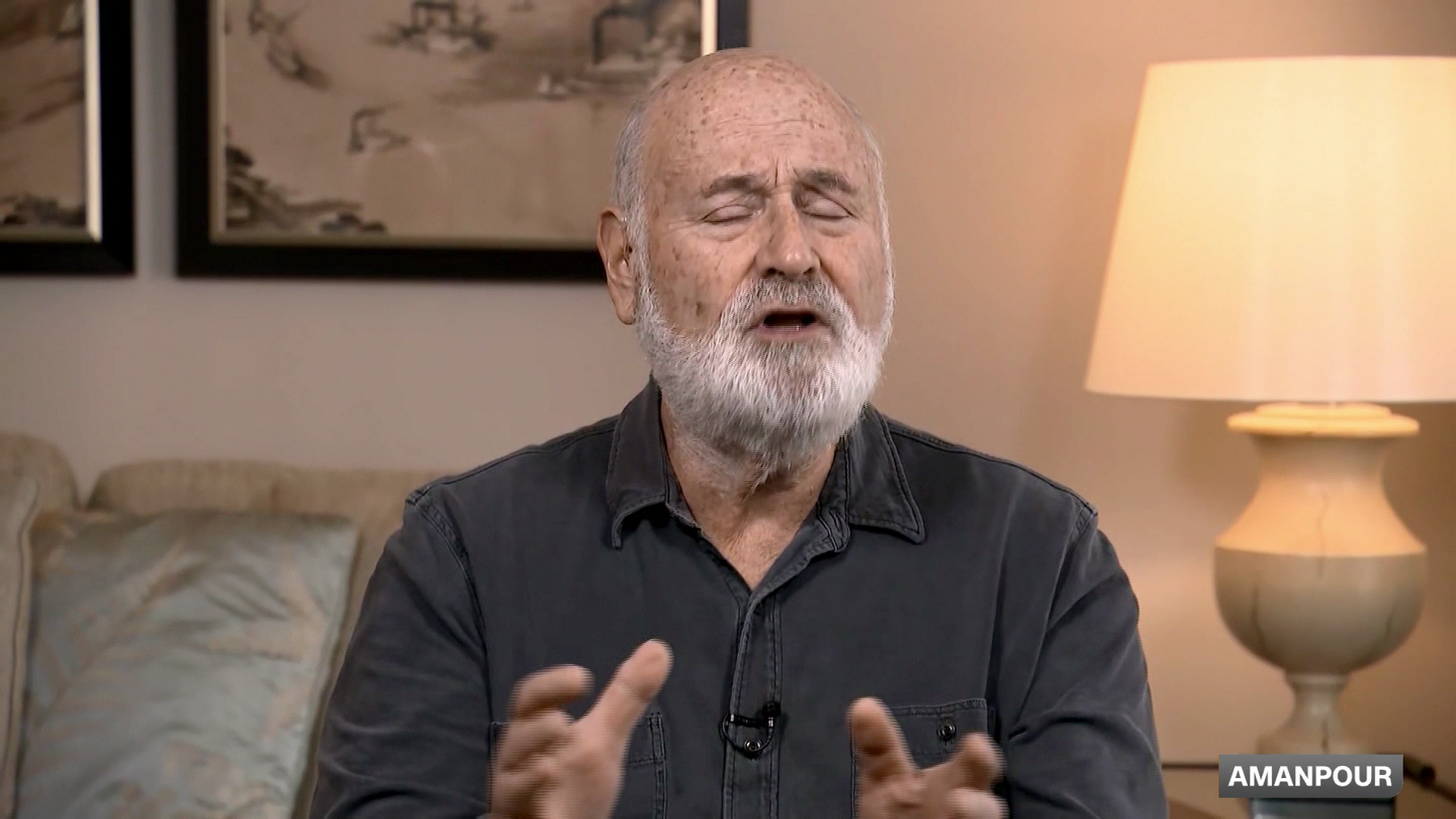
Rob Reiner has taken a lead role in a not so subtle attempt to negatively brand a huge portion of the population.

Acting as a kind of unofficial marketer of the propaganda, he has produced a film that is chock-ful of falsehoods.

He recently promoted his movie on MSNBC by pushing the meme while simultaneously maligning both Johnson and former President Donald Trump. Then he pulled out the race card.

“They believe that this is a white Christian nation,” Reiner said, seemingly implying that “they,” i.e., Christian Nationalists, are inherently racist.

In the documentary itself, respected institutions and organizations, including The Heritage Foundation, Turning Point USA, and Hillsdale College, are also disparaged in the propaganda process.

All of this started me thinking about the “Deplorables” label of the past.

I remembered that it took the air out of their sails when the label was embraced by those who were in support of the former president.

So here goes.

I love Jesus. I love our country. And I love all people.

If that makes me a Christian Nationalist, so be it.