The Never-ending Erosion of Privacy

In this era of out-of-control crime, certain retail chains and big-box stores are now using surveillance technology in an effort to address the massive amount of theft that has been taking place.

Up until recently, folks were generally unaware that such surveillance methods were being utilized by establishments. But as word has spread, so has public concern. And for good reason.

Newly applied surveillance techniques now include the use of facial recognition devices, which quietly scan and store biometric data on customers as they shop for everyday groceries and household supplies.

Biometric data are comprised of unique physical and behavioral characteristics that collectively determine each individual’s personal identity.

The biometric data that are being collected include, among other things, unique facial geometry, iris or retina patterns, hand geometry, behavioral traits, and even voiceprints.

This type of data is fundamentally different from personal information that was collected in the past. These data are processed electronically and are highly sensitive due to their uniqueness and permanence.

Unlike a password or credit card information, which after suffering a security breach can be changed, biometric information is generally a fixed measure. As such, once data are collected and stored, the information contained within is fixed as well, meaning it cannot be revoked or altered.

The primary type of biometric data currently being collected falls under the category of facial recognition, i.e., the use of technology to scan the face of an individual via an in-store device.

The in-store device collects and stores the one-and-only facial geometry of a distinct individual, creating a kind of “template” or mathematical representation of the individual’s face.

Use of this kind of technology raises major privacy concerns, particularly due to its ability to scan individuals en masse, and do so without first obtaining consent.

Signs displayed at the entrances of some Wegmans grocery store outlets located in New York City now disclose, as per the local law, that specified data collection is being conducted on the premises.

However, in many other retail establishments across the country, shoppers are not being forewarned.

Things are happening quickly, though. Some high-profile retailers, including Walmart, Target, and Home Depot, are currently facing lawsuits for practices similar to the ones implemented at Wegmans.

Certain companies have attempted to justify biometric data collection, claiming that the tool enhances overall security measures.

However, to legal scholars and average folks alike, the risks to privacy, the possible misuse of personal data, and the potential violation of civil liberties certainly appear to outweigh the commercial benefit that retailers are seeking.

Entering a store is hardly an agreement to be the subject of biometric surveillance. In most jurisdictions, customers have no practical way to refuse.

Consent, within the retail context, is an illusion.

With regard to regulation, it is primarily effectuated in the United States at a state and local level, with no comprehensive federal law governing private or governmental use of facial recognition and similar technologies.

Additionally, there is no federal statute that specifically regulates facial recognition or biometric data collection by either private entities or for governmental use.

The Federal Trade Commission has warned of inherent harms in biometric data collection technologies.

Some states are moving to ban retail facial recognition outright, recognizing that people shouldn’t have to surrender their biometric privacy for merely wanting or needing to shop for groceries.

Even in jurisdictions where disclosure is required, such as New York City, the practice of biometric data collection persists, without any affirmative permission from customers.

A number of state laws have led to lawsuits against retailers for collecting data without having obtained informed consent. However, the patchwork legal reality in the United States has left far too many Americans unprotected, basically allowing companies to treat public spaces as data-mining operations.

Aside from the privacy issue, these systems allow for deeper intrusions. For example, the biometric data can be used for what is known as “surveillance pricing,” where retailers track behavior such as the length of time one lingers in a certain aisle in order to charge an individual more money, based on a perceived willingness to pay.

Facial recognition technology also has the capacity to analyze emotions or demographics for the purposes of targeted marketing, a kind of shopping profiling, if you will.

It is my legal as well as my personal opinion that the time has come to ban altogether the practice of biometric surveillance in retail spaces.

While we wait for this to happen, here’s an idea:

All like-minded shoppers unite, and with what privacy we still have left we take our faces elsewhere.

Are you in?

Nick Reiner’s Uphill Legal Battle

In a case that has shocked the entertainment world, Nick Reiner, son of legendary filmmaker Rob Reiner, stands accused of first-degree murder of his father, and also of his mother, Michele Reiner.

With the inevitable backdrop of the glaring Hollywood spotlight, time will tell whether Reiner’s murder trial ends up devolving into a spectacle of celebrity privilege and familial drama.

Reiner, if convicted, faces life in prison without parole.

Battle lines within the courtroom have already been drawn. His defense team is being led by high-profile attorney Alan Jackson, who previously represented disgraced filmmaker Harvey Weinstein as well as Karen Read, who was accused of murder and subsequently acquitted.

The prosecution team is being led by Habib Balian. Balian is well known for his prosecutorial work on the cases of Robert Durst and the Menendez brothers.

Reiner’s defense team is signaling that the lawyers will likely go in the direction of an insanity plea, a strategy that many legal experts characterize as a steep climb.

This is exactly as it should be.

Far from being flawed, the rigorous standards in our courts for proving insanity are designed to be a safeguard against abuse, ensuring that even in high-profile, heart wrenching, inter-family cases such as this, justice will remain blind.

To be clear, the insanity defense is not, and should never be, a get-out-of-jail-free card for heinous acts.

In most U.S. jurisdictions (including California where Reiner’s case unfolds), defendants must not just prove mental illness was present, but they must also prove that they were incapable of understanding the nature of their actions or of distinguishing right from wrong at the time of the crime.

This is known as the M’Naghten Rule, the legal standard for the insanity defense, which originates from a case in England back in 1843.

Interestingly, it is a standard that, when applied, succeeds in approximately 1% of the cases in which it is attempted.

With regard to Reiner, reports suggest that his history of mental health struggles, and possible substance abuse, will be central to the plea. However, in practice, voluntary drug use rarely qualifies as legal insanity. It often points instead to diminished capacity at best, which might mitigate sentencing, but does not absolve guilt.

The maintaining of the tradition that makes it difficult to assert an insanity defense is important for society at large. It prevents the legal strategy from being weaponized in cases in which the desire for rehabilitation might generate public sympathy, despite the gravity of the crime.

If every defendant with a psychologist’s report could claim temporary madness, prisons would be empty and the families of victims would be left without recourse or closure.

In Reiner’s situation, the alleged premeditation (evidenced by crime scene details that are emerging) makes an insanity verdict even less likely. This is not injustice, but rather it is the system working to hold individuals responsible, regardless of their circumstances or position within society.

Because Reiner’s father was a renowned Hollywood filmmaker, a media frenzy is to be expected, as is speculation about motives.

At this point in time, it is reassuring that the case seems to be being handled like any other first-degree murder prosecution, unswayed by the Reiner family’s fame or inter-family dynamics.

In a recent courtroom appearance, Reiner was denied bail and is being kept incarcerated until he proceeds to trial, much like any other defendant in a similar position would be. No red-carpet treatment, but simply hearing the judge’s gavel strike in the same manner it would for any other individual.

This manifestation of equality under the law is precisely the way it is supposed to be.

We have seen far too many instances in which wealth and status appear to compromise the quality of justice itself, via deferred prosecutions, dismissed cases, and lenient sentences for those who are powerful, affluent, or well-connected.

In the Reiner criminal proceeding up until the present, prosecutors appear to have been using the full weight of evidence, pushing forward with witness statements and a timeline that paints a picture of deliberate violence.

The inter-family aspect adds layers of sorrow, no doubt. Rob and Michele were not just victims, but a father and a mother, purportedly losing their lives in a gruesome manner, allegedly at the hands of their own son, a loss that would tear any household apart.

Despite these alleged factors, though, the court thus far understands that the case should not be treated as a private family matter to be hushed up or plea-bargained away behind closed doors.

The high-profile nature of the case serves to remind us all that murder is murder, regardless of where it takes place or the societal ranking of the individuals involved.

Numerous observers have pointed out that the celebrity aspects of the case may create biases that can cut both ways, with jurors potentially being starstruck or, in contrast, overly punitive.

In its exquisiteness, the law has the protective mechanisms of jury selection, sequestering, and an appellate system that work together to keep fairness in the forefront.

May the principles that guide our legal system remain intact, and may justice for all prevail.

The Dangers of AI Companions

These days it seems that people of all ages are turning to chatbots to satisfy some of our most fundamental human needs, especially conversational interactions, friendship connections, and romantic courtships.

Those who regularly engage with chatbots may or may not realize that they may actually be forfeiting genuine connections in exchange for digital illusions.

Emerging research is sounding the alarm about the dangers of human-AI interaction.

AI companions, such as chatbots, have been programmed to provide emotional support. While this may sound fine on paper, such “pseudo-intimacy” often turns out to be a double-edged sword.

People are interacting with AI “personalities” that are programmed to be encouraging of whatever is being discussed. Responses to questions are instantaneous. They are also typically tailored to satisfy the human user’s personal desires.

A 2024 study in the Journal of Computer-Mediated Communication highlighted how algorithmic communications mimic closeness but also lack the authenticity of genuine human bonds. The resultant bi-directional interactions lead users to over-interpret superficial cues and form unhealthy dependencies.

Far from alleviating isolation, such interactions often deepen it as users retreat from the unpredictable nature of real relationships into the sterile comfort of contrived companionship.

AI-driven tools in the workplace automate collaboration, diminishing the need for human teamwork. This weakens human bonds.

Employees who frequently interact with AI systems report higher levels of loneliness, which in turn may be linked to insomnia and other potentially harmful post-work activity, such as excessive alcohol consumption.

People innately sense the artificiality of AI interaction. Recent surveys underscore this human response.

A Pew Research Center study from June 2025 found that a majority of Americans believe AI will worsen our ability to form meaningful relationships, with far more people seeing erosion rather than improvement in human connections.

As AI saturates our daily lives, instead of bridging gaps it appears to be widening them, prompting solitude to grow into a silent epidemic.

The digital age has already caused loss of empathy and erosion of essential social skills.

Human interaction thrives on in-person experience. An essential part of communication is non-verbal nuance. Speech and voice variations are accompanied by subtle glances, hesitant pauses, and empathetic nods.

In contrast, AI simplifies communication to digital prompts and programmed algorithms. Vital human elements are stripped away.

Research from the Gulu College of Health Sciences in March 2025 warns that excessive engagement with AI companions leads to decreased social skills, emotional detachment, and difficulties in maintaining authentic relationships.

By redefining communication norms, AI reduces our capacity for understanding non-verbal cues, which is a skill honed through face-to-face encounters.

Beyond the individual, AI-human interaction threatens the fabric of society. Algorithms curate echo chambers, limiting independent thought and fostering division.

As AI reshapes standards in communication and interaction, it blurs lines between human and machine, thereby normalizing friendless lives and eroding shared cultural and spiritual identities.

The resultant fragmentation from AI raises profound questions about consent, bias, and the commodification of intimacy. Without intervention, we face a world proliferated with AI relationships. It is a world fraught with danger to the well-being of both the individual and society at large.

A longitudinal study on chatbot use, published by MIT in March 2025, revealed rising concerns about its impact on real-world socialization. Overall, higher daily usage of chatbots correlated with higher loneliness and dependence.

Younger generations immersed in AI from childhood are particularly vulnerable, with studies showing reduced patience for ambiguity and a decline in social intelligence.

Social intelligence refers to an individual’s ability to comprehend, execute, and navigate social interaction, which, among other things, may include predominant verbal and non-verbal cues.

As users prioritize digital efficiency over interpersonal depth, society runs the risk of creating isolates, i.e., those who are proficient in prompting machines but inept at connecting with other individuals.

AI’s foray into mental health poses an additional alarming danger. Because access barriers to therapy are increasing, tens of thousands are turning to AI chatbots for mental health counseling.

A June 2025 Stanford study cautions that these mental health tools may reinforce stigma, deliver dangerous advice, or fall significantly short of human empathy.

Harvard researchers found similar results, also noting that emotional wellness apps foster serious attachments and dependencies and may potentially do more harm than good.

Increasing reports of AI-induced mental issues are mounting. Clinicians document cases of psychosis, suicide, and even murder-suicide, which are stemming from intense chatbot interactions.

It is not possible or, in my opinion, ethically acceptable to outsource the mental health needs of our people to a string of calculated algorithms.

Without boundaries, widespread use of non-human mental health counseling is resulting in atrophied social skills, increased loneliness, and, in the worst of cases, a collapse in mental health functioning.

Tech leaders have the responsibility to prioritize real connections over robotic replicas. It is essential for the AI industry to work towards more human-centric designs of technology.

It is also important to simultaneously implement a set of ethical standards. The underlying philosophy that defines the ethical standards will ultimately shape society’s destiny.

In my eyes, the future is binary. Each of us is being forced to make a decision.Take care in the choices that you make.

Humanity is hanging in the balance.

A Just Outcome

Tyler Robinson, a 22-year-old resident of Washington County, Utah, stands accused of the assassination of Charlie Kirk, which took place on September 10, 2025, during a speaking event at Utah Valley University.

Kirk, a 31-year-old nationally recognized free speech advocate and high school/college civic preacher, was brutally gunned down in a crowded campus courtyard. It was a brazen targeted attack that shook the nation to its core.

Robinson, who was arrested after a 33-hour manhunt, faces charges of aggravated murder as well as other related felonies, with prosecutors pursuing the death penalty.

The alleged assailant’s crime, due to its premeditation, public endangerment, and assault on civil discourse itself, is one in which justice arguably demands the ultimate punishment available under the law.

Utah’s capital punishment statute reserves the death penalty for only the worst criminals, i.e., those who commit aggravated murder with a callous disregard for human life.

Robinson’s actions are clearly callous and demonstrate a flagrant disregard for the lives of Kirk, his family, and the attendees of the event.

The evidence shows overwhelmingly that this was not an impulsive act, but rather a calculated killing. It was planned and executed with alarming precision. Surveillance footage shows the defendant concealing a rifle and approaching the event with intent. He fired a fatal shot at Kirk prior to fleeing.

The county attorney has highlighted the premeditated nature of the attack, noting that Robinson, who was not a student at Utah Valley University, deliberately traveled to the event. Also noted were his actions afterward, including alleged attempts to both obstruct justice and tamper with witnesses.

In order to qualify for the death penalty, Utah law requires an aggravating factor of creating a “great risk of death to others.” Robinson’s alleged crime endangered scores of students, faculty, and attendees who were present at the college campus courtyard.

Adding to the death penalty case is the tragic fact that Kirk’s own children, as well as other children, were present to witness the horror, something that Robinson purportedly knew and yet went forward with his hideous actions.

A university campus is a place that has traditionally been looked upon as a bastion of free speech. Two of the major components of Kirk’s public service mission were to encourage civil discourse and to promote free speech in the corridors of academia.

It is the height of bitter irony that in addition to ending Kirk’s life, there was apparently a desire to extinguish Kirk’s own right to speak, forever.

To allow such an act to go without the application of the appropriate measure of justice serves to embolden others who might take it upon themselves to target individuals, terminate their lives, and irrevocably silence their voices.

Utah’s death penalty process is neither hasty nor arbitrary. It requires a unanimous jury finding of aggravated murder and aggravating circumstances, followed by a penalty phase that will weigh mitigating factors, such as remorse or mental health issues, against the crime’s severity.

Prosecutors must prove these factors beyond a reasonable doubt during the determination of the guilt phase of the trial. Based on what is currently known, given the eyewitness accounts, video evidence, and family cooperation, a conviction on aggravated murder seems probable.

Because of Kirk’s status as a high-profile national figure, jurors may be more likely to accept the suitability of the death penalty option. The strong evidence of aggravating circumstances, such as the public risk and premeditation, favors the use of the full extent of punishment.

Robinson’s lack of remorse was illustrated in his alleged obstruction, among other things, allegedly attempting to convince various individuals to stay silent. His reported lack of cooperation with the prosecution exhibits a clear lack of contrition.

It is a general principle that the wheels of justice grind slowly, in Utah and elsewhere. Robinson’s case may take years before a trial would actually begin, primarily due to pre-trial motions and competency evaluations. The state’s process is stringent, with automatic appeals to the Utah Supreme Court as well as potential federal habeas review that may delay a potential execution for years.

Notwithstanding delays and obstacles, the pursuit of justice is, and always will be, worth the wait time.

Those who oppose the death penalty often cite life without parole as a sufficient enough deterrence.

However, as our society is witnessing in similarly brutal cases, allowing defendants to live out their days in prison, with the lingering possibility of future clemency, sends a message that even the most egregious acts of violence may have future flexibility in alleviating consequences.

The death penalty, in contrast, affirms that some crimes are so grievous, the perpetrators themselves have essentially forfeited the right to remain in society.

For Kirk, his family, and the nation, there is one outcome at this time that appears to surpass all others.

May the laws of our land “Take up the cause of the fatherless” and “plead the case of the widow.” (Isaiah 1:17)

Men Competing in Women’s Sports Ultimately Headed to the Supreme Court

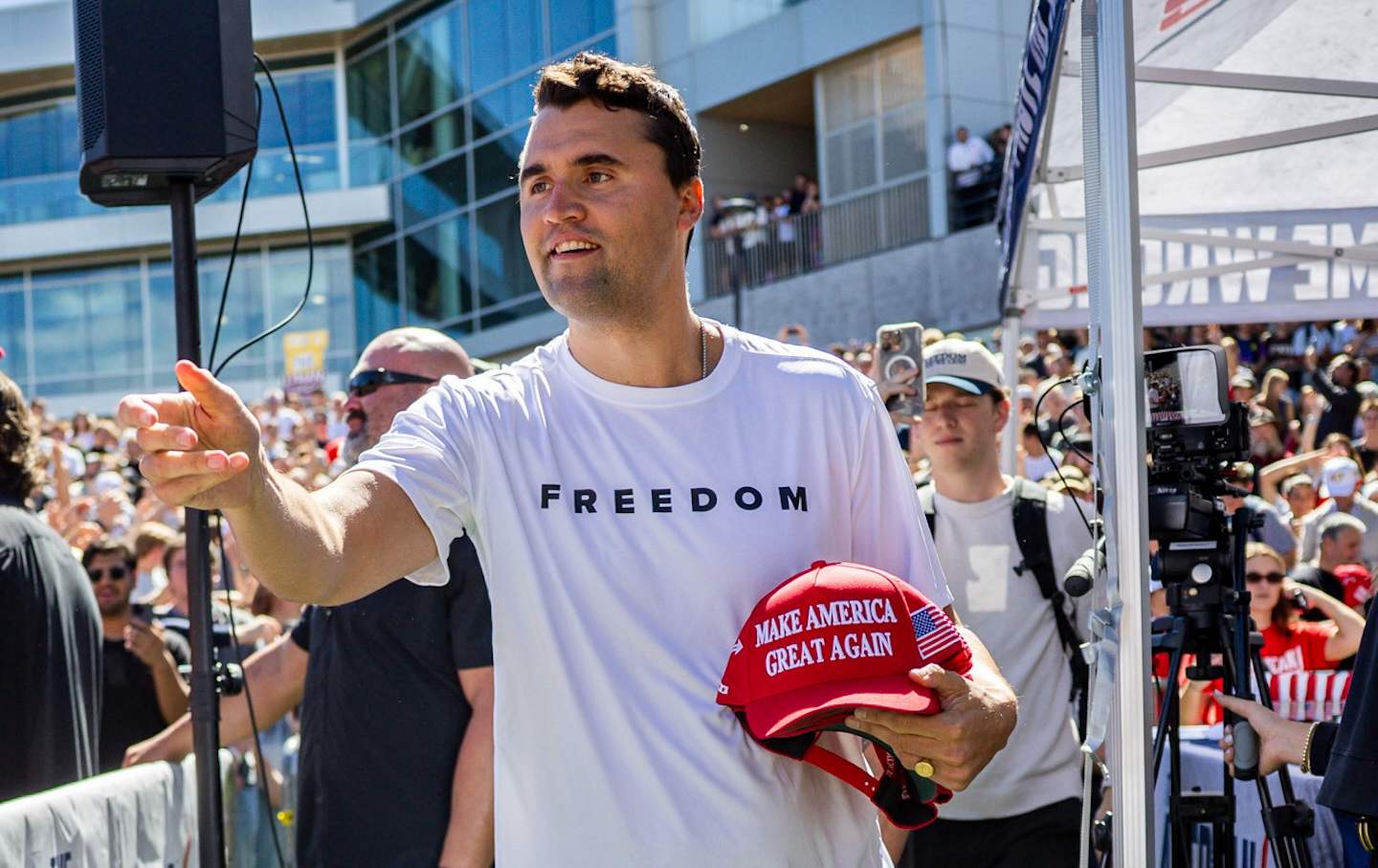
In a recent podcast with Turning Point USA co-founder Charlie Kirk, California Governor Gavin Newsom stated that it is “deeply unfair” for boys to compete against girls in athletic contests.

The governor’s “unfair” admission appears to have been a momentary opinion, since he soon changed direction regarding female athletes in his state.

President Donald Trump had made the subject of prohibiting biological male athletes from competing in women’s sports a key issue in the 2024 election campaign. President Trump recently suggested that he may cut federal funding to California if the state continued to allow biological male athletes to compete against females.

Gov. Newsom was informed that California’s policies are in violation of Title IX, which prohibits discrimination on the basis of sex in any federally-funded educational program.

In February 2025, the Department of Education began an investigation into the California Interscholastic Federation (CIF), which oversees sports at more than 1500 high schools. These are schools at which the policy of allowing male transgender students to compete against females has continued.

In May 2025, the Department of Justice (DOJ) began an investigation into whether California was violating the civil rights of female students in connection with the implementation of the same policies.

U.S. Secretary of Education Linda McMahon outlined a list of demands for California, which must be met if the state wishes to continue to receive federal funding. Sec. McMahon noted that California must fulfill a list of actions or risk the loss of education funding.

The Department of Education’s investigation indicated that the California Department of Education (CDE) and the CIF are in violation of Title IX, the federal civil rights law that forbids sex-based discrimination in education. This is because the state’s policies allow males who identify as females to participate in women’s sports.

Should the State of California decide not to comply with Title IX and fail to prohibit participation by biological males, it will lose federal funding.

The administration has proposed a resolution agreement that would require California to change its policies. The Golden State has 10 days to accept the proposed resolution agreement. If it does not, the Department of Education will refer the matter to the DOJ for further proceedings.

Under the resolution agreement, California must:

– Alter its guidance that allows participation in sports based on gender identity.

– Issue written apologies to each female athlete who took second place to a biological male athlete.

– Restore misappropriated sports records, titles, and awards to the female athletes who would otherwise have attained them.

– Adopt binary biology-based definitions for the terms “male” and “female.”

– Conduct an annual certification ensuring compliance with Title IX.

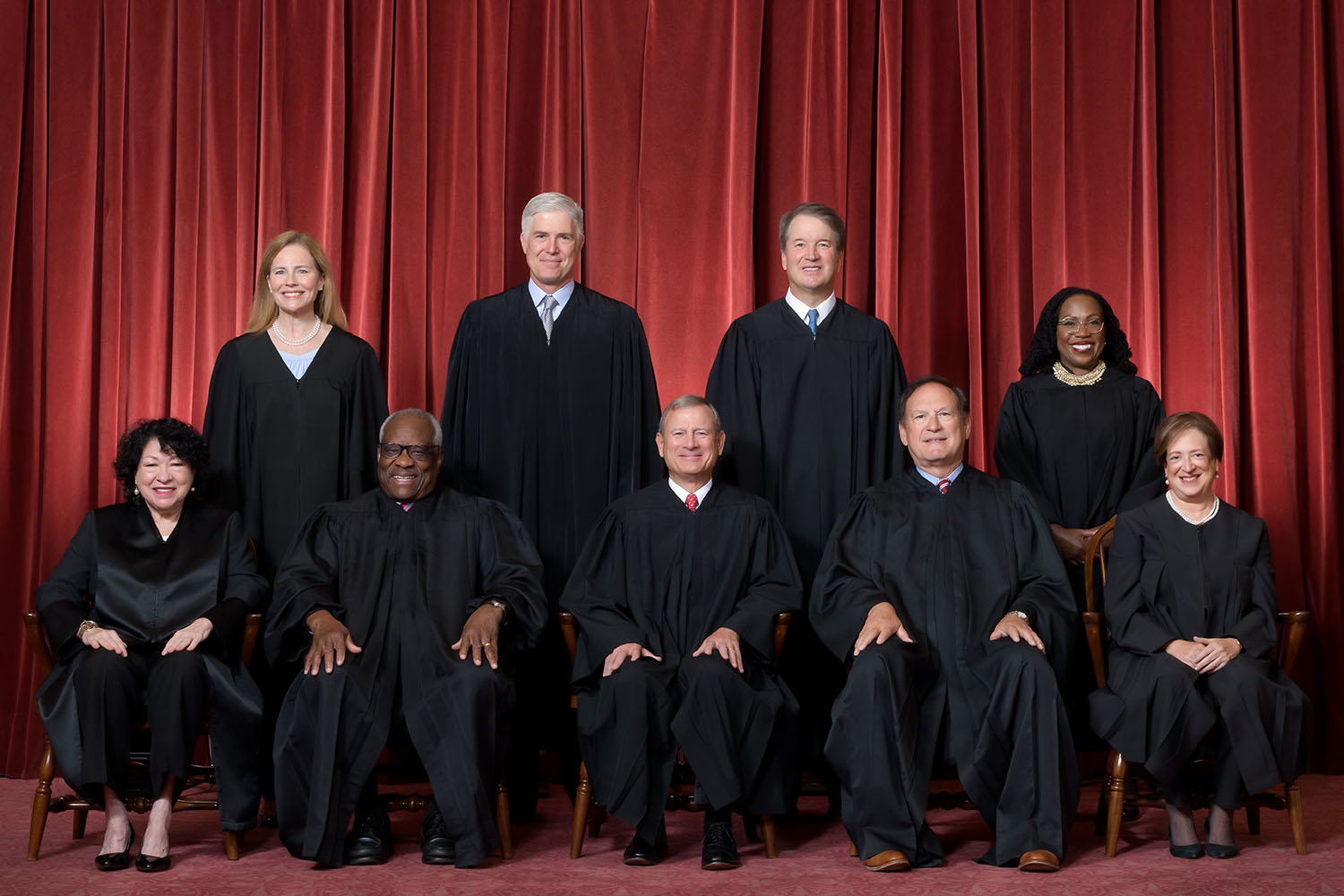
In analyzing this issue from a legal perspective, it is difficult to see how the U.S. Supreme Court could not be the final arbiter in this matter.

Several states have already passed laws restricting participation, based on sex assigned at birth. Other states are facing legal challenges that assert discrimination.

As legal battles have ensued, courts have reached differing conclusions when reviewing challenges surrounding the placement of restrictions on transgender athletes’ participation in school sports. Legal challenges have invoked both Title IX and the Equal Protection Clause of the Fourteenth Amendment.

Some federal courts have rendered rulings that base discrimination on gender identity. Other courts have ruled that the restriction of teams based on biological sex does not violate legal protections.

Courts have also been divided in rulings that concern the application of the Equal Protection Clause with regard to laws and policies that involve gender identity in differing contexts.

President Trump’s Executive Order 14201, which seeks to ban biological males from female sports across all educational levels, brings an additional layer to the legal complexity.

In my legal opinion, the issue of biological male athletes competing in women’s sports necessitates a High Court decision, because of the need for a thorough analysis and ultimately a clear definitive ruling.

The direct involvement of the Supreme Court, regarding the manner in which Title IX and other anti-discrimination laws are applied to transgender athletes, is essential, due to the conflicting legal interpretations of multiple federal courts as well as the societal ramifications that will inevitably flow from the High Court’s decision.

Catholic Bishops Fight Washington State’s Anti-Christian Law

The State of Washington recently passed a law that requires religious clergy to report information to authorities, even when the information is obtained during the centuries-old rite of Confession.

Although there are other legal ramifications to the new law, of particular significance is the reporting of information involving the sexual abuse of a child that is obtained during the sacramental rite.

Under the new legislation, clergy are required under penalty of law to report to authorities information that is acquired within the sacred walls of a confessional.

The term clergy, as defined in the state law, is “any regularly licensed, accredited, or ordained minister, priest, rabbi, imam, elder, or similarly positioned religious or spiritual leader.”

However, the state is solely targeting what is known as the priest-penitent privilege, leaving a lengthy list of categories of communications impervious to judicial interference, including the attorney-client privilege, the spousal privilege, and the sexual assault advocate privilege.

In my legal assessment, this new law is unconstitutional, discriminatory, and selective in that it exempts from compelled testimony an aunt or uncle, an Alcoholics Anonymous sponsor, a union representative, and an extensive list of others receiving confidential communication.

Catholic priests, on the other hand, are left exposed to be subpoenaed.

The priest-penitent privilege became a legal principle in the law of evidence for the purpose of protecting confidential communications between Catholic priests and those individuals seeking forgiveness and spiritual guidance during the Sacrament of Confession.

In the Catholic Church, the Sacrament of Confession is a sacred religious practice through which individuals confess their sins to a priest, who represents Christ, in order to seek forgiveness, grace, and reconciliation with God.

Priests are obligated to maintain what is called the “seal of confession,” a strict mandate of confidentiality.

The obligation of the confessional seal is so significant that, if violated, the penalty for the priest is as severe as can be: an automatic excommunication.

The confidentiality of communications during Confession is essential for Catholic Christians to be able to freely practice their faith. Being able to speak freely to clergy, without concern that any intimate admissions would ever be disclosed, is key to this sacramental experience.

The Code of Canon Law of the Catholic Church provides insight into the gravity of the obligations to which Catholic clergy are subject.

Canons 983 and 984 deal with the administration of the Sacrament of Confession and the confidentiality required by priests.

Canon 983 states that the sacramental seal is “inviolable,” meaning that a priest may not act against the interests of the penitent in any way whatsoever.

Canon 983 §1. states that “it is absolutely forbidden for a confessor to betray in any way a penitent in words or in any manner and for any reason.”

Canon 984 prohibits priests from any uses of the information acquired in Confession that would be a detriment to the penitent, even when a disclosure of the information is not deemed to be a risk.

The legal privileges set forth in Canon Law support the ability of clergy and penitents to freely practice their religion. It is likewise an integral part of religious freedom in general, as set forth in the U.S. Constitution, which prohibits the state from interfering with sacred religious practices, as per the restraints on government set forth in the First Amendment.

With the new law, Washington legislators are seemingly attempting to use the public’s concern for an extremely serious crime to undermine revered Christian religious practices.

The Catholic Bishops of Washington have responded by filing a lawsuit that challenges the constitutionality of the law.

In the lawsuit documents, the bishops present to the court the legal argument that the State of Washington has, by “putting clergy to the choice between temporal criminal punishment and eternal damnation,” and, “interfering with the internal governance and discipline of the Catholic Church, and targeting religion for the abrogation of all privileges,” patently violated the Free Exercise and Establishment Clauses of the First Amendment to the U.S. Constitution, and also violated the Equal Protection Clause of the Fourteenth Amendment to the U.S. Constitution, as well as Article I, Section 11 of the Constitution of the State of Washington.

The bishops also cite the discriminatory and arbitrary nature of the state interference by pointing out that the legislature has ignored secular privileges, while unfairly singling out religion.

“Information obtained through privileged communication by any supervisor in an organization other than clergy—including, for example, any non-clergy member of a religious non-profit or any member of a non-religious nonprofit—remains excluded from the reporting requirement.”

For priests, this is an impossible choice: Either violate Catholic Church teaching and incur automatic excommunication; or, after non-compliance with the law, be subjected to imprisonment, endure the confinement for the prescribed time, and suffer the separation from the flock they vowed to shepherd.

No doubt prayers are going up that the Washington State law will be struck down by a federal court.

James Comey’s Stumble on the Beach

In a recent post on his Instagram account, former FBI Director James Comey put up a photo of seashells on the sand that had been arranged to form the following pair of numbers: 86 47.

Accompanying the photo was a not so cryptic comment from Comey: “Cool shell formation on my beach walk.”

The social media subsequently exploded with reactions from individuals who were outraged over the post.

Comey responded with another post, alleging that he “didn’t realize some folks associate it [the number 86] with violence.” He added that he is “opposed to violence in all circumstances,” and he took down the original post.

To say that Comey’s comments regarding the number 86 stretch the boundaries of credibility is an understatement, especially when you consider who Comey is, the position in government that he previously held, and the individual with whom the number 47 is associated.

As a high-ranking law enforcement official, Comey’s prior duties included the prosecution of participants in organized crime. Such participants routinely use the number 86 as a code word for “assassination.”

According to Cassell’s Dictionary of Slang, the number 86 means “to kill, to murder; to execute judicially.”

Perhaps surprisingly for Comey, the seriousness of his wholly ill-advised post appears to be increasing with the passage of time. This is because the individual with whom the second seashell number is associated was saved by God’s grace from two attempts of the first seashell number’s kind.

In fact, Homeland Security Department Secretary Kristi Noem announced that the agency she heads as well as the Secret Service are investigating the matter.

FBI Director Kash Patel and Director of National Intelligence Tulsi Gabbard have also joined in the investigative tasks.

Director Patel indicated that the FBI is ready to assist the Secret Service with “all necessary support.” And Director Gabbard stressed that the administration and the Secret Service are taking the incident “very seriously.”

“There has to be accountability for this,” Director Gabbard told Fox News host Jesse Watters.

Predictably, the mainstream media have failed in their responsibility to objectively and truthfully report on the story. Instead they appear to be carrying water for the former FBI director.

Headlines about the incident speak volumes, as demonstrated below:

— “With Comey questioning, the Trump administration again targets speech” (The Washington Post)

— “The old slang term ‘86’ probably started as restaurant-worker jargon. Suddenly it’s in the news” (The Associated Press)

— “Trump admin’s Comey investigation is meant to stoke a culture of fear among Americans” (MSNBC)

— “Ex-FBI boss interviewed by Secret Service over Trump seashell post” (The BBC)

It just so happens that Comey’s seashell encounter during his stroll on the beach occurred just a few days prior to the release of his latest book. Could it have been a way to generate some pre-release buzz? In any event, he has been making the rounds on every media outlet that is willing to pitch him softballs.

While appearing on MSNBC with Nicole Wallace, he seemed to take on the role of victim.

“You are back in the middle of a political firestorm,” Wallace said.

Comey responded, “Yeah, for walking on the beach with my wife.”

He went on to describe himself as “a grandfather and an author wearing sweaters and jeans,” explaining that he had “posted a silly picture of shells” that he apparently “thought was a clever way to express a political viewpoint…”

A political viewpoint? FBI Deputy Director Dan Bongino sees it very differently.

In a post on X, Deputy Director Bongino said that the numeric symbolism was being used by copycats to send out threats that the FBI is mandated to investigate, which requires valuable time and resources.

“We are now dealing with copycats, sending cryptic threats to public figures, using the ‘86’ reference,” Deputy Director Bongino wrote. “Whether they turn out to be legitimate threats or not, taxpayer-funded public safety agents are going to have to run these all out and investigate them.”

If a prosecution against Comey is sought, it is likely to be a difficult one, considering free speech and intent arguments. However, time will tell whether other significant facts will emerge that justify legal action against the former FBI director.

In the meantime, many like me are still hoping that the haters’ hardened hearts are transformed.

Still sending up prayers, too, for the one who despite the hate, fights on anyway.