Diddy’s Legal Woes Spell Trouble for Some Major Hollywood Players

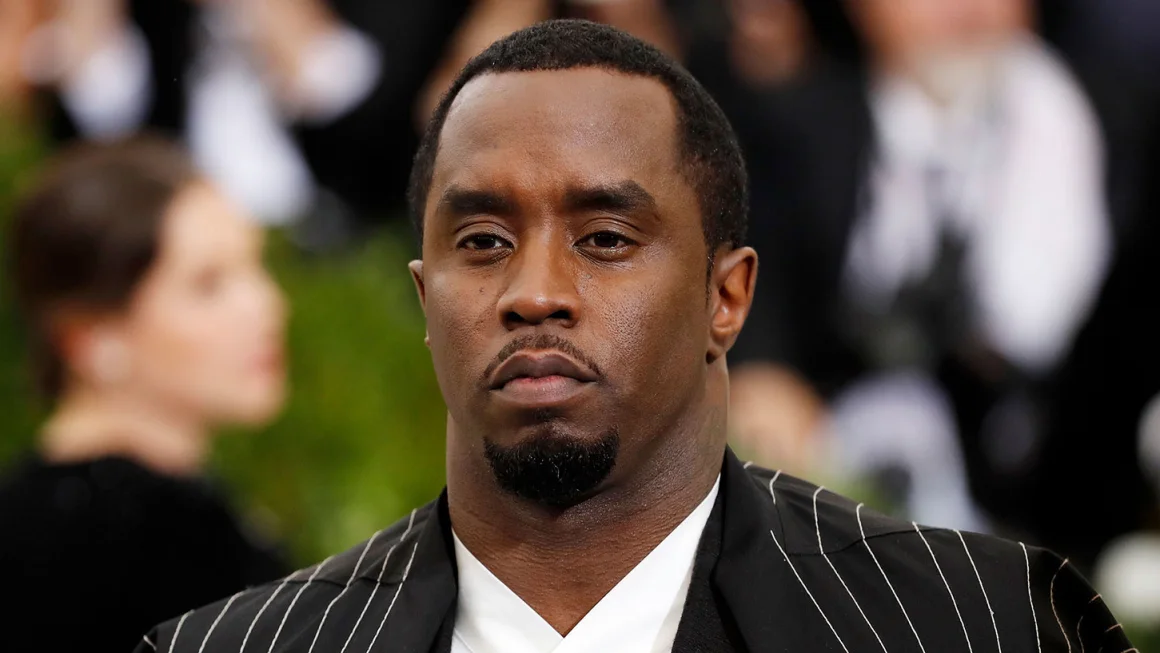
Sean Combs, widely known as Diddy, continues to be embroiled in a scandal that appears to be growing more serious each day, not only for him but for several of his Hollywood colleagues.

The influential music producer and three-time Grammy winner was recently refused bail, after having pleaded not guilty to multiple felony counts. His criminal trial is fast approaching.

After he was charged criminally, more allegations surfaced via a lawyer who is representing at least 120 plaintiffs that intend to file lawsuits against Diddy and others.

Speaking at a press conference, Texas attorney Tony Buzbee indicated that his clients will be alleging various sexual misconduct allegations against Diddy as well as additional defendants.

According to Buzbee, over 3,280 people have contacted his firm with allegations against the entertainment mogul. However, after vetting the claimants and their cases his law firm decided to represent a select 120 people. Additional potential cases are still under review.

The alleged abuses that will appear in the moving papers purportedly took place mainly at parties that were held in the states of New York, California and Florida, parties at which individuals were allegedly given drinks laced with drugs.

Some of the alleged conduct occurred at venues where individuals who were seeking to break into the entertainment industry were auditioning.

The allegations purportedly took place between the years 1991 and 2024.

According to Buzbee, the alleged victims that are planning to file suit consist of 60 males and 60 females. A shocking 25 of the plaintiffs were purportedly minors at the time of the alleged misconduct.

The purported young age of some of the alleged victims appears to be altering the nature and character of the allegations against Diddy.

Buzbee elaborated on the alleged circumstances of a nine-year-old boy who was taken to New York to audition for Diddy’s record label.

“This individual was sexually abused, allegedly by Sean Combs and several other people at the studio, in the promise to both his parents and to himself of getting a record deal,” the attorney said.

Buzbee provided details of another alleged incident involving a fifteen-year-old girl who was allegedly flown to New York City to attend a party, and who subsequently was allegedly drugged and raped in the presence of Diddy.

The attorney invoked the industry that is most likely to be impacted by Diddy’s case, that being Hollywood.

“The biggest secret in the entertainment industry, that really wasn’t a secret at all, has finally been revealed to the world,” Buzbee said to the press.

He then added the following words, which likely sent shivers across the Hollywood community:

“The day will come when we will name names other than Sean Combs, and there’s a lot of names…But the names that we’re going to name, assuming that our investigators confirm and corroborate what we’ve been told, are names that will shock you.”

Buzbee indicated that there are additional perpetrators, and said, “They already know who they are.”

Numerous household names have outward ties to Diddy. Some have been photographed with him. Many have attended his parties.

Hollywood is bracing itself for the day that A-listers in connection to the Diddy cases are named.

Anxiety is high over the very real possibility that careers and brands will be tarnished, whether by association with a Diddy allegation, or worse, by being named as a defendant in a criminal case or a civil one.

During a segment on “The Breakfast Club,” radio host Charlamagne Tha God opined that if Combs is convicted of racketeering and sex trafficking, others involved will likely be going to jail.

As for Diddy himself, he is completely denying the claims and allegations. His representatives have stated that he “cannot address every meritless allegation in what has become a reckless media circus.”

They added that Diddy “emphatically and categorically denies as false and defamatory any claim that he sexually abused anyone, including minors,” and stated that “he looks forward to proving his innocence and vindicating himself in court if and when claims are filed and served, where the truth will be established based on evidence, not speculation.”

Diddy is due back in court for a status conference on October 9, 2024, during which the court is expected to set a trial date. Prosecutors have also said that the investigation into alleged criminal activity is still ongoing.

In the meantime, Hollywood is holding its collective breath.
Oliver Anthony’s Blue Collar Anthem Rockets to Number One

Truths, especially those that have been suppressed, often have a way of emerging in the form of a song.

With one finger on an instrument and another on the pulse of a culture, a gifted songwriter is able to capture a moment, compose melody, and pen lyrics. With the luck of the draw, the creation may even become a musical soundtrack for its times.

This just happened in the life of former factory worker and off-the-grid farmer Oliver Anthony.

He performed an original song for an audience comprised of his dogs. The instant the video was uploaded to the web, Oliver’s world changed forever.

Just days ago the Virginia singer-songwriter was unknown to the general public. Now he has the number one song on iTunes. It’s called “Rich Men North of Richmond.”

It turns out that Oliver writes his songs from a 90-acre piece of land in Farmville, about an hour outside of Richmond, the place that he and his trio of canines call home.

A performance video of “Rich Men North of Richmond,” which was posted by radiowv, currently has more than 8.4 million YouTube views.

The footage shows him singing while strumming an acoustic guitar. His song is blue-collar music at its best, twangy, bluesy, and soul-stirring. The distinctive country tune speaks the language of average folks and puts into words their feelings of frustration with those who are running the country.

It opens with the following lines:

“I’ve been selling my soul

Working all day

Overtime hours

For bull—- pay.”

Reflecting the discontent with the present economic reality and the fallout from unjust governmental policies, Oliver goes on to sing, “Lord, it’s a damn shame what the world’s gotten to for people like me and people like you.”

One of the most compelling lines in the song points to the surreal nature of life these days, with the words, “Wish I could wake up and it not be true, but it is, oh it is. Living in the new world with an old soul.”

In a separate YouTube introduction video that he posted, Oliver shares that the performance video of “Rich Men North of Richmond” is “the first song to get out there that’s been recorded on a real microphone and a real camera, and not just on my cell phone.”

He also shares that prior to finding his musical mission he had “wasted a lot of nights getting high and getting drunk, and I had sort of gotten to a point in my life where even things that I did care about didn’t mean anything to me anymore.”

Invoking a famed TV psychologist, he adds, “This is certainly no Dr. Phil episode, but I found an outlet in this music. I started uploading a couple of songs.”

He voices his concerns about the difficulties folks face in having to pay high taxes while experiencing the falling dollar.

“No matter how hard they push and how much effort they put into whatever it is they’re doing, they just quite can’t get ahead because the dollar’s not worth enough, it’s being over-taxed,” he states.

He draws attention to the horrific situation in the world involving our precious children.

“One of the worst things a human being can do is take advantage of a child,” he says. “I think I drew the line on being quiet when I started to see that becoming normalized. And I’ll leave that at that.”

He explains that “in the last part of the song, it touches on suicide rates and really on mental health and depression.” He goes on to express that “there’s no reason why young men or women in this country should be committing suicide. There’s obviously a problem. People talk about epidemics in this country — the homelessness and the drug use and the lack of skilled labor…”

He also notes that he sits “pretty dead center down the aisle on politics” and that “it seems like both sides serve the same master — and that master is not someone of any good to the people of this country.”

Kari Lake shared her love of Oliver’s song on Twitter/X, posting, “I can’t listen to Oliver Anthony’s ‘Rich Men North of Richmond’ without getting chills.” She added, “It’s raw, it’s true, & it’s touching the hearts of men & women across this great nation.”

Country music singer-songwriter John Rich actually made a recent offer to produce Oliver’s album.

Meanwhile, left-leaning media are trying to sully the song. For example, Rolling Stone published a piece titled “Right-Wing Influencers Just Found Their Favorite New Country Song,” characterizing the tune as a “passionate screed against the state of the country.”

News bulletin: His song is music to the ears of millions of Americans whose voices have been suppressed and who have simply been suffering in silence.

8.4 million views and counting is the exclamation point.

AI and the Song

Music is a universal language like no other.

When words seem inadequate, it speaks volumes.

So where does music come from?

We may differ in our opinions on that. But a lot of us believe that inspiration, in music as in various other art forms, literary writings, discoveries, inventions, and the like, has an other worldly origin.

Musical inspiration is particularly unique, though, because of its biblical roots and its distinct resonance within human beings across all time.

Artists who are driven to share their musical inspirations are currently facing some questions that are seriously haunting ones.

Here are a few:

1. Can technology really create the equivalent of human music?

2. Will technologically designed songs measure up to the music that human beings love?

3. Is music designed by technology really music?

There are a whole lot of music artists who are concerned about Artificial Intelligence (AI) and its supposed “creation” of musical content.

Experimentation with computers composing music has been going on for decades. But there was always a human at the helm.

Now with AI, the human is hidden. A programmer, a series of programmers, faceless, nameless, all seemingly lost, only data remain.

And we are supposed to accept the notion that data have been assigned to be our new composers?

Such so-called artistic advances in AI are prompting an interesting reaction – a mixed blend of enthusiasm, anticipation, and alarm.

A few recent examples provide insight.

A “collaboration” between famed pop musicians Drake and The Weeknd, which was actually an AI-simulated version of “Heart on My Sleeve,” went viral on social media. The track was quickly pulled at the behest of the label, Universal Music Group.

AI was used to generate an album of the highly successful British rock band Oasis. But the group had long been disbanded. Apparently, an insignificant detail.

Canadian EDM artist Claire Boucher, a.k.a. Grimes, is evidently embracing the idea of an AI version of herself.

She sent out the following advertisement of sorts:

“I’ll split 50% royalties on any successful AI generated song that uses my voice,” Grimes tweeted. “Same deal as I would with any artist i collab with. Feel free to use my voice without penalty. I have no label and no legal bindings.”

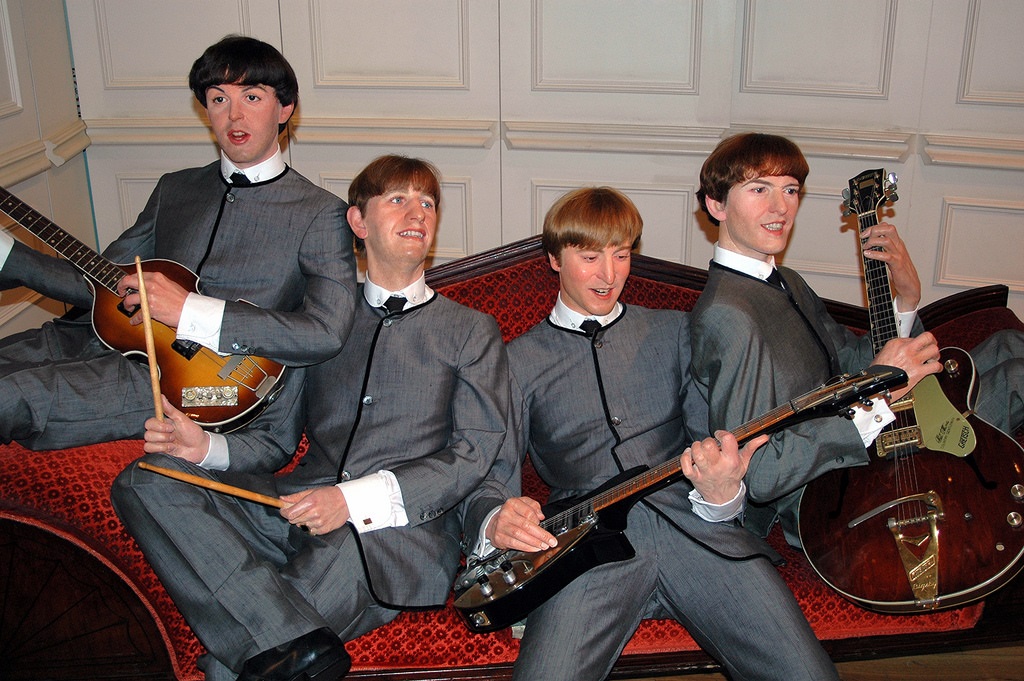
Probably the biggest story relating to all of the above involves Sir Paul McCartney. The former Beatle is one of the most influential composers and performers of all time.

McCartney has accelerated the AI discussion by announcing that the surviving Beatles would release an AI-assisted tune, which will feature vocals by the late John Lennon.

He told BBC Radio 4 that the technology was able to “extricate” Lennon’s voice from a demo recording to allow the song to be completed, and it is set to be released this year.

During the production of Peter Jackson’s documentary “Get Back,” technology was used to remove background noise from the track and otherwise clean up the audio.

“[Jackson] was able to extricate John’s voice from a ropey little bit of cassette,” McCartney said. “We had John’s voice and a piano and he [Jackson] could separate them with AI.”

“So when we came to make what will be the last Beatles record, it was a demo that John had, and we were able to take John’s voice and get it pure through this AI,” McCartney added.

Reportedly, the song is a 1978 Lennon composition called “Now and Then.”

McCartney had received the demo a year earlier from Lennon’s widow, Yoko Ono. The tracks were recorded on a boombox as John sat at the piano in his New York apartment.

Two of the songs on the demo, “Free as a Bird” and “Real Love,” were restored by producer Jeff Lynne and released in 1995 and 1996, the first Beatles release in 25 years.

The band had attempted to record “Now and Then,” but the recording session had been halted and the tune abandoned.

Now AI is facilitating McCartney’s completion of the song.

But is it really a new Beatles song? John isn’t with us anymore. How could it be?

After the announcement, some consternation appeared on various web platforms.

McCartney then backtracked a bit, taking to Twitter to assure Beatle fans that in the making of the “new” Beatles song nothing had been “artificially or synthetically created.”

It could be that McCartney is experiencing some trepidation about the use of AI for music production.

He’s certainly not alone.

According to a poll taken by the Bedroom Producers Blog, 86% of those surveyed believe the technology will replace existing tools of music production, and 73% of respondents believe AI could replace human producers in the future.

It actually doesn’t take a musician or songwriter or producer or engineer to realize that, within this context, AI is just what its name indicates – Artificial.

Thankfully, there are still those among us who are able to recognize real music and who freely acknowledge the very source of our human inspiration.

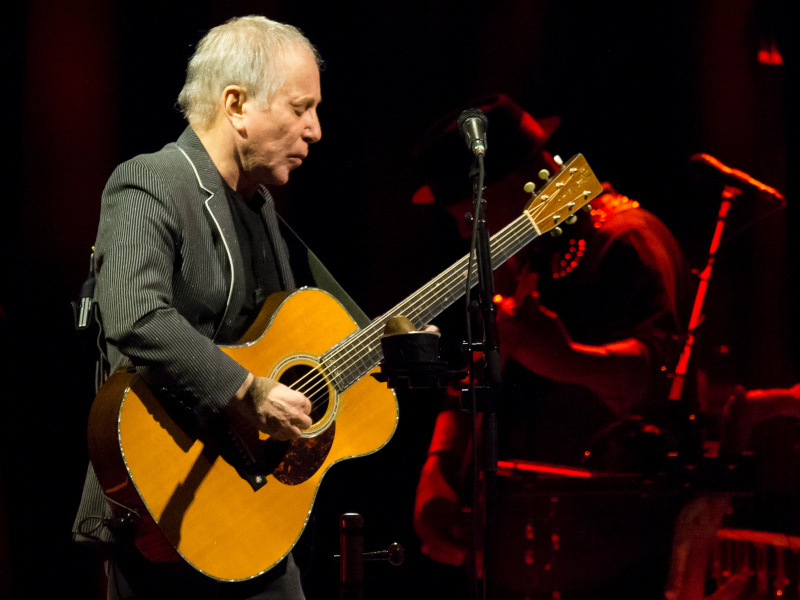
Paul Simon: The Psalmist and the Song

Paul Simon is one of the most celebrated contemporary artists in the history of American music. The acclaimed singer-songwriter has won sixteen Grammy Awards and is also a two-time inductee into the Rock and Roll Hall of Fame.

Simon’s decades-long musical journey had its beginnings in a pairing up with a schoolmate named Art Garfunkel. The two formed a duo, aptly named Simon & Garfunkel.

The combined efforts of the two generated a soundtrack that through melody and lyrics was able to capture and reflect back the thoughts and emotions of a nation in the midst of a cultural shift.

A musical pioneer, the group exquisitely melded the genres of folk and rock. Its success was remarkable as evidenced by massive record sales as well as accolades, including being ranked among Rolling Stone magazine’s “Greatest Duos of All Time.”

In his solo career, which launched in the 1970s, Simon would continue his eclectic musical and lyrical exploration, this time combining reggae, soul, and indigenous styles.

Simon’s dad Louis provided his son with an early musical head start. In addition to being a college professor, Louis was a bass player and bandleader, performing under the name Lee Sims. Mom Belle taught elementary school.

Simon’s latest work is a 33-minute suite, titled “7 Psalms.” The project came to the iconic poet-wordsmith in a compelling dream, which has evidently reshaped his life’s work.

Spiritual language and imagery has long been a trademark of his inimitable songwriting. Simon wrote the timeless inspirational hymn “Bridge over Troubled Water,” which he and Garfunkel performed to the adulation of audiences around the globe.

He is able to make his religious visions uniquely relatable, as he did in his 2012 album “So Beautiful or So What,” which was so filled with faith-based references it surprised even him. The song lyrics feature poetry about God, angels, creation, prayer, and the afterlife.

While discussing the spiritual nature of his art during an interview with the PBS program “Religion & Ethics NewsWeekly,” he noted that “for somebody who is not a religious person, God comes up a lot in my songs.”

“I think it’s a part of my thoughts on a fairly regular basis,” he said. “I think of it more as spiritual feeling. It’s something that I recognize in myself and that I enjoy, and I don’t quite understand it.”

Although his music is cherished by people of all faiths, he was actually raised in the Jewish tradition. Regarding his Jewish roots, he explains, “I was raised to a degree enough to be bar mitzvahed and have that much Jewish education…”

With fans of every spiritual persuasion, Christians appear to be especially appreciative for his Christmas song additions. In “So Beautiful or So What” he includes the Christmas tune “Getting Ready for Christmas Day.” In another song called “Love and Hard Times,” he includes the gentle line: “God and His only son paid a courtesy call on Earth one Sunday morning.”

In the song “The Afterlife,” he imagines waiting in a line similar to the Department of Motor Vehicles. But his poetic description of life after death is anything but ordinary. Rather, it is a word picture describing the awesomeness of God.

“Face-to-face in the vastness of space

Your words disappear

And you feel like you’re swimming in an ocean of love

And the current is strong.”

“By the time you get up to speak to God, and you actually get there, there’s no question that you could possibly have that could have any relevance,” he explained.

Simon has been artistically attempting to deal with the power of the visionary dream he experienced in 2019. It is from this dream that his latest album “7 Psalms” originated.

He revealed the project on a video trailer that he released.

“On Jan. 15, 2019, I had a dream that said, ‘You’re working on a piece called 7 Psalms,’” he revealed. “The dream was so strong that I got up and I wrote it down, but I had no idea what that meant.”

As Simon describes it, after the dream episode, segments of “7 Psalms” gradually came. “I would start to wake up two or three times a week between 3:30 and 5 in the morning and words would come. I’d write them down, then start to put it together.”

In his spiritual search for truth, he asked probing questions.

“This is a journey, for me, to complete,” he shared. “This whole piece is really an argument I am having with myself about belief, or not.”

His lyrics in one of the tunes ask:

“Is sorrow a beautiful song,

lives in the heart and sings for all?

Your forgiveness.”

He then candidly sings:

“And I, the last in the line,

hoping the gates won’t be closed before Your forgiveness.”

In a song recorded in a church with wife Edie Brickell, his words hearken back to the Old Testament.

“The sacred harp, that David played

to make his songs of praise,

we long to hear those strings,

that set His heart ablaze.”

According to the video, the album release is set to have a companion documentary, titled “In Restless Dreams,” which is directed by Alex Gibney.

In his PBS interview, he expressed his deeply thought out concept of the Creator.

“When you’re looking to be thankful at the highest level, you need a specific and that specific is God,” he said.

Like a lot of us, Simon derives profound inspiration and gratitude from the beauty of the universe and the gift of life.

“How was all of this created?” he asked.

“If the answer to that question is God created everything, there was a creator, than I say, Great! What a great job,” he said.

He and the psalmist David may have more in common than Simon could ever imagine.

The Who’s Roger Daltrey Schools the ‘Woke’ Generation

Roger Daltrey is the lead singer of the rock group The Who.

The iconic 1960s band played a starring role in music history as part of an era that pop culture designates as “The British Invasion.”

Artists, experts, and sages within and without the music industry consider The Who to be one of the most influential rock bands of the 20th century, both for having brought a number of innovations to the rock music world and for having racked up sales of over 100 million records worldwide.

Daltrey was, and still remains, the prototypical rock front man, a consummate showman who perfected the lasso swing of the microphone accompanied by the boldly executed strut.

Counted among its rock music accomplishments is the addition of a number of enduring classic tunes to the pop culture catalogue, including “Won’t Get Fooled Again,” “I Can See For Miles,” and “My Generation,” and the popularization of the “rock opera” in its musical theater pieces “Tommy” and “Quadrophenia.”

The song that initially propelled The Who to musical fame was “My Generation.” On Rolling Stone’s list of the 500 Greatest Songs of All Time, it clocked in at number eleven.

During an interview on Zane Lowe’s Apple Music 1 podcast, Daltrey did some thinking out loud about his generation and the creative freedom that was enjoyed during the 1960s. He remarked that the “woke generation” is creating a “miserable world” that suppresses the kind of free expression he and his band mates experienced in their heyday.

“It’s terrifying, the miserable world they’re going to create for themselves. I mean, anyone who’s lived a life and you see what they’re doing, you just know that it’s a route to nowhere,” Daltrey said.

He spoke of the blessings that he experienced by having lived in a “golden era” when freedom of speech was encouraged rather than stifled.

Daltrey and the band used creative artistic freedom to establish a brand that combined rock music with modern performance art. Members ended their concerts in dramatic fashion by destroying their own instruments right on the stage. For better or for worse, depending on your pop culture perspective, copycats followed.

With all the fame and fortune he has achieved, Daltrey appears to be solidly grounded, genuinely grateful, and amazingly humble, commenting that “… when you’ve lived through the periods of a life that we’ve had the privilege to. I mean, we’ve had the golden era. There’s no doubt about that.”

The rocker pointed out the shortcomings of today’s social media and its effect on the integrity of information.

“It’s just getting harder to disseminate the truth. It’s almost like, now we should turn the whole thing off. Go back to newsprint, go back to word of mouth and start to read books again. It’s becoming so absurd now with AI, all the tricks it can do, and the ‘woke’ generation,” he opined.

Unflinchingly, he also took on the system that seems to have recently become much more acceptable in Western nations than it has ever been in the past – communism.

“… We came out of a war, we came out of a leveled society, completely flattened bomb sites and everything. And we’ve been through socialist governments. We’ve seen the communist system fail in the Soviet Union. I’ve been in those communist countries while they were communist,” Daltrey explained.

With a dose of sarcasm tacked onto his remark, Daltrey talked about the tragic results of communist regimes, saying, “I’ve seen how ‘wonderful’… really? it was.”

His message to the “woke” is that socialism and communism are far less than “wonderful” for the lives of those who are subject to such systems.

It comes as no great surprise that Daltrey handily plays the role of verbal pugilist. As a younger man he was known to engage a time or two in brawls of the physical kind.

Like his band mates, he grew up in a tough British working class neighborhood. He was once fired from The Who for punching out Keith Moon over the drummer’s substance abuse. However, the band reconciled with their irreplaceable front man rather quickly.

In a later additional “Rocky”-style encounter, Daltrey knocked out his legendary guitarist Pete Townsend during a physical altercation the two had.

On the political front, in the past he was a supporter of the British Labour Party but became disillusioned with the party’s mass immigration policies under the Tony Blair government.

In 2018, he telegraphed his sensitization to socialist policies when he referred to the Labour leader at the time, Jeremy Corbyn, as a “communist.”

He also supported the Brexit movement, writing the following in the UK Mirror:

“Whatever happens our country should never fear the consequences of leaving. We went into the Common Market in 1973. Do you know what was going on before we went in? It was the 1960s. The most exciting time ever – Britain was Swinging. Films, Theatre, Fashion, Art and Music… Britain was the centre of the world. You got that because Britain was doing its own thing. It was independent. Not sure we’ll ever get that again when we’re ruled by bureaucrats in the European Union.”

It takes someone like Daltrey who, along with the courage, has the career clout as a rock icon to express himself in a manner that risks cancellation by the very folks he is criticizing.

As for The Who, after releasing 11 studio albums the group unveiled yet another one in December of 2019, fittingly called “WHO.”