Catholic Bishops Fight Washington State’s Anti-Christian Law

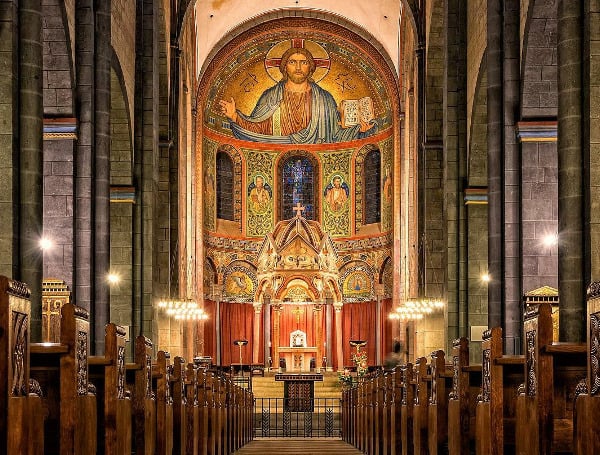
The State of Washington recently passed a law that requires religious clergy to report information to authorities, even when the information is obtained during the centuries-old rite of Confession.

Although there are other legal ramifications to the new law, of particular significance is the reporting of information involving the sexual abuse of a child that is obtained during the sacramental rite.

Under the new legislation, clergy are required under penalty of law to report to authorities information that is acquired within the sacred walls of a confessional.

The term clergy, as defined in the state law, is “any regularly licensed, accredited, or ordained minister, priest, rabbi, imam, elder, or similarly positioned religious or spiritual leader.”

However, the state is solely targeting what is known as the priest-penitent privilege, leaving a lengthy list of categories of communications impervious to judicial interference, including the attorney-client privilege, the spousal privilege, and the sexual assault advocate privilege.

In my legal assessment, this new law is unconstitutional, discriminatory, and selective in that it exempts from compelled testimony an aunt or uncle, an Alcoholics Anonymous sponsor, a union representative, and an extensive list of others receiving confidential communication.

Catholic priests, on the other hand, are left exposed to be subpoenaed.

The priest-penitent privilege became a legal principle in the law of evidence for the purpose of protecting confidential communications between Catholic priests and those individuals seeking forgiveness and spiritual guidance during the Sacrament of Confession.

In the Catholic Church, the Sacrament of Confession is a sacred religious practice through which individuals confess their sins to a priest, who represents Christ, in order to seek forgiveness, grace, and reconciliation with God.

Priests are obligated to maintain what is called the “seal of confession,” a strict mandate of confidentiality.

The obligation of the confessional seal is so significant that, if violated, the penalty for the priest is as severe as can be: an automatic excommunication.

The confidentiality of communications during Confession is essential for Catholic Christians to be able to freely practice their faith. Being able to speak freely to clergy, without concern that any intimate admissions would ever be disclosed, is key to this sacramental experience.

The Code of Canon Law of the Catholic Church provides insight into the gravity of the obligations to which Catholic clergy are subject.

Canons 983 and 984 deal with the administration of the Sacrament of Confession and the confidentiality required by priests.

Canon 983 states that the sacramental seal is “inviolable,” meaning that a priest may not act against the interests of the penitent in any way whatsoever.

Canon 983 §1. states that “it is absolutely forbidden for a confessor to betray in any way a penitent in words or in any manner and for any reason.”

Canon 984 prohibits priests from any uses of the information acquired in Confession that would be a detriment to the penitent, even when a disclosure of the information is not deemed to be a risk.

The legal privileges set forth in Canon Law support the ability of clergy and penitents to freely practice their religion. It is likewise an integral part of religious freedom in general, as set forth in the U.S. Constitution, which prohibits the state from interfering with sacred religious practices, as per the restraints on government set forth in the First Amendment.

With the new law, Washington legislators are seemingly attempting to use the public’s concern for an extremely serious crime to undermine revered Christian religious practices.

The Catholic Bishops of Washington have responded by filing a lawsuit that challenges the constitutionality of the law.

In the lawsuit documents, the bishops present to the court the legal argument that the State of Washington has, by “putting clergy to the choice between temporal criminal punishment and eternal damnation,” and, “interfering with the internal governance and discipline of the Catholic Church, and targeting religion for the abrogation of all privileges,” patently violated the Free Exercise and Establishment Clauses of the First Amendment to the U.S. Constitution, and also violated the Equal Protection Clause of the Fourteenth Amendment to the U.S. Constitution, as well as Article I, Section 11 of the Constitution of the State of Washington.

The bishops also cite the discriminatory and arbitrary nature of the state interference by pointing out that the legislature has ignored secular privileges, while unfairly singling out religion.

“Information obtained through privileged communication by any supervisor in an organization other than clergy—including, for example, any non-clergy member of a religious non-profit or any member of a non-religious nonprofit—remains excluded from the reporting requirement.”

For priests, this is an impossible choice: Either violate Catholic Church teaching and incur automatic excommunication; or, after non-compliance with the law, be subjected to imprisonment, endure the confinement for the prescribed time, and suffer the separation from the flock they vowed to shepherd.

No doubt prayers are going up that the Washington State law will be struck down by a federal court.
Jim Harbaugh: Life Coach

In 1995 the Roman Catholic Pope John Paul II offered his perspective on what he saw as the “culture of death.”

The pontiff wrote about a belief system that had supplanted an existing ideology; one that had for centuries stood as the prevailing moral compass.

Pope John Paul II warned that the underlying assertions of the culture of death could cause the world to “revert to a state of barbarism which one hoped had been left behind forever,” adding that such presuppositions prompt individuals to disregard the sacredness of human life and view the world in a cold utilitarian way.

“In this way a kind of ‘conspiracy against life’ is unleashed. This conspiracy involves not only individuals in their personal, family or group relationships, but goes far beyond, to the point of damaging and distorting, at the international level, relations between peoples and States,” the Pope wrote.

News headlines from around the globe seem to confirm that we are living in the middle of a tug-of-war over the value and meaning of human life itself.

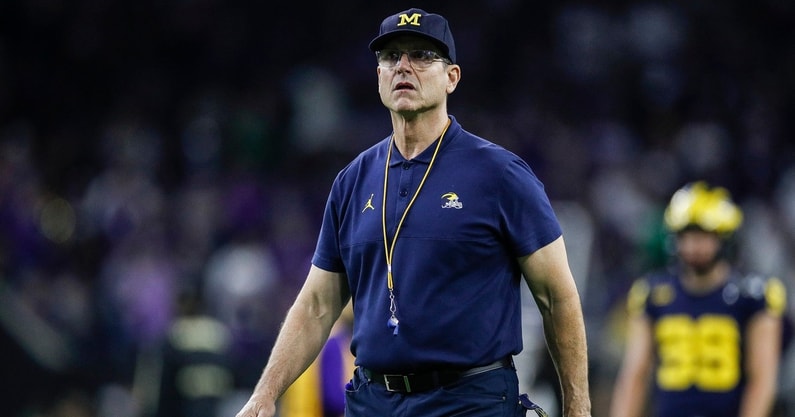
With his extensive experience and faith background, former quarterback and current football coach Jim Harbaugh has a lot of wisdom to contribute to the cultural discussion.

Harbaugh is presently the head football coach for the University of Michigan, having played football there as a student.

While in the NFL for 14 seasons on numerous teams, a memorable stretch had him in the quarterback position for the Chicago Bears.

In 1995 he led the Indianapolis Colts to the AFC Championship Game, was selected to the Pro Bowl, and was honored as NFL Comeback Player of the Year.

Prior to his Michigan stint, he gained experience as head coach for the University of San Diego, where he won two consecutive championships.

He moved on to another head coach position at Stanford, where he led the team to two bowl appearances and an Orange Bowl win.

He also served as head coach for the NFL’s San Francisco 49ers before returning to his present position at his alma mater, the University of Michigan.

As icing on the cake, Harbaugh’s Michigan team just won the College Football Playoff National Championship.

What did the coach do after securing the trophy in the national college football championship?

Well, he didn’t go to Disneyland.

Instead he headed to the annual “March for Life” rally, which took place on the National Mall this past weekend, to lend his support.

Harbaugh is a committed Catholic Christian. He spoke to a gathering of marchers who share his unshakable belief that human life, at all stages from conception through natural death, is a sacred gift.

“Just have the courage to let the unborn be born,” he said. “The testimony of so many here…just so thankful and grateful for that.”

Noting the cold temperature, he added, “This is a great day for a march, it’s a great day for the sanctity of life, and it’s football weather, so let’s go!”

He then introduced former NFL tight end Benjamin Watson, who proceeded to urge folks to engage in “the new fight for life.”

Harbaugh spoke further about the life issue in an interview with the Daily Caller.

“You know, we all talk about human rights. There’s really no rights that are important unless you have the right to life,” he said.

Following the rally, social media commentator Jon Root asked him about his many NFL coaching prospects.

Harbaugh had recently interviewed for a number of NFL head coaching positions and is reportedly receiving offers to come back to the NFL as a head coach.

What does someone as accomplished as Harbaugh do when confronted with tough decisions?

In his case, he looks to his faith and his family for guidance.

“I just take the counsel from God and the Holy Spirit, and Mr. Jack Harbaugh, my dad, and my wife Sarah,” he shared.

“Just taking the advice, just living one day at a time, one day at a time, one game at a time, one play at a time,” he said.

It all sounds like a good game plan in moving the ball forward in life and for life.

Catholic Bigotry and the Los Angeles Dodgers

The Los Angeles Dodgers recently decided to re-invite a virulently anti-Catholicgroup to the team’s Pride Night event.

This is the same group that had originally been scheduled to receive a community service award but was uninvited for a brief period of time.

Sen. Marco Rubio, R-Fla., Catholic Vote, the Catholic League, and other Christian groups had condemned the original decision, and the team had promptly rescinded the invite.

However, the Los Angeles LGBT Center, the ACLU, several Democrat politicians, and the media began accusing the baseball team of bigotry.

In the midst of the uproar, the Los Angeles Angels baseball team issued a public invite of its own to the aforementioned anti-Catholicgroup.

That’s when the Dodgers re-invited the group and proceeded to issue an apology for having previously uninvited it.

It is puzzling at a minimum that both LA teams have endorsed a group that has a long history of being dedicated to anti-Catholic activities.

The Archdiocese of Los Angeles has weighed in, issuing a statement condemning the Dodgers for “the decision to honor a group that clearly mocks the Catholic faith and makes light of the sincere and holy vocations of our women religious who are an integral part of our Church,” adding that the invitation to the group “has caused disappointment, concern, anger, and dismay from our Catholic community.”

The LA Archdiocese further stated that it “stands against any actions that would disparage and diminish our Christian faith and those who dedicate their lives to Christ.”

The decision by the Dodgers also drew the ire of the Twitter account of San Francisco Archbishop Salvatore Cordileone.

“Our Catholic sisters devote themselves to serving others selflessly. Decent people would not mock & blaspheme them,” the archbishop tweeted. “So we now know what gods the Dodger admin worships. Open desecration & anti-Catholicism is not disqualifying. Disappointing but not surprising. Gird your loins.”

CatholicVote has vowed to launch a “barrage” of advertising against the team across Los Angeles and during game broadcasts.

“This is a slap in the face of every Catholic…and we will pummel this decision in advertising that the Dodgers can’t ignore,” CatholicVote President Brian Burch said in a statement.

“Every advertiser, every season ticket holder, every charity, every fan must speak out against the Dodgers’ decision to promote anti-Catholic hate,” Burch added.

He questioned why the Dodgers would honor a group that is, among other descriptives, clearly “anti-Catholic.”

This particular group has a fairly long history of mocking and insulting Catholic religious figures, tenets, and symbols. Antipathy toward Catholic Christians is routinely expressed both directly and indirectly.

The Catholic League has published a report citing numerous examples of bigotry against Catholicism in general and Catholic nuns in particular.

The list includes a sham exorcism, a sham Mass that blasphemes the Lord and Savior of Christianity, a sham Sacrament of Holy Communion, a sham vile version of the Stations of the Cross devotion, a sham mockery of the holy day of Good Friday, and a sham irreverent ridicule of Easter Sunday.

Although he is a professed Catholic, President Joe Biden has said nothing about the debacle.

Catholic League President Bill Donohue is seeking to convince Catholics in the Los Angeles area to skip the Pride Night event scheduled for June 16.

Unfortunately, like so many other things in life, America’s favorite pastime has been politicized.

In the 1992 movie “A League of Their Own,” Tom Hanks’s character Jimmy Dugan utters the famous line: “There’s no crying in baseball!”

Well, Jimmy, there’s crying in baseball today.

Shia LaBeouf’s Faith Enhancing Film Role

Shia LaBeouf is a changed man. And it looks as though the spiritual prep for his latest movie role deserves a lot of the credit.

Playing the lead in the upcoming biopic “Padre Pio” appears to have guided the actor toward a new commitment to Christianity.

The film relays the real life story of one of the most beloved Catholic priests and humanitarian figures, an individual who within Catholicism has been given the designation of “Saint.”

Padre Pio was an Italian Franciscan Capuchin friar who was canonized by Pope John Paul II in 2002 and has been venerated in the Roman Catholic Church ever since.

He was known around the globe for manifestations that many believe could only have emanated from above.

Over the course of his lifetime in shepherding his flock, he exhibited numerous supernatural phenomena and miraculous occurrences, including the marks of stigmata (wounds on the body that correspond to those suffered by the crucified Christ), visions, healings, and the ability to bi-locate and prophesy.

The Sanctuary of Saint Pio of Pietrelcina is located in the Province of Foggia, Italy, the southern Italian region (Puglia), where much of the filming of the “Padre Pio” movie took place.

Shia accepted the starring role of the film in the summer of 2021 and immediately arranged to spend time with a group of Capuchin Franciscan friars who resided in Northern California.

Traveling later to Rome, he went to stay at a monastery in southern Italy, the same locale in which the movie had initially been filmed. He even chose to sleep in the same bed where Padre Pio had rested his head.

In a recent conversation with Bishop Robert Barron, Shia revealed how he was led to become a Catholic Christian.

Referring to the time spent at the California monastery, he said, “When I walked into this, my life was on fire.”

The “fire” of which he spoke related to the personal tribulation he was going through, not only dealing with feelings of shame and depression, but even thoughts of ending it all. This was because back in 2020 his former girlfriend had sued him, accusing him of sexual assault.

In the aftermath of the debilitating experience, Shia parted with his agency and made the decision to take time off from his career.

He described a moment where serious suicidal thoughts were flooding his mind.

“I had a gun on the table. I was outta here,” he said. “I didn’t want to be alive anymore when all this happened.”

He also described the depth of emotion that had overtaken him.

“Shame like I had never experienced before — the kind of shame that you forget how to breathe. You don’t know where to go…,” he said.

He came to a point where his past actions made him feel as though he wasn’t worthy of being loved by God or of being received into a faith community.

He would soon be in for a blessed surprise. Living with the friars, he got to experience the love and support his heart and soul were aching for.

As Shia interacted with the friars and immersed himself in the Bible, he felt an “invite” to “let go” of obstacles.

Learning about the gifts of repentance, redemption and forgiveness convinced him of that all-important truth – in God’s eyes he is, as we all are, precious, worthy, and yes, loved beyond measure.

“It was seeing other people who have sinned beyond anything I could ever conceptualize also being found in Christ that made me feel like, ‘Oh, that gives me hope,’” he explained. “I started hearing experiences of other depraved people who had found their way in this, and it made me feel like I had permission.”

A transformational event in Shia’s personal journey was experiencing the Catholic Mass in its traditional Latin form.

“While we were practicing Latin Mass, I was having genuine emotional experiences,” he said.

Shia thought he had taken on the “Padre Pio” movie part for career reasons. However, he eventually came to realize that the Ultimate Director was working on a most beautiful subplot.

“I know now that God was using my ego to draw me to Him. Drawing me away from worldly desires. It was all happening simultaneously,” he said. “The reach-out had happened. I was already there, I had nowhere to go. This was the last stop on the train. There was nowhere else to go—in every sense.”

No doubt Shia’s spiritual path has been a unique one. His mother is Jewish and his father is a Christian. Both a bar mitzvah and a baptism graced his childhood.

As his first religious denomination, he chose his mother’s Jewish faith. Then in 2004 he shared that he had a “personal relationship with God that happens to work within the confines of Judaism.”

He later discovered his father’s Christian conviction while filming a movie. He said in an interview in 2014, “I found God doing [the film] Fury. I became a Christian man. Brad [Pitt] was really instrumental in guiding my head through this.”

In June of 2022, while at a park in Pasadena, California, he was seen reuniting with his estranged father, where the two read from Bibles as they sat next to one another.

Shia sees his religious pilgrimage as analogous to his method acting approach.

“I like to be immersive,” he said. “I like all immersive experiences, not just acting. That’s probably why I like Catholicism as well. I like adventure, and that requires full immersion.”

It seems to me that we could all use an immersive experience in faith these days.

“Padre Pio” is scheduled to premiere at the 2022 Venice International Film Festival, which runs from August 31 to September 10.