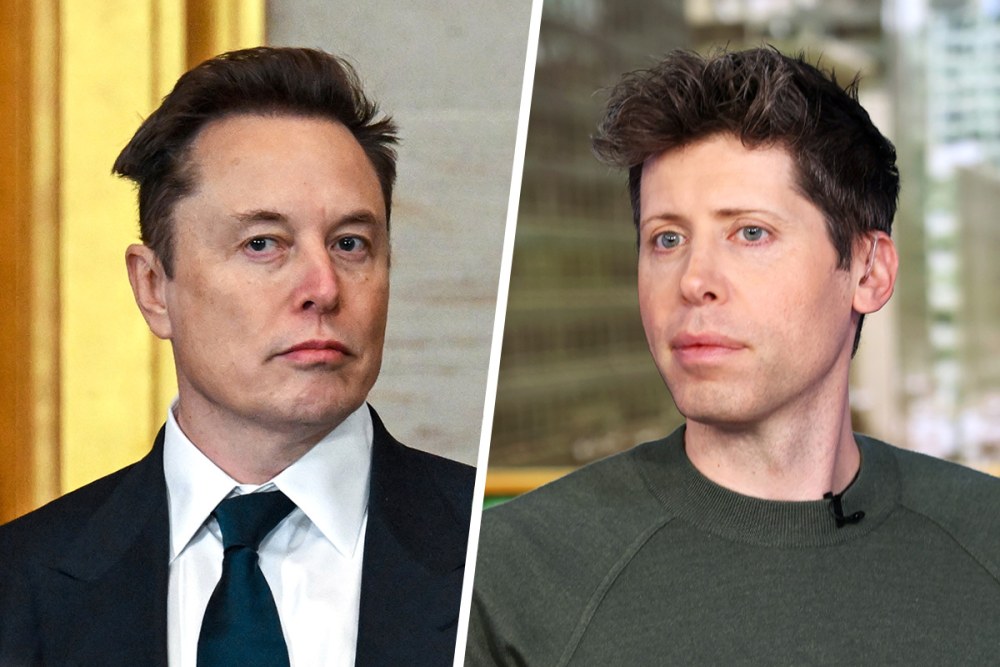
The high-profile trial of Elon Musk vs. Sam Altman is one week in.
As the federal jury in Oakland, California takes in the evidence, one simple question hangs over the courtroom: Can you steal a charity?
The answer will determine the future of artificial intelligence as well as the fate of charitable giving.
OpenAI, the entity that Musk and Altman co-founded, was built on a solemn, legally binding promise that its leaders have since breached.
What began in December 2015 as a nonprofit organization, which was dedicated to developing artificial intelligence that benefitted all of humanity, has become a closed-source, profit-making, $850 billion company.
The stealth transformation was not merely a clever business plan. It was a breach of charitable trust.
Musk, Altman, and Greg Brockman co-founded OpenAI. Prior to its founding, Musk had grown increasingly worried about the risks of advanced AI. Altman shared similar concerns about AI’s concentration in a few big companies.
Altman and Musk had the titles of co-chairs at OpenAI’s launch. Musk hadn’t just lent his name to the new nonprofit, he had conceived the idea, recruited key talent, and poured in tens of millions of dollars.
The founding charter sought to advance digital intelligence safely and openly, free from commercial pressures. Internal documents, emails, and Musk’s sworn testimony presented during the first week of the trial have laid it out plainly.
Musk would never have funded or championed the project had he known it would morph into a Microsoft-backed profit engine. But this is exactly what happened.
After Musk left the board of directors in 2018 over conflicts with Tesla’s own AI work, OpenAI’s management pivoted.
First came the effort to attract capital. Then billions of dollars rolled in from Microsoft. And by 2025, OpenAI had fully restructured into a for-profit entity, with Microsoft securing a 27% stake worth $135 billion. The company was sprinting toward going public.
OpenAI’s ChatGPT became a commercial hit, while the original open-source safety-first mission was quietly deleted.
The very organization that Musk helped to create, trying to prevent AI from being controlled by a handful of profit-driven giants, was now partnered with one of them.
Based on the evidence in court, Musk’s motives for bringing the lawsuit appear to be legitimate. Musk has testified that, by late 2022, he had lost confidence in Altman’s commitment to the nonprofit charter. And he has renounced any personal financial gain he would obtain from a legal victory. It appears as though the legal proceeding is not about him enriching himself, because he has pledged to redirect any damages back to the original charitable mission.
In large part, this case is about enforcing the rules that protect donors who give to a charitable cause with the expectation that the organization will remain a charity.
The stakes couldn’t be higher. If the jury and the judge allow to stand the transformation of a charity into a business enterprise, a dangerous precedent will be set.
If this should happen, any nonprofit entity would be able to use a founder’s accomplishments and status to bring in initial donations, and then flip to a for-profit model once the money and talent have been locked in.
Such a precedent would cause charitable giving in America to suffer a serious decline.
Ironically, the future of AI would be handed over to the same concentrated corporate power that Musk and Altman originally set out to counter.
It is unlikely that a Musk victory in this legal battle would detrimentally affect innovation. Rather, it may have the potential to restore competition and accountability. It may also force OpenAI to honor the safety-and-humanity-first charter, which justified its tax-exempt status and spurred its original support.
Despite the high profile and high net worth of both of the parties in this trial, the issues at stake are more than just monetary. The founding documents of OpenAI are, in essence, a contract with the public.
Musk’s attorney put it bluntly in the opening statement: “No one should be allowed to steal a charity.”
As an example, a nonprofit museum can run a gift shop, but it cannot loot the Rembrandts and sell them for private gain.
The monumental trial is expected to last three to four weeks. After the jury has heard the testimony, seen the emails, and gone over the timeline, it must decide whether promises made in the name of humanity still mean anything.
A verdict for Musk would send a clear message to those creating AI models: Innovation without integrity has consequences.
Promises must be kept, especially when it comes to the commitment between a charity and its donors.
The commitment of OpenAI to pursue safe, open, humanity-first artificial intelligence must be honored.
If justice prevails, Musk should be the victor. And the public will reap the benefit.

