In the Aftermath of the Mueller Report, Democrats Are Deeply Divided

hoyersteny_071918am2_lead

Over the course of the past two years, President Donald Trump has stoically endured two congressional investigations, a counterintelligence probe, and a pervasively broad special counsel investigation, while the Mueller Report has essentially obliterated the Russia collusion narrative, which was repeatedly pitched to the public via partisan politicians and news outlets.

Much to the chagrin of the Democratic Party, the president projects an even greater strength than when the attempt to neutralize his agenda first began.

The former outsider is now an incumbent in the highest political office in the land, having acquired invaluable experience over the last two years as well as important knowledge. The president and the American people know so much more about the high-profile federal agencies and corruption on the part of some.

It turns out that the total deconstruction of the Trump/Russia narrative has actually harmed the Democrats, serving to deeply divide its members over the question of whether to pursue impeachment, which is a major priority for its activist left-wing base.

Political leaders in both parties are aware that if the House of Representatives were to hypothetically impeach the president, the Constitution requires a trial in the Senate, whereby a two-thirds majority would need to be secured in order to remove the president from office. Of course, this scenario is highly unlikely, since the GOP holds a 53-47 majority in that chamber.

Over this past weekend three Democrat committee chairmen refused to let go of the idea of moving forward towards an impeachment of the president. Chairman of the House Intelligence Committee, Adam Schiff (D-Calif.), House Oversight Committee Chairman Elijah Cummings (D-Md.), and House Judiciary Committee Chairman Jerrold Nadler (D-N.Y.) made it a point to keep the impeachment door wide open.

Those who use reason as opposed to emotion to analyze the situation realize that continuing to participate in a small-minded and vengeance-based pursuit of the president is an ill-advised strategy. Leaders of the Democratic Party are no doubt aware that the House takeover during the mid-term elections was fueled in large part by Democrat candidates who were running in red or purple districts, and who assured voters that they were moderate or even conservative in their political ideology. These candidates oftentimes further asserted that they would not be pulled toward the radical side of the political spectrum.

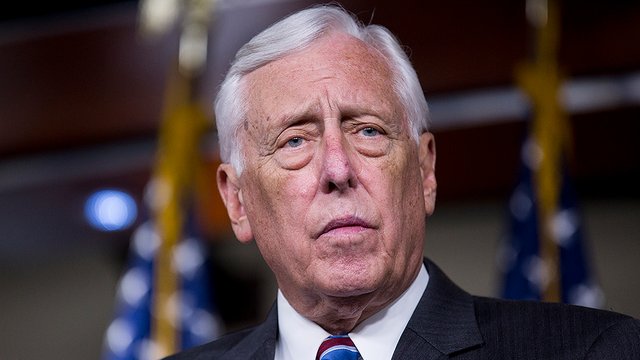
It stands to reason that those who came into office touting middle-America bona fides are likely to be hurt by an attenuated and seemingly spiteful impeachment process against a president who has been cleared of the false collusion charges that were lodged against him. With this in mind, Majority Leader Steny Hoyer recently characterized an impeachment agenda as inadvisable, echoing House Speaker Nancy Pelosi’s (D-Calif.) warning that impeachment would divide the country.

“Based on what we have seen to date, going forward on impeachment is not worthwhile at this point,” Hoyer told CNN. “Very frankly, there is an election in 18 months, and the American people will make a judgment.”

Why would the Democrat leadership speak publicly against the pursuit of an impeachment investigation? The answer emerges from the numbers with which Democrat politicians are mesmerized.

A meager 31 percent of rank and file Democrats who self-identify as liberal or moderate view impeachment as worth pursuing, according to a recent Business Insider poll. However, 50 percent of those who see themselves as “very liberal” would like to see Democrats in the House pursue impeachment.

The far-left base, which by all appearances is the center of energy and media attention in the current Democratic Party, embraces the radical rhetoric of the freshman trio of congressional representatives: Alexandria Ocasio-Cortez (D-NY), Ilhan Omar (D-Minn.), and Rashida Tlaib (D-Mich.).

Media figures aligned with the Democratic base have propagandized the subject of impeachment on television and radio shows as well as websites, using out of context language found in the gossipy second section of the Mueller Report. And so-called progressives use amplified social media posts to keep the impeachment option alive.

However, the enlightened know that party unity is a fragile commodity. It is also a mandatory one, if national elections are to be decisively won.

The Democratic Party currently finds itself in the precarious position of being deeply divided on whether to go after the president. The liberal wing, which typically dominates the presidential primaries, is pressuring Democrat presidential candidates to adopt a pro-impeachment position.

They do so at their own peril.

Taylor Swift Gets Political

sub-buzz-15428-1513722794-2

For quite a while now the Internet has had a peculiar obsession with pop star Taylor Swift’s self-imposed political silence.

Liberal-minded Twitter and Facebook users have been posting comments pressuring Swift to join the ranks of myriad other celebrity activists who use their fame capital to move the political bar ever further to the left.

Up until now digital bully tactics have had little effect on the singer-songwriter. However, times have apparently changed in a big way, and Swift, who is currently on a “Reputation” concert tour, uploaded a photo to Instagram that virtually announces her candidate picks for political office in the state of Tennessee.

Swift previously nurtured an image of being above the political fray. In stark contrast, she has now chosen to take very specific positions on a number of polarizing issues in addition to her candidate endorsements.

Letting it be known that she will be voting as a Tennessee resident in the 2018 midterms, Swift announced her support for two Democrat candidates in her home state, one who is running for the U.S. Senate and another who is striving to secure a seat in House of Representatives.

Along with her endorsements, Swift let loose with an over-the-top slam of Republican Senate candidate Marsha Blackburn, who although of the female gender has the seemingly incorrect party affiliation attached to her name, at least according to leftist celebrity activists.

Swift informed her fans that Marsha Blackburn was running for the U.S. Senate in Tennessee and conveyed her emotion-laced opposition.

“As much as I have in the past and would like to continue voting for women in office, I cannot support Marsha Blackburn. Her voting record in Congress appalls and terrifies me,” Swift shared.

Accompanying her post was a black and white photo in which Swift wears a flannel shirt that makes her look like her old country music singing self.

A number of Swift’s A-list BFFs, including Blake Lively, Karlie Kloss, Katy Perry, and Chrissy Teigen, “liked” the post.

In her political Instagram post, Swift referenced her former approach to avoiding political expression.

“In the past I’ve been reluctant to publicly voice my political opinions, but due to several events in my life and in the world in the past two years, I feel very differently about that now,” Swift wrote.

Swift’s habit of abstaining from political discourse had become part of her public image. In a 2012 interview with TIME, she said that in spite of keeping herself “as educated and informed as possible,” she does not discuss political subjects.

“I don’t talk about politics because it might influence other people,” she told the publication at the time.

In November 2017, a blogger criticized Swift for her political silence and actually accused her of enabling an alt-right and white supremacist fan base.

Meghan Herning wrote a piece titled “Swiftly to the alt-right: Taylor subtly gets the lower case kkk in formation,” which was published in PopFront Magazine. Herning asserted that Swift’s single “Look What You Made Me Do” contains “dog whistles to white supremacy in the lyrics.”

Additionally, referring to the clothing worn in Swift’s related music video, Herning wrote that “Taylor lords over an army of models from a podium, akin to what Hitler had in Nazi Germany.” Herning added that “the similarities are uncanny and unsettling.”

Essentially condemning Swift for her silence, Herning wrote, “And while pop musicians are not respected world leaders, they have a huge audience and their music often reflects their values. So Taylor’s silence is not innocent, it is calculated.”

Herning received a letter from Swift’s attorneys, demanding she retract the article and threatening a lawsuit. The American Civil Liberties Union promptly came to the aid of Herning.

That same month, the left-leaning UK Guardian published an editorial titled “The Guardian view on Taylor Swift: an envoy for Trump’s values?”

The newspaper implied that, in part, because of her silence, Swift was a stealth Trump supporter.

“… a notable voice has been missing from the chorus: that of Taylor Swift, the world’s biggest pop star. Her silence is striking, highlighting the parallels between the singer and the president: their adept use of social media to foster a diehard support base … their laser focus on the bottom line; their support among the ‘alt-right,’” the editorial read.

The Guardian claimed that Swift’s songs “echo Mr. Trump’s obsession with petty score-settling in their repeated references to her celebrity feuds, or report in painstaking detail on her failed romantic relationships.”

In a Politico piece titled “The Weird Campaign to Get Taylor Swift to Denounce Donald Trump,” which summarized the pressure being mounted at the time on Swift to jump on the anti-Trump skateboard, Swift was labeled “studiously apolitical.”

Stats on the pop singer reveal that she has garnered 112 million Instagram followers, 84 million followers on Twitter, and 72 million “likes” on her Facebook page.

It is arguable that she is at the apex of the celebrity pyramid, as liberals who have pressured her to join their ranks are no doubt aware.

Her level of fame grants her greater endorsement power than many of the other celebrities who have been visible participants in left-of-center protests of late.

With all this in mind, there is now a question of whether Swift will be able to hold on to her popularity, and additionally whether she can maintain her sizable social media platform after the public becomes fully informed of her newfound politics.