Social Media and AI Are Robbing Us of Personal Connections

A young 19-year-old woman sits in her dorm room holding a smart phone.

The college student has hundreds of Instagram followers and a favorite AI chatbot. The bot remembers her favorite songs, offers endless reassurances, and never disputes or disagrees.

Each night she goes through the same ritual, texting into the wee hours. Although for weeks she hasn’t met with anyone in person, she is convinced that she is indeed socializing. But the truth is she is totally alone.

This scene is in no way unique. Instead it has become the default for millions of young people.

Social media and AI chatbots are not just providing methods for making life easier. They are systematically replacing the sometimes challenging, emotionally risky, high-stakes effort of forming human relationships.

The result is a quiet but accelerating crisis of isolation that threatens mental health, family formation, and the fundamentals of society.

The United States is in the midst of a loneliness epidemic. Too many young people are spending less time building relationships, which have historically defined adulthood, created the closest of friendships, spawned romantic partnerships, and facilitated continuous face-to-face interaction.

The problem is growing wider and deeper. In 2023, the U.S. Surgeon General designated social isolation as a public health epidemic, which is linked to higher rates of depression, anxiety, cardiovascular disease, dementia, and reduced life expectancy.

Back when social media platforms first arrived on the scene, they paved a path toward isolation. Platforms that were optimized for attention quickly transformed conventional social comparisons into algorithmic activities.

Young users frequently scrolled through highlight reels and oftentimes came to the conclusion that their lives were inadequate. Posting for self-validation purposes as opposed to engagement with others became the norm for many individuals.

Impressionable minds learned that brief dopamine hits from received “likes” resulted in positive experiences.

This often stood in stark contrast to another experience; that of being engaged in genuine conversation but risking disapproval and/or rejection from other participants.

The latter case may explain why actual face-to-face time among young people declined.

Then along came AI chatbots. These were not just neutral assistants. Companion-style AIs were explicitly fashioned to simulate emotional intimacy.

Think about it. The chatbots are always dependable, extremely attentive, and never judgmental in the way real-life human beings can be.

For adolescents and young people, especially those who are already primed by social media to avoid rejection, the appeal is obvious.

Early data and user reports indicate that every day a rising numbers of teens and young adults are now spending hours in extended role-play and emotional conversation with chatbots. Some even describe the exchanges as their “main relationship.”

The chatbot provides the illusion of being known, minus any kind of reciprocal obligation.

What is truly disturbing is that young people are gradually losing the ability to build authentic relationships, because all too often they are foregoing human interaction for digital substitutes.

If they only knew how wonderfully fulfilling true human relationships can be. Challenging at times, yes, but so worth the investment.

Interestingly, relationships have the potential to become stronger when exposed to friction. In contrast, friction-less interaction may result in underdeveloped emotional muscles.

Surveys and demographic trends show Gen Z and younger cohorts are reporting fewer close friendships, lower rates of dating, and delayed milestones of partnership, when compared to prior generations of the same age.

Multiple national surveys document that loneliness among young adults is rising as digital “connection” metrics explode. And unfortunately, anxiety and depression rates have climbed.

On a hopeful note, experiments that reduce the use of social media consistently demonstrate improvements in mood and social functioning.

Society’s family structure is dependent upon adults who are capable of sustaining long-term commitments. And our workplace environment is dependent on adults who possess the much-needed interpersonal communication and conflict resolution skills.

Many are wondering if anything can be done to reverse the anti-personal, anti-social trend.

Here are a few suggestions:

– Social media companies can alter algorithms.

– AI developers can choose not to market companion bots as emotional substitutes.

– Parents and school administrators can treat screen time as a public-health issue.

– Individuals can come to the knowledge that convenience is not the same as fulfillment.

– Young people can tap into the courage within to make real connections.

The truth is we alldesperately need each other.

We simply can’t live without human companionship.

The time has come to seriously reduce our collective screen activity and make more human connections.

What folks of all ages are likely to discover is that real life beats virtual life every time.

Upcoming Supreme Court Cases May Help Restore Free Speech on Social Media

The Supreme Court recently announced that it is going to hear two major cases relating to the right of free expression.

Both cases will examine the constitutionality of state laws that were created to prohibit tech companies from discriminating against social media platform users who are ideologically conservative.

At the heart of the cases is Big Tech’s pattern of targeting and eliminating select content.

The passage by state legislators in 2021 of the laws in question came in response to censorship of user-generated content, which was taking place on social media sites.

The Texas and Florida legislatures were acting on behalf of their constituents in using their lawmaking capabilities to try and restore freedom of expression to the portion of the digital world that was being impacted by selective censorship.

It is regrettable, to say the least, that the redacting of factual information, political ideology, faith expression, and the like, which frequently runs contrary to today’s progressive and/or radical narratives, is routine business for a majority of Big Tech companies.

The Texas and Florida legislators engaged in the appropriate processes in an effort to address the censorship problem.

Texas law H.B. 20 bars social media platforms with at least 50 million active users from blocking, removing, or demonetizing content based on a respective user’s point of view. Similar to phone companies, the law re-classifies social media platforms as “common carriers.”

Florida law S.B. 7072 forbids large social media platforms from censoring or banning political candidates and what the law refers to as a “journalistic enterprise.” The Florida bill also mandates that social media companies publish standards for the removal of content as well as for exercising consistency in the application of such standards.

Technology industry groups NetChoice and the Computer & Communications Industry Association have challenged each of the state laws. Members of the groups include TikTok, X, formerly called Twitter, and the owners of Facebook and Google.

The Biden administration joined with the technology groups, arguing that social media platforms’ rights include those of censoring the content of customers.

Two appeals courts have given conflicting rulings over the two state laws. One of the appellate courts upheld the Texas law, but another struck down the Florida statute. In both cases, implementation of the state laws during appeals has been temporarily halted by federal courts.

In May of 2022, the Supreme Court (by a 5-4 ruling) kept the Texas law on hold during the process of litigation.

Justice Samuel Alito was part of a dissenting opinion, which said that the law should be left in place and that the issues were so novel and significant that the Supreme Court would have to consider them at some point. The justice wrote, “Social media platforms have transformed the way people communicate with each other and obtain news.”

Justice Alito added, “At issue is a groundbreaking Texas law that addresses the power of dominant social media corporations to shape public discussion of the important issues of the day.”

The justice also expressed skepticism toward the argument that social media companies have editorial discretion protected by the First Amendment, such as the kind that newspapers and other traditional publishers enjoy.

The aforementioned tech trade groups, along with the Biden administration, are contending that the Constitution protects the social media platforms’ elimination of so-called disinformation.

Tech companies claim that taking away their unfettered right to censor will mean that their platforms will be filled with the vague categories they are claiming pose a danger, e.g. bullying, extremism, and hate speech.

However, the High Court will look closely at the carve-outs that state legislators placed in the laws to permit platforms to perform legitimate functions. These exceptions allow categories of content, such as pornography and foreign government speech, to be removed by the tech companies.

The above mentioned cases, which will be heard in the new nine-month term that recently began, will ultimately answer a single question of utmost importance: Do states have the ability to put a halt to speech discrimination by tech companies?

Social media platforms have become essential communication components of everyday life.

They allow us to connect and interact with individuals, organizations, educational institutions, governmental bodies, health agencies, etc.

Pray that the Supreme Court decides in favor of a free internet so free speech can live.

Risking It All for the First Amendment, Elon-style

Thanks to Elon Musk’s release of the “Twitter Files,” it is now public knowledge that Twitter’s former executives were directed by government officials and campaign staffers to bury a report that contained information on an international influence-peddling scheme.

The scandal is a huge story, because it involves a Democratic Party nominee for the highest office in the land, just prior to the 2020 election.

Government officials were engaged in a supposed effort to address “disinformation.” However, said officials used social media companies to employ censorship, across media outlets of all types, of a story that was known full well to be accurate.

Among myriad other things, it was an attempt to influence an impending election.

Needless to say, the government’s involvement in the suppression of truth, with knowledge of same, is a violation of the First Amendment.

Although alarming in and of itself, what is perhaps even more disturbing is the tepid reaction at best, and indifferent response at worst, which has been exhibited on the part of the complicit media.

Woke-leaning venues ignored it and left-leaning outlets spun it.

Why does it matter? It makes all the difference in the world to those who seek truth, cherish freedom and love country.

Many press outlets have launched an attack against Elon himself. Personal remarks that have been directed at the CEO have been unfair, and in many cases, defamatory.

The radically intolerable judgmental left is in full takedown mode, characterizing Elon’s actions as those of an ambitious billionaire who seeks ever more wealth and power.

But how does one even begin to evaluate the sincerity of the motives and/or actions of fellow human beings?

One of the ways is to ask the question, What’s in it for them? That is, What do they have to gain?

Equally or even more telling is the question, What do they have to lose?

When we look at Elon’s position in the business world, it’s fairly obvious that he has a whole lot to lose in terms of tangible things. After all, he’s the richest person on the planet.

There’s also the matter of his reputation, an immaterial possession that many value even more than all of the material combined.

Yes, it could easily be said that Elon has risked everything in order to bring this important story to light.

In a recent “Twitter Spaces” appearance, the self-described Chief Twit engaged in a Q and A session.

He was asked a rather odd question about whether he was having any “suicidal thoughts.”

He replied, “I do not have any suicidal thoughts,” adding, “If I committed suicide, it’s not real.”

He also revealed that he perceives a greater risk to his personal safety, due to his widely reported actions at Twitter.

“Frankly, the risk of something bad happening or literally even being shot is quite significant,” he said. “I’m definitely not going to be doing any open-air car parades, let me put it that way.”

No exaggeration. Elon is risking his life, fortune and sacred honor.

When the First Amendment was adopted, the only institution with enough power to inhibit freedom of speech was the government. Now we know that big-tech companies are in on the speech-suppressing act. Whether ordered to or on a whim, they can muzzle us.

The Twitter Files confirm that our government worked directly with Big Tech. It was revealed that regular meetings took place between government and top executives of tech firms.

Thanks to Joe Rogan’s interview with Facebook CEO Mark Zuckerberg, it is now known that the same thing that was going on at Twitter was going on at Facebook.

It may be that some of those who were seeking to silence opposing views believed that they were resisting tyranny. If so, they were deluded. In reality, they were aiding and abetting tyranny.

In the words of Frederick Douglass, “Liberty is meaningless where the right to utter one’s thoughts and opinions has ceased to exist.”

Many believe that after death comes resurrection. Pray it is so with liberty.

We Are All James Woods

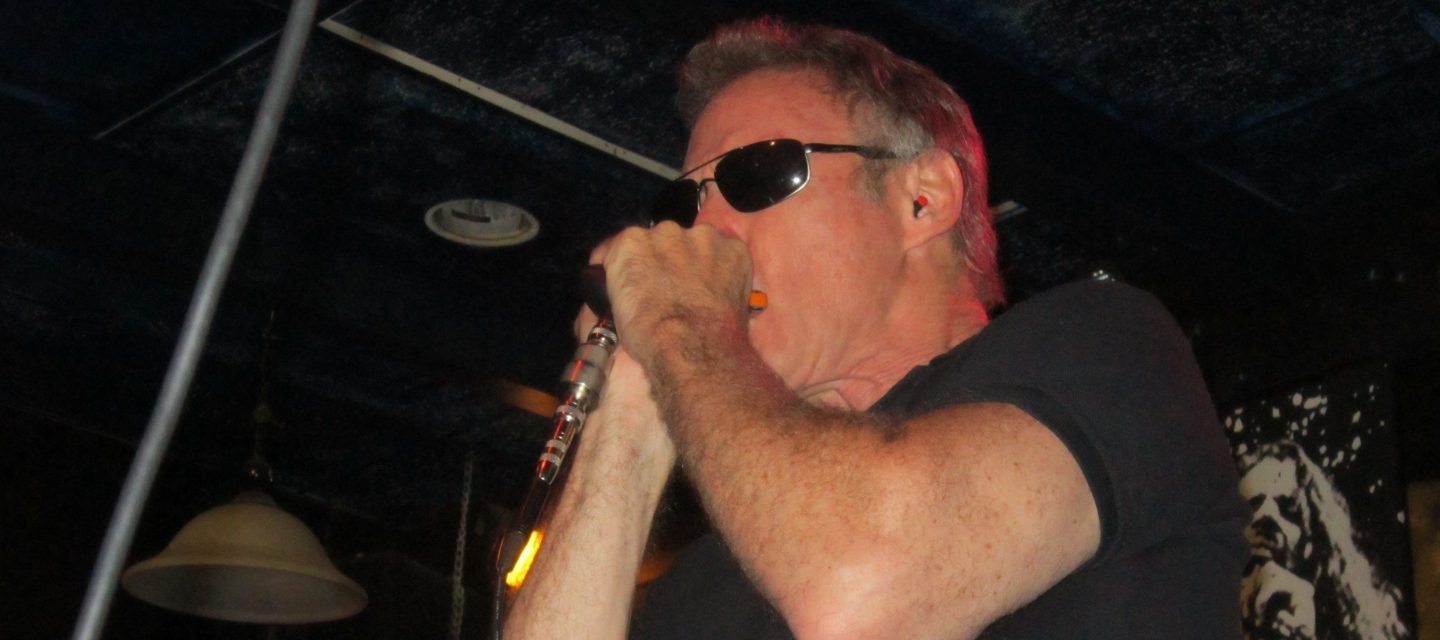
James Woods is well known for his accomplishments in the entertainment arts.

Consummate actor of stage and screen, he gained a considerable degree of fame for his role in the film adaptation of Joseph Wambaugh’s 1973 non-fiction book “The Onion Field,” a crime thriller extraordinaire.

Over the years James has had the opportunity to work with many a legendary Hollywood director, a distinguished roster that includes the names of David Cronenberg (“Videodrome”), Oliver Stone (“Salvador” and “Nixon”), Richard Attenborough (“Chaplin”), and Martin Scorsese (“Casino”).

In addition to the big-screen circuit, he has taken strolls down the TV road, playing characters the likes of America’s Mayor in the film “Rudy: The Rudy Giuliani Story.”

Industry trophies stand as a testament to his achievements. Among other accolades, he has two Oscar nominations and two Emmy wins to his credit.

Most recently, James has become a focal point of the so-called Twitter Files, the first in a series of documents released to journalist Matt Taibbi by Twitter CEO Elon Musk.

The files detail the behind-the-scenes communications surrounding Twitter’s content moderation decision making (under previous ownership), which involved, among other things, the suppression of a 2020 New York Post story about President Joe Biden’s son Hunter and Hunter’s notorious laptop.

During a recent two-hour long Twitter Spaces session, new Twitter owner Elon indicated that a second drop of Twitter Files will take place at an undisclosed future date, files that will go to Taibbi and Bari Weiss, an additional journalist.

The documents highlight how, just prior to the 2020 presidential election, Twitter executives worked closely with Democrats to eliminate content that was highly inconvenient for them.

The company’s rationale at the time for the extraordinary censorship imposed was that the story constituted “hacked materials,” a determination questioned by many insiders.

The New York Post had made it clear that a computer repairman had the laptop in his possession because Hunter himself had dropped it off.

There was never any hacking.

In simple terms, then-Twitter executives characterized a story that did not emanate from hacked material, as exactly the opposite – hacked material. This was likely done to explicitly hide the facts from an unknowing public.

Files also reveal that Twitter seemingly complied with the Democratic Party’s directives in suppressing the accounts of select celebrities, quite strikingly the account of James Woods.

In the words of Taibbi, “Celebrities and unknowns alike could be removed or reviewed at the behest of a political party.”

James has stepped forward to lead a class action lawsuit against the social media platform as well as the DNC over damage done to his personal civil rights, reputation and career.

“How would you like to fund a class action suit for those who were suppressed?” James asked Elon in a tweet. “I’ll be happy to be lead plaintiff.”

In a recent interview, James emphasized his intent to file a lawsuit over the Twitter matter.

“I can guarantee you one thing more than anything else you’ll ever hear in your life: I will be getting a lawyer. I will be suing the Democratic National Committee no matter what,” he stated.

“Whether I win or lose, I am going to stand up for the rights that every American [is entitled to]…,” James said.

James knows what informed individuals know; that the rights of each and every American are now on the line.

The Taibbi posts also confirmed that former Twitter executive Vijaya Gadde was central to the New York Post‘s suppression of the Hunter laptop story.

Gadde, the social media platform’s former head of something called “legal, policy, and trust,” was later appointed by the Biden administration as an advisor to the Department of Homeland Security in its supposed effort to counter “disinformation.”

Gadde is sure to be brought before the House Judiciary Committee when Republicans take control in January 2023.

“We’re tracking Vijaya Gadde’s role in the suppression of the New York Post story on Hunter Biden’s laptop. We absolutely plan to investigate this more. Stay tuned,” a committee spokesperson told the New York Post.

For his part, Rep. James Comer (R-KY) has said that anyone at Twitter who was involved in censoring The Post’s story will be testifying to the House Oversight Committee.

In response to the report, Rep. Comer said that he wants to bring in “every employee at Twitter who was involved in suppressing the Hunter Biden laptop story” to “explain their actions to the American people.”

He also referred to the Twitter ban as “election suppression.”

Polls have indicated that if voters had known about the Hunter story prior to the 2020 election, the information would have had a determinative impact on the outcome.

According to Taibbi, the only Democrat in Congress who seemed to react to the suppression was Rep. Ro Khanna (D-CA), who deserves credit for reminding his colleagues that the nation must be guided by First Amendment principles.

Rep. Nicole Malliotakis (R-NY) gave a brief summation on what has been revealed to the world by Elon.

“Twitter helped the Biden campaign & Democratic lawmakers to conceal information days before a presidential election. This type of suppression of free speech and information sharing is indefensible,” Rep. Malliotakis said, adding, “House Republicans must thoroughly investigate this matter to ensure big tech is reined in.”

James is hoping that others are going to join him in his fight within the court system.

He has let it be known that he is not one to shy away from legal battles.

“I’ve been a target of these people for six years. They have destroyed my career. They have destroyed my livelihood. They’ve destroyed my faith in a country that my family has defended in the military since the Revolutionary War,” he said.

Spoken like someone with the heart of a patriot.

Here’s hoping that more join James Woods in heart and deed.

Making Twitter Great Again, Elon Musk-style

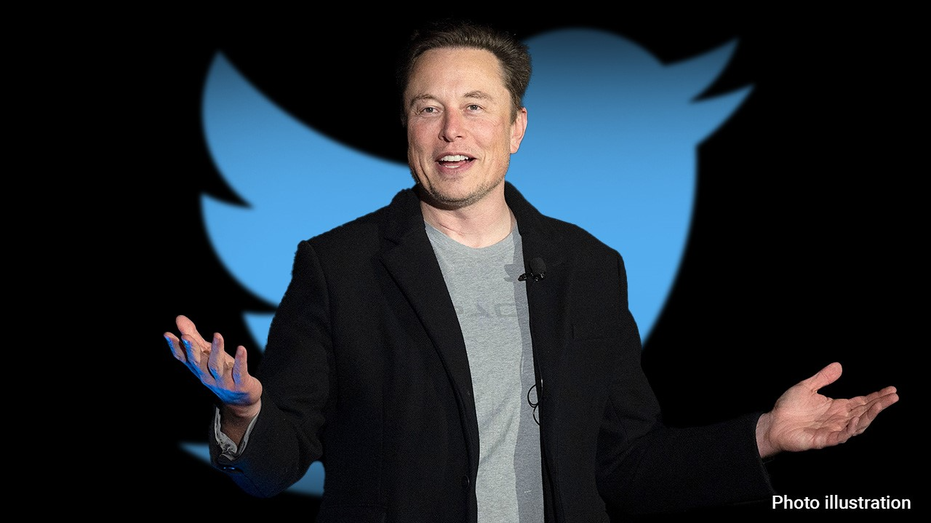
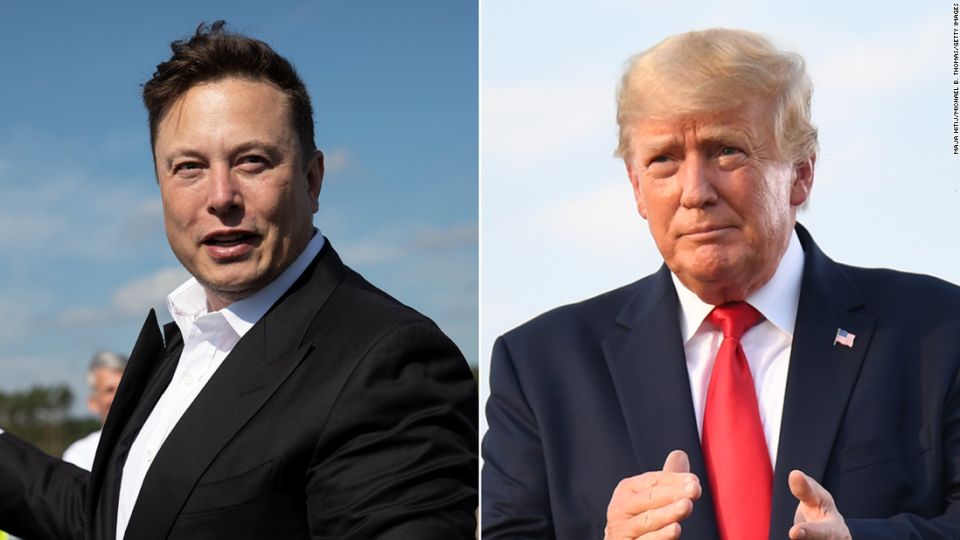
Elon Musk just welcomed back to the Twitter-verse former President Donald J. Trump.

In the process, the social media site owner and self-described “Chief Twit” showed exactly what he’s made of, principles-wise.

The official reversal of Trump’s lifetime Twitter ban, along with the restoration of his more than 80 million followers, was implemented over the past weekend. The handle @realDonaldTrump was reactivated, and users on Twitter are once again able to tag the former president in posts.

Elon formally brought 45’s account back to life after conducting a poll on the platform that received more than 15 million votes.

“Reinstate former President Trump: Yes or No?” the poll asked.

Fifty-two percent of Twitter users voted to return him to the platform.

“The people have spoken. Trump will be reinstated,” Elon tweeted, adding, “Vox Populi, Vox Dei,” a Latin phrase that means “the voice of the people is the voice of God.”

As the present world’s most successful entrepreneur, Elon understands that business accomplishments are the fruits of a free-flow exchange of ideas.

When free expression is stifled, weeds of stagnation are able to take root. They have the capacity to choke off discussion, interaction, creativity and ultimately personal as well as collective achievement.

In addition to Trump, Elon has reanimated the Twitter accounts of others who had previously been evicted, including psychologist, media analyst and author Jordan Peterson, cultural commentators and political lampooners The Babylon Bee and comic-turned-leftist activist Kathy Griffin.

In response to his efforts to make Twitter free again, Elon has been derided in the press, berated on social media and pummeled on his very own site.

But what really threw leftists and their compliant media buddies into a full-blown tizzy was the reinstatement of the former president’s account.

For his part, Trump used his own social media platform (Truth Social) along with a recent video address to express some uncertainty about actually engaging in tweeting on Twitter.

“I hear we’re getting a big vote to also go back on Twitter. I don’t see it because I don’t see any reason for it,” the former president (via video) told the Republican Jewish Coalition meeting in Las Vegas.

Trump had been banished from Twitter in January of 2021, ostensibly in response to post-election events that occurred at the U.S. Capitol building.

His tweet history stands as a testament to his social media mastery. The brevity and wit are unmatched by anyone, except perhaps the Chief Twit himself.

Two posts that Trump made just before he was banned illustrate the point.

At his January 6 rally, after he called on people to act “peacefully and patriotically,” he followed up with a plea for peace via his Twitter account.

“Please support our Capitol Police and Law Enforcement. They are truly on the side of our Country. Stay peaceful!” he posted.

This admonition was buttressed with another tweet.

“I am asking for everyone at the U.S. Capitol to remain peaceful. No violence! Remember, WE are the Party of Law & Order – respect the Law and our great men and women in Blue. Thank you!”

Given the wide reach and influence of Twitter, and considering that the 45th president recently launched his campaign to become the nation’s 47th president, fans and even some foes of the former president have a genuine desire to see Trump tweet again.

It took a lot of courage to do what Elon did in returning Trump to the Twitter platform.

It also took a whole lot of integrity, something society desperately needs yet too frequently gets in its civic and corporate leaders.

The man is a genuine free speech devotee who is determined to rebuild the digital town square.

For the sake of our country, pray that he succeeds.

Elon Musk’s Plan to Set the Bird Free

Tesla founder Elon Musk currently owns the singular status of being the wealthiest person in world.

Back in April of 2022, amid a modest amount of fanfare, he purchased a 9.2 percent stake in Twitter. This caused the keepers of the predominant media narrative to come unglued.

Amusingly, he was able to explain his motives on the very platform that he was in the early stages of acquiring.

“Free speech is essential to a functioning democracy,” Elon tweeted, and then asked his followers, “Do you believe Twitter rigorously adheres to this principle?”

Over 70 percent of the 2 million participants in his poll responded “No.”

He had already secured a significant degree of celebrity status, having previously grabbed headlines numerous times over and had even taken to the iconic “Saturday Night Live” stage to perform host duties.

Now it looks as though he has become a historical figure of sorts, due in large part to his $44 billion purchase of the company he has characterized as “the de facto public town square.”

Along with the entire world he had watched as a small group of corporations worked hand in hand with the government, under the guise of eliminating “misinformation.”

It was a warped process at a minimum, one in which people were stripped of the ability to engage in the free exchange of ideas, something that Americans had previously enjoyed and had even taken for granted.

The stifling of speech in this manner had an additional treacherous impact; that being, the authentic pursuit of truth became a virtual impossibility.

Ironically, many of those who considered themselves to be champions of free speech seemed to have suffered a degeneration in their ability to reason.

CNN ran a piece that carried the headline “Analysis: Elon Musk owning Twitter should give everyone pause.”

“The Guardian” did a one-up op-ed with the title “Elon Musk’s Twitter Is Going To Be a Disaster.”

And a “Wired” piece offered the prediction “Elon Musk’s Twitter Will Be Chaos.”

For his part, Elon shared a series of text images explaining why he had acquired Twitter.

“There has been much speculation about why I bought Twitter and what I think about advertising,” he posted. “Most of it has been wrong.”

The tech mogul apparently perceived the societal risk that was inherent in the direction social media had been trending.

“There is currently great danger that social media will splinter into far right-wing and far left-wing echo chambers that generate more hate and divide our society,” Elon wrote. “In the relentless pursuit of clicks, much of traditional media has fueled and catered to those polarized extremes, as they believe that is what brings in the money, but, in doing so, the opportunity for dialogue is lost.”

“It is important to the future of civilization to have a common digital town square, where a wide range of beliefs can be debated in a healthy manner without resorting to violence,” he added. “…that is why I bought Twitter. I didn’t do it because it would be easy. I didn’t do it to make more money. I did it to try to help humanity, whom I love.”

Leftists on Twitter reacted to Elon’s sentiments in a spiteful adolescent manner.

Writer for “The Intercept” Jon Schwarz stated, “This would be the traditional kind of town square that’s owned by one guy and funded by huge corporate advertisers.”

Deadline Hollywood associate editor Valerie Complex tweeted, “Im glad I already started distancing myself from Twitter so when this is finalized I can be at peace being on here even less.”

Condé-Nast legal affairs editor Luke Zaleski posted, “What’s the point of being the richest man in the world if you can’t own free speech?”

The Prospect managing editor Ryan Cooper tweeted, “Sounds like curtains for this place.”

Entertainment outlets and Hollywood figures also displayed their collective displeasure.

In its opening, “Saturday Night Live” telegraphed the producers’ loyalties to the Democratic Party via an attack on three mid-term election GOP candidates: Dr. Oz, Herschel Walker, and Kari Lake. It then took aim at its former host through its “Weekend Update” segment, targeting Elon’s purchase.

Writer-producer Shonda Rhimes tendered her judgmental farewell, tweeting, “Not hanging around for whatever Elon has planned. Bye.”

Marina Sirtis, the actress who plays Deanna Troi on “Star Trek: The Next Generation,” announced the following: “I’m sorry but I cannot be a part of anything owned by #ELONMUSK and his cabal of deplorable‘s. I’ll stay on for a couple of days so that we can say goodbye but after that I’m gone.”

“I’m out of here,” Ken Olin, executive producer of “This Is Us,” tweeted.

Elon, who has comically dubbed himself “Chief Twit,” indicated that no decisions on content or reinstating of accounts will be made until a “content moderation council” is put in place.

Still, one potential reinstatement has leftists in an absolute frenzy; that would be the reinstatement of the man of their nightmares and the years-long target of their obsession, former President Donald J. Trump.

Anxieties were heightened when reports came out in May of 2022 that Elon had stated the following: “I do think it was not correct to ban Donald Trump; I think that was a mistake.”

Although what Twitter will ultimately become still remains to be seen, the new chief has been using his account to celebrate the personal ownership of the platform.

A recent message posted by the entrepreneur perhaps best captures feelings on the part of a vast majority of Twitter users.

Elon tweeted the liberating song lyrics of the late great B.B. King, “Let the good times roll.”

May he keep the bird free.

Lessons Learned from the PayPal Debacle

PayPal is currently in an existential crisis.

The company recently issued an updated “Acceptable Use Policy” (AUP), which was set to go into effect on November 3 of this year.

Among other things, the AUP included a $2,500 fine, which was to be imposed on users of PayPal if said users transmitted speech that the digital financial service company deemed unacceptable.

The type of speech that would have triggered the policy included “the sending, posting, or publication of any messages, content, or materials” that “promote misinformation.”

Debits taken directly from users’ PayPal accounts would have been the means used to collect the hefty fines.

Having already suffered the loss of free expression at the hands of the reigning misinformation police currently patrolling our society’s virtual and real worlds, a whole lot of people reacted swiftly and forcefully.

A tsunami-sized backlash against the AUP ensued in the conventional media, social media and elsewhere. This forced PayPal to backtrack big time.

Up until now the multinational technology company had been the world’s preeminent online payment system, ranking 143rd in revenue on the 2022 Fortune 500 list.

Originally founded in 1998 by Max Levchin, Peter Thiel and Luke Nosek as a company called Confinity, it went through a merger in 2000 with X.com, an online financial services company co-founded in 1999 by Elon Musk.

Musk directed X.com to focus its resources on the online payment business. Musk was subsequently replaced by Thiel as CEO of X.com, which was renamed PayPal, and ultimately went public in 2002. The former wholly owned subsidiary of eBay became an independent company again in 2015.

Like way too many other large tech enterprises, PayPal’s management ultimately swerved into speech regulating territory, banning in 2018 radio host Alex Jones, along with Jones’s website.

Three years later PayPal announced a plan to collaborate with the Anti-Defamation League (ADL) and the League of United Latin American Citizens (LULAC), as well as other nonprofits, to scrutinize users’ transactions for purported investigative purposes relating to extremism groups. The results were intended to be shared with law enforcement and other entities.

ADL CEO Jonathan Greenblatt indicated that a better understanding of how extremist groups use PayPal could potentially “help disrupt those activities.”

In September of 2022, PayPal closed the accounts of a British social commentator and two related groups, the Free Speech Union and The Daily Sceptic website.

The accounts were apparently terminated because of alleged misinformation about the COVID-19 vaccine. A few days later, however, PayPal reversed its decision.

During the same month, the company threatened to withdraw its sponsorship of the Phoenix Suns, if the basketball team’s owner Robert Sarver failed to be removed from the franchise.

Sarver is presently under a one-year suspension from the Suns, following an internal investigation that found he allegedly used “hostile” words and slurs against women and minorities.

The company also recently banned Gays Against Groomers, a group composed of LGBT-identifying individuals. Simultaneously, PayPal’s subsidiary Venmo also blocked the organization.

Ian Miles Cheong, an independent journalist who reports on the promotion of transgenderism to minors, has also been banned.

After facing media scrutiny and a viral wave of criticism, including some chiding from its former president David Marcus and one of the company’s founders Musk, lo and behold, the company stretched credibility by claiming the change in policy had gone out to the public by mistake.

A PayPal spokesperson reportedly told the following to National Review:

“An AUP notice recently went out in error that included incorrect information. PayPal is not fining people for misinformation and this language was never intended to be inserted in our policy. Our teams are working to correct our policy pages. We’re sorry for the confusion this has caused.”

— Marcus had used his Twitter account to slam the original AUP policy change.

“It’s hard for me to openly criticize a company I used to love and gave so much to. But PayPal’s new AUP goes against everything I believe in,” PayPal’s former CEO tweeted. “A private company now gets to decide to take your money if you say something they disagree with. Insanity.”

— Musk tweeted a single word reply, “Agreed.”

— Another Twitter user, Andrea Stroppa, had shared an article on the policy change and added, “Worrying. That’s why we need the X platform more than ever.”

Musk responded with an emoji, “💯,” meaning total agreement. Stroppa appeared to be referring to a new platform that Musk recently said he wanted to create.

Professionals in tech and media know quite well, when dealing with Terms of Service, these kinds of changes are reviewed and signed off on by skilled executives and attorneys before they are implemented.

— Intrepid reporter and social media influencer Jack Posobiec didn’t mince words when he posted, “#BankruptPaypal no one is buying their walkback. We know what their plan is. They’re just mad they got caught.”

— “Well, well… looks like PayPal spread misinformation about itself,” Christina Pushaw, campaign spokeswoman for Gov. Ron DeSantis, tweeted. “Maybe they should pay a $2,500 fine to all of us?”

Other furious users had simply closed their accounts and taken to Twitter to share their thoughts.

— Commentator and impactful influencer Candace Owens had tweeted, “Just moved all money I had in my PayPal account out of it. And I very must suggest you do the same. This is serious… #PayPal is dead.”

— Sen. Tim Scott, R – S.C., had posted his desire to investigate the matter.

“Allowing private companies to become thought police would be egregious and illegal overreach,” Sen. Scott tweeted. “My office will be looking into the validity of PayPal’s new policy and taking any necessary action to stop this type of corporate activism.”

It remains to be seen the extent to which PayPal has damaged itself with the attempted curb on freedom of expression and the unconvincing withdrawal.

In any event, the PayPal saga serves as an object lesson for corporations still wishing to dabble in viewpoint discrimination.

A big warning sign now hangs at the entrance to the internet, which reads,

CAUTION: Censor at your own risk.