How Archbishop Fulton J. Sheen Became a Digital Influencer

At a time when content creators are competing for attention through the use of stunts, dance routines, and street brawls, Christianity’s most unlikely rising digital star is a man who passed away fourteen years before the first iPhone was released.

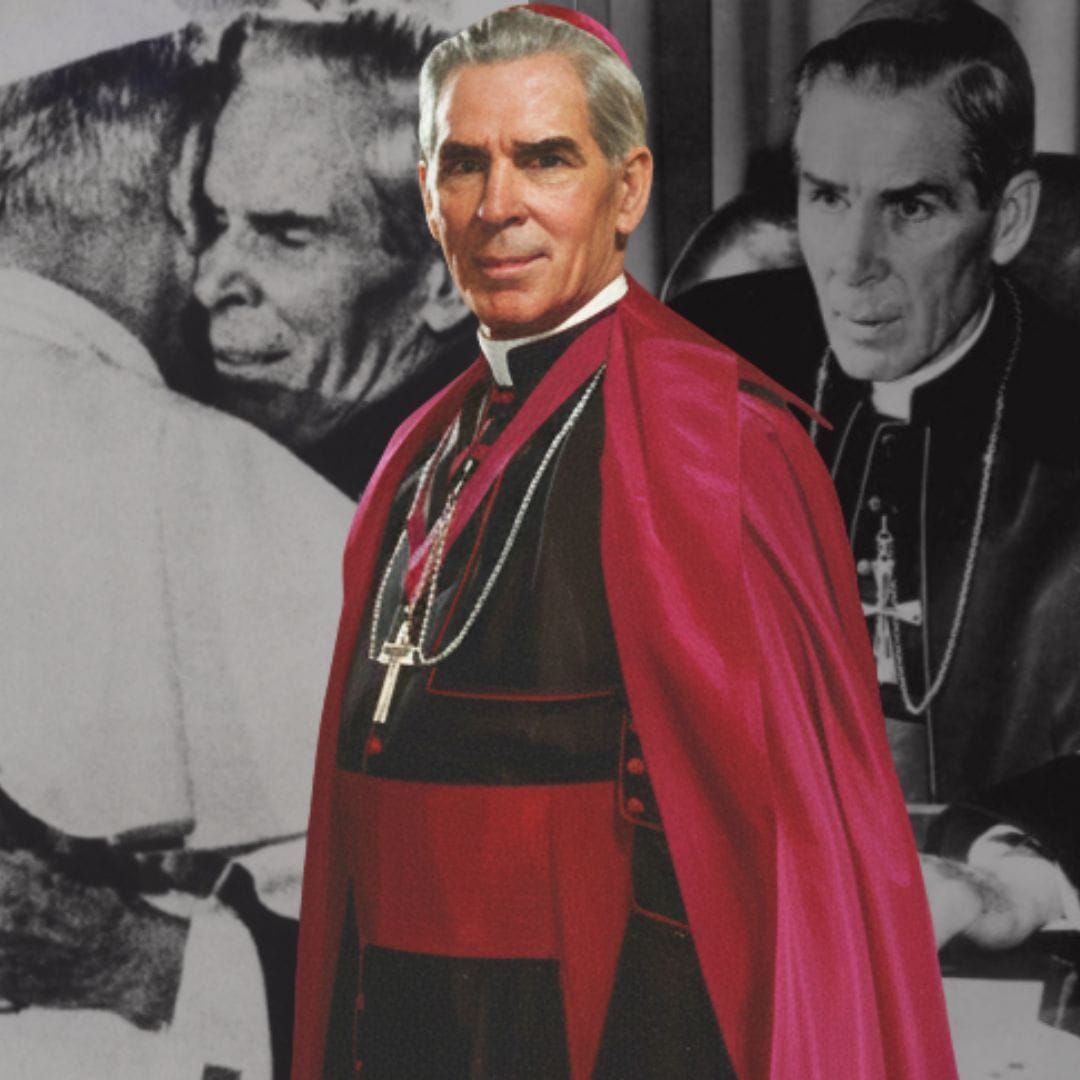
Archbishop Fulton J. Sheen, renown philosopher, theologian, and television pioneer, is now officially on a path toward sainthood.

What is remarkable isn’t just the fact that he might become St. Fulton Sheen. It is that he has already achieved something quite unlike anything the modern world has seen before; a posthumous social media influencer whose reach is larger now than when he first conquered the airwaves.

Blessed Sheen understood the attention economy before it had received its tagline. In 1951, he launched a prime-time television show called “Life Is Worth Living.” The program went head-to-head against TV’s top comedian Milton Berle as well as legendary singer and performer Frank Sinatra.

With piercing eyes that seemed to bore through the black-and-white screen, Blessed Sheen delivered clear moral messages to millions of average everyday Americans.

In language that ordinary folks could understand, an estimated 30 million viewers tuned in weekly to watch a Catholic bishop explain the existence of God, the problem of suffering, and the meaning of sacrifice.

He was, by any modern metric, a true influencer. Blessed Sheen built a “personal brand” before the term was part of our common vernacular. He published 73 books, recorded thousands of hours of radio and television fare, and developed what is now recognized as a unique style, complete with dramatic pauses, larger-than-life gestures, and one-liners aimed straight at the camera.

He consistently beat the competition in ratings and even won an Emmy Award in 1953, which he accepted by thanking his “…writers — Matthew, Mark, Luke and John.”

Here’s another bit of info that makes Blessed Sheen’s current moment so amazing. On TikTok, X, and Instagram, clips of his broadcasts (now colorized and subtitled) routinely generate millions of views.

Those in the younger demographic, who quite often know little about the Cold War or culture war, have been sharing his quotes with the same fervor typically reserved for podcast clips and TED Talks; quotes on the deeper concepts in life that challenge our worldviews regarding human dignity, untold suffering, real and/or perceived inequities, and the inherent dangers of communism.

Blessed Sheen represents the essence upon which the algorithm thrives; that being, the concise, provocative, visually distinct, endlessly quotable, etc.

Additionally, his direct, intellectually serious, visually distinctive, and witty style that worked on 1950s TV screens is one that perfectly aligns with the social media video ecosphere of today.

Comments on TikTok, YouTube, and Instagram about his one-liners have garnered positive contemporary labels such as “savage” and “based.” And discussions of his teachings are often extensive in substance and intriguing in content.

Blessed Sheen was of a mind that Christianity should meet people where they are, and one should use whatever tools are available to assist this process. If that meant a 1955 prime-time television show was in order, so be it.

In 2026, TikTok posts just may be the equivalent. Blessed Sheen’s communication style was tailor-made to go viral. As a matter of fact, he spoke in aphorisms that fit neatly into character limits.

Here’s a sampling:

– “The measure of love is to love without measure.”

– “You must remember to love people and use things, rather than to love things and use people.”

– “We become like that which we love. If we love what is base, we become base; but if we love what is noble, we become noble.”

More than mere theological observations, in today’s terms the above are shareable content. Blessed Sheen spoke to a post-Industrial Revolution culture that was anxious about technology, human connection, and the deeper meaning of life.

These are concerns that would logically be urgent to a generation raised on smartphones.

Blessed Sheen preached that material abundance without spiritual purpose creates a particular kind of despair. To young people drowning in abundance but starving for meaning, this message lands with surprising force.

The world just witnessed an event in which tens of thousands filled a former NFL stadium in St. Louis, Missouri, as the archbishop was declared “Blessed.” The first U.S.-born bishop to reach this stage of beatification now stands one verified miracle away from canonization.

Pope Leo shared that he had watched Blessed Sheen as a child. “It was a way of spending some time together as a family with the truths… that he shared in such an enthusiastic, lively way,” the pope, following the beatification, recalled.

When a second miracle is confirmed, the saint-in-waiting will be formally recognized. He is still converting, consoling, and teaching. But his words now travel farther and faster than he ever could have imagined.

The irony is rich. A man who once competed with Berle and Sinatra for ratings is now competing with MrBeast.

And he is winning, not by changing his message but by proving that truth, well-communicated, has no expiration date.

Fads and phases will always come and go. But the human hunger for meaning is a trend that never ends.

Waiting on a second miracle for The Influencer Who Would Be Saint.
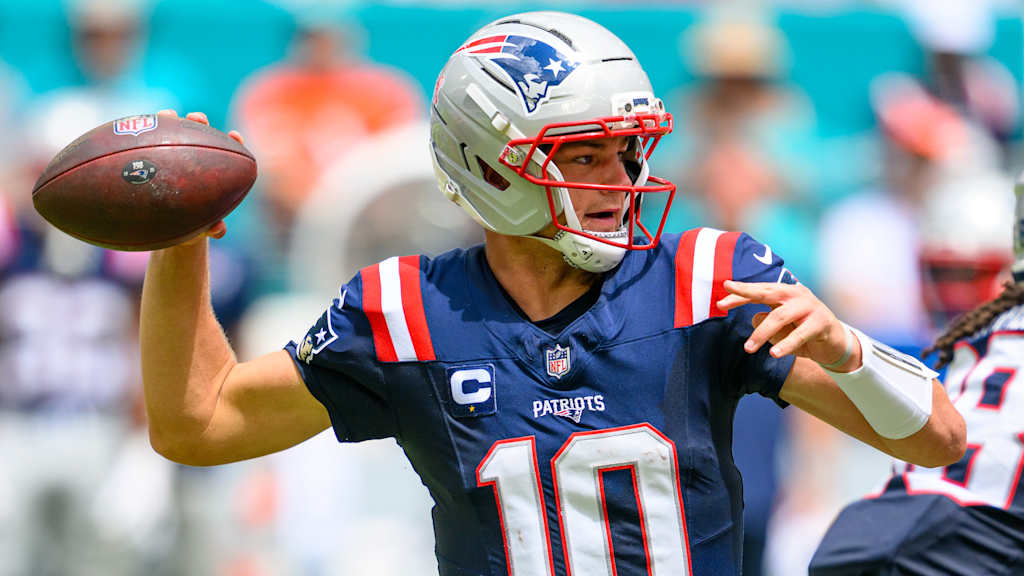
New England Quarterback Drake Maye a Winner Nonetheless

The New England Patriots may not have won 2026’s Super Bowl LX, but the team’s quarterback Drake Maye is a winner off the field for comments that he recently made on marriage and family.

At a time when too many professional athletes are making headlines with negative commentary, Maye stepped up and shared something positive.

Here’s a little background to set the stage.

While in college, he played football for the North Carolina Tar Heels. In 2022 he won the title of ACC Football Player of the Year, after having led the NCAA in total yardage. And as a second-year player in the NFL, he exceeded all expectations.

At the young age of 23, he had the distinct honor of leading the Patriots in this year’s Super Bowl against the Seattle Seahawks. Although his team failed to take home the trophy, Maye’s future in the NFL looks bright.

Prior to the big day, while at the Super Bowl Opening Night press conferences, he was asked about his own marriage to wife Ann Michael Maye. He gave an earnest response, praising marriage as “one of the best decisions” of his life, even crediting the institution for having a positive impact on his career and personal life.

He didn’t mince words. He gave his full-throated endorsement, characterizing marriage and family as a primary source of strength, joy, and personal fulfillment.

“I definitely would advise [my teammates] to eventually get married. It’s one of the best things in life… There’s no better feeling than coming home to a wife that loves you and cares for you and is worried about your best interests,” he said, adding, “I chose to get married young and I don’t regret it one bit.”

Far from being a scripted soundbite, Maye and Ann Michael have been together since attending middle school in North Carolina, where they began building a relationship rooted in faith, shared history, mutual support, and quiet commitment.

Their June 2025 wedding came after years of dating through high school and college and on into his budding NFL journey.

Maye’s personal story stands as a powerful counter-narrative to a sub-group of the culture that all too often glorifies excessive self-gratification, serial dating, and superficial interaction as rites of passage.

His comments highlight some fundamental principles about marriage and family, which a wide swath of modern society has largely downplayed.

A loving relationship within the bonds of marriage has the potential to provide a mental and emotional stability, sense of belonging, spiritual grounding, and motivation apart from self-interest that may be difficult to achieve and sustain, minus society’s legal, cultural, and/or religious validation.

Considering his public expressions, it should come as no surprise that the QB is a sincere man of faith.

When the New England Patriots clinched the AFC Championship, Maye expressed his gratitude to the Creator of the Universe. In his post-game interview, he said, “I thank the good Lord.”

While answering questions ahead of the Super Bowl, Maye revealed his priorities.

“Being a follower of Jesus Christ is the biggest thing in my life,” he said.

To this end, in December of 2025 he said, “I think the biggest thing is using my platform to spread the Word and spread the good news.”

Under Maye’s leadership, the Patriots became the AFC champs and were able to reach the biggest pro football game of the year.

He credits his wife with supporting his career while pursuing her own passions. Her viral baking videos have endeared her to Patriots fans, who refer to her as the “First Lady of New England.”

Maye spoke of the simple joy of coming home to someone who genuinely cares about his well-being, something that, amid the pressures of NFL life, has clearly fueled his on-field growth and leadership traits.

In praising marriage, Maye is in no way imposing his choices on others. He was careful to say that his teammates “have a right to do whatever they choose.” At the same time, he is sharing his own experience as evidence that commitment early in life can lead to profound good.

The approach of personal testimony, without passing judgment, makes his position all the more compelling and is a quiet affirmation of the leadership he displays that inspires without lecturing.

Despite the Super Bowl loss, Maye scored a victory in the public square for marriage and family.

It’s a sentimental back-to-the-future tale: Build your life around someone else and watch love multiply.

A Just Outcome

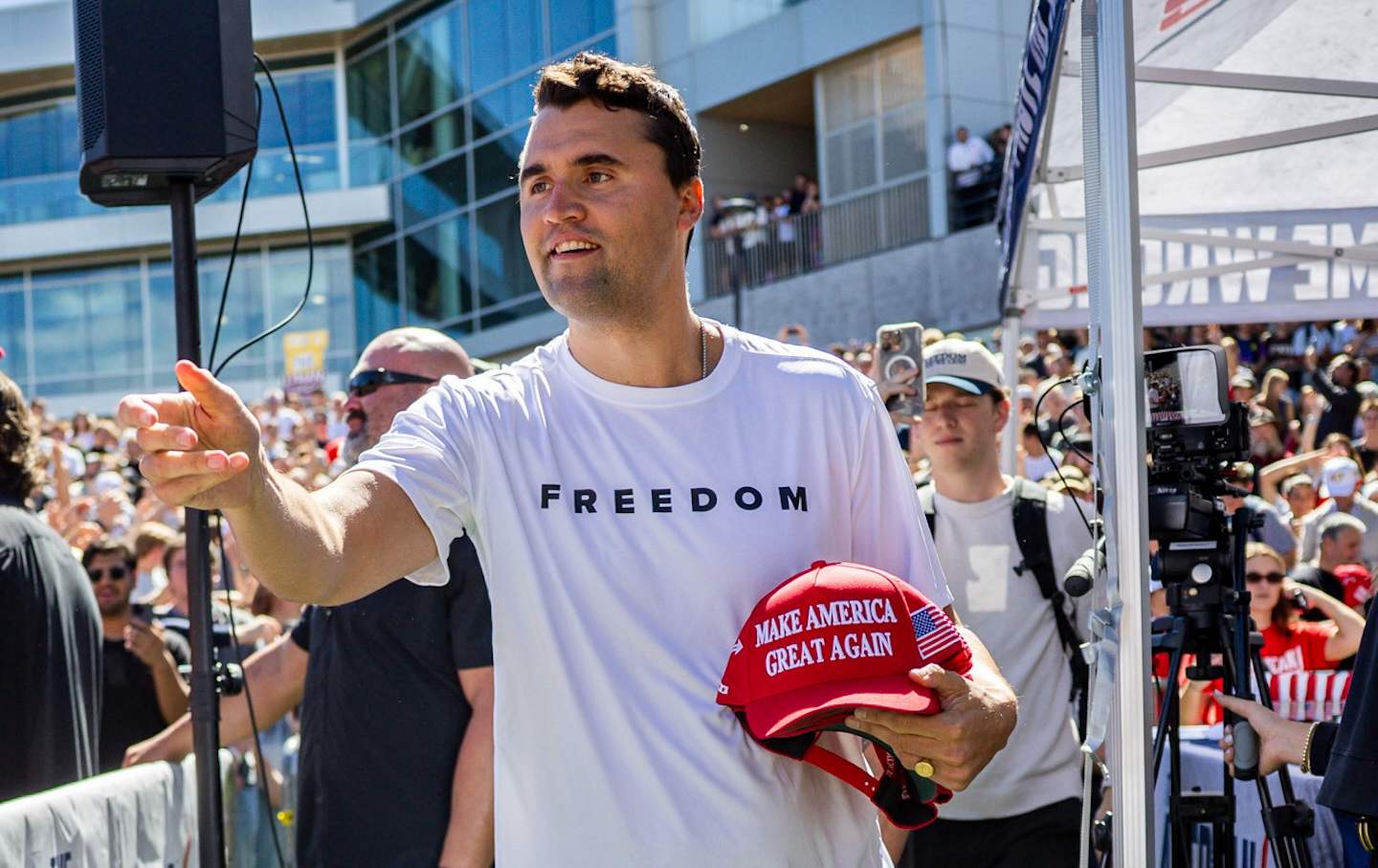
Tyler Robinson, a 22-year-old resident of Washington County, Utah, stands accused of the assassination of Charlie Kirk, which took place on September 10, 2025, during a speaking event at Utah Valley University.

Kirk, a 31-year-old nationally recognized free speech advocate and high school/college civic preacher, was brutally gunned down in a crowded campus courtyard. It was a brazen targeted attack that shook the nation to its core.

Robinson, who was arrested after a 33-hour manhunt, faces charges of aggravated murder as well as other related felonies, with prosecutors pursuing the death penalty.

The alleged assailant’s crime, due to its premeditation, public endangerment, and assault on civil discourse itself, is one in which justice arguably demands the ultimate punishment available under the law.

Utah’s capital punishment statute reserves the death penalty for only the worst criminals, i.e., those who commit aggravated murder with a callous disregard for human life.

Robinson’s actions are clearly callous and demonstrate a flagrant disregard for the lives of Kirk, his family, and the attendees of the event.

The evidence shows overwhelmingly that this was not an impulsive act, but rather a calculated killing. It was planned and executed with alarming precision. Surveillance footage shows the defendant concealing a rifle and approaching the event with intent. He fired a fatal shot at Kirk prior to fleeing.

The county attorney has highlighted the premeditated nature of the attack, noting that Robinson, who was not a student at Utah Valley University, deliberately traveled to the event. Also noted were his actions afterward, including alleged attempts to both obstruct justice and tamper with witnesses.

In order to qualify for the death penalty, Utah law requires an aggravating factor of creating a “great risk of death to others.” Robinson’s alleged crime endangered scores of students, faculty, and attendees who were present at the college campus courtyard.

Adding to the death penalty case is the tragic fact that Kirk’s own children, as well as other children, were present to witness the horror, something that Robinson purportedly knew and yet went forward with his hideous actions.

A university campus is a place that has traditionally been looked upon as a bastion of free speech. Two of the major components of Kirk’s public service mission were to encourage civil discourse and to promote free speech in the corridors of academia.

It is the height of bitter irony that in addition to ending Kirk’s life, there was apparently a desire to extinguish Kirk’s own right to speak, forever.

To allow such an act to go without the application of the appropriate measure of justice serves to embolden others who might take it upon themselves to target individuals, terminate their lives, and irrevocably silence their voices.

Utah’s death penalty process is neither hasty nor arbitrary. It requires a unanimous jury finding of aggravated murder and aggravating circumstances, followed by a penalty phase that will weigh mitigating factors, such as remorse or mental health issues, against the crime’s severity.

Prosecutors must prove these factors beyond a reasonable doubt during the determination of the guilt phase of the trial. Based on what is currently known, given the eyewitness accounts, video evidence, and family cooperation, a conviction on aggravated murder seems probable.

Because of Kirk’s status as a high-profile national figure, jurors may be more likely to accept the suitability of the death penalty option. The strong evidence of aggravating circumstances, such as the public risk and premeditation, favors the use of the full extent of punishment.

Robinson’s lack of remorse was illustrated in his alleged obstruction, among other things, allegedly attempting to convince various individuals to stay silent. His reported lack of cooperation with the prosecution exhibits a clear lack of contrition.

It is a general principle that the wheels of justice grind slowly, in Utah and elsewhere. Robinson’s case may take years before a trial would actually begin, primarily due to pre-trial motions and competency evaluations. The state’s process is stringent, with automatic appeals to the Utah Supreme Court as well as potential federal habeas review that may delay a potential execution for years.

Notwithstanding delays and obstacles, the pursuit of justice is, and always will be, worth the wait time.

Those who oppose the death penalty often cite life without parole as a sufficient enough deterrence.

However, as our society is witnessing in similarly brutal cases, allowing defendants to live out their days in prison, with the lingering possibility of future clemency, sends a message that even the most egregious acts of violence may have future flexibility in alleviating consequences.

The death penalty, in contrast, affirms that some crimes are so grievous, the perpetrators themselves have essentially forfeited the right to remain in society.

For Kirk, his family, and the nation, there is one outcome at this time that appears to surpass all others.

May the laws of our land “Take up the cause of the fatherless” and “plead the case of the widow.” (Isaiah 1:17)

Groundbreaking Animated Film ‘The King of Kings’

Hollywood executives are accustomed to achieving big box-office results from family-friendly animated films.

The global animation market has hauled in hundreds of billions of dollars in revenue. Additionally, animated films have become a major portion of the total movie box office, with several films securing billion-dollar grosses.

Included among the top-50 highest-grossing films of all time are the following animated features: “Ne Zha 2,” “Inside Out 2,” “The Lion King,” “Frozen 2,” “The Super Mario Bros. Movie,” “Frozen,” “Beauty and the Beast,” “Incredibles 2,” “Minions,” “Toy Story 3,” “Toy Story 4,” “Moana 2,” and “Despicable Me 3.”

It’s a simple truth that animated films pay the Hollywood bills. These movies have a 30% higher profit margin than non-animated movies, mainly due to lower production costs.

The entertainment business community is once again having to come to terms with the massive appeal and box-office success of faith-based films. “The King of Kings,” the biblical movie in animated form, has been a blessed bonus.

“The King of Kings” has not only brought in significant grosses in its second weekend, it is also enjoying an unprecedented 10% drop in revenue from its debut weekend, which is minuscule in comparison to the customary drop of 35% or more during second week releases.

“The King of Kings” took in more than $17.2 million during the film’s second weekend. The movie is appearing in over 3,500 theaters across the country. As of this writing, its total domestic take is well over $47 million.

It also set a record for the biggest opening for a faith-based animated film, when it hit $19.3 million in its debut weekend.

Audiences that have seen “The King of Kings” are loving it. The movie has achieved the highest score, an A+ from CinemaScore (the company that measures moviegoers’ satisfaction).

The film has also earned an enviable 98% “fresh” score on the Rotten Tomatoes site’s Popcornmeter, while the aggregated critics rated “The King of Kings” 65% “fresh.”

Angel Studios co-founder Jordan Harmon told Variety, “This movie is really ‘The Passion’ for kids.” The faith-film mogul also shared that at early screenings children were walking out of the theater in tears.

Directed by Seong-ho Jang, “The King of Kings” boasts a roster of well known veteran actors that are featured in its voice-over cast, including Pierce Brosnan as Pontius Pilate, Mark Hamill as King Herod, Forest Whitaker as Peter, Ben Kingsley as High Priest Caiaphas, Kenneth Branagh as Charles Dickens, Uma Thurman as Catherine Dickens, Roman Griffin Davis as Walter Dickens, and Oscar Isaac as Jesus.

A South Korean production, Angel Studios acquired the North American rights to the film in November 2024.

The plot of movie is based on the children’s book “The Life of Our Lord” by Charles Dickens.

It begins with Dickens himself attempting to recite his classic, “A Christmas Carol,” to a theater audience. The author’s performance is interrupted by his son Walter, who is backstage, acting out the exploits of King Arthur.

Following his wife’s suggestion, Dickens tries to distract his son from an obsession with the Knights of the Round Table by telling him of the greatest story ever told, the real-life drama of a king even greater than Arthur, Jesus Christ.

Walter just doesn’t believe that anyone could be the King of Kings, but he reluctantly agrees to listen to his father as long as he can stop the storytelling should he get bored.

As Walter listens, he becomes more and more intrigued with the life of Jesus. He begins to vividly imagine that he is actually in the story, and he ends up feeling as though he is present with Jesus and the disciples, witnessing the events in the life of Christ that include the Nativity, the Miracles, the Passion, and the Resurrection. Like the disciples, the more Walter learns about Jesus, the more he loves Him.

The movie deals with this monumental story in a truly unique manner. The narrative device of Charles Dickens relaying a story to his son Walter (as was used in the beloved author’s original work) conveys both an intimacy and a nearness in proximity to the unfolding events.

Audiences experience the story through Walter’s innocent eyes and are led themselves to ponder, and/or re-ponder, the meaning of the life, passion, death, and resurrection of Jesus Christ.

Like many others, I can attest that Easter miracles are still in the making.

Chris Pratt’s Faith Love Story

It was in the late 2000s when actor Chris Pratt secured Hollywood fame for his portrayal of Andy Dwyer in the NBC sitcom “Parks and Recreation.”

Although his role in the sitcom was meant to be temporary, producers liked him so much they asked him to become a series regular.

After dropping out of college, working as a waiter, and living homeless in Hawaii, Pratt had clearly come a very long way. He was now a genuine TV star.

His career would continue to rocket as he obtained supporting roles in a number of significant films, including “Moneyball,” “Zero Dark Thirty,” and “Her.”

He hit true A-list status through major roles in two blockbuster film franchises: Marvel’s “Guardians of the Galaxy” series and the “Jurassic World” trilogy.

“The Magnificent Seven,” “Passengers,” and “The Tomorrow War” would usher in other stellar roles. And his voicing of characters in “The Lego Movie” franchise, “The Super Mario Bros. Movie,” and “The Garfield Movie” would further expand his audience horizons.

As an actor, Pratt possesses a unique capacity to simultaneously handle drama, action, and humor. This combination is serving to continually propel his career.

The proof is in the celluloid. Movies in which he has had a starring role have grossed over $13 billion worldwide.

With all the success he has achieved, he is nevertheless motivated by something much greater – a deep and abiding faith.

Like nearly everyone else on earth, Pratt has wrestled with doubt and particularly throughout his early years found himself falling into old habits.

“I’d make promises, but I didn’t keep them,” he said in an interview.

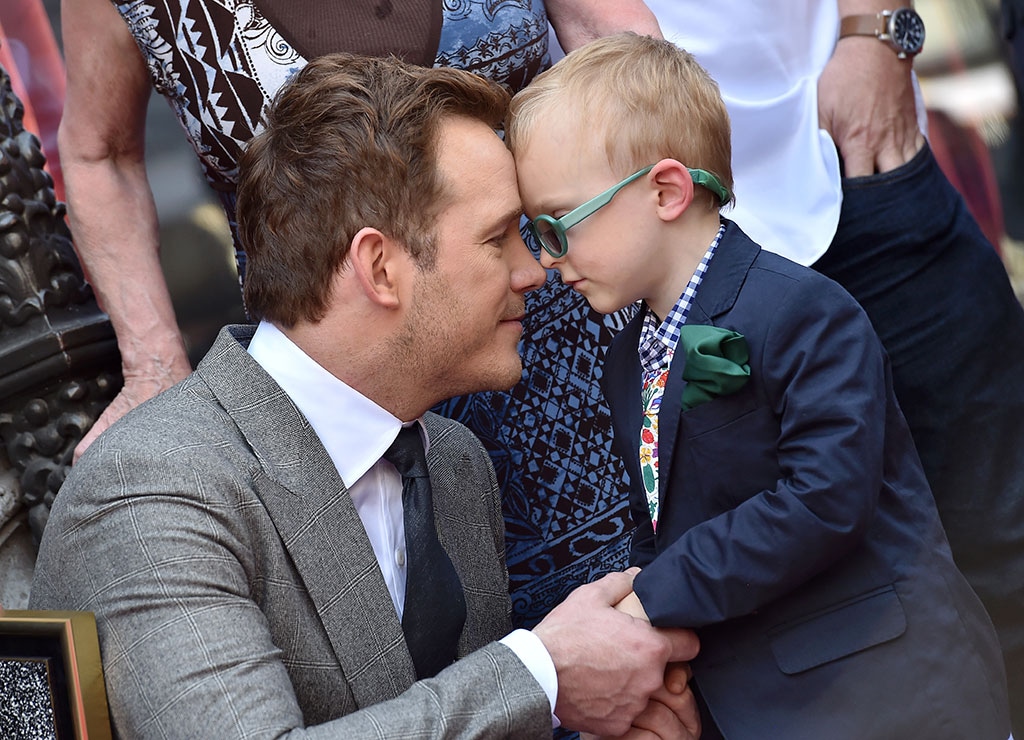
However, his life changed in 2012 when his baby son Jack was born premature and was forced to spend his first month in a neonatal intensive care unit.

“We were scared for a long time,” Pratt said.

“He [Jack] had all of these issues going on. I prayed hard to God. I was in a season of transition spiritually at that time, and didn’t quite fully understand. I made a deal with God again: ‘I’m sorry, God, here I am again, asking for your grace again.’ And He really saved my son, and that was the moment [my faith] was cemented,” he said.

Pratt recalls it as a miracle that restored his faith in God.

“My heart softened, and my faith hardened. That was the moment that I was like, ‘Moving forward, I’m going to give my platform to God,’” he said.

Since then he has used his celebrity profile to enhance awareness of the Almighty.

He wants to affirm people who are believers in Christ, but he also hopes to reach out to the people who haven’t yet experienced God’s presence.

“I want to be a light to people who’ve never seen light. I want to be a light to people who have seen light but turned away from it or been afraid of it,” Pratt said.

As a father of four, he wants to raise his children “with an understanding that their dad was unashamed of his faith in Jesus, and with a profound understanding of the power of prayer, and the grace and the love and the joy that can come from a relationship with Jesus.”

He is well aware that many in the entertainment industry don’t share his views. But this doesn’t deter him.

“It’s who I am. I’m not going to hide behind it. A city on a hill cannot be hidden,” he stated.

Pratt understands the dark side of fame and the ways in which celebrities can oftentimes be trapped by it.

He once responded to a question from “The Late Show” host Stephen Colbert about the inherent danger of intense fame.

“If the spotlight that’s shining on you is brighter than the light that comes from within you — it’ll kill you…,” he said.

He knows firsthand that being a Christian in Hollywood is going against the grain.

When faced with criticism, his approach is to pray for his critics.

“If people don’t understand me, I’m going to pray for them, and then I’m going to go back and hang out with my kids and play tag,” he said.

Pratt exhibits the beautiful virtue of self-sacrifice, which is encompassed in a relationship with God. He has counted the cost of standing up for his faith and is totally willing to pay the price.

“I care enough about Jesus to take a stand, even if it cost me. It could cost me everything, but I don’t care. It’s worth it to me because this is what I’m called to do, it’s where my heart is.”

Pratt is now starring in the original happily-ever-after love story.

When you experience the love of God, you want everyone else to feel it too.

The Consequences of a Godless Society

We are living in the Age of the Unthinkable.

“Surreal,” “disturbing,” and “frightening” are some of the words that are rolling off the tongues of America’s beleaguered people.

The internet is saturated with news reports and video clips that tell the woeful tale.

How in the world did we get here?

The explanation is fairly simple. We allowed those who had an atheist bent to shove God out of sight.

In June of 2022, belief in God hit a new low in the United States, 81 percent, according to Gallup. This is a six percentage point drop from 2017. It is the lowest level in Gallup’s history.

By comparison, more than 90 percent of Americans believed in God in the years that spanned from 1944 through 2011.

In another study from Pew Research, which was released in January 2024, the largest “religious” group in the country is comprised of those Americans who say that they have no religious affiliation, a group that includes atheists, agnostics, and individuals who indicate that their religion is “nothing in particular.”

When asked to choose their religion, 28 percent checked “none.” In 2007 the “Nones,” as this group is referred to, were only at 16 percent.

In this latest Pew study, 17 percent of Nones identify as atheist, 20 percent as agnostic, and 63 percent as “nothing in particular.”

The trend is clear. The U.S. is drifting away from a belief in God and moving toward secular atheism. But the truth is human beings are hard-wired to worship God, and without Him something else will rush in to take His place. It could be money, power, self, and even the almighty state.

The almighty state is the big one. Eminent theologian Francis Schaeffer explained that “…humanists, having no god, must put something at the centre, and it is inevitably society, government, or the state.”

Getting rid of God is a prerequisite to communism. The founders of communism saw this as the first step in leading a free country and its people toward the worship of government, and ultimately to an acceptance of a communist dictatorship.

It is not easy to indoctrinate people and convince them to give up their faith in God. As a matter of fact, it takes more faith to deny the existence of God than to believe in Him.

Minds have to be manipulated into believing that creation occurred without a Creator.

But scientists have found that space and time came into existence during a moment referred to as “The Big Bang.” There had to be a causal agent outside of space and time for this to happen. This, in essence, is a description of God Himself.

Communism insists that there is no Creator. No Prime Mover. No God. And bit by bit the would-be rulers strip God from every inch of the public square.

Without God, good and evil become arbitrary concepts. There is no accounting for right and wrong, which leaves the door wide open for the almighty state to step in and make all the determinations.

Without God, the world grows ice cold. It is a realm in which human dignity erodes away, and people ultimately find themselves enslaved to masters not of their own choosing.

What if we are in an escape room and we are about to discover that it’s not a game?

Time to find God again.

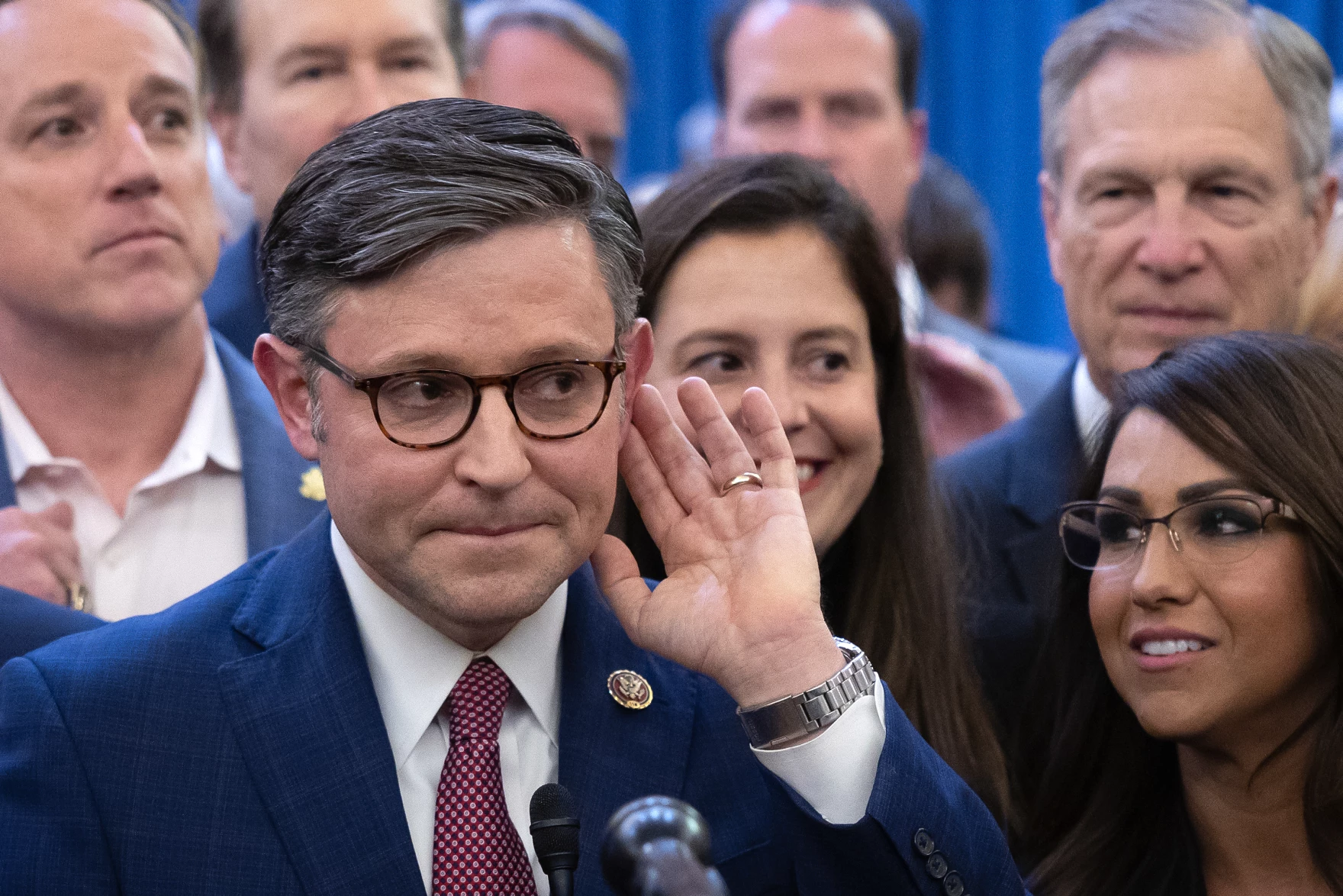
Speaker of the House Mike Johnson’s American Values

Mike Johnson is under attack for the religious and cultural beliefs that he holds.

In an appearance on a recent weekend news program, the newly-elected Speaker of the House made the following comments regarding the barrage of negativity that he is having to endure:

“There are entire industries built on taking down, tearing down people like me. I understand that comes with the territory and we’re not fazed by it,” he said.

From the moment he took possession of the Speaker’s gavel, enemies within the media have joined forces with partisan operatives in an attempt to pigeonhole him as an extremist.

Appearing to take things in stride, he stated, “I’ve been labeled all kinds of stuff, but these people don’t know me.”

Johnson is currently serving a fourth term in the U.S. House of Representatives, having secured Louisiana’s fourth congressional district seat with the largest regional margin of victory in over fifty years.

Arriving at his new post with almost 20 years of constitutional law experience under his belt, in his practice he routinely safeguarded the fundamental rights of individuals and businesses.

He characterized his legal career as one that placed him in the position of “defending religious freedom, the sanctity of human life, and biblical values…”

Highly respected by his colleagues, a deeply divided Republican caucus actually came together and succeeded in electing him as new House Speaker.

Even prior to his Speaker post he was held in high esteem by his colleagues. He was one of the most well-liked members of the GOP leadership.

Back in 2022, he had been unanimously elected vice chair of the House Republican Conference for a second time.

The favorable reputation was due in large part to the way in which he comported himself, humble in his demeanor yet true to his principles.

He hadn’t really aspired to the Speaker’s office or ever actually contacted anyone about the position. Rather, his colleagues were the ones that reached out to him and encouraged him to seek the nomination.

He has described himself first and foremost as a Christian, stating the following when he first ran for Congress:

“I’m a committed Christian and my faith informs everything I do.”

A number of journalists appear to be heavily triggered by Johnson’s expressions of faith.

During a 2022 technology panel, which took place at his church in Louisiana, Johnson spoke about a subscription-based computer program that he and his teenage son were using at the time to monitor questionable content.

Media outlets, including Rolling Stone and The New Republic, apparently unearthed the remarks. Attacks were then leveled at the Speaker for his commitment against pornography.

While talking to reporters at the Capitol, he described the negative media blitz as “just the latest attack in a campaign by D.C. insiders on my faith.”

Walking the Christian walk, he explained, “If you truly believe in the Bible’s commands and seek to follow them, it’s impossible to be a hateful person because the greatest command in the Bible is that you love God with everything you have, and you love your neighbor as yourself.”

Those who are going after Johnson are perhaps unintentionally, or perhaps intentionally, forgetting that the beliefs he espouses are the same Judeo-Christian principles that served as foundational pillars during the initial formation of our country.

The Founders were heavily influenced by biblical teachings contained in the Old and New Testaments.

Thomas Jefferson wrote in the Declaration of Independence the profound “self-evident” truth that “all men are created equal, that they are endowed by their Creator with certain unalienable Rights, that among these are Life, Liberty and the pursuit of Happiness.”

These words spring from the Judeo-Christian credo that all people are created in the image of God.

The Founders recognized Scripture as a prime source of moral and ethical wisdom and incorporated many of its precepts into the U.S. Constitution. The three branches of government, checks and balances on power, the freedom to worship, and equal treatment under the law are but a few.

It is through the application of these inherent values that Johnson desires to implement what he terms “principled governance.”

He summed up the application of his faith in the following manner:

“We’re going to continue to love all people. We’re going to continue to bless even those who persecute us because that’s our worldview and that’s how we operate.”

He added, “Everybody take a breath, give us a chance and you’ll see what principled governance looks like.”

Praying for Speaker Johnson’s success.

And a miracle for America.