The Rising Power of the Podcast

An interesting thing is happening in the new “Golden Age of America.” The mainstream media are quietly fading away.

Although former media giants have been losing their credibility, influence, and audiences for a quite a stretch of time, things really seem to have accelerated over the past couple of weeks.

Most recently, a string of mainstream anti-Trump media figures have given up their positions, including Jim Acosta who exited CNN, Chuck Todd who fled NBC News, Norah O’Donnell who left CBS News, Andrea Mitchell who vacated her MSNBC anchor chair, and Neil Cavuto who waved good-by to Fox News.

Thanks in large part to a whole lot of fake reporting, many left-leaning outlets had simply lost the public trust. That’s when the media vehicles of podcasting and streaming stepped up to provide a much-needed alternative to ABC, NBC, CBS, CNN, the New York Times, and the Washington Post.

And what happened is quite remarkable. New media figures that were accurate, informative, and real became more powerful and more influential than their media predecessors had been.

Acosta’s former employer generally brings in less than 400,000 viewers during primetime hours. On the other hand, Joe Rogan, who hosts one of the top three podcasts in the world, averages 11 million viewers per episode.

As a result of the changing media landscape, leftist media outlets are no longer able to control the narrative.

One contributing factor in the newfound success of podcasts is the growth of Gen Z (ages 13 to 24) audiences.

Edison Research found that 47 percent of the Gen Z online population (an estimated 24 million Americans) are monthly podcast listeners.

Interestingly, podcasters played a significant role in the landslide victory of President Donald Trump. According to a Bloomberg report, a group of highly popular podcasters and streamers rose to become the new mainstream source of information for millions of young males.

In the report, 9 podcasters were specifically cited: Adin Ross, Andrew Schulz, The Nelk Boys, Logan Paul, Joe Rogan, Lex Friedman, Patrick Bet-David, Shawn Ryan, and Theo Von.

In one impactful episode, Rogan interviewed then-GOP presidential nominee Trump during the final weeks of the 2024 presidential campaign. The podcast drew more than 50 million views on YouTube.

During the 2024 campaign cycle, nominees of both parties courted podcasters in an effort to seek support from voters who increasingly obtained their news information from non-traditional sources.

Vice President and Democrat presidential nominee Kamala Harris scheduled an interview with Alex Cooper for her “Call Her Daddy” podcast. Harris also sat with the hosts of the “All the Smoke” podcast for some Bay Area basketball talk.

Meanwhile, with the help of his son Barron’s media savvy, Trump focused on getting his MAGA message out via podcasts especially to young male voters.

It was inevitable that media changes would eventually come to White House press briefings and elsewhere in the government, including the Pentagon.

As part of the alternative media ecosystem, podcasters have been afforded seats at the table where they are permitted to ask questions at press briefings, much to the disdain of the establishment press.

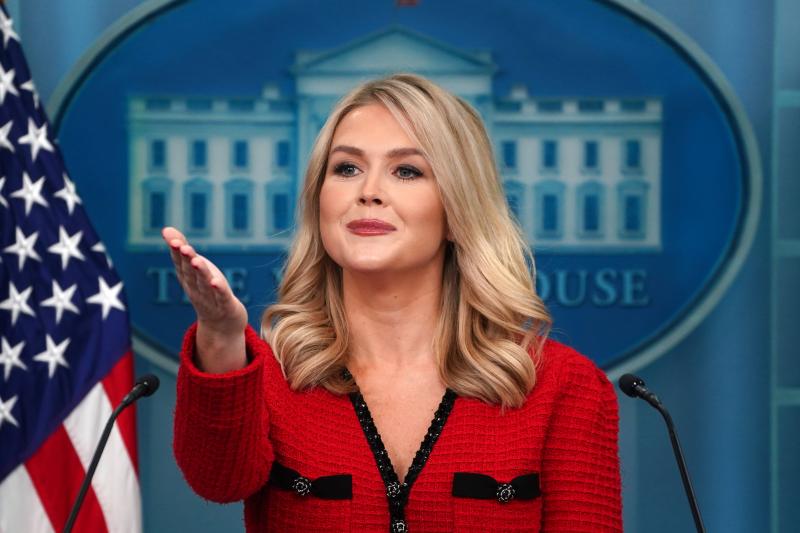
At her second press briefing, John Ashbrook of the Ruthless podcast was allowed to ask White House Press Secretary Karoline Leavitt a question.

Ashbrook, a former campaign strategist to Sen. Mitch McConnell, R-Ky., sat in the “new media” seat among chairs that in prior administrations had been reserved for members of the White House press corps.

Leavitt called the Ruthless podcast “one of the most influential podcasts in America.”

Meanwhile over at the Pentagon Secretary of Defense Pete Hegseth booted formerly prestigious media outlets from the Pentagon’s press offices to make room for new media organizations. The New York Times, NBC News, NPR, and Politico were told to evacuate their Pentagon office spaces by Valentine’s Day.

In their places, three new outlets were welcomed, The New York Post, One America News Network, and the Breitbart News Network.

As the new media kids on the block, podcasts have had an impressive beginning.

In my opinion, they’ve only just begun to wield their media power.

Joe Rogan Verbally Spars with CNN’s Sanjay Gupta

Actor, comedian, TV personality, UFC color commentator, and podcast host Joe Rogan has achieved a level of success in life to which very few can lay claim.

His entertainment industry profile reads like a Hollywood dream sheet. He has been a comedy specials creator and host of the popular reality series “Fear Factor.” Most currently, he has put together what may arguably be deemed the most successful podcast in the world.

Back in his early teens Rogan developed an interest in martial arts. His first martial art was Taekwondo. He would go on to earn the title of Massachusetts full-contact state champion for four consecutive years.

At one time he thought he might become a professional kickboxer. Instead he took on the role of stand-up comic, which eventually propelled him to the stage at The Comedy Store in Hollywood.

Rogan had some acting roles too, including being part of the NBC sitcom “NewsRadio” cast. It was here that he would become friends with fellow “NewsRadio” cast member Phil Hartman.

During a discussion between the two, Hartman shared with Rogan that he was experiencing some difficulties in his marriage. On numerous occasions, Rogan tried to convince the SNL standout that it might be better for him if he left his wife.

Hartman failed to accept Rogan’s advice, saying that he wanted to remain in the marriage for the sake of the children. No one could have known about the tragedy that awaited. In 1998 Hartman’s life would end at the hands of his wife.

The loss of his friend deeply impacted Rogan, and he canceled a series of performances that had been scheduled. But time heals and spirits are renewed.

He would later secure the role of backstage and post-fight interviewer for the Ultimate Fighting Championship (UFC). An eventual friendship with UFC president Dana White afforded him the opportunity to earn the post of color commentator for the fights. Four times he would be named MMA Personality of the Year by the World MMA Awards.

Rogan started hosting the NBC show “Fear Factor” in 2001. He continued to do stand-up performances even as he carried out his host duties on “Fear Factor,” which went on for six straight seasons, with a seventh season airing years later in 2011.

A very busy man, he would become co-host of Comedy Central’s “The Man Show” in 2003.

At the end of 2009, he ventured into the podcasting world with a fellow comedian named Brian Redban. The title of the podcast would later be whittled down to a single host’s name. It rose to fame and lives on as “The Joe Rogan Experience.”

The podcast features an interview format on a wide variety of topics, with a special emphasis on politics, philosophy, and news. It was first picked up by SiriusXM Satellite Radio and later by Spotify in a record breaking $100 million deal.

Most recently, Rogan became the unfortunate target of the cancel culture crowd.

His crime? Asking questions about vaccine mandates and COVID therapies. And having the gall to have expert guests appear on his show to explain their positions.

After Rogan himself tested positive for COVID-19, he chose to use Ivermectin as part of a therapy to regain his health. CNN anchors, including Jim Acosta, Brian Stelter, Erin Burnett, and Jim Sciutto, went on the attack and attempted to smear and denigrate him.

CNN’s Chief Medical Correspondent Sanjay Gupta made an appearance on Rogan’s podcast. It was here that Rogan took the opportunity to confront the guest regarding the network’s false characterization of Ivermectin, which Rogan had used to facilitate his recovery. CNN had labeled the medication a “horse dewormer.”

“It’s a lie,” Rogan said during the interview. “It’s a lie on a news network … and it’s a lie that they’re conscious of. It’s not a mistake. They’re unfavorably framing it as veterinary medicine.”

He asserted that CNN mischaracterized a drug that has been “given out to billions and billions of people.”

Part of Rogan’s appeal is just this – people love his blunt approach.

Gupta quickly found out that Rogan was not going to mince words during the interview.

“Why would they lie and say that’s horse dewormer?” Rogan asked Gupta. “Don’t you think that a lie like that is dangerous on a news network when you know that they know they’re lying? … Do you think that that’s a problem that your news network lies?”

Like a fighter who out-maneuvers his opponent, Rogan further drove his point home, emphasizing that CNN is Gupta’s employer.

“Does it bother you that the network you work for out and out lied, just outright lied about me taking horse dewormer?” Rogan grilled Gupta.

Finally Gupta conceded, using the phrase “they shouldn’t have said that.”

As for Rogan, the round continued with him landing some additional verbal punches.

“Why did they do that?” Rogan asked.

“I don’t know,” Gupta responded.

“You didn’t ask [CNN management]? You’re the medical guy over there!” Rogan pointed out.

The now very uncomfortable Gupta admitted that he should have asked.

It was then that Rogan, having transformed into a media critic, moved the focus to the central issue; that is, the responsibility and credibility of Gupta’s network.

“My point is you’re working for a news organization,” he said.

Rogan added the following flurry: “If they’re lying about a comedian taking horse medication, what are they telling us about Russia? What are they telling us about Syria? Do you understand that that’s why people get concerned about the veracity of the news?”

With that, the interview effectively ended with what in Rogan’s former profession is called – a technical knockout.