No Equivalency between Trump and Biden Trials

President Joe Biden’s son Hunter was recently found guilty on three criminal charges: Making a false statement in the purchase of a gun, making a false statement in information required to be kept by a gun dealer, and possession of a gun by a person who is an unlawful user of a controlled substance.

After only three hours of deliberation, a Delaware jury convicted Hunter on all counts. Each count carries a maximum fine of $250,000. Additionally, the first son could be sentenced to a maximum of 25 years in prison.

Almost immediately after the guilty verdict had been announced, Democrats and the complicit media began singing from the identical song sheet. Phrases such as the tediously familiar “no one is above the law” echoed through the cybersphere.

Many supposed pundits made comparisons between Hunter’s trial and the unusual Manhattan proceedings, which claimed to convict current GOP presumptive nominee and former President Donald Trump.

First a little background on the current president’s son’s case.

Hunter ended up being tried on gun crimes. But this came about after a federal judge put the brakes on a plea deal that a previous prosecutor had attempted to push through.

The plea deal had been announced in June of 2023. Hunter had agreed to plead guilty to misdemeanor tax offenses through which he would have essentially escaped with a slap on the wrist.

If the deal had been implemented, he would have received two years probation and a “diversion agreement,” which would have enabled him to avoid prosecution on the felony gun charge.

However, U.S. District Judge Maryellen Noreika seriously questioned the agreement. Hunter’s lawyers tried to salvage it but were unsuccessful. Everything culminated in Hunter’s recent Delaware courtroom trial and his swift conviction.

Now for the main distinctions between the two high-profile trials:

— Trump was never offered any deal to avoid being criminally tried. Hunter was offered a very choice arrangement.

— In Trump’s case, the prosecution conflated a bookkeeping misdemeanor into 34 felony counts. In Hunter’s case, despite having possession of a now-authenticated laptop that was purportedly loaded with material indicating potentially serious crimes, the prosecution pared things down to a charge of lying on a gun application.

— Trump found himself in an extremely hostile venue, featuring conflicts of interest, star witnesses with credibility gaps, and evidence that was short on relevance and long on salaciousness.

On the other hand Hunter’s trial played out in a friendly venue, a place where people routinely viewed him and other family members as celebrities, and he wasn’t muzzled with a gag order.

— Lastly, Trump is running for president. Hunter isn’t.

The first son is set to return to the courthouse in late summer or fall 2024, this time in California. He will be facing charges of three felonies and six misdemeanors concerning $1.4 million in taxes.

The prosecution has alleged that he didn’t pay his federal income taxes from January 2017 to October 2020, and that he filed false tax reports to boot.

The back taxes have since been paid.

Under normal circumstances, a case such as this would pose greater potential legal jeopardy for Hunter than the case in Delaware.

But then again, there’s not much that can be considered “normal circumstances” these days, so it’s anyone’s guess what will ultimately happen.

Here’s one thing you can hang your hat on.

There is no equating the Trump and Biden trials.

Not in procedure.

Not in fairness.

Not in guilt or innocence.

Not in outcome.

And not when it comes to the dispiriting effect on our nation.
Justice Politicized

20150708_101237_sjm-steinle-07xx-05

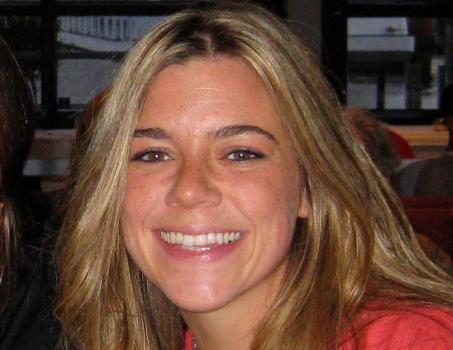
On a beautiful July day, a young woman was showing her father the piers of San Francisco. Without warning, a bullet entered her back. Holding his daughter in his arms, the last words the father would hear his daughter say were, “Help me, Dad.”

The woman’s name was Kate Steinle, and the man who would cause her life to come to a tragic end is named Garcia Zarate. Kate’s story will go down in history as being one of the most flagrant travesties of justice the legal system has had to endure.

Zarate had been deported from the United States five times. He had also repeatedly re-entered the country and was a felon seven times over.

Prior to the shooting, Zarate had just completed a nearly four-year federal prison sentence for illegally reentering the country. After he was remanded to San Francisco law enforcement on an outstanding warrant, which involved a minor charge that was ultimately dismissed, local officials released Zarate, ignoring a request from federal authorities to keep him in custody.

Zarate was acquitted by a San Francisco jury of first and second degree murder as well as the charges of involuntary manslaughter and assault with a semi-automatic weapon. The only charge of which he was actually found guilty was the one of being a felon in possession of a firearm.

The prosecution argued that the defendant had fired the murder weapon intentionally. The defense claimed that the shooting was accidental, that Zarate found a stolen gun on the waterfront, and that the firearm had somehow fired itself.

Considering the facts, it is disturbing that the jury was able to exonerate Zarate in this way. He held the murder weapon (the handgun) in his hand. He pulled the trigger, and the bullet ended up robbing Kate of her life.

Even if the jury bought into the defense contention that Zarate did not intend to kill Steinle, reasonable deliberators would come up with a charge of second degree murder or involuntary manslaughter.

The whole idea that this homicide was one in which no one is responsible runs counter to the law and to common sense. The jury’s verdict omits individual fault for Steinle’s untimely death.

Zarate possessed a firearm illegally. He fired it into an area where other people were likely to be seriously injured or even die. His actions were reckless and could have yielded a verdict of second degree murder. The jury went further, however, by choosing to bypass his obvious criminal negligence, which would have, at a minimum, resulted in involuntary manslaughter. Apparently, non-judicial factors played into the jury’s deliberation.

Judge Samuel Feng had repeatedly admonished prospective jurors, asking them not to consider the politics that had thrust the Steinle case into national headlines.

Still, immediately after the verdict was announced, defense attorney Francisco Ugarte evidently could not wait to engage in politics.

“From day one, this case was used as a means to foment hate…I believe today is a day of vindication for the rest of immigrants,” Ugarte stated.

Defense attorney Matt Gonzalez and Public Defender Jeff Adachi also entered into the political fray by attacking the president, vice president, and attorney general.

The Steinle verdict was not due process but rather a politicized miscarriage of justice to further advance the highly illegal and dangerous “sanctuary” cities policies. The city of San Francisco had set up “sanctuary” rules, which stopped federal agents from removing a five-time deported criminal from the country.

Zarate had reentered the U.S. illegally and had additionally been in federal custody. However, he was handed over to the San Francisco sheriff in order to be prosecuted on a marijuana case. He was released weeks before Steinle was killed, and the sheriff did so without notifying federal authorities.

The “sanctuary” policies of cities such as San Francisco and states such as California prevent local law enforcement from cooperating with federal immigration agents. The tragic truth is that, if the policy had not been in place, Zarate would have been turned over to Immigration and Customs Enforcement in the Spring of 2015 and Steinle would still be alive.

Politicians who are supposed to foster public safety, but instead create rules that stop cooperation with federal law enforcement officers, are exposing their constituents to grave danger.