‘Sound of Freedom’ Is the Whisper of Hope

Some things are so horrible they are difficult to even mention. Sex trafficking of children is one such unspeakable issue.

However, a recent movie not only dares to breach the subject, it brings a ray a hope to the darkest of places.

People of conscience uniformly agree that the abduction of little ones for the purposes of sexual exploitation is an abomination. It is the slavery of the modern day.

Traffickers seek out the vulnerable, those unfortunate youth who frequently live in poverty or war-torn regions of the world.

Victims such as these are being illegally sold, adopted out, married off, pushed into prostitution, and/or forced to work under myriad of insufferable and degrading conditions.

A newly released film titled “Sound of Freedom” is taking this unmentionable issue head-on.

The movie is directed and co-written by Alejandro Monteverde, produced by Eduardo Verastegui who also appears in the film, and stars Jim Caviezel, well known as the lead actor in Mel Gibson’s “The Passion of the Christ” film, and Mira Sorvino, the Oscar winning actress in Woody Allen’s “Mighty Aphrodite” film.

Caviezel portrays hero Tim Ballard, who left his previous real-life position as an agent with Homeland Security Investigations to pursue a mission of rescuing children from human sex traffickers.

Ballard personally requested that he be portrayed in the film by Caviezel, having observed the actor’s work in the 2002 film “The Count of Monte Cristo.”

The movie tells the true story of Ballard’s dangerous journey abroad to rescue the sister of a boy he had previously saved from traffickers.

The film’s opener contains some compelling scenes that demonstrate one of the diabolical ways in which traffickers abduct children.

A welder who is living in Honduras encounters an elegant woman who claims to be the founder of a talent agency. After seeing the welder’s 11-year-old daughter singing at the marketplace, the woman suggests that she tryout for a potential job in the entertainment business.

The father subsequently drops both his daughter and son off at the tryouts, which are being held at a poorly maintained hotel and are attended by other children as well.

When the father returns to pick up his children, to his shock he finds that the room is empty and his daughter and son are missing.

It turns out that the woman was no recruiter for the entertainment business but instead was a front for the fast-growing criminal enterprise of child sex trafficking.

Ballard is able to engineer a daring rescue of the welder’s son. However, his sister continues to be held captive. So Ballard heads to Colombia to try and rescue the young girl from the clutches of evil.

The backstory of the “Sound of Freedom”’s release is a tale of providential determination. After the project’s original filming and completion in 2018, it takes a detour that almost completely derails it.

21st Century Fox had contracted to distribute the movie, but before it can be scheduled for release the studio is acquired by Disney.

For some reason Disney executives choose to shelve the film. It takes years for the filmmakers to re-acquire the distribution rights.

In March of 2023, Angel Studios (the faith-based entertainment company which through crowdfunding has produced “The Chosen,” “Dry Bar Comedy,” and “The Wingfeather Saga”) was able to obtain the distribution rights for “Sound of Freedom” from Disney.

Angel Studios used its equity crowdfunding expertise to raise the cash needed to market the movie.

The studio also utilized an innovative program that encouraged patrons to “pay it forward,” so that people who might not otherwise see the movie would be able to watch it in theaters for free.

Goya Foods, an executive producer of the film, also provided financial support for the movie via Goya Cares, an anti-trafficking foundation established by the company.

The marketing efforts for the film really appear to be paying off and have resulted in more than $7 million in pre-sale revenue.

During one of the many dramatic scenes in the film, Ballard alludes to a passage from the Gospel of Luke.

“It would be better for you if a millstone were hung around your neck and you were thrown into the sea than you should ever hurt one of these little ones,” Ballard says.

In the Bible, Jesus himself instructs us about the inherent value of each and every child.

When in the film Ballard is asked why he has taken up this arduous mission, he replies, “Because God’s children are not for sale.”

So strong is his commitment to his mission, during the filming of the movie Ballard reportedly left the Columbian set so that he could join his team of former Navy SEALs to participate in the rescue of more than 200 children.

For me personally, another passage from the Bible comes to mind. It is that of the Good Shepherd.

The shepherd has 100 sheep in his flock. But if one single sheep goes missing, he leaves the 99 in search of the one.

At least in prayer, may people of conscience continue to strive to be like the Good Shepherd.

And may God in his goodness send more Tim Ballards to rescue the one in need.

AI Is Set to Take Over Hollywood

Generative AI is a type of Artificial Intelligence technology that has the capacity to almost instantly produce text, images, audio, and video.

Understandably, the entertainment community is in an uproar over the prospect of AI wiping out a huge chunk of the longstanding industry.

While a segment of Hollywood is actually enthused about the idea that AI might free creators from some of the typically tiresome tasks and also help to avoid the hefty price tag that frequently accompanies big budget projects, others are scared to pieces.

It’s fairly easy to convince a portion of the entertainment community that AI is an overall plus. Use of the technology has become common practice within the biz.

The late Carrie Fisher was digitally cast via AI (with permission from her daughter) in the film “The Rise of Skywalker.”

In another instance, in order to make it seem as if 80-year-old actor Harrison Ford were still in his thirties, Disney-owned Lucasfilm used images of Ford’s face, taken from the “Indiana Jones” films of the 1980s, and blended them into the fifth Indiana Jones film, “Indiana Jones and the Dial of Destiny.”

During an interview with late-night host Stephen Colbert in which he talked about his AI-restored on-screen image, Ford said, “It’s fantastic.”

Actor James Earl Jones, who is now 92 years old, authorized an AI version of his famous voice, which he had supplied for the Darth Vader character in the “Star Wars” franchise series, so that the character could continue on.

Reportedly, a digital version of the late actor Christopher Reeve will be included in a cameo appearance in the upcoming movie “The Flash.”

AI technology is routinely being used to alter mouth movements, so as to more accurately sync words in dubbed films of a different language. It is also regularly being used to create cinematic music and soundscapes.

Paul Schrader, screenwriter of “Taxi Driver” and director of “American Gigolo,” did a Facebook post about something that he called a “dirty little secret composers know.”

“AI is already scoring filmed entertainment and has been for some time,” Schrader wrote.

Lately the actors and writers unions have been forced to confront the dark side of AI, and they don’t like what they see coming.

Generative AI is one of the main reasons the Writers Guild of America (WGA) has been on strike for weeks and the Screen Actors Guild‐American Federation of Television and Radio Artists (SAG-AFTRA), of which this author is a member, has been threatening to strike as well.

Both unions are seeking to limit the use of AI in the industry.

Digital doppelgangers in fake movie trailers have been popping up, making entertainment content without the assistance of Hollywood creatives.

AI-generated trailers, which have appeared on the Internet for what seems to be director Wes Anderson’s films, typically include well known actors such as Bill Murray and Scarlett Johansson. The trailers implement Anderson’s characteristic style, and they feature fake adaptations of popular franchises such as “Star Wars,” “Harry Potter,” and “The Lord of the Rings.”

A video of Ryan Reynolds selling Teslas was recently shared on Twitter but has since been removed. Reynolds’s production company responded with another AI-generated video, with Twitter owner Elon Musk endorsing gin made by a Reynolds-owned company. This video has also been removed.

A-listers, including Tom Cruise and Keanu Reeves, have actually been the victims of unauthorized AI-generated deep fake videos.

Then there’s the world of voice actors, which has also been shaken in a major way. So-called voice cloning is easily conjured up by AI technology.

The reality is AI technology is capable of improving itself. The phenomenon is known as “emergence.” In the not-too-distant future, entertainment content will be created by simply giving prompts to AI technology without actors, writers, directors, or cameras having to be involved.

This means that an individual with minimal resources but with access to AI can create professional looking videos that feature famous actors and characters, minus their personal consent or involvement.

Actors already have a degree of legal protection, through existing prohibitions, from unauthorized use of their names, images, and/or likenesses.

However, things start getting really murky when it comes to AI technology’s training data. The rights of the previous performances of individual actors being used for the purposes of AI training will likely be an issue in union negotiations.

Duncan Crabtree-Ireland, SAG-AFTRA’s chief negotiator, has spoken out about maintaining control over the AI-created lookalikes of actors and the issue of fairness when it comes to using personas.

“The performer’s name, likeness, voice, persona – those are the performer’s stock and trade,” Crabtree-Ireland said. “It’s really not fair for companies to attempt to take advantage of that and not fairly compensate performers when they’re using their persona in that way.”

Writers in turn possess intellectual property rights to their works. But under the present law they will have a difficult burden to prove.

In order to protect their rights in court, they must prove that the AI work is either a reproduction of their own work or a derivative of it.

In the real world, AI will likely be trained with a multitude of scripts, making this burden of proof all but impossible.

In Schrader’s opinion, “The WGA position on AI is a fascinating conundrum. The guild doesn’t fear AI as much as it fears not getting paid.”

Notwithstanding the dangers that the technology poses, the director predicts that AI “will become a force in film entertainment.”

Both SAG-AFTRA and the WGA want reasonable safeguards before AI capabilities proliferate within the industry.

“Family Ties” actress, computer science graduate, and former SAG board member Justine Bateman is unequivocally against the use of AI tech for entertainment content.

“I think AI has no place in Hollywood at all. To me, tech should solve problems that humans have,” Bateman said, adding that its use will “have an incredibly bad effect — disastrous effect on the entertainment business.”

The actress views the use of AI as a backward looking “automatic imitation” through which creativity will be stifled.

“What’s the next genre in film? What’s the next genre in music? You’re never going to see anything like that if we’re all using AI,” Bateman said.

She stated that she didn’t “want to live in that world,” echoing the sentiments of many actors, writers, directors, and musicians.

FYI: The above written article was created by means of the author’s un-Artificial Intelligence.

A Faith and Family Hollywood Merger

With the out-of-touch product that Hollywood has been serving up for far too long now, it turns out that a sizable audience has been built up, one that is truly longing for solid faith and family-based entertainment fare.

Well some good news is on the horizon for folks like these and likeminded ones. Two highly successful media outlets, both of which have been providing consumers with faith and family focused content, are teaming up.

Great American Media, parent company of the popular cable channel Great American Family, is merging with PureFlix, a streaming service that offers a variety of faith-based movies, television shows, and documentaries.

The terms of the deal have not yet been disclosed, but Great American Media will hold the majority interest in the upcoming combined company.

Great American happens to be the current competitor and business rival of the Hallmark Channel. Interestingly, the person who launched Great American had been at the helm of Hallmark for over a decade.

Bill Abbott, then-CEO of Crown Media, which is the parent company of Hallmark, guided the channel to become the go-to network for made-for-TV Christmas movies.

Abbott left Hallmark in 2020 over an incident involving traditional versus non-traditional values. He went on to launch Great American Media and its two cable TV channels, Great American Family and Great American Living. He also launched a free ad-supported subscription streaming channel called Great American Adventures.

Great American Media’s programming features the aforementioned Christmas films, rom-coms, and classic series that focus on “faith, family and country” themes.

The executive was also able to bring over some of the top former Hallmark Channel stars to his budding network, including Danica McKellar, best known for playing Winnie Cooper in the original “Wonder Years” television show, Lori Loughlin of “Full House” fame, as well as fellow “Full House” star and queen of Hallmark’s Christmas fare Candace Cameron Bure.

PureFlix is a streaming service that is known for its extensive library of faith-oriented and family-friendly content, including the “God’s Not Dead” film franchise and “The Chosen” streaming series.

The streaming service presents a family alternative to Netflix. It currently has a price tag of $7.99 per month and boasts more than a million subscribers in over 190 countries.

In 2020 PureFlix became part of Affirm, Sony Pictures’ faith-based division, which had previously released faith-based films known for modest production budgets and sizable profit margins, including such successful titles as “War Room,” “Heaven Is for Real,” “Overcomer,” and “Miracles from Heaven.”

Abbott will remain as CEO of the newly formed entity created by the two-company merge, and he will report to the board of directors.

The merger highlights the importance of faith-based family-friendly entertainment to Hollywood as a whole.

“This merger will allow us to further our commitment to original, quality content and makes Great American Media and Pure Flix leaders in a large and under-served market,” Abbott stated in the announcement of the transaction.

It is this oft-neglected group of media consumers that stands to benefit the most from the merger. This being said, my prediction is that the joining of forces of the two media outlets is likely to produce an all-out faith-based juggernaut.

It is going to have a larger reach, a larger library of family-friendly material, and a larger comprehensive streaming and cable television experience. And Pure Flix and Great American Media will most likely enhance one another’s content.

Great American Media had previously launched its content on traditional cable networks as opposed to a streaming service. The company’s networks are not only available in 50 million pay TV homes, they are featured in internet TV bundles such as Frndly TV and Fubo, and also on its own free, ad-supported channel, making it one of the fastest-growing television outlets.

After the merger takes place, PureFlix will have given Great American’s networks a streaming home of their own.

At the same time, Great American’s cable channels will have provided a new platform for Pure Flix to showcase content for TV audiences and will also have made available a library of new content that can be shown on Great American Media’s networks.

This is the kind of win-win business deal that makes for a very happy Hollywood ending.

Stars of ‘Jesus Revolution’ Ride the Heavenly Wave

Liberals mock it, mainstream media critics slam it, and jaded journalists sneer at it. But “Jesus Revolution” just keeps beating every benchmark.

With a few weeks running under its belt, the Lionsgate faith-based film just sprinted past $47 million in domestic box office, simultaneously out-grossing the combined total of four of this year’s Best Picture Oscar nominees.

Directed by Jon Erwin and Brent McCorkle, the little flick with a $15 million budget has Hollywood execs green with envy over its ample profit margin.

In order to raise awareness and interest in the film prior to its release, the PR team scheduled lots of church and university screenings. The strategy paid off big-time, especially at the movie’s debut where it was projected to bring in $7 million and instead more than doubled expectations with its $15.5 million take its first weekend.

“Jesus Revolution” tells the true story of the national spiritual awakening that occurred in the late 1960s and early 1970s. It has officially become Lionsgate’s highest-grossing post-pandemic film since 2019.

As is the custom in the entertainment business, when a project experiences this type of success, opportunities tend to multiply for the lucky folks involved.

The filmmakers recently announced the release of another faith-based movie, which is set for later this year. The movie’s lead character is played by two-time Oscar-winner Hillary Swank.

Casting Swank in the starring role was quite a coup. Not only has the actress garnered two Academy Awards for Best Actress, Time once named her as one of the 100 most influential people in the world.

After winning her second Oscar, Swank famously said, “I don’t know what I did in this life to deserve this. I’m just a girl from a trailer park who had a dream.”

The upcoming movie, titled “Ordinary Angels,” tells the real-life story of a struggling Kentucky hairdresser, who helps rally a community to come to the aid of a widowed father to help save the life of his gravely ill little girl.

“I was drawn to this beautiful true story because it’s such a powerful reminder that angels reside everywhere among us. And that faith, hope, grit, and positivity are all powerful fuel for miracles,” Swank said in a statement.

The backdrop for the hairdresser’s heroism is a region that has been devastated by an immense snowstorm, which occurs during the record cold wave of 1994. The father is pursuing a life-giving liver transplant for his daughter.

“Ordinary Angels” has a lot of connections to “Jesus Revolution.” The film is directed by one of “Jesus Revolution’’’s screenwriters, Jon Gunn. It is co-written by “Jesus Revolution” director Jon Erwin. And it will be released by the same company that brought the public “Jesus Revolution,” Lionsgate.

“Ordinary Angels” also features Nancy Travis of “Last Man Standing.” And Oscar nominated actress Meg Tilly of “Agnes of God” and “The Big Chill” fame has a co-writing credit for the screenplay.

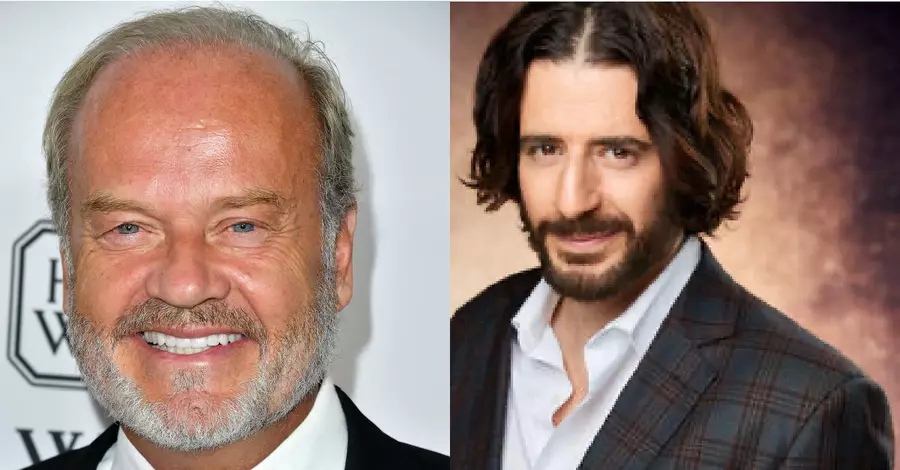
Meanwhile Kelsey Grammer, the star of “Jesus Revolution,” and Jonathan Roumie, the co-star of the film, have new projects in the offing.

Grammer’s career has been seriously elevated, due to his brilliant portrayal of Pastor Chuck Smith as the legendary evangelist who pilots the Christian revival of the late 1960s and early 1970s.

The signature hit sitcom that established Grammer’s stardom, “Frasier,” has been rebooted by Paramount+. Grammer’s character, Dr. Frasier Crane, is an on-the-air psychologist, who comes back to Boston and now has to deal with unexpected life challenges. The “Frasier” reboot boasts a fresh cast.

After plenty of internet speculation by fans of the series, a few weeks ago the reboot was confirmed.

The original co-stars, which include David Hyde Pierce (Niles), Jane Leeves (Daphne), and Peri Gilpin (Roz), are not counted among the cast of the reboot. In fact, the only returning original cast member is Grammer himself.

The new series will feature Jack Cutmore-Scott as Frasier’s son Freddy Crane, who is expected to bring in elements of the beloved Frasier dad character Marty Crane, a role that was portrayed by John Mahoney, who passed away in 2019.

Unfortunately, no release date has yet been set for the “Frasier” reboot, but it is likely that the series premiere will be slated for late 2023 on Paramount+.

Nothing but good things also seem to be on the horizon for Grammer’s co-star Roumie, who has become a favorite faith-based actor.

Not only is he fresh on the heels of his success in “Jesus Revolution,” he is the star of the largest fan-supported entertainment project of all time, “The Chosen,” a dramatic streaming series about the life of Jesus Christ (portrayed by Roumie).

The powerful United Talent Agency (UTA) took note of Roumie and signed the faith-based phenom to a multi-year deal.

Brendan Fraser’s Inspirational Comeback

During last Sunday night’s Academy Awards ceremonies, an emotional Brendan Fraser won his very first Oscar. He took home the Best Actor trophy for his role in the movie “The Whale.”

In his acceptance speech, he made reference to his unusual career trajectory.

“I started in this business 30 years ago, and things didn’t come easily to me, but there was a facility that I didn’t appreciate at the time until it stopped,” he said.

The actor achieved fame and fortune for his compelling roles in a host of hit movies. In his “Encino Man” breakthrough role, he portrays a caveman who is revived out of his frozen state and upon awakening finds himself in the modern world.

Best known for his starring role in “The Mummy” franchise, Brendan appeared to have exited for a fairly long stretch from the entertainment industry as well as the public square.

Lots of folks took note of his extended absence, but they also noticed his amazing reemergence. Only this time he is holding an Oscar in his hand.

Those in the know understood why the career of the talented and successful actor had come to an abrupt halt.

The back story of his disappearance and reappearance provides insight into one of the darker sides of Hollywood. Thankfully for Brendan, some bright spots were ahead.

His is a tale of suffering, rejection, and eventually redemption.

Like a number of other action stars, Brendan has routinely decided to perform many of his own stunts in both his action and comedy roles. The decision turned out to have some major consequences though, taking a steep toll on his body.

He spoke candidly about having to deal with serious pain as a result of his work in the 2008 film “The Mummy: Tomb of the Dragon Emperor,” as well as previous films.

“I was put together with tape and ice… Screw-cap ice packs and downhill-mountain-biking pads, ‘cause they’re small and light and they can fit under your clothes. I was building an exoskeleton for myself daily,” he said.

Injuries would force him to undergo several surgeries over a period of seven years, including a partial knee replacement, a laminectomy, lumbar surgery, and vocal cord repair.

In addition to physical suffering, he shared that his world had been shaken by a sexual assault.

In 2018 he revealed that back in 2003 he had been sexually assaulted by an individual named Philip Berk, who was the then-president of the Hollywood Foreign Press Association, the organization that votes for the Golden Globe Awards. Berk denies the allegation.

Brendan explained that he had “played by the rules up until that point,” adding, “I felt like, okay, now, suddenly, I’ve been violated. And it has gone too far. And I will no longer abide this.”

He also said that the incident made him “retreat” and “feel reclusive.”

Interestingly, there is a kind of consensus among many entertainment writers and social media users that he was actually blacklisted from Hollywood because of the sexual assault allegations.

He himself alluded to the notion, saying, “I don’t know if this curried disfavor with the group, with the HFPA. But the silence was deafening.”

“The phone does stop ringing in your career, and you start asking yourself why. There’s many reasons, but was [this] one of them? I think it was,” he said.

He also characterized his acting work as having “withered on the vine.”

Much like the arc of a great script, Brendan’s real life story would be redirected, thanks to a unique movie role.

Securing the lead acting part in “The Whale” would end up being a monumental turnaround event in his life.

In his acceptance speech at the Oscars, he expressed heartfelt gratitude to the director of the film, stating, “I’m grateful to Darren Aronofsky for throwing me a creative lifeline and hauling me aboard the cruise ship ‘The Whale.’”

For him, or for any actor, the part that Brendan plays is a most unusual one. He took on the challenging role of playing a reclusive, precariously overweight English teacher.

Although many in the film critic community took issue with the movie itself, both the critics and the public loved Brendan’s portrayal.

At the 2022 Venice Film Festival where “The Whale.” premiered, the actor received a standing ovation. And in addition to an Academy Award for his artistic endeavor, he also garnered a Screen Actors Guild Award and Critic’s Choice Movie Award.

It’s all so remarkable, really.

The individual who seemed to have been exiled from the entertainment community got a golden return ticket back.

Kelsey Grammer Is the Preacher Man in ‘Jesus Revolution’

In its debut weekend, the new Lionsgate film “Jesus Revolution” managed to exceed all monetary expectations, more than doubling box-office estimates in North America.

The movie’s success has not only stunned the entertainment industry by soaring into third place in ticket sales, but it has also gotten sterling reviews from viewing audiences.

Providentially the film’s opening comes at a time when a bona fide Christian phenomenon has been taking place.

Now known as “The Asbury Revival,” tens of thousands of young people have been gathering together at Kentucky’s Asbury University for non-stop prayer, song and praise to heaven.

The Asbury awakening experience has been spreading around the globe, spontaneously igniting crowds at colleges, theaters and sports stadiums. Throngs of ardent worshipers are refocusing their lives and looking to a higher power.

Movie theaters in which “Jesus Revolution” has been shown are having similar, unprompted worship activity that cannot be contained. Attendees are bursting out in spontaneous prayer, and many end up making commitments to follow the Broken Road.

“Jesus Revolution” tells the true story of Calvary Chapel founder Chuck Smith, the highly influential and beloved Christian leader, pastor and teacher.

Never wanting personal credit but rather always giving the glory to God, Pastor Chuck was the humble leader of the “Jesus Movement,” the phenom of its time in the late-1960s and early-1970s. He went home to be with the Lord in 2013.

A lover of The Word, Pastor Chuck planted the “seeds” for the historical revival. The first Calvary Chapel was located in Costa Mesa, California, and many more Calvary Chapels were soon to follow.

The film’s title was taken from a 1971 Time magazine cover, where the two words made major headlines.

Based on a book of the same name, the movie follows pastor-in-waiting Greg Laurie (played by Joel Courtney), Christian flower child Lonnie Frisbee (played by Jonathan Roumie), and lead character Pastor Chuck Smith (played by Kelsey Grammer), as the three form what would come to be looked upon as a watershed spiritual awakening.

As a result of the efforts of Laurie and Frisbee, in the late 1960s Pastor Chuck finds that his Southern California church is suddenly overflowing with hippies, who are seeking an encounter with the God of the Bible.

Particularly gifted in the art of storytelling and blessed with a professional narrator’s voice, this was a pastor who was kind, gentle and irrepressibly joyous.

What better material for the master storyteller than The Bible? He took the congregation through The Good Book line by line, cover to cover, multiple times, and the people loved it. I was privileged to be one of them.

In both real life and now on the big screen, Pastor Chuck is the perfect greeter to welcome young truth seekers into the Christian community.

The film’s actual archival footage of Laurie, Frisbee and Pastor Chuck preaching to massive gatherings is a moving reminder of the spiritual power of revival.

The film was theatrically released in the United States by Lionsgate on February 24, 2023. Entertainment companies had forecasted that the faith-based film would bring in around 6 to 7 million dollars in revenue in its opening weekend.

But remarkably, “Jesus Revolution” took the third place slot in the weekend box office, with more than 15.5 million dollars. It actually played to packed houses, taking in almost $6,300 per theater.

The critics predictably gave the movie mixed reviews. Conversely, filmgoers themselves gave “Jesus Revolution” an A+ CinemaScore and a 99% Rotten Tomatoes rating.

The film’s director Jon Erwin made history by obtaining four A+ CinemaScores, more than any other filmmaker since the ratings began. Erwin had previously received the highest CinemaScore rating for “American Underdog,” “I Can Only Imagine” and “Woodlawn.”

The industry is struggling to explain why this film surpassed box-office expectations. It may have to do with the personal relationship that Christians have with their Savior, which they oftentimes keep to themselves until the right moment presents itself. Like enjoying a meaningful movie together.

Box-office predictors may also have underestimated the star power of Kelsey, the actor best known for the lead role in the long-running television sitcom “Frasier,” which is still going strong in syndication. His expert acting skills, length and breadth of experience, and unapologetic Christianity come to the fore in his Pastor Chuck portrayal.

Kelsey turned out to be a brilliant casting decision, not only because the resonant baritone voice that he possesses is so reminiscent of the pastor he portrays, but also because he’s the real deal when it comes to his Christian faith.

When he spoke during a recent interview about his portrayal of Pastor Chuck, he described his faith walk in a way in which a lot of folks are able to relate.

“I’ve had hiccups. I’ve had some tragic times,” Kelsey said.

He noted something that is a common struggle for those seeking God, particularly when individuals are going through difficult times.

“I have wrestled with those and worked my way through them: sometimes rejecting faith, sometimes rejecting God even, in a period of being pretty angry about it, like, ‘Where were you?’…,” he said.

Kelsey concluded with personal testimony that is unequivocal and at the same time relatable.

“I have come to terms with it and have found great peace in my faith and in Jesus. It’s not cavalier. Jesus made a difference in my life. That’s not anything I’ll apologize for,” he said.

To put it mildly, today’s Hollywood is generally less than friendly toward people of faith, especially Christians.

Leave it to Kelsey to go where most stars dare not tread.

The Devil in Hollywood

There has been a troubling increase within our culture in the use of demonic imagery and ritualistic ceremonies.

Most strikingly, the entertainment industry, with the help of its media accomplices, has been weaving satanic messaging, symbolism and the like into musical compositions, performances and videos.

However, never have things been as explicit and wicked in their presentation as we have seen of late.

It is insidiously corrosive to a society, and likewise dangerous to an individual that dares take such a destructive path.

Here are a few Left Coast examples:

Rapper and singer Lil Nas X was involved in the co-creation of a pair of sneakers that had a drop of human blood in the soles of the shoes. The sneakers were decorated with a pentagram and contained a scripture citation that read, “And he said to them, ‘I saw Satan fall like lightning from heaven.’” (Luke 10:18)

Singer Demi Lovato released an album that had a horribly profane title. Its cover showed Lovato posed on a cross and dressed in offensive and debasing clothing.

Appearing together at the recent Grammy Awards show, pop singers Sam Smith and Kim Petras performed what turned out to be a Luciferian tribute. Smith played the lead character, complete with fiery flames and demonic overtones.

On their part, the corporate media was generally seen giving nods of approval to Smith for his reprehensible presentation. CBS responded to a tweet from the singer, which had included a photo of Smith donning horns during a dry run for the awards show.

“This is going to be SPECIAL,” Smith tweeted, tacking on a devil emoji.

CBS replied, “….You can say that again. We are ready to worship!”

Senator Ted Cruz characterized Smith’s Grammy segment perfectly, when he tweeted, “This… is… evil.”

We are seeing a twisted sort of glee being exhibited by elites in the entertainment business and establishment media. Looking at this from a historical and spiritual perspective can provide insight into what’s behind it all.

It seems that the left has been enamored with the diabolical for centuries. Motivations have been mixed. Some look for a way to garner attention. Others just seem to be fascinated with evil itself, and with evil’s chief celebrity, Satan.

For folks like this, the devil is looked upon as a rebel.

Now in books, movies and music, characters that play the rebel can appear intriguing, independent and sometimes even heroic. But here’s the ugly little secret. This is what the devil is expert in – appearing to be something that he isn’t. After all, he’s the Master of Deception.

Radical writer and philosopher William Godwin, Mary Shelley’s father, presented the devil as an admirable rebel against God.

French anarchist Pierre-Joseph Proudhon embraced Satan as a symbol of liberty.

Russian writer Mikhail Bakunin described the devil as an “eternal rebel.”

Theosophical Society founder Helena Petrovna Blavatsky published a journal called “Lucifer.”

American activist Moses Harman named his periodical “Lucifer the Lightbearer.”

Saul Alinsky, in an epigraph on the introductory page to his book “Rules for Radicals,” expressed that Lucifer was the “first radical” who “rebelled against the establishment.”

Dr. Paul Kengor, a professor of political science at Grove City College, pointed out that “long before Karl Marx was writing about the hell of communism, he was writing about hell.”

Several years before he wrote the infamous “Communist Manifesto,” Marx penned demonic poetry and prose. His family was originally Jewish, but his father left Judaism and converted to Protestantism, and had all of his children baptized in the Christian faith. Notwithstanding his religious background, in his twenties Marx became a staunch atheist.

Many leftists leaders of today have a deep antipathy toward traditional religions, and just like their inauthentic rebel hero they seek to destroy them. Communism is a proven way to achieve this unholy goal.

From legendary evangelist Billy Graham came the following statement: “Has it ever occurred to you that the Devil is a religious leader and millions are worshipping at his shrine today? … The name of this present-day religion is Communism… The Devil is their god, Marx their prophet, Lenin their saint and Malenkov their high priest.”

The devil is real, and he’s on a seek-and-destroy mission.

What does he want to destroy? Your soul, and the souls of everyone around you.

Bob Dylan put it to song in his inimitable “Gotta Serve Somebody.”

Well, it may be the Devil or it may be the Lord

But you’re gonna have to serve somebody.

Sam Smith and his liberal buddies in the entertainment and media industries should give Dylan’s tune a listen. It will serve their souls well.