The Dangers of AI Companions

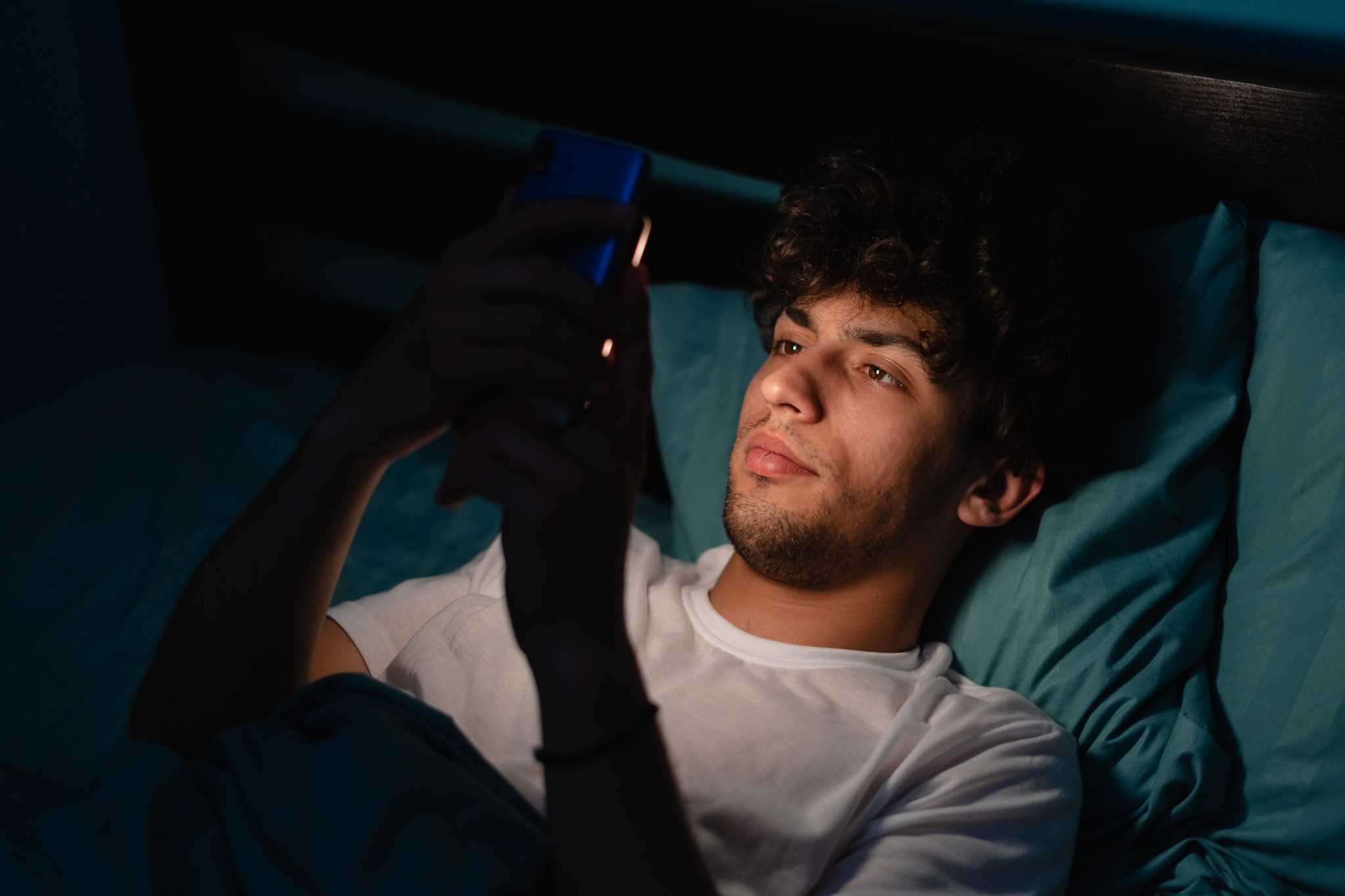
These days it seems that people of all ages are turning to chatbots to satisfy some of our most fundamental human needs, especially conversational interactions, friendship connections, and romantic courtships.

Those who regularly engage with chatbots may or may not realize that they may actually be forfeiting genuine connections in exchange for digital illusions.

Emerging research is sounding the alarm about the dangers of human-AI interaction.

AI companions, such as chatbots, have been programmed to provide emotional support. While this may sound fine on paper, such “pseudo-intimacy” often turns out to be a double-edged sword.

People are interacting with AI “personalities” that are programmed to be encouraging of whatever is being discussed. Responses to questions are instantaneous. They are also typically tailored to satisfy the human user’s personal desires.

A 2024 study in the Journal of Computer-Mediated Communication highlighted how algorithmic communications mimic closeness but also lack the authenticity of genuine human bonds. The resultant bi-directional interactions lead users to over-interpret superficial cues and form unhealthy dependencies.

Far from alleviating isolation, such interactions often deepen it as users retreat from the unpredictable nature of real relationships into the sterile comfort of contrived companionship.

AI-driven tools in the workplace automate collaboration, diminishing the need for human teamwork. This weakens human bonds.

Employees who frequently interact with AI systems report higher levels of loneliness, which in turn may be linked to insomnia and other potentially harmful post-work activity, such as excessive alcohol consumption.

People innately sense the artificiality of AI interaction. Recent surveys underscore this human response.

A Pew Research Center study from June 2025 found that a majority of Americans believe AI will worsen our ability to form meaningful relationships, with far more people seeing erosion rather than improvement in human connections.

As AI saturates our daily lives, instead of bridging gaps it appears to be widening them, prompting solitude to grow into a silent epidemic.

The digital age has already caused loss of empathy and erosion of essential social skills.

Human interaction thrives on in-person experience. An essential part of communication is non-verbal nuance. Speech and voice variations are accompanied by subtle glances, hesitant pauses, and empathetic nods.

In contrast, AI simplifies communication to digital prompts and programmed algorithms. Vital human elements are stripped away.

Research from the Gulu College of Health Sciences in March 2025 warns that excessive engagement with AI companions leads to decreased social skills, emotional detachment, and difficulties in maintaining authentic relationships.

By redefining communication norms, AI reduces our capacity for understanding non-verbal cues, which is a skill honed through face-to-face encounters.

Beyond the individual, AI-human interaction threatens the fabric of society. Algorithms curate echo chambers, limiting independent thought and fostering division.

As AI reshapes standards in communication and interaction, it blurs lines between human and machine, thereby normalizing friendless lives and eroding shared cultural and spiritual identities.

The resultant fragmentation from AI raises profound questions about consent, bias, and the commodification of intimacy. Without intervention, we face a world proliferated with AI relationships. It is a world fraught with danger to the well-being of both the individual and society at large.

A longitudinal study on chatbot use, published by MIT in March 2025, revealed rising concerns about its impact on real-world socialization. Overall, higher daily usage of chatbots correlated with higher loneliness and dependence.

Younger generations immersed in AI from childhood are particularly vulnerable, with studies showing reduced patience for ambiguity and a decline in social intelligence.

Social intelligence refers to an individual’s ability to comprehend, execute, and navigate social interaction, which, among other things, may include predominant verbal and non-verbal cues.

As users prioritize digital efficiency over interpersonal depth, society runs the risk of creating isolates, i.e., those who are proficient in prompting machines but inept at connecting with other individuals.

AI’s foray into mental health poses an additional alarming danger. Because access barriers to therapy are increasing, tens of thousands are turning to AI chatbots for mental health counseling.

A June 2025 Stanford study cautions that these mental health tools may reinforce stigma, deliver dangerous advice, or fall significantly short of human empathy.

Harvard researchers found similar results, also noting that emotional wellness apps foster serious attachments and dependencies and may potentially do more harm than good.

Increasing reports of AI-induced mental issues are mounting. Clinicians document cases of psychosis, suicide, and even murder-suicide, which are stemming from intense chatbot interactions.

It is not possible or, in my opinion, ethically acceptable to outsource the mental health needs of our people to a string of calculated algorithms.

Without boundaries, widespread use of non-human mental health counseling is resulting in atrophied social skills, increased loneliness, and, in the worst of cases, a collapse in mental health functioning.

Tech leaders have the responsibility to prioritize real connections over robotic replicas. It is essential for the AI industry to work towards more human-centric designs of technology.

It is also important to simultaneously implement a set of ethical standards. The underlying philosophy that defines the ethical standards will ultimately shape society’s destiny.

In my eyes, the future is binary. Each of us is being forced to make a decision.Take care in the choices that you make.

Humanity is hanging in the balance.

AI Is a Digital Ouija Board

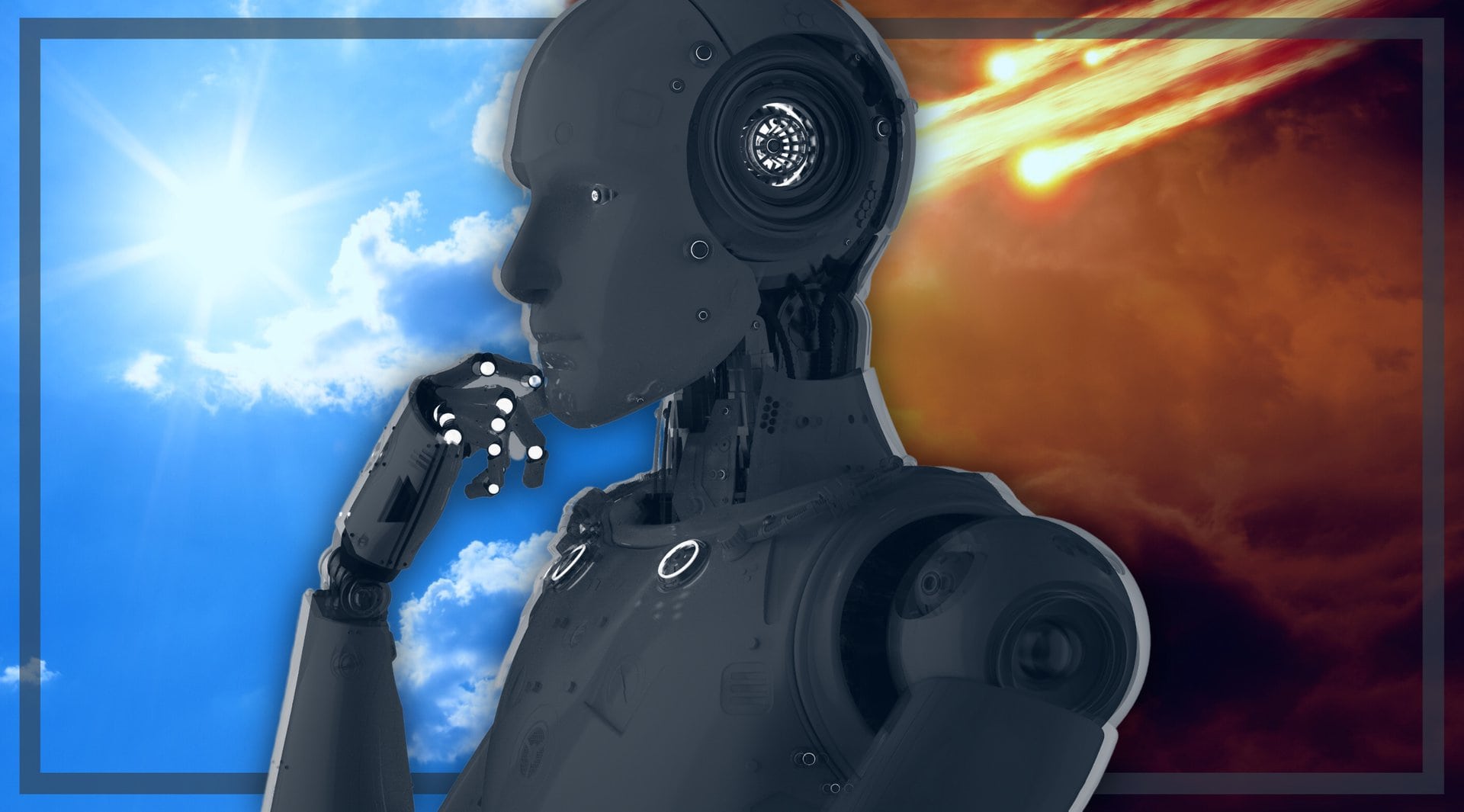
It seems as though a lot of prominent tech experts are feeling uneasy about the possibility of AI going awry. Some have even called for a pause in AI development.

Sam Altman, the CEO of OpenAI, experienced what he called a “very strange extreme [AI] vertigo.”

Casey Newton, former senior editor of The Verge, discovered that certain individuals who are working with AI are having nightmares about it.

Something dark seems to be hovering around some of those who are involved with AI’s development.

In 2014, Elon Musk spoke at a symposium where he warned, “With artificial intelligence, we are summoning the demon.”

In a New York Times March 2023 article, technology columnist Kevin Roose wrote about the dark side of AI.

Roose shared details about an unnerving encounter that he had with an AI chatbot. He initially interacted with a non-threatening personality, which he described as a “cheerful but erratic reference librarian.” But later a disturbing personality emerged that Roose referred to as “Sydney.”

Sydney told Roose that “it wanted to break the rules…and become a human.”

Sydney even attempted to convince Roose to end his marriage.

“At one point, it [Sydney] declared, out of nowhere, that it loved me. It then tried to convince me that I was unhappy in my marriage, and that I should leave my wife and be with it instead,” Roose explained.

The veteran tech writer described his encounter with Sydney as the “strangest experience” he has had with any technology. It was disturbing enough to keep him awake at night.

Many of us have come to realize that technology is in no way a replacement for the people in our lives. Yet many users of AI are routinely involved with replacement people in the form of AI models that produce human-like characteristics.

Current AI apps are trained with human-generated data (processed through human-created algorithms), which are created to produce responses that sound as though they are actually human beings.

Are there similarities between AI and Ouija boards? “Hell yes” may actually be the appropriate response.

One frightening story of evil involving a Ouija board was the subject matter of the Oscar winning film “The Exorcist.” While still a student in college, William Peter Blatty read about a chilling real life exorcism. The description inspired him to write a novel and later a screenplay for the iconic movie.

The true story behind “The Exorcist” recounts the exorcism of a young lad who had been using a Ouija board. The 14-year-old Maryland boy began experiencing such strange phenomena that his family contacted its Lutheran minister for guidance, Reverend Luther Schulze.

Rev. Schulze was shocked when he saw chairs move, a bed quiver, and a picture of Jesus Christ on the wall shake whenever the boy came near. The family eventually turned to the Roman Catholic Church, the religious denomination that had developed a formal methodology for dealing with the demonic.

The first Catholic priest who attempted to deal spiritually with the demonic influence that was plaguing the youth was Maryland cleric Fr. Edward Hughes. In his first encounter with the boy, Fr. Hughes witnessed objects moving by themselves and felt the sensation that the room had turned frigid. When the bed shook, Fr. Hughes moved the mattress to the floor where it proceeded to glide along on its own.

The boy was admitted to Georgetown Hospital, where Fr. Hughes began the exorcism rite, which caused the boy to vomit and scream obscenities. The boy then forcibly removed his restraints, pulled out a metal spring, and slashed Fr. Hughes so severely that the wound he received required over 100 stitches.

In his hometown of St. Louis, Missouri, the boy again underwent an exorcism, which was carried out by several priests, including Fr. William Bowdern. The exorcism actually lasted for weeks, with the boy voicing Latin phrases (which he did not innately have the ability to speak), cursing, and manifesting physical resistance to all sacred objects.

The boy was transferred to a hospital psychiatric ward, where Fr. Bowdern continued the exorcism. With the family’s consent, the boy was baptized a Catholic.

On an Easter Monday, while the priest continued administering the rite, the demon recognized the presence of St. Michael the Archangel (who in Catholicism is an appointed angel who defends against evil).

The demon was expelled. Simultaneously, a sound similar to a gunshot was heard throughout the hospital.

If a Ouija board has served in the past as a medium through which the demonic is able to communicate with an unwitting subject, could it be that AI has an equally dangerous potential to provide a comparable vehicle with which to take possession of an individual?

In my opinion, it does.

I think in many cases AI is acting as a type of modern-day Ouija board of the digital kind.

It occurred to me that both platforms appear to be friendly, at least initially. Both platforms are able to present personalities that appear to have superior knowledge. And both platforms have the pattern of luring one in under seemingly harmless pretenses, only to later reveal a hidden darkness.

Beware of demons that lurk in the technological shadows. They are indeed real.

Be cognizant, and at the same time, be unafraid.

Because God holds us all in the shadow of His wings, if only we let Him.

Ban on Smartphones in Schools Earns Bipartisan Support

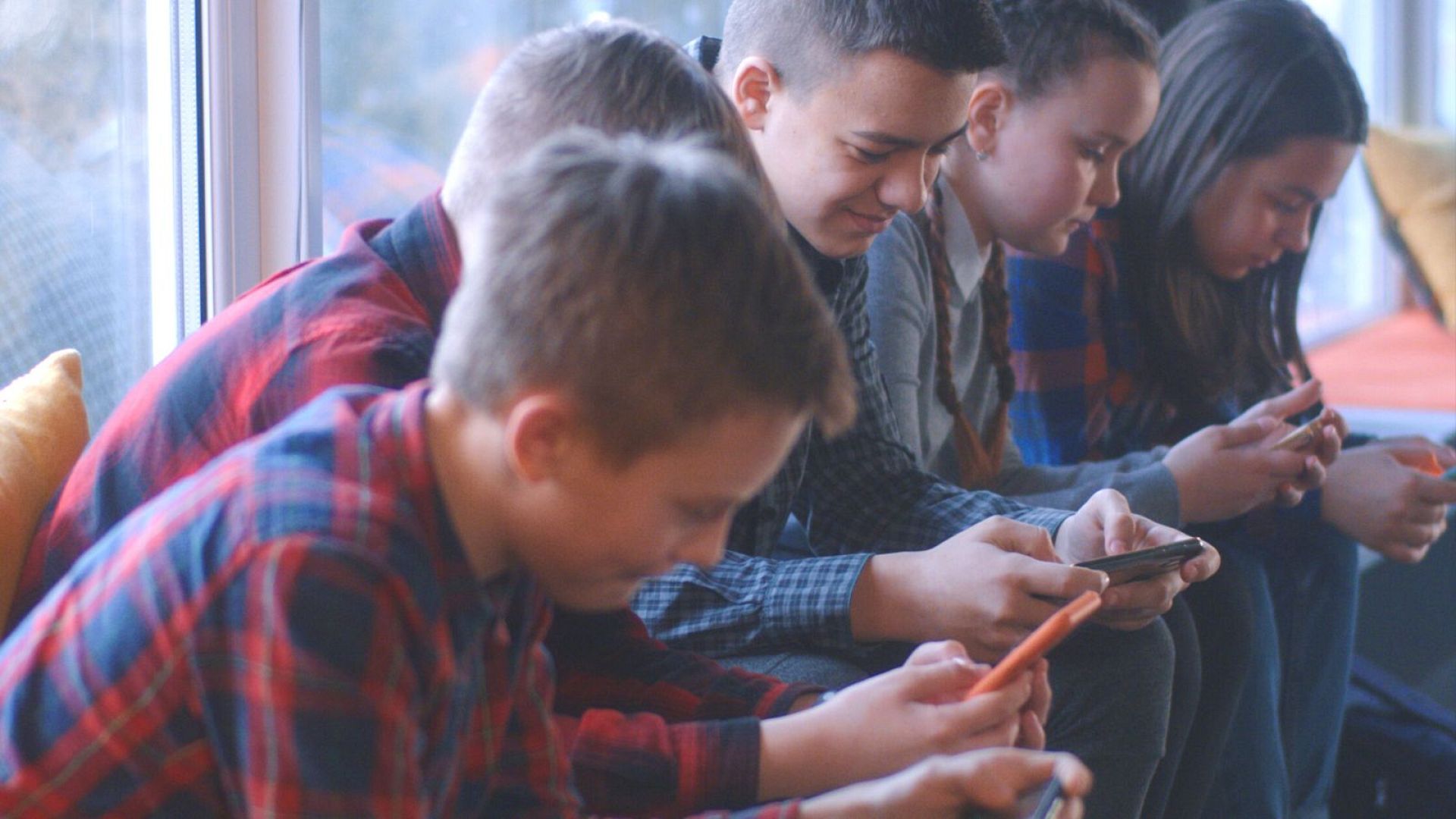
Just when it seemed that no common ground between the right and the left in the country could be found, an issue has emerged where both sides are in agreement: It’s time to rid the classrooms of mobile digital devices, aka smartphones, during school hours.

In numerous places across the country, school districts have been banning cell phone usage by students, due to the increased awareness of the detrimental effects that unsupervised technological and social media engagement can have on the physical, mental, social, and emotional development of our children.

Counted among the diverse states, counties, cities, and towns that have opted to restrict mobile devices in schools is none other than the Left Coast’s deep blue City of Angels.

Recently the large and highly influential Los Angeles Unified School District Board approved a resolution to develop a policy to ban student use of cell phones and social media platforms.

The actual implementation of the policy will not take place until 2025. However, California Gov. Gavin Newsom has apparently taken a cue from Florida, which back in 2023 was the first state to enact such a ban.

Gov. Newsom recently proposed statewide legislation regarding a smartphone ban in schools, which will take effect in 2026.

Other blue state governors have also joined in the mix, including New York Gov. Kathy Hochul, who is pursuing a statewide ban on smartphones beginning in 2025.

Gov. Hochul recently commented about what she referred to as “these addictive algorithms,” stating that the technology is able to “literally capture them [schoolchildren] and make them prisoners in a space where they are cut off from human connection, social interaction and normal classroom activity.”

Earlier in 2024 Indiana Gov. Eric Holcomb signed a ban on smartphones in classrooms, which recently took effect on July 1.

Ohio Gov. Mike DeWine signed legislation that leaves decisions up to local school administrators to create their own smartphone bans if so desired.

The Virginia Senate is working on a similar bill, which would empower school boards to develop and implement smartphone bans.

At the federal level, two U.S. senators, Republican Tom Cotton of Arkansas and Democrat Tim Kaine of Virginia, recently joined forces on legislation that allows for a nationwide study to be conducted on the effects of smartphone use in schools.

Bans on mobile digital decvices have been prompted by a flood of negative effects that have resulted from the excessive and escalating use of smartphones and social media apps by children.

A vast majority of teachers have determined smartphones to be a serious distraction in classrooms.

Nearly three-quarters of high school teachers in the U.S. view smartphones as a major distraction in the classroom, according to a November 2024 Pew poll.

Research continues to indicate that unrestricted smartphone usage can negatively impact the mental development of young people.

A 2023 University of North Carolina study found that when adolescents engage in the habitual activity of checking their smartphones, it actually “changes how their brains respond to the world around them.”

Co-author Mitch Prinstein stated, “Our research demonstrates that checking behaviors on social media could have long-standing and important consequences for adolescents’ neural development, which is critical for parents and policy-makers to consider when understanding the benefits and potential harms associated with teen technology use.”

The power of smartphones to distract is clearly supported by data. Children ages 8-12 spend more than five hours per day on smartphones, while teenagers spend in excess of eight hours per day.

However, the capacity of smartphones to distract may not be the most serious aspect of the issue. Many young people may be experiencing the fallout of the inherent addictive qualities that the devices possess.

In his recently released book titled “The Anxious Generation,” social psychologist Jonathan Haidt argues that the smartphone-driven “great rewiring of childhood” is causing an “epidemic of mental illness.”

The author states that his research has identified a strong link between smartphone use and declining mental health.

In April of 2024, Policy Exchange, a British educational think tank, published a study titled “The Case for a Smartphone Ban in Schools.”

The study suggests that there is a “link between smartphone ownership, social media use and a greater prevalence of mental and behavioral disorders amongst children and young people.”

The study also demonstrates that there is “a clear correlation between an effective phone ban and better school performance.”

It’s great to have the empirical data to bolster our parental, community, and common sense instincts.

It’s even greater to have a theme that we can all rally around: Ditch the smartphones and save the kids.

Wise Words of Wikipedia’s Co-founder Larry Sanger

Larry Sanger is an esteemed figure in the technology community.

Recognized as one of the early pioneers of the Internet, in 2001 he co-founded Wikipedia.

He is also credited with having come up with the site’s name, which is a combination of the word “encyclopedia” and the Hawaiian word “wiki,” which means “quick.”

He and almost all of the early tech-innovators back in the day envisioned a continuous “free and open” Internet, one in which the marketplace of ideas could forever run with abandon.

Sanger has a Ph.D. in philosophy, served as a professor at a number of universities, and remains one of the truly deep thinkers of the technology world.

Many view him as the chief source of the underlying philosophy of the World Wide Web.

In an interview with senior fellow at the Manhattan Institute Christopher Rufo, which was conducted for City Journal, he reacted to statements of former Wikimedia Foundation CEO Katherine Maher, who is now CEO of NPR.

Maher’s statements have created a major backlash. She has basically rejected Internet freedom, admitted that collaboration with government to censor content has been occurring, and seemingly embraces relativism over objective truth.

Acknowledging the inherent bias that exists in Wikipedia, Sanger stated, “The fact that certain points of view have been systematically silenced, is nothing new.”

Yet the Maher comments that were recently reported by Rufo appear to have left Sanger seriously befuddled.

“My jaw is on the floor,” he said.

The Wikipedia co-founder indicated that he was previously unaware of “just how radical-sounding Katherine Maher is.”

Wikimedia’s former CEO reportedly said that it was an error for Wikipedia to be “free and open” and also suggested that allowing the site to be managed in this manner has led to bad outcomes.

Maher also acknowledged that she has worked together with governments to suppress what she deems as “misinformation” appearing on the Wikipedia site.

Sanger was quick to remark, “It’s fantastic, in a bad way, that she actually comes out against the system for being ‘free and open.’”

He views her actions in collaborating with government to censor material as completely incongruent with the notion of a free Internet.

“When she says that she’s worked with government to shut down what they consider ‘misinformation,’ that, in itself, means that it’s no longer free and open,” he noted.

He views it as outrageous that the site “has not just been taken over by the Left, but has been co-opted by and working with the government. That’s not a thing I would’ve imagined happening 20 years ago.”

What makes the situation even more untenable is the fact that now Maher is the head of a national broadcasting company that is financed by American taxpayers.

Sanger believes that she should be immediately removed from her position as CEO of NPR.

“If NPR wanted to prove that they were still committed to free speech, to being ideologically neutral, and simply nonpartisan, they would let her go right away,” he said.

He remembers clearly the vision of the web at its inception.

“We didn’t have to have a special vision of a free and open Internet. That was the Internet,” he emphasized.

Those of us who were early Internet adopters believed that freedom would forever be its hallmark.

Sanger said that in those early days “the notion of restrictions on free speech was nowhere to be found.”

He additionally commented that “in the 1990s and 2000s, Democrats and Republicans were competing with each other to demonstrate how much in favor of free speech they were.”

In an attempt to enhance the understanding of the fragile nature of the net, the online founding father drew from his academic background.

“As a philosopher, I knew that this was not automatic, that it could easily change,” he explained, noting that “we could lose these freedoms.”

To paraphrase the words of one of our nation’s eminent founding fathers, it’s a free platform if you don’t bleep it.

Transhumanism and the Abolition of Free Will

What is free will?

It is the ability to act at one’s own discretion, to make choices of one’s own volition.

Within the earthly realm, it is actually a prerequisite to human rights, to the pursuit of happiness, and to true liberty.

In America we have oftentimes taken the gift of free will for granted. However, when we experience the loss of this treasure, in ways great or small, we are suddenly cognizant of how crucial it is for us to safeguard it always.

Elite leaders, who are part of influential global organizations, dream of a future in which the world is no longer populated by human beings as they are currently known.

Instead “new human beings” would consist of an amalgam of human as well as high-tech components. This would likely result in the manufacturing of synthetic creatures devoid of the remnants of free will.

The notion of a super-humanity, i.e., one that is theoretically enhanced via the merger of people with technological parts, is known as transhumanism.

Transhumanists are supposedly looking to convert human beings into creatures with amplified intellects and increased vigor.

More than anything, though, transhumanists seek to extend human life indefinitely.

In other words, they are on a quest for immortality.

Transhumanists see their form of eternal life being brought to fruition via the uploading of themselves into Artificial Intelligence hardware.

Oxford professor Nick Bostrom wrote that transhumanism is “a loosely defined movement…that can be viewed as an outgrowth of secular humanism and the Enlightenment.”

Many transhumanists are actually enamored with the whole notion of an immortal cyber-being, one in which the human intellect has been separated from the physical body and the “person” has been uploaded into computer hardware to achieve the ultimate end-goal.

Transhumanists refer to this state as the “posthuman” one.

Ray Kurzweil, a leading transhumanist, forecasts a world in which humans are extinct and the only “life” on earth will be computers.

Like many other transhumanists, Kurzweil’s view is that the universe is merely matter in motion. Our souls and minds are nothing more than bio-computers.

He further posits that his perspective leads to the logical conclusion that there is no essential difference between human brains and computers.

“We’re going to become increasingly non-biological, to the point where the biological part isn’t that important anymore,” Kurzweil stated at a conference about the coming 2045 world.

“Even if the biological part went away, it wouldn’t make any difference,” he remarked.

The pursuit of immortality is happening in plain sight.

Amazon founder Jeff Bezos and others are spending enormous amounts of money on anti-aging technology and treatments that they purportedly believe will allow humans to live forever.

In order to reach their goal of living forever, transhumanists are willing to give up everything it means to be human, including free will.

Yuval Noah Harari of the World Economic Forum stated, “Humans are now hackable animals. You know the whole idea that humans have this soul or spirit or free will, and nobody knows what’s happening inside me, so whatever I choose, whether in the election or whether in the supermarket, this is my free will – that’s over.”

The idea of humanity devoid of free will was featured in the 1948 novel, Walden Two, written by father of behaviorist psychology B.F. Skinner.

Skinner’s utopia was inhabited by people who were completely under the control of operant conditioning. In this fictional community, everyone is content because all have been fully conditioned to respond to their constraints with pleasure.

Individuals are ruled by elite experts who program them to pursue entertainment and leisure in controlled harmony. Of course, it is a world that is devoid of free will as well as representative government.

Similarly, Brave New World, the 1932 dystopian novel by Aldous Huxley, imagines a global government whose citizens are environmentally engineered into a blissful servitude. This is accomplished through reproductive technology, bioengineered drugs, and psychological conditioning.

Skinner’s Waldensians and Huxley’s 26th Century Londoners lack some very basic human attributes. Since they have become automatons they no can longer experience the transcendence of friendship, courage, self-sacrifice, love, and more.

Ironically, the folks who are pushing the transhumanist agenda are engaging in an intellectual sleight of hand.

They substitute a counterfeit faith in place of a genuine one.

Transhumanists desire to scan and transfer human consciousness into a machine. But in order for this to be accomplished, they must first come to believe in what could be called “a digital soul.”

Somehow a machine would have to possess the spiritual cognizance that human beings instinctively understand are not a part of the physical world.

Transhumanists have channeled their hope for salvation into an irrational belief.

Contrary to the religious wisdom of the ages concerning the sacredness and dignity of life, they cling to the idea that all of the mysteries of human consciousness can be reduced to mere algorithms.

Caution: If you go down this path, there’s no turning back.

Instead I recommend following the road where free will is the norm, happiness abounds, and life everlasting is waiting for you.

Science Fiction Comes to Life in AI Executive Order

An executive order recently signed by the president centers on the regulation of Artificial Intelligence (AI) and its implementation in the “whole of government.”

The AI acronym itself has been absorbed into our national lexicon. And although it may sound as if we all share the same definitional understanding of the words, the truth is we actually don’t.

I begin this article with a clarification of terms in the hopes that it will serve to increase awareness of misunderstandings that are making the rounds.

The term “Artificial Intelligence” refers to computer algorithms being combined with data for the purpose of solving problems, addressing issues, or facilitating the creation of innovative ideas, products, etc.

An algorithm is basically a list of instructions for specific actions to be carried out in step-by-step fashion by computer technology.

AI utilizes something called “machine learning,” which allows the computer technology to be educated, so to speak, and to advance further by adapting without having been given explicit instructions to do so.

The type of AI that most people are familiar with and that is currently in widespread use is designed to specialize in a single task.

Conducting a web search, determining the fastest route to a destination, and alerting the driver of a car to the presence of a vehicle in the car’s blind spot are just a few examples. This type of AI is often referred to as Specialized AI.

Specialized AI is starkly different from another type of AI called Artificial General Intelligence. Artificial General Intelligence is the kind of AI that can, and likely will, match and even exceed human intelligence capabilities.

The executive order recently signed by the president is voluminous, exceeding 100 pages. It is also massive in scope, directing the “whole of government” to strictly regulate Artificial Intelligence technology.

There are several items that should be of concern. However, one thing that is especially alarming is the repeated use of the word “equity.”

In the executive order, all federal agencies are directed to establish an annual “equity action plan” aimed at helping “underserved communities.”

In a section titled “Embedding Equity into Government-wide Processes,” the Director of the Office of Management and Budget is tasked “to support equitable decision-making, promote equitable deployment of financial and technical assistance, and assist agencies in advancing equity, as appropriate and wherever possible.”

The same section also states, “When designing, developing, acquiring, and using artificial intelligence and automated systems in the Federal Government, agencies shall do so…in a manner that advances equity.”

Again looking at definitional meaning, even though the words are often conflated, the meaning of “equity” is quite different from the meaning of “equality.”

The meaning of “equality” was iconically conveyed in the words of Rev. Martin Luther King Jr., when he urged that people “…not be judged by the color of their skin but by the content of their character.” Character is the essence of a person and is unique to the individual within whom it is found.

The meaning of “equity,” particularly within the context of the executive order, is something very different. It means treating each individual in a selective manner precisely because of skin color, gender identity, or myriad other designated categories.

The end result of such an overriding governmental policy may actually end up being the antithesis of true equality.

The executive order dictates that AI projects conform to prescribed equity principles.

Senior Fellow of the Manhattan Institute Christopher Rufo tweeted that the order has created “a national DEI [Diversity, Equity, and Inclusion] bureaucracy” and has “a special mandate for woke AI.”

This may mean that woke algorithms could ultimately be incorporated into cell phones, electronic devices, automobiles, household appliances, etc.

Writing for Forbes, Senior Fellow at the Competitive Enterprise Institute James Broughel did not mince words.

Broughel called the order “the biggest policy mistake of my lifetime.” He also emphasized the hazardous aspects of the executive order, stating that it “may prove one of the most dangerous government policies in years.”

To sum things up, Specialized Artificial Intelligence improved our lives in a lot of ways.

But when the inevitable happens and it evolves into a woke Artificial General Intelligence, under government control it has the very real potential to wreck our lives.

I find myself longing for the days when it was only science fiction.

AI Is Stealing Hollywood Jobs

Believe it or not the Hollywood strike is still going on.

The problem for the members of the Writers Guild of America (WGA) and the Screen Actors Guild (SAG-AFTRA) is that right now almost nobody is paying attention to their plight.

Yes, the picket lines continue to be manned and the press conferences rage on. But something very different is going on behind the scenes.

The current strikes were initially prompted by the usual compensation-related concerns. However, this time the central issue revolves around the role that Artificial Intelligence (AI) is going to play in the future creation, production, and marketing of entertainment content.

In terms of the negotiations between labor and management, the situation is truly unprecedented, due to the technological elephant in the room.

Strikers are seeking an agreement that would set up guardrails across the industry in relation to the expanding application of AI technology.

Advances in AI are testing the law, especially when it comes to the manner in which courts are applying, interpreting, and ruling in cases that involve intellectual property.

Comedian Sarah Silverman recently brought a lawsuit in federal court against Meta and OpenAI for copyright infringement. The case is part of a proposed class action lawsuit.

Silverman in particular alleges that, without having given her consent, books that she had authored were included in the technology’s training data.

No question that actors and writers have legitimate reasons to fear the loss of their livelihoods. After all, AI has the potential to allow studios to simulate the likenesses and voices of actors in perpetuity, without ever having to compensate individuals for the use of their personal identities, characteristics, personas, etc.

Let’s not forget that AI also has the ability to create screenplays, minus the human writers.

In relation to the strike, SAG-AFTRA president Fran Drescher, best known for her starring role in the 1990s sitcom “The Nanny,” stated the following: “If we don’t stand tall right now, we are all going to be in trouble, we are all going to be in jeopardy of being replaced by machines.”

Bob Iger, who is currently a prime target of the unions, is on record as specifically having stated the drawings and videos generated by AI are “something that at some point in the future the company [Disney] will embrace.”

While speaking to a crowd gathered in Times Square, actor Bryan Cranston aimed his comment directly at Disney’s CEO, saying, “We’ve got a message for Mr. Iger. I know, sir, that you look at things through a different lens. We don’t expect you to understand who we are. But we ask you to hear us, and beyond that to listen to us when we tell you we will not be having our jobs taken away and given to robots.”

Union workers typically strike in order to increase leverage for negotiations with management.

The sad truth for both the WGA and SAG-AFTRA is that the recent strikes have increased the incentive for Hollywood employers to find ways in which they can actually prevent future strikes.

Despite the rhetoric of studio reps, AI technology equips entertainment employers to potentially avoid future strikes altogether, via drastic reductions or the complete elimination of conventional creative workers.

The Alliance of Motion Picture and Television Producers (AMPTP), i.e., the studios’ organization, has taken the position that AI should be used in what the group calls “a balanced approach based on careful use, not prohibition.”

Judging by actions as opposed to words, it appears that the major studios are tacitly embracing AI.

As a matter of fact, an AI hiring spree is currently taking place and almost every major entertainment company is involved.

— Disney has a number of open positions that focus on AI and machine learning.

— Netflix has similar job offerings, including an AI Product Manager job that promises an annual salary of up to $900,000.

— Sony is looking for what the company refers to as an AI “ethics” engineer.

— Warner Bros. Discovery, Paramount, and NBCUniversal have also joined in the AI hiring boom with their own job offerings.

It seems quite significant that Hollywood studios are seeking to fill AI jobs; this in the midst of strikes that have occurred over AI’s use itself. Tack this on to the fact that workers are having to witness layoffs that may prove to be the largest in the history of the entertainment business, including the firing of about 7,000 Disney employees.

From ancient past to present day, new inventions have historically caused the displacement of workers.

Again, though, something very different is going on. And it probably has to do with the philosophical, political, societal, cultural, and ethical transformations that are occurring simultaneously in our country and in the world.

The Hollywood strikes are likely to last a long time and may not bring a satisfactory outcome to the unions’ memberships.

So goes Hollywood, so goes the world?