Lessons on Communism from ‘Doctor Zhivago’

Artistic works oftentimes reflect the times in which they are created.

Music, books, films, and the like, particularly those that endure the test of time, may serve as vessels of information, entertainment, and enlightenment for a culture.

Some artistic works may reveal truths that governments with malicious intent would rather suppress.

“Doctor Zhivago” is a 1957 novel penned by Russian author Boris Pasternak.

Pasternak’s book made its debut on the big screen in 1965 under the same title. The film was produced by Carlo Ponti, directed by David Lean, and stars Omar Sharif, Julie Christie, and Geraldine Chaplin, among others.

The widely read best seller is actually one of the most famously censored pieces of literature.

The author embedded in his work the notion that every person is entitled to a private life and deserves respect as a human being. This was fundamentally irreconcilable with the communist maxim that the individual must be sacrificed to the collective.

Consequently, the book was banned in the old Soviet Union, and the movie was not allowed to be made there. Instead it was filmed mostly in Spain.

The then-Soviet government hid the book from the Russian people, because the “Doctor Zhivago” story explicitly reveals the dark truths of communist tyranny.

The communists censored anything that had the capacity to hinder their despotic drive for political power.

Like those who preceded them, the Soviet tyrants did nothing to restrict individuals that parroted the establishment narrative.

However, when it came to those whose speech constituted a threat to their power, they routinely demonized, silenced them, or worse.

According to a book by Peter Finn and Petra Couvée called “The Zhivago Affair,” Pasternak thought his novel would never be published in the old Soviet Union, because of the manner in which authorities viewed it. So the author gave the manuscript to an Italian publishing scout, which ultimately led to Pasternak’s book becoming a global best seller.

De-classified documents have revealed that, during the late 1950s, the CIA actually distributed copies of his novel to Soviet citizens in order to spread the word about communism’s inherent dangers.

Providentially, the movie became one of the top-grossing films of all time and ranks high on most of the lists of best movies ever made. In 1966 it was awarded five Oscars.

It is the backstory of “Doctor Zhivago,” though, that makes the book and film so notable and amazingly timely.

It tells the story of a Moscow physician-poet, who struggles to cope with the changing landscape of his homeland as a group of communist commissars literally take over the country.

The film stars Sharif in the title role, while Julie Christie portrays his love interest Larissa “Lara” Antipova.

“Doctor Zhivago” uses a flashback technique, with the main character’s half-brother narrating the tale of his search to find his niece, who is the daughter of Lara and Yuri.

Early in the movie young Yuri is orphaned. His only earthly possession is a Russian stringed instrument that he inherited, the balalaika, which weaves its way through the film’s musical score.

The youth is taken in by friends of his family, Alexander and Anna Gromeko, and is subsequently moved to Moscow.

He grows up to become a doctor and soon takes Tonya, daughter of the Gromekos, as his wife.

During World War I, Yuri provides medical care to soldiers fighting on the battlefield. Lara enlists as a nurse. She eventually encounters the love of her life.

For the next six months they serve together at a field hospital, while unrest foments in Russia, following the return of exiled Vladimir Lenin.

Yuri and Lara fall deeply in love. The doctor initially remains faithful to wife Tonya, but passions eventually prevail.

One particularly meaningful scene in the movie occurs after Russia exits WWI. Yuri returns to his Moscow home only to find that the residence has been taken over by the Soviet government and now houses a large group of strangers.

Yuri’s dream of a privately-owned home has vanished. Now a dozen other families live in the space that the good doctor once had for himself and his family.

The chairman of the residence committee, Comrade Kaprugina, tells Yuri, “There was living space for 13 families in this one house.”

“Yes,” Yuri says. “Yes, this is a better arrangement, comrades. More just.”

His words, of course, are a lie that he is forced to say out loud. No longer does he have control over who lives in what was once his home.

He knew his poems had been condemned. He also knew the sheer ruthlessness of his nation’s captors. Now he lives in a place where truth no longer is permitted to be spoken in public.

“Doctor Zhivago” is worth watching and re-watching, not only because it is a great movie, but because it pertains to the present in a way that aptly illustrates how top-down government control can so easily slip into full-blown communism.

The Russian revolution divided the populace, pitting neighbor against neighbor, poor against rich, rural against urban, faith-filled against secular, and so on.

Community organizers consolidated power and eventually seized total control.

Media outlets joined forces in protection of the almighty state, working undercover as allies of the government in the public indoctrination business.

Children in schools were propagandized too, and parental rights were methodically stripped away.

Hundreds of millions were deprived of the right to speak, worship, and travel freely.

Under communism and its other unholy titles, people the world over have been subjected to man-made famines, forced labor, deadly purges, show trials, extrajudicial executions, lethal gulags, and outright genocide.

The infamous track record of communism speaks for itself.

Americans used to fight against the political leviathan with everything in them, rushing to rescue citizens of other nations in peril as well.

In the end, we pray that we will still be able to say, individually and collectively, “I have fought the good fight, I have finished the race, I have kept the faith.” (2 Timothy 4:7)
AI Is Stealing Hollywood Jobs

Believe it or not the Hollywood strike is still going on.

The problem for the members of the Writers Guild of America (WGA) and the Screen Actors Guild (SAG-AFTRA) is that right now almost nobody is paying attention to their plight.

Yes, the picket lines continue to be manned and the press conferences rage on. But something very different is going on behind the scenes.

The current strikes were initially prompted by the usual compensation-related concerns. However, this time the central issue revolves around the role that Artificial Intelligence (AI) is going to play in the future creation, production, and marketing of entertainment content.

In terms of the negotiations between labor and management, the situation is truly unprecedented, due to the technological elephant in the room.

Strikers are seeking an agreement that would set up guardrails across the industry in relation to the expanding application of AI technology.

Advances in AI are testing the law, especially when it comes to the manner in which courts are applying, interpreting, and ruling in cases that involve intellectual property.

Comedian Sarah Silverman recently brought a lawsuit in federal court against Meta and OpenAI for copyright infringement. The case is part of a proposed class action lawsuit.

Silverman in particular alleges that, without having given her consent, books that she had authored were included in the technology’s training data.

No question that actors and writers have legitimate reasons to fear the loss of their livelihoods. After all, AI has the potential to allow studios to simulate the likenesses and voices of actors in perpetuity, without ever having to compensate individuals for the use of their personal identities, characteristics, personas, etc.

Let’s not forget that AI also has the ability to create screenplays, minus the human writers.

In relation to the strike, SAG-AFTRA president Fran Drescher, best known for her starring role in the 1990s sitcom “The Nanny,” stated the following: “If we don’t stand tall right now, we are all going to be in trouble, we are all going to be in jeopardy of being replaced by machines.”

Bob Iger, who is currently a prime target of the unions, is on record as specifically having stated the drawings and videos generated by AI are “something that at some point in the future the company [Disney] will embrace.”

While speaking to a crowd gathered in Times Square, actor Bryan Cranston aimed his comment directly at Disney’s CEO, saying, “We’ve got a message for Mr. Iger. I know, sir, that you look at things through a different lens. We don’t expect you to understand who we are. But we ask you to hear us, and beyond that to listen to us when we tell you we will not be having our jobs taken away and given to robots.”

Union workers typically strike in order to increase leverage for negotiations with management.

The sad truth for both the WGA and SAG-AFTRA is that the recent strikes have increased the incentive for Hollywood employers to find ways in which they can actually prevent future strikes.

Despite the rhetoric of studio reps, AI technology equips entertainment employers to potentially avoid future strikes altogether, via drastic reductions or the complete elimination of conventional creative workers.

The Alliance of Motion Picture and Television Producers (AMPTP), i.e., the studios’ organization, has taken the position that AI should be used in what the group calls “a balanced approach based on careful use, not prohibition.”

Judging by actions as opposed to words, it appears that the major studios are tacitly embracing AI.

As a matter of fact, an AI hiring spree is currently taking place and almost every major entertainment company is involved.

— Disney has a number of open positions that focus on AI and machine learning.

— Netflix has similar job offerings, including an AI Product Manager job that promises an annual salary of up to $900,000.

— Sony is looking for what the company refers to as an AI “ethics” engineer.

— Warner Bros. Discovery, Paramount, and NBCUniversal have also joined in the AI hiring boom with their own job offerings.

It seems quite significant that Hollywood studios are seeking to fill AI jobs; this in the midst of strikes that have occurred over AI’s use itself. Tack this on to the fact that workers are having to witness layoffs that may prove to be the largest in the history of the entertainment business, including the firing of about 7,000 Disney employees.

From ancient past to present day, new inventions have historically caused the displacement of workers.

Again, though, something very different is going on. And it probably has to do with the philosophical, political, societal, cultural, and ethical transformations that are occurring simultaneously in our country and in the world.

The Hollywood strikes are likely to last a long time and may not bring a satisfactory outcome to the unions’ memberships.

So goes Hollywood, so goes the world?

Country Music Artist Jason Aldean’s Cancel Counterpunch

Country music is a genre unique to the American culture.

Up until recent times it is has served as an extraordinarily enduring American soundtrack, one that both musically and lyrically has been able to capture the spirit that lives in the down-home heart.

The blend of folk, gospel, and blues first sprouted in small southern and western towns. It soon came into full artistic bloom, not only reflecting a kind of blue-collar melodic score but also mirroring beliefs, attitudes, and values of working class society.

Music is one of the other-worldly aspects of human nature. And so it is that an essential component of any great musical composition is truth.

As in every other artistic field, country music artists have historically used their talents to share thoughts and opinions via the distinct language of the heartland.

Unfortunately, today’s country music scene is vastly different from years past. I know because I have lived it, not in cowboy hat-style but in a folk, gospel, and blues artist way.

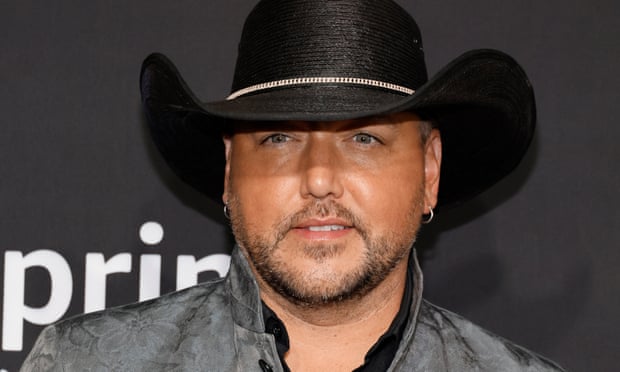
Jason Aldean is a superstar country music singer, with 27 number one hits and several top-selling albums. He recently released a song that threw him smack in the middle of the cancel-culture battle.

Aldean’s recent single “Try That In a Small Town” came out in May 2023, but went with little mention in the non-music press.

Then in July the music video was released. That’s when the artist as well as the song came under heavy mainstream media and social media attack.

In a Twitter post accompanying the video, Aldean indicated that the song represented an “unspoken rule” that is embraced by residents of small towns.

“We all have each other’s backs and we look out for each other,” he said.

This sentiment is conveyed in the song’s plain-spoken lyrics:

“Well, try that in a small town

See how far you make it down the road

Around here we take care of our own

You cross that line, it won’t take long

For you to find out, I recommend you don’t.”

It appears that Aldean’s detractors may have been lying in wait to pounce on him. His wife and sister had launched a clothing line with conservative threads, and he himself had been photographed playing golf with none other than USA’s 45th president.

The video includes footage from the Summer of 2020, where flags were burned, cars were smashed, businesses were vandalized, police were abused, etc.

The left responded in what has become routine fashion, slapping a bigoted label on the art and the artist.

The tragic incidents of 2020 and the brutal crimes that continue to ravage major cities have been minimized and/or completely ignored by dominant left-leaning media outlets.

Aldean’s artistic inclusion of depictions of events seems to have really hit a nerve. It has elicited what is clearly an over-the-top response from the left.

— Democrat Tennessee Rep. Justin Jones characterized the tune as a “heinous song calling for racist violence.”

— Some of Aldean’s peers have piled on, including former pop singer-turned-country music artist Sheryl Crow.

— Country Music Television (CMT), the cable TV channel that once upon a time was dedicated to country music, pulled the “Try That In a Small Town” video after bots on social media lobbed racist remarks. As a result, countless country fans are now giving CMT the Bud Light treatment.

— Nashville’s E3 Chophouse has banished CMT from its TV sets. The restaurant happens to be owned by the families of country singer Luke Bryan, former baseball player Adam LaRoche, and Aldean himself.

“We will not air CMT at any of our restaurants until a formal apology is made and Jason’s music video is reinstated,” the restaurant’s Twitter account stated.

Aldean used his personal Twitter account to push back against the unfair accusations.

“There is not a single lyric in the song that references race or points to it,” he wrote. “Try That In A Small Town, for me, refers to the feeling of a community that I had growing up, where we took care of our neighbors, regardless of differences of background or belief.”

Country music star Travis Tritt is defending his colleague, expressing his respect and admiration for “Try That In A Small Town.”

“IMO, this song isn’t promoting violence as some have suggested. It is simply expressing a point of view that many American people share which is against the obvious violence that we have seen from the likes of so many ‘activists groups’ in this country in recent years and the belief shared by millions that this behavior would not be tolerated by many people in many places across the USA. God bless America and all the people in it,” Tritt wrote.

Former Democratic presidential candidate Tulsi Gabbard offered some spirited support, tweeting, “The outrage around @Jason_Aldean ‘Try That in a Small Town’ is the latest round fired in the ‘woke’ war against freedom. Their attacks reveal the Democrat elite’s true values – violent looters during BLM protests can run free, but a song about respecting the flag & taking care of your neighbors is heresy and must be cancelled.”

The American people are speaking the loudest of all. “Try That in a Small Town” is No. 1 on iTunes.

Aldean performed the song at a recent concert in Cincinnati. In his intro, he directly took on his adversaries, saying, “I feel like everybody’s entitled to their opinion. You can think something all you want to — that doesn’t mean it’s true, right?”

“What I am is a proud American,” he continued. “I’m proud to be from here. I love our country. I want to see it restored to what it once was before all this bull**** started happening to it.”

Aldean’s small town is proving to be mighty big in a lot more ways than one.

The “USA! USA!” chants from the concert crowd were more than just a show of support for the country music artist.

They were a great big “Thank You!” to Jason Aldean from down-home hearts across America and around the globe.

Hidden Blessing in the Hollywood Shutdown

Hollywood sets have gone dark.

A central reason for the recent Screen Actors Guild-American Federation of Television and Radio Artists (SAG-AFTRA) strike is that actors, writers, and other entertainment artists are super nervous about Artificial Intelligence (AI) making them and their jobs obsolete.

When the strike was first announced, current president of SAG-AFTRA Fran Drescher was at the mike to address the press.

Drescher, the former lead actress of the 1990s hit TV sitcom “The Nanny,” heads the union that boasts a membership of over 160,000 film and television actors.

Interestingly, the writers union had gone on strike a couple of months back. But now that SAG-AFTRA has also taken to the picket line, the situation in Hollywood is looking pretty bleak.

The last time both unions were on strike simultaneously was over sixty years ago, when none other than then-actor (who ultimately turned President of the United States) Ronald Reagan was wearing the union president’s hat.

Like every other aspect of our lives, things presently appear to be out of whack.

The brand of Hollywood itself is in tatters, in large part because of the cultural and political agendas that permeate every nook and cranny of the town.

What has particularly outraged the public, though, are the productions that have been coming from major studios, chock-full of vile and inappropriate imagery, content, and messaging aimed straight at our kids and teens.

Could the Hollywood shutdown created by the two entertainment unions be a blessing in disguise?

A lot of consumers of entertainment fare are viewing it this way, as if maybe a wrench in the works was exactly what was needed to stop the madness.

Striking actors and writers have reason to be concerned about the capability of AI models to supplant human beings in the manufacture of entertainment products.

Creative types are also increasingly astonished at the sheer capabilities of generative AI models, which can digitally produce what would typically have been created by human beings, but in a faster and less expensive way.

AI ingests the works and images of human artists as part of its training data. The technology can then alter and/or mash-up content, allowing entertainment companies to avoid compensating the people who originally created the works or were even the subjects of images used.

Additionally, other creative types such as musicians and visual artists are carefully watching the entertainment biz battle, as are all those who work in an array of fields that will no doubt be affected by AI’s implementation.

We are already witnessing the technological replacement of human beings in a host of industries. Still, the entertainment business has a unique opportunity to do something helpful for society at large.

The manner in which Hollywood resolves the two strikes could set the marker, not only for the entertainment industry but for other businesses as well.

Digitally created trailers and scenes featuring what appear to be well known actors have popped up all over the internet. The virtual phenom is posing legal and ethical concerns that the unions are obliged to address.

At a recent press conference, Drescher warned, “If we don’t stand tall right now, we are all going to be in trouble. We are all going to be in jeopardy of being replaced by machines.”

SAG-AFTRA chief negotiator Duncan Crabtree-Ireland indicated during a press conference that a proposal by the studios would put background performers at a terrible disadvantage.

“They propose that our background performers should be able to be scanned, get paid for one day’s pay, and their company should own that scan of their image, their likeness, and should be able to use it for the rest of eternity,” Crabtree-Ireland said.

The Alliance of Motion Picture and Television Producers (AMPTP), which represents major studios including Walt Disney and Netflix, issued a statement suggesting that the claim made by SAG-AFTRA leadership is untrue.

An AMPTP spokesperson told ZDNET that the use of digital replicas would be restricted to the specific motion picture for which the actor is employed, and that any additional use would require the actor’s permission.

“Any other use requires the background actor’s consent and bargaining for the use, subject to a minimum payment,” the spokesperson stated.

This strike over AI is just the opening scene.

Sit yourself down and get ready for a real-life epic drama.

Only this time you’re not going to be able to say, “Don’t worry. It’s only a movie.”

Filmgoers Ignore Detractors and Flock to ‘Sound of Freedom’

Despite Hollywood executives trying to shelve it and mainstream media outlets trying to discredit it, the recently released film “Sound of Freedom” has upended the entertainment industry with resounding ticket sales, an enviable profit margin, and superb audience ratings.

The Washington Post, the Rolling Stone, the UK Guardian and other media organizations have denigrated the movie, falsely attempting to tie it to conspiracy theorists.

People are simply ignoring media naysayers, packing the theaters, and showering the film with standing ovations, resulting in more than $40 million in box-office revenue over a six-day period, according to industry estimates.

Due to its summer release, the movie had been facing plenty of competition, which was coming from big-budget studio blockbusters intended to please popcorn loving crowds.

“Sound of Freedom” definitely doesn’t conform to the template of a conventional summer release.

The plot of the movie is based on the true story of Tim Ballard, who founded a group to combat child sex trafficking.

Jim Caviezel, star of Mel Gibson’s 2004 cinematic masterpiece “The Passion of the Christ,” takes on the role of Ballard, a former government agent who stares down danger as he travels to godforsaken places on a quest to rescue enslaved children who have become victims of unspeakably horrifying crimes.

Summer studio releases typically have budgets that consist of hundreds of millions of dollars. However, with a tab of $14.5 million “Sound of Freedom”’s production costs were considerably less.

On the Fourth of July, “Sound of Freedom” easily passed up the franchise studio sequel “Indiana Jones and the Dial of Destiny.” The film had a release-day revenue of $14 million as compared to the $11.5 million that the “Indiana Jones” movie took in on its June 30 opening.

“Indiana Jones and the Dial of Destiny” had a budget of more than $250 million, while “Sound of Freedom” cost less than $15 million.

“Sound of Freedom” hit a very solid third place for the weekend with more than $18 million.

The public loves the film, giving it the highest CinemaScore rating possible, an A+. And movie fans who weighed-in on the Rotten Tomatoes website gave it a 100% rating.

In order to get more people to pay attention to the violations of human dignity with which the film deals, Dana White, President of the Ultimate Fighting Championship (the global mixed martial arts organization) posted a video on social media.

White spoke out on the importance of “Sound of Freedom” and the chilling nightmare of human trafficking. He was joined by legendary actor and director Gibson, who urged people to see the movie.

The White and Gibson video footage has gone viral, providing some powerful promotion for the movie.

During the video, White said, “There is a new movie out there called ‘Sound of Freedom’ and it’s about human trafficking. More importantly, about the trafficking of children. This is a disgusting, horrific issue that’s happening all around the world. And it’s not getting better, it’s getting worse.”

The UFC CEO is utilizing his own company in an effort to get the word out.

“What I’m gonna do is I’m gonna give any of my UFC employees that want to see this movie free tickets to go and see,” White said.

He even urged other business leaders to take his idea and run with it.

“I would like to encourage other executives to do the same at their company,” he said.

In the section of footage in which he appears, Gibson focused on the public becoming more knowledgeable on the issue.

“One of the most disturbing problems in the world today is human trafficking,” Gibson said.

“Particularly the trafficking of children. Now the first step in eradicating this crime is awareness. Go see ‘Sound of Freedom,’” he encouraged.

In a unique approach to ticket sales, at the end of the movie while the credits roll on, Caviezel appears onscreen to ask the audience to go to the Angel Studios website and participate in the “Pay It Forward” program.

This program allows people to purchase tickets for others so that those who cannot afford the cost will be able to obtain a ticket for free.

Those who suffer from the scourge of human trafficking are crying out to be rescued.

May “Sound of Freedom” succeed in its mission of informing people and prompting action.

And may all of us be responsive to those who wait in the shadows for someone to care.

‘Sound of Freedom’ Is the Whisper of Hope

Some things are so horrible they are difficult to even mention. Sex trafficking of children is one such unspeakable issue.

However, a recent movie not only dares to breach the subject, it brings a ray a hope to the darkest of places.

People of conscience uniformly agree that the abduction of little ones for the purposes of sexual exploitation is an abomination. It is the slavery of the modern day.

Traffickers seek out the vulnerable, those unfortunate youth who frequently live in poverty or war-torn regions of the world.

Victims such as these are being illegally sold, adopted out, married off, pushed into prostitution, and/or forced to work under myriad of insufferable and degrading conditions.

A newly released film titled “Sound of Freedom” is taking this unmentionable issue head-on.

The movie is directed and co-written by Alejandro Monteverde, produced by Eduardo Verastegui who also appears in the film, and stars Jim Caviezel, well known as the lead actor in Mel Gibson’s “The Passion of the Christ” film, and Mira Sorvino, the Oscar winning actress in Woody Allen’s “Mighty Aphrodite” film.

Caviezel portrays hero Tim Ballard, who left his previous real-life position as an agent with Homeland Security Investigations to pursue a mission of rescuing children from human sex traffickers.

Ballard personally requested that he be portrayed in the film by Caviezel, having observed the actor’s work in the 2002 film “The Count of Monte Cristo.”

The movie tells the true story of Ballard’s dangerous journey abroad to rescue the sister of a boy he had previously saved from traffickers.

The film’s opener contains some compelling scenes that demonstrate one of the diabolical ways in which traffickers abduct children.

A welder who is living in Honduras encounters an elegant woman who claims to be the founder of a talent agency. After seeing the welder’s 11-year-old daughter singing at the marketplace, the woman suggests that she tryout for a potential job in the entertainment business.

The father subsequently drops both his daughter and son off at the tryouts, which are being held at a poorly maintained hotel and are attended by other children as well.

When the father returns to pick up his children, to his shock he finds that the room is empty and his daughter and son are missing.

It turns out that the woman was no recruiter for the entertainment business but instead was a front for the fast-growing criminal enterprise of child sex trafficking.

Ballard is able to engineer a daring rescue of the welder’s son. However, his sister continues to be held captive. So Ballard heads to Colombia to try and rescue the young girl from the clutches of evil.

The backstory of the “Sound of Freedom”’s release is a tale of providential determination. After the project’s original filming and completion in 2018, it takes a detour that almost completely derails it.

21st Century Fox had contracted to distribute the movie, but before it can be scheduled for release the studio is acquired by Disney.

For some reason Disney executives choose to shelve the film. It takes years for the filmmakers to re-acquire the distribution rights.

In March of 2023, Angel Studios (the faith-based entertainment company which through crowdfunding has produced “The Chosen,” “Dry Bar Comedy,” and “The Wingfeather Saga”) was able to obtain the distribution rights for “Sound of Freedom” from Disney.

Angel Studios used its equity crowdfunding expertise to raise the cash needed to market the movie.

The studio also utilized an innovative program that encouraged patrons to “pay it forward,” so that people who might not otherwise see the movie would be able to watch it in theaters for free.

Goya Foods, an executive producer of the film, also provided financial support for the movie via Goya Cares, an anti-trafficking foundation established by the company.

The marketing efforts for the film really appear to be paying off and have resulted in more than $7 million in pre-sale revenue.

During one of the many dramatic scenes in the film, Ballard alludes to a passage from the Gospel of Luke.

“It would be better for you if a millstone were hung around your neck and you were thrown into the sea than you should ever hurt one of these little ones,” Ballard says.

In the Bible, Jesus himself instructs us about the inherent value of each and every child.

When in the film Ballard is asked why he has taken up this arduous mission, he replies, “Because God’s children are not for sale.”

So strong is his commitment to his mission, during the filming of the movie Ballard reportedly left the Columbian set so that he could join his team of former Navy SEALs to participate in the rescue of more than 200 children.

For me personally, another passage from the Bible comes to mind. It is that of the Good Shepherd.

The shepherd has 100 sheep in his flock. But if one single sheep goes missing, he leaves the 99 in search of the one.

At least in prayer, may people of conscience continue to strive to be like the Good Shepherd.

And may God in his goodness send more Tim Ballards to rescue the one in need.

AI and the Song

Music is a universal language like no other.

When words seem inadequate, it speaks volumes.

So where does music come from?

We may differ in our opinions on that. But a lot of us believe that inspiration, in music as in various other art forms, literary writings, discoveries, inventions, and the like, has an other worldly origin.

Musical inspiration is particularly unique, though, because of its biblical roots and its distinct resonance within human beings across all time.

Artists who are driven to share their musical inspirations are currently facing some questions that are seriously haunting ones.

Here are a few:

1. Can technology really create the equivalent of human music?

2. Will technologically designed songs measure up to the music that human beings love?

3. Is music designed by technology really music?

There are a whole lot of music artists who are concerned about Artificial Intelligence (AI) and its supposed “creation” of musical content.

Experimentation with computers composing music has been going on for decades. But there was always a human at the helm.

Now with AI, the human is hidden. A programmer, a series of programmers, faceless, nameless, all seemingly lost, only data remain.

And we are supposed to accept the notion that data have been assigned to be our new composers?

Such so-called artistic advances in AI are prompting an interesting reaction – a mixed blend of enthusiasm, anticipation, and alarm.

A few recent examples provide insight.

A “collaboration” between famed pop musicians Drake and The Weeknd, which was actually an AI-simulated version of “Heart on My Sleeve,” went viral on social media. The track was quickly pulled at the behest of the label, Universal Music Group.

AI was used to generate an album of the highly successful British rock band Oasis. But the group had long been disbanded. Apparently, an insignificant detail.

Canadian EDM artist Claire Boucher, a.k.a. Grimes, is evidently embracing the idea of an AI version of herself.

She sent out the following advertisement of sorts:

“I’ll split 50% royalties on any successful AI generated song that uses my voice,” Grimes tweeted. “Same deal as I would with any artist i collab with. Feel free to use my voice without penalty. I have no label and no legal bindings.”

Probably the biggest story relating to all of the above involves Sir Paul McCartney. The former Beatle is one of the most influential composers and performers of all time.

McCartney has accelerated the AI discussion by announcing that the surviving Beatles would release an AI-assisted tune, which will feature vocals by the late John Lennon.

He told BBC Radio 4 that the technology was able to “extricate” Lennon’s voice from a demo recording to allow the song to be completed, and it is set to be released this year.

During the production of Peter Jackson’s documentary “Get Back,” technology was used to remove background noise from the track and otherwise clean up the audio.

“[Jackson] was able to extricate John’s voice from a ropey little bit of cassette,” McCartney said. “We had John’s voice and a piano and he [Jackson] could separate them with AI.”

“So when we came to make what will be the last Beatles record, it was a demo that John had, and we were able to take John’s voice and get it pure through this AI,” McCartney added.

Reportedly, the song is a 1978 Lennon composition called “Now and Then.”

McCartney had received the demo a year earlier from Lennon’s widow, Yoko Ono. The tracks were recorded on a boombox as John sat at the piano in his New York apartment.

Two of the songs on the demo, “Free as a Bird” and “Real Love,” were restored by producer Jeff Lynne and released in 1995 and 1996, the first Beatles release in 25 years.

The band had attempted to record “Now and Then,” but the recording session had been halted and the tune abandoned.

Now AI is facilitating McCartney’s completion of the song.

But is it really a new Beatles song? John isn’t with us anymore. How could it be?

After the announcement, some consternation appeared on various web platforms.

McCartney then backtracked a bit, taking to Twitter to assure Beatle fans that in the making of the “new” Beatles song nothing had been “artificially or synthetically created.”

It could be that McCartney is experiencing some trepidation about the use of AI for music production.

He’s certainly not alone.

According to a poll taken by the Bedroom Producers Blog, 86% of those surveyed believe the technology will replace existing tools of music production, and 73% of respondents believe AI could replace human producers in the future.

It actually doesn’t take a musician or songwriter or producer or engineer to realize that, within this context, AI is just what its name indicates – Artificial.

Thankfully, there are still those among us who are able to recognize real music and who freely acknowledge the very source of our human inspiration.