Trump Weathers the Democrat Subpoena Storm

donaldtrumpmgn4

President Donald Trump is experienced in the art of litigation.

As a successful real estate entrepreneur, he was able to acquire the skills necessary to maneuver the legal playing field in the rough and tumble Manhattan marketplace.

The president has now made a strategic decision to litigate rather than comply with the attempt by Democrats to use their oversight powers to keep a discredited narrative alive.

Recently, a significant change took place in the legal approach that the Trump White House adopted.

For the past two years President Trump’s administration fully cooperated with Special Counsel Robert Mueller’s investigation. More than a million documents were produced, officials were allowed to freely testify, and executive privilege was not exercised.

However, following the release of the Mueller report, the administration has decided to take a different legal approach with respect to what appears to be an unnecessary use of congressional investigative powers.

The president has recently indicated his opposition to having White House personnel submit to the subpoenas peppering Pennsylvania Avenue from overzealous congressional Democrats.

By challenging the Democrats’ efforts to perpetually investigate rather than fulfilling their congressional duties, President Trump increases the likelihood of the Democratically controlled House to be perceived as a “do-nothing” chamber.

White House attorneys are objecting to Democrat subpoenas, which probably means that protracted legal battles will ensue.

The Trump Organization has filed a lawsuit against House Oversight Chairman Elijah Cummings, D-Md., seeking to block a subpoena for the president’s years-old financial records.

Treasury Secretary Steven Mnuchin allowed a deadline to pass, which was given by the Democrat House to turn over the president’s tax returns.

The White House instructed its former personnel security director Carl Kline not to testify before Congress about the process by which the president’s daughter Ivanka Trump and husband Jared Kushner obtained their security clearances. The House has since held Kline in contempt.

Personal counsel of the president Rudy Giuliani pointed out to Politico that the president’s position on the House subpoenas is justified, when considering the partisan political motives of congressional Democrats.

“I think it’s exactly the right legal strategy, Giuliani said. “I doubt there’s anybody in America that thinks this has some legitimate governmental purpose.”

“This is like a judge saying I’m going to hang you, but I’ll give you a trial first,” Giuliani added.

Chairman of the Senate Judiciary Committee Lindsey Graham, R-S.C., fully supports the president’s policy of not complying with what Graham rightly referred to as “a complete partisan thing now.”

With the Muller investigation wrapped up, the Russia-collusion narrative debunked, and an obstruction of justice charge eliminated, Graham accurately compared Democrats to filmmaker Oliver Stone attempting to come up with a plot line for a film dealing the Kennedy assassination.

“I think Congress is going crazy here,” Graham told The Associated Press.

One of the things that has been driving many of the Democrats in Congress insane is the prospect of bringing in former White House counsel Don McGahn to testify. Because the Trump administration has indicated that it may use executive privilege to prevent Congress from subpoenaing McGahn, the media have been invoking the specter of former President Richard Nixon in an attempt to portray the invocation of the constitutional privilege as an illicit act.

The president is legally empowered to resist subpoenas originating from the legislative branch that are designed to obtain information or testimony relating to the executive function. The Supreme Court has viewed this presidential privilege as a part of the separation of powers doctrine, derived from the president’s ability to carry out the duties held by the commander in chief under the Constitution.

The privilege to prevent staffers from testifying and/or withhold documents arises because of the unique need to protect the confidentiality of the advice that assists presidential judgments.

Despite the stilted coverage of most of the media, prior presidents have engaged in similar battles. Former President George W. Bush clashed with Congress after his administration attempted to block testimony from top aides over the firing of several federal prosecutors.

Former President Barack Obama asserted executive privilege to withhold documents related to the gun-trafficking scandal known as Operation Fast and Furious, which resulted in the House holding then-Attorney General Eric Holder in contempt.

The Supreme Court in United States v. Nixon held that when executive privilege is at issue, “…coequal branches of the Government are set on a collision course.” The judicial branch is therefore forced to deal with “the difficult task of balancing the need for information in a judicial proceeding and the Executive’s Article II prerogatives.” Such a proceeding “pushes to the fore difficult questions of separation of powers and checks and balances.” The court concluded that “constitutional confrontation between the two branches are likely to be avoided whenever possible.”

Consequently, when dealing with confrontations between the executive and legislative branches, the courts have avoided direct intervention.

In such legal proceedings, the wheels of justice move even more slowly than usual and are likely to slog through the court system eventually making their way up to the High Court.

The bottom-line result will be that the president’s legal battles with Congress are likely to last beyond the 2020 presidential election, thus denying the investigation-obsessed Democrats both their narrative and their pound of flesh.

In the Aftermath of the Mueller Report, Democrats Are Deeply Divided

hoyersteny_071918am2_lead

Over the course of the past two years, President Donald Trump has stoically endured two congressional investigations, a counterintelligence probe, and a pervasively broad special counsel investigation, while the Mueller Report has essentially obliterated the Russia collusion narrative, which was repeatedly pitched to the public via partisan politicians and news outlets.

Much to the chagrin of the Democratic Party, the president projects an even greater strength than when the attempt to neutralize his agenda first began.

The former outsider is now an incumbent in the highest political office in the land, having acquired invaluable experience over the last two years as well as important knowledge. The president and the American people know so much more about the high-profile federal agencies and corruption on the part of some.

It turns out that the total deconstruction of the Trump/Russia narrative has actually harmed the Democrats, serving to deeply divide its members over the question of whether to pursue impeachment, which is a major priority for its activist left-wing base.

Political leaders in both parties are aware that if the House of Representatives were to hypothetically impeach the president, the Constitution requires a trial in the Senate, whereby a two-thirds majority would need to be secured in order to remove the president from office. Of course, this scenario is highly unlikely, since the GOP holds a 53-47 majority in that chamber.

Over this past weekend three Democrat committee chairmen refused to let go of the idea of moving forward towards an impeachment of the president. Chairman of the House Intelligence Committee, Adam Schiff (D-Calif.), House Oversight Committee Chairman Elijah Cummings (D-Md.), and House Judiciary Committee Chairman Jerrold Nadler (D-N.Y.) made it a point to keep the impeachment door wide open.

Those who use reason as opposed to emotion to analyze the situation realize that continuing to participate in a small-minded and vengeance-based pursuit of the president is an ill-advised strategy. Leaders of the Democratic Party are no doubt aware that the House takeover during the mid-term elections was fueled in large part by Democrat candidates who were running in red or purple districts, and who assured voters that they were moderate or even conservative in their political ideology. These candidates oftentimes further asserted that they would not be pulled toward the radical side of the political spectrum.

It stands to reason that those who came into office touting middle-America bona fides are likely to be hurt by an attenuated and seemingly spiteful impeachment process against a president who has been cleared of the false collusion charges that were lodged against him. With this in mind, Majority Leader Steny Hoyer recently characterized an impeachment agenda as inadvisable, echoing House Speaker Nancy Pelosi’s (D-Calif.) warning that impeachment would divide the country.

“Based on what we have seen to date, going forward on impeachment is not worthwhile at this point,” Hoyer told CNN. “Very frankly, there is an election in 18 months, and the American people will make a judgment.”

Why would the Democrat leadership speak publicly against the pursuit of an impeachment investigation? The answer emerges from the numbers with which Democrat politicians are mesmerized.

A meager 31 percent of rank and file Democrats who self-identify as liberal or moderate view impeachment as worth pursuing, according to a recent Business Insider poll. However, 50 percent of those who see themselves as “very liberal” would like to see Democrats in the House pursue impeachment.

The far-left base, which by all appearances is the center of energy and media attention in the current Democratic Party, embraces the radical rhetoric of the freshman trio of congressional representatives: Alexandria Ocasio-Cortez (D-NY), Ilhan Omar (D-Minn.), and Rashida Tlaib (D-Mich.).

Media figures aligned with the Democratic base have propagandized the subject of impeachment on television and radio shows as well as websites, using out of context language found in the gossipy second section of the Mueller Report. And so-called progressives use amplified social media posts to keep the impeachment option alive.

However, the enlightened know that party unity is a fragile commodity. It is also a mandatory one, if national elections are to be decisively won.

The Democratic Party currently finds itself in the precarious position of being deeply divided on whether to go after the president. The liberal wing, which typically dominates the presidential primaries, is pressuring Democrat presidential candidates to adopt a pro-impeachment position.

They do so at their own peril.

Hollywood Writers Go to War with Talent Agents

1513300629694

Two Hollywood institutions, the Writers Guild of America (WGA) and the Association of Talent Agents (ATA), are now in an all out battle with one another. Consequently, the way in which business is conducted in the entertainment world may never be the same.

A dispute between the two organizations arose over the 43 year-old Artists’ Managers Basic Agreement (AMBA), a pact between the WGA and the ATA, which regulates the terms of how agents represent writers.

The WGA by-laws stipulate that an agency must sign the AMBA in order to represent one of its members.

Questions about the AMBA arose after a survey of WGA members found that Hollywood writers felt as if the major agencies’ practice of “packaging” was a detriment to their careers.

Packaging refers to an activity in which agents engage whereby there is a combining together of creative clients to benefit film studios, producers, and television networks.

Talent agencies used to rely primarily on a 10 percent commission rate as a revenue source. However, the practice of packaging provided a means in which larger agencies would be able to earn substantial additional revenue.

So-called packaging fees are charged separately and comprise an additional revenue source that is over and above the 10 percent commission; this additional amount of income is earned in exchange for bringing to a particular entertainment project a group of artists, e.g., writers, directors, and actors.

Additionally, the three biggest agencies, William Morris Endeavor (WME), Creative Artists Agency (CAA), and United Talent Agency (UTA), have spawned affiliate companies that participate in the ownership of content.

Writers contend that agents who package and gain an ownership stake have a conflict of interest, and they further assert that this conflict has caused writers’ earnings to decline.

The pursuit of packaging revenue places agents in a position of seeking deals that produce lucrative packaging fees rather than pushing for their clients to receive greater compensation.

When an agency owns and/or produces content, it places the agent in the dubious position of being an employer who is supposed to be representing the interests of an employee. This is a textbook case of a conflict of interest.

The growth of revenue streams for large talent agencies has attracted private equity investors and has even spurred some of the larger agencies to reportedly pursue the idea of going public. This has added more pressure as well as additional incentive to continue packaging and content ownership.

The agents that engage in such practices have actually made things worse through a lack of transparency, which has bred mistrust with their clients. Creators often had no knowledge that the content they had created was being packaged, with their agency generating a substantial amount of additional revenue off of their work. The agencies have acknowledged this error and have indicated that in the future they will be transparent.

The problem is that the damage has been done. Because the WGA and the ATA have come to an impasse in their negotiations, a tough-minded new talent agent code of conduct has been implemented by the writers union to end packaging and content ownership by agencies. The new code disallows any agent who represents a WGA member from receiving packaging fees and/or from working with agency-affiliated production companies.

WGA members have been instructed to disassociate from agents who do not comply with the new code of conduct. To this end, the union has provided members a DocuSign link with which they can send formal termination letters to agents.

These letters are now being sent out. Krista Vernoff, the showrunner on ABC’s “Grey’s Anatomy,” wrote an article for the Hollywood Reporter, which is titled “Why I Left My Agent, Despite the Sales Pitch.”

A sizable number of writers have taken to Twitter to announce their solidarity with the union by changing their profile pictures to icons that say “I Stand With the WGA.”

More than 800 writers have signed a statement of support and indicated that they “will only be represented as writers by agencies franchised by the Guild.” Most of the notable showrunners and TV creators that agencies desire to package have been visibly in support of the union.

The union has decided to play hardball with a new database for showrunners, where position openings are posted and writers may directly apply for work. It has put forth a plan for writers to be represented by managers and lawyers, as opposed to agents, although the ATA contends that the plan violates the law in California and New York.

Reportedly, the union has already drafted a lawsuit against the ATA and its member agencies, which would bring the battle to a courtroom on the East Coast or the West. The lawsuit will likely claim a breach of fiduciary duty by the agents who accepted fees from studios and allegedly failed to negotiate in good faith on behalf of their clients’ interests.

The outcome of this conflict will likely result in an entertainment industry realignment, whereby writers are represented by smaller agencies that agree to collect commissions, minus the packaging or content participation.

In a letter to members, the WGA described the significance of the big agencies firing in the following manner: “We know that, together, we are about to enter uncharted waters.”

Smollett Gets Hit with a Lawsuit as Chicago Seeks Justice

befunky-collage_opt

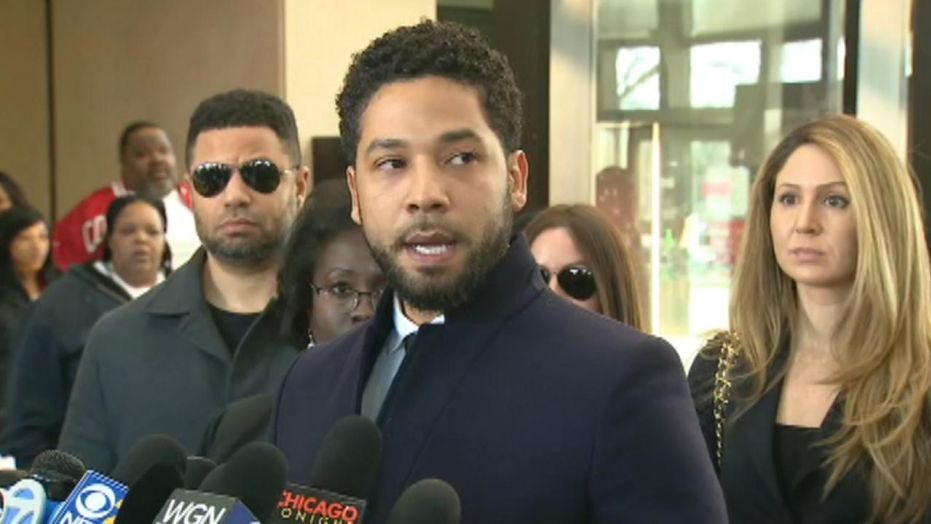
Jussie Smollett may regret his failure to pay a bill sent to him courtesy of the City of Chicago.

After an extensive investigative process, a demand for payment was sent to the alleged hate crime hoaxer in an effort by the city to obtain reimbursement for costs incurred due to Smollett’s claims.

The letter gave the “Empire” actor seven days in which to pay an amount of approximately $130,000.

Smollett is refusing to pay the city anything, not a single solitary penny. He continues to publicly claim that he has been “truthful and consistent on every single level since day one,” despite the fact that one of his lawyers has already fundamentally altered the facts of his claims.

Smollett may be about to reap the whirlwind because of a civil lawsuit that the city of Chicago plans to file against him. Bill McCaffrey, a spokesperson for Chicago’s Department of Law, released a statement indicating that because Smollett “has refused to reimburse the City of Chicago for the cost of police overtime spent investigating his false report on January 29, 2019,” a civil complaint is in the process of being drafted.

McCaffrey commented that the lawsuit against Smollett will be filed “in the near future” and that the city will “pursue the full measure of damages allowed under the ordinance.”

A provision in the municipal code allows the city to file a civil action to collect the costs incurred when individuals make “false statements” to law enforcement and cause resources to be wasted.

The law also allows the city to go after the actor for “up to three times the amount of damages the city sustains” as a result of the violation. Consequently, if Smollett loses he faces a possible judgment of $390,000. In addition, the city can recover court costs and attorney’s fees, which could push the amount he could owe to over $500,000.

Smollett will soon realize that civil law differs greatly from criminal law, just as O.J. Simpson and Robert Blake discovered. Civil lawsuits pose grave problems even in cases in which criminal defendants are acquitted after a full trial.

In civil cases, the burden of proof is significantly less than that required of prosecutors in a criminal proceeding. The standard for the prosecution in a criminal matter requires evidence sufficient to prove the guilt of the defendant “beyond a reasonable doubt.”

In its civil lawsuit against Smollett, the City of Chicago is only required to produce a “preponderance of evidence” to prove that Smollett is liable for the amounts sought. This civil standard requires that the city prove Smollett is more likely than not to have arranged for the attack upon himself, for the court, in the form of a judge or a jury, to hold the actor liable.

The $130,000 may in hindsight look quite inexpensive to Smollett, especially after he sees the amount of legal costs for which he will be responsible in order to defend himself against the City of Chicago’s lawsuit.

The extensive civil litigation that the city’s lawsuit would create would open the actor up for a sworn deposition under oath with the penalty of perjury hanging in the balance.

Smollett and his attorneys continue to make public statements proclaiming Smollett’s innocence. However, Joseph Magats, a lead prosecutor in the case, recently said that he “does not believe” Smollett is innocent.

Perhaps the greatest risk for Smollett is that a court will come to a legal conclusion that it was he himself who staged the alleged attack upon his person, thereby cementing his place in history as a B-list hate crime stager.

Dim Prospects for Jussie Smollett

694940094001_6018205875001_6018205763001-vs

Despite the dropping of the 16 felony counts with which he was charged by the Cook County, Illinois state’s attorney, “Empire” actor Jussie Smollett’s image and career prospects are still in jeopardy.

Currently, Smollett’s team is heavily engaged in the crisis management process, attempting to stop the decline of his public image. According to TMZ and other news outlets, offers of prospective roles have come to a halt since Smollett was arrested and charged with alleged involvement in orchestrating a hoax hate crime.

The actor, who for the time being remains a cast member of the television drama, is reportedly in pursuit of TV appearances so that he can tell his version of what happened and reverse the public relations slide.

Despite his claims of innocence, Smollett went from being viewed as a sympathetic victim to being perceived as a self-centered, morally challenged individual.

Because of the manner in which his criminal case has been jettisoned, he is now at the epicenter of a political corruption scandal, and as public outrage continues to grow he is even being compared to O.J. Simpson on social media, cable television, and talk radio.

There was recently an expectation that Smollett might attend the National Association for the Advancement of Colored People ( NAACP) Image Awards that took place this past weekend, but the actor was a no-show. Although he had been nominated for an award, he lost out on getting a win.

As an indicator of his standing within the culture, Smollett’s reputation has been taking a bruising of the comedic kind. During the NAACP awards show, when comedian Chris Rock was presenting the award for Outstanding Comedy Series, the presenter riffed on Smollett, despite having been instructed by the producers to avoid making the “Empire” actor a part of his humor.

“They said no Jussie Smollett jokes,” Rock said. “I know. What a waste of light skin. You know what I could do with that light skin? That curly hair? My career would be out of here. F***ing running Hollywood.”

Rock then struck directly at Smollett’s credibility.

“What the h**l was he thinking?” Rock asked. “From now on, you’re Jessie from now on. You don’t even get the ‘U’ no more. That ‘U’ was respect. You don’t get no respect from me.”

Smollett was also the subject of punch lines during the most recent broadcast of NBC’s “Saturday Night Live.” During a sketch on Weekend Update, Cecily Strong portrayed Fox News’ judicial star Jeanine Pirro.

“[President Trump] is getting rid of Jussie Smollett and he is bringing back Roseanne,” Strong, playing the character of Judge Jeanine, said.

“She [Roseanne] is getting a new show, The Barrs; it’s going to be Roseanne and William Barr…they are going to tell it like they see it, and they are going to take all the d**n Ambien they want, period.”

In another sketch, Smollett was in an imaginary meeting with his manager, the “Empire” executive producer, and TV executives to discuss his criminal case.

A MAGA hat wearing Chris Redd portrays Smollett, who claims that he was the victim of another attack. In an attempt to lend credence to his story, the Smollett character produces a box of Crest Whitestrips, three red letter Ks, a receipt, car keys, and a purple Teletubby.

Even though Smollett appears to have avoided a prosecution in Cook County, the actor is being investigated in a federal probe over whether he authored and mailed a hate-filled letter that arrived on the “Empire” set earlier this year. The letter contained bigoted invectives, a stick figure hanging from a tree, and a white powdery substance that echoed the anthrax letter attacks of 2001.

Federal charges, if brought, could expose Smollett to the possibility of spending 5-20 years behind bars.

“Jussie, you know we’ve got to fire you, right?” the executive producer character on SNL said during the sketch. The line may prove to be prophetic.

Despite supportive statements issued by the producers of “Empire” and Fox, Deadline reports that the actor is not expected to be a part of the series next season.

After the news broke that the charges against Smollett were inexplicably dropped, ratings for “Empire” fell to an all-time low, which was even lower than the debut episode this season that had slid 35 percent when compared to last year’s ratings.

Smollett has already been written out of the remaining episodes of the current fifth season. The actor’s option is up in June 2019. In the interim, the network and producers will determine whether to, as one source said, “cut their losses if need be” by choosing to renew “Empire” without Smollett’s inclusion.

‘Unplanned’ Is a Must-See for a Nation in Denial

unplannedmovie

Hollywood loves to rally around a cause, but only as long as the cause is solidly in line with its accepted left-wing ideology. One cause that definitely isn’t, is the advocating of the right of an unborn baby to live.

“Unplanned,” a daring new movie that pays no attention to Hollywood’s roster of no-go subjects, has been fighting a constant uphill battle as it forges its way toward release day. Along the treacherous road it has had to traverse, it has been blocked from using certain music in its soundtrack, banned by a Christian radio network, and unfairly rated by the Motion Picture Association of America (MPAA).

The movie boldly tells the true story of Abby Johnson, one of the youngest individuals in the country to ever have served as a Planned Parenthood clinic director.

After working at an abortion clinic for eight years and winning an “Employee of the Year” award, Abby had the enormously disturbing yet incredibly enlightening experience of having to assist with an ultrasound-guided abortion. What she witnessed was absolutely horrendous: a tiny baby inside the womb, who was in the struggle of his or her life, having to suffer through the gruesomeness of dismemberment.

Following the experience, Abby summoned up the courage necessary to leave her financially lucrative position and extensive employment stint. She walked away from the nation’s largest abortion provider and set out to launch a ministry that would help other former Planned Parenthood employees to transition out of abortion related work.

The writing and directing team of Chuck Konzelman and Cary Solomon, who also wrote the screenplay for the film “God’s Not Dead,” understood the challenge that the latest movie project faced.

The hostility issue was driven home through the difficulties experienced in a previous pro-life film, “Roe v. Wade,” including an incident in which a significant part of the cast and crew abruptly left the project after learning of the script’s content.

While the casting of “Unplanned” was taking place, potential cast members were alerted by the directors that involvement with the film might mean that future work in the entertainment industry may be in jeopardy as a result of the movie’s content.

The film was shot in secret in Stillwater, Oklahoma. While on the set, the cast and crew used the code name “Redeemed” in order to keep the project under wraps and hold close to the vest the fact that they were making a film with the same title as Johnson’s memoir.

All of those working on the project were instructed not to reveal the movie’s content to the press or in any other manner disclose it on the Internet or on social media.

As the producers sought licensing rights for songs that they felt might assist the mood of certain scenes in the movie, they received the cold shoulder from the music industry. The required licensing was denied for a number of tunes, including Cyndi Lauper’s “Girls Just Want to Have Fun,” Oingo Boingo’s “Dead Man’s Party,” One Direction’s “Story of My Life,” The Fray’s “How to Save a Life,” and Trevor Rabin’s “The Guardian Suite.”

Additionally, the movie received some unexpected flack from a giant of the Christian world. K-Love is a Christian music radio network, which broadcasts on hundreds of stations in at least 47 states with markets that include New York, Los Angeles, and Chicago. K-Love is also the sixth most online streamed station in the world. Essentially, the Christian music giant banned from its airwaves any promotion for “Unplanned.”

Abby was not at all happy with the network, expressing her displeasure in the following tweet: “Ever heard of the Christian radio station K-LOVE? Of course you have. They are huge, in just about every market. And, they are funded by their listeners. Well, here’s some news for you. K-LOVE has decided that they will not run any promos for my movie, Unplanned. So, a Christian radio network won’t advertise for a prolife movie. They have stated that they don’t want to promote anything ‘political.’”

In a wholly unfair and blatantly biased move, the MPAA informed the filmmakers that the organization planned to give the movie the “R” rating rather than a “PG-13” one, unless the visual depictions of abortion were edited out of the film.

It surely is not lost by anyone who pays attention to the movie ratings system that a “PG-13” rating, as opposed to “R” rating, is routinely handed out to films that include in their content profanity, gratuitous violence, and/or sexually explicit material.

Abby wrote an open letter to parents across America to make sure that they understood “Unplanned” is free from profanity or sexual content. In the letter, she describes a scene, which depicts what she saw on the ultrasound screen – images that transformed her life and redirected her path.

“You will see what I saw: a baby on an ultrasound screen in black and white 2D. You will see the abortion instrument, which looks like a big straw in real life and like a dark line on the ultrasound, introduced onto the screen. You will see the baby struggle against it. You will see the baby first slowly, then quickly disappear into the instrument as it does what it is designed to do,” Abby wrote.

A second scene that Abby cited as a reason for the “R” rating is one that she indicated was a re-creation of her experience with the abortion pill.

“I won’t lie to you; that scene shows some blood. In real life I hemorrhaged so badly I thought I was going to die. The movie captures that without being gratuitous or gory,” Abby wrote.

The MPAA has denied that it assigned the rating due to political bias. However, the group’s decision has resulted in a scenario in which a teenage girl can obtain an actual abortion without her parent’s permission, but the same teenage girl is not allowed admission into a theater, minus the supervision of an adult, to view a film that includes a scene that merely depicts the real life procedure.

The March 29 premiere of “Unplanned” is right around the corner.

In honor of all the babies who have had to endure the procedure that Abby witnessed and worse, let’s all go see “Unplanned,” and perhaps we can escort some teens and other youth who are secondary victims in this whole abortion tragedy.

College Admission Scandals Imitate TV Scripts

lori-loughlin-and-felicity-huffman-new-758x397

The admissions scandal that recently hit some of the nation’s most prestigious colleges and universities has resulted in the largest prosecution of an alleged scheme to influence higher education admission decisions made at top tier institutions.

Approximately 50 people have been caught up in the investigation, including the organizer of the alleged scheme, coaches and testing administrators who were purportedly bribed, and wealthy parents of admission seeking students.

The ongoing investigation is named “Operation Varsity Blues,” a title that was also used for a 1999 cult movie starring James Van Der Beek, Jon Voight, Paul Walker, Ron Lester, and Scott Caan. The film’s plot features a small town football team in a sports crazed Texas community, where players deal with teenage angst while coping with an obsessive coach played by Voight.

Van Der Beek portrays a backup quarterback who gains the starting position when the first string QB is injured. Much to the chagrin of Van Der Beek’s character’s father, he wants to attend an Ivy League school.

“Varsity Blues” is best known for a scene in which the quarterback son shouts to his football obsessed father the following words: “I don’t want your life!”

The actor recently referenced the famous film quote in a Twitter post about the breaking news of the college admissions scandal.

“If only there was a succinct turn of phrase these kids could have used to inform their parents they were not desirous of their life path,” Van Der Beek posted.

When prosecutors and investigators used the title of a movie as a name for their investigation, they may not have fully realized the bizarre “life imitates art” connections, which the facts presented with respect to the two most famous defendants involved in the case, actresses Felicity Huffman and Lori Laughlin.

The allegations in the indictment against Huffman are remarkably similar to a plot line in an episode of the television show in which Huffman starred, “Desperate Housewives.” In the fifth episode of the first season of the ABC television series, Huffman’s character and her fictitious husband contribute money to an elite private school in order to gain admission for their children.

“A generous donation will ensure our kids beat ’em out,” Huffman’s character explains to her spouse.

When the husband asks about the requisite amount, Huffman’s character replies, “$15,000.”

Ironically, the amount of $15,000 is the exact sum that Huffman is alleged to have paid in the form of a charitable donation to facilitate a higher score on her real life daughter’s standardized test. The scheme involved an alleged bribe to a proctor at a testing center who would then modify the daughter’s answers in order to raise her final score.

Meanwhile Loughlin, who starred in the television series “Full House,” appeared in one episode that had a plot line, which would end up foreshadowing future trouble with legal authorities. In episode fifteen of season six, which incidentally also aired on ABC, Loughlin’s character’s husband Jesse, played by John Stamos, attempts to prevaricate in order to obtain admission to a prestigious pre-school for their fictitious twin sons. In a conversation with Joey, portrayed by David Coulier. Jesse reveals his plans to lie in order to gain access to the school for his boys.

“I’m their father,” Jesse says. “If I don’t lie for them, who will?”

Jesse plots to misrepresent his profession as that of a diplomat and to boast of his toddler sons’ abilities to speak foreign languages and play various musical instruments.

Loughlin’s character puts a stop to Jesse’s plans and helps guide the family to the realization that an elite pre-school may not be the best thing for their children.

Loughlin’s character says to Jesse, “I know you want what’s best for them, but maybe the fast track isn’t it,” adding that the two boys are “normal, healthy kids and whatever track they’re on, they seem to be doing OK.”

Loughlin and Mossimo Giannulli, Loughlin’s real life fashion designer husband and creator of the Mossimo clothing line, were accused in the indictment of paying $500,000 disguised as a charitable donation, so that a university admissions committee would be led to believe that their two daughters would be joining the women’s rowing team at the school, when in reality neither had ever received training or participated in the sport.