Children of the Lockdown

It’s been almost three and a half years since public health officials first urged the locking down of America in order to prevent the spread of a virus.

As talk of a possible repeat scenario grows louder, perhaps it might be prudent to stop and reflect on what we have gone through psychologically, socially, and emotionally, particularly our children.

When the lockdown was implemented, some prominent professionals questioned the policy. For doing so, they were maligned and sometimes even censored.

Dr. Martin Kulldorff (Harvard), Dr. Sunetra Gupta (Oxford), and Dr. Jay Bhattacharya (Stanford) are three highly qualified epidemiologists, who at a pivotal point in history came together to publish a document.

The document, titled the Great Barrington Declaration, made the case that lockdowns have a deleterious effect upon children. Additionally, an argument was made that denying children the opportunity to attend school was particularly harmful.

The scholars were subsequently disparaged by public officials and certain media figures, as if there were some kind of effort in place to avoid open debate of the document’s content.

In recent coverage of the “Twitter files,” journalist and former New York Times reporter Bari Weiss brought to light the story of Dr. Bhattacharya, whose social media accounts were systematically banned.

Evidently, the professor of health policy at Stanford University ended up becoming one of the victims of high-tech suppression.

Dr. Bhattacharya, who holds both an MD and PhD from Stanford, had published 135 articles in top peer-reviewed scientific journals of medicine, economics, health policy, epidemiology, statistics, law, and public health. The doctor was treated outrageously for having countered the lockdown narrative.

Weiss documented how Dr. Bhattacharya was attacked and censored for asserting that the lockdowns could cause harm to children.

“Still trying to process my emotions on learning that @twitter blacklisted me. The thought that will keep me up tonight: censorship of scientific discussion permitted policies like school closures & a generation of children were hurt,” the Stanford professor tweeted.

During a podcast, Dr. Bhattacharya also spoke of the cost to the children as a result of the lockdowns and school closings, calling them “devastating” and “almost unimaginable.”

He pointed to Sweden as a compelling case study.

“Sweden did better than most countries, certainly better than the United States, despite not putting in place school closures and a whole host of lockdown-related policies,” he said.

The doctor revealed that shortly after the Great Barrington Declaration had gained attention he received hate mail and death threats.

Time, of course, has passed, and although Dr. Bhattacharya’s ideas were once rejected and hidden away, data have been gathered, indicating he was correct.

Here’s a look at some additional studies:

— Nine researchers published a systematic review, using multiple databases from December 2019 to December 2020. The review is titled “Effects of COVID-19 pandemic on mental health of children and adolescents: A systematic review of survey studies.”

It showed that the impact of the pandemic on the mental health of children and adolescents was multifaceted and substantial. Survey studies indicated that anxiety, depression, loneliness, stress, and tension were the most-observed symptoms of children and adolescents during this time period.

Thirty-five survey studies involving 65,508 participants, ages 4 to 19 years-old, revealed anxiety (28%), depression (23%), loneliness (5%), stress (5%), fear (5%), tension (3%), anger (3%), fatigue (3%), confusion (3%), and worry (3%) to be the most common mental health issues reported.

— Another recent study from the University of Virginia Health showed that suicide attempts among children (via overdose) rose sharply during the pandemic.

The rate of suicide attempts (via poisoning) reported to U.S. poison centers among children and adolescents ages 10 to 19 showed an increase of 30 percent during the year 2021, when compared to 2019.

2021 was the first full year of the pandemic and its attendant lockdowns. The rate of suspected attempts by intentional poisoning among children ages 10 to 12 showed an increase of 73 percent, when compared to the year 2019.

“These findings suggest that the mental health of children and adolescents might still be affected by the pandemic, raising concerns about long-term consequences, especially given that previous attempted suicide has been found to be the strongest predictor of subsequent death by suicide,” the researchers wrote.

— Boston Children Hospital epidemiologist Dr. Mainuna Majumder and colleagues assembled data from 14 states on suicides in 2020. Findings indicated that 10 to 19-year-olds accounted for a more significant share of suicides in 2020 than in prior years, with percentages going from 5.9 in 2015 through 2019 to 6.5 in 2020 (a statistically significant increase of 10 percent). The study appears in JAMA Pediatrics.

The two-year study period (spanning 2019 through 2020) looked at approximately 3,800 children, ages 4 to 18, who were admitted to inpatient units for mental health-related reasons. In the year prior to the pandemic, 50 percent of admitted patients had suicidal ideation or had made suicidal attempts. This figure jumped to 60 percent during the first year of the pandemic.

— A separate study by the communication charity I CAN asked primary and secondary school teachers across England, Scotland, and Wales about the impact of lockdowns on their pupils.

I CAN found over two-thirds (67 percent) of primary school teachers believe the children they teach had fallen behind in their speaking and/or understanding and were worried that these pupils would not be able to catch up.

The I CAN data indicated that 1.5 million children were having difficulties with speech and comprehension.

— Independent provider of mental health services Cygnet Health Care, which operates over 150 centers with more than 2,500 beds across the UK, recently provided important data regarding the mental health of children who had suffered lockdowns.

Data indicated referrals to Cygnet’s psychiatric intensive care units in its hospitals that treat children and adolescents had more than doubled between 2019 and 2022. Following the lockdowns, young people were referred for problems that included low mood, insomnia, stress, anxiety, anger, irritability, emotional exhaustion, depression, and post-traumatic stress symptoms.

— A recent study in the UK by the Institute of Fiscal Studies and University College London connected children’s social and emotional development with the lockdown-related employment status of their parents.

Forty-seven percent of parents reported that their children’s social and emotional skills had declined during the pandemic. Fifty-two percent of children 4 to 7 years-old experienced a decline in social and emotional skills, and 42 percent of 12-15 year-olds reported the same.

Proof of collateral damage to children due to lockdowns continues to surface. Still, many public health officials and politicians seem to be urging a revival of the lockdown policy.

In retrospect, the doctors and other professionals who were disparaged and/or censored were accurate in their assessments of the negative effects of lockdowns on school-aged children.

Millions of young people could have been spared the negative psychological, social, emotional, and academic ramifications of the lockdowns.

Heaven forbid that we have a repeat of this history.

‘Sound of Freedom’ Is the Whisper of Hope

Some things are so horrible they are difficult to even mention. Sex trafficking of children is one such unspeakable issue.

However, a recent movie not only dares to breach the subject, it brings a ray a hope to the darkest of places.

People of conscience uniformly agree that the abduction of little ones for the purposes of sexual exploitation is an abomination. It is the slavery of the modern day.

Traffickers seek out the vulnerable, those unfortunate youth who frequently live in poverty or war-torn regions of the world.

Victims such as these are being illegally sold, adopted out, married off, pushed into prostitution, and/or forced to work under myriad of insufferable and degrading conditions.

A newly released film titled “Sound of Freedom” is taking this unmentionable issue head-on.

The movie is directed and co-written by Alejandro Monteverde, produced by Eduardo Verastegui who also appears in the film, and stars Jim Caviezel, well known as the lead actor in Mel Gibson’s “The Passion of the Christ” film, and Mira Sorvino, the Oscar winning actress in Woody Allen’s “Mighty Aphrodite” film.

Caviezel portrays hero Tim Ballard, who left his previous real-life position as an agent with Homeland Security Investigations to pursue a mission of rescuing children from human sex traffickers.

Ballard personally requested that he be portrayed in the film by Caviezel, having observed the actor’s work in the 2002 film “The Count of Monte Cristo.”

The movie tells the true story of Ballard’s dangerous journey abroad to rescue the sister of a boy he had previously saved from traffickers.

The film’s opener contains some compelling scenes that demonstrate one of the diabolical ways in which traffickers abduct children.

A welder who is living in Honduras encounters an elegant woman who claims to be the founder of a talent agency. After seeing the welder’s 11-year-old daughter singing at the marketplace, the woman suggests that she tryout for a potential job in the entertainment business.

The father subsequently drops both his daughter and son off at the tryouts, which are being held at a poorly maintained hotel and are attended by other children as well.

When the father returns to pick up his children, to his shock he finds that the room is empty and his daughter and son are missing.

It turns out that the woman was no recruiter for the entertainment business but instead was a front for the fast-growing criminal enterprise of child sex trafficking.

Ballard is able to engineer a daring rescue of the welder’s son. However, his sister continues to be held captive. So Ballard heads to Colombia to try and rescue the young girl from the clutches of evil.

The backstory of the “Sound of Freedom”’s release is a tale of providential determination. After the project’s original filming and completion in 2018, it takes a detour that almost completely derails it.

21st Century Fox had contracted to distribute the movie, but before it can be scheduled for release the studio is acquired by Disney.

For some reason Disney executives choose to shelve the film. It takes years for the filmmakers to re-acquire the distribution rights.

In March of 2023, Angel Studios (the faith-based entertainment company which through crowdfunding has produced “The Chosen,” “Dry Bar Comedy,” and “The Wingfeather Saga”) was able to obtain the distribution rights for “Sound of Freedom” from Disney.

Angel Studios used its equity crowdfunding expertise to raise the cash needed to market the movie.

The studio also utilized an innovative program that encouraged patrons to “pay it forward,” so that people who might not otherwise see the movie would be able to watch it in theaters for free.

Goya Foods, an executive producer of the film, also provided financial support for the movie via Goya Cares, an anti-trafficking foundation established by the company.

The marketing efforts for the film really appear to be paying off and have resulted in more than $7 million in pre-sale revenue.

During one of the many dramatic scenes in the film, Ballard alludes to a passage from the Gospel of Luke.

“It would be better for you if a millstone were hung around your neck and you were thrown into the sea than you should ever hurt one of these little ones,” Ballard says.

In the Bible, Jesus himself instructs us about the inherent value of each and every child.

When in the film Ballard is asked why he has taken up this arduous mission, he replies, “Because God’s children are not for sale.”

So strong is his commitment to his mission, during the filming of the movie Ballard reportedly left the Columbian set so that he could join his team of former Navy SEALs to participate in the rescue of more than 200 children.

For me personally, another passage from the Bible comes to mind. It is that of the Good Shepherd.

The shepherd has 100 sheep in his flock. But if one single sheep goes missing, he leaves the 99 in search of the one.

At least in prayer, may people of conscience continue to strive to be like the Good Shepherd.

And may God in his goodness send more Tim Ballards to rescue the one in need.

The Agenda behind the ‘Climate Strikes’

eight_col_climate

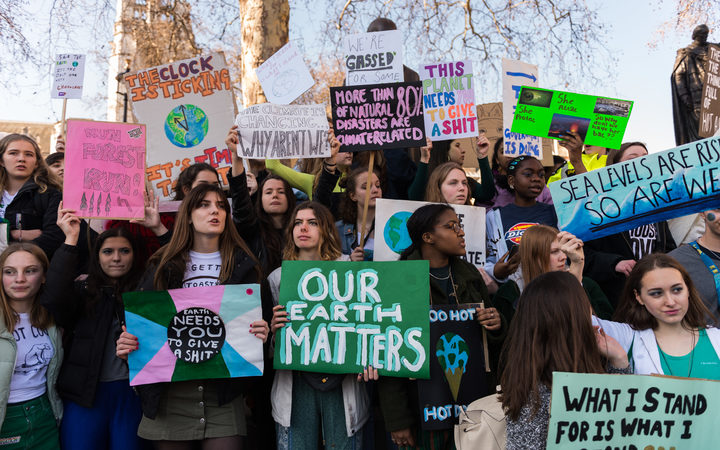
Climate strikes were recently staged around the globe in an effort to bring attention to the supposed emergency state of what was once called “weather.”

Leftists are expert at manufacturing scary crises. To this end, they have managed to re-frame “weather” by giving it a number of anxiety-inducing names over the past few decades. Prior to settling on their latest iteration, they bandied about frightening sounding phrases such as “global cooling” and “global warming,” among others.

Similar to the unsavory designs that came before it, the latest weather-related scheme is as flimsy as a plastic straw.

In a quest to amass power, insure compliance, manipulate minds, and fuel negative emotions, liberals have landed on a single moniker that is broad enough to stick to whatever weather circumstances may arise. Full and complete control over the lives of target subjects is the end goal.

Unfortunately, many of our young people have fully embraced the climate change propaganda, as have the expected tried-and-true liberals.

Much like the “March for Our Lives,” a youth-led event that took place prior to the 2018 elections and focused on firearms, the whole notion of a climate strike looks more and more like a subtle means of ginning up enthusiasm and participation for the upcoming 2020 elections, all to the benefit of the left.

The recent climate protest, which involved millions of students skipping school and taking to the streets, was said to be inspired by 16-year-old Swedish activist Greta Thunberg.

Thunberg was reportedly so stirred by the teen activists at Marjory Stoneman Douglas High School in Parkland, Florida, who had organized the aforementioned March for Our Lives, she decided to boycott school until the 2018 Swedish election.

The year in which Democrats launched what they referred to as the “blue wave” was the same year that the left utilized the anti-gun movement to mobilize younger voters. That was the year 2018.

It was also the same year that climate justice group Zero Hour initiated a climate protest march globally for young people. Additionally, a political action organization, Sunrise Movement, began demanding that mid-term candidates take a “No Fossil Fuel Money Pledge.”

The Sunrise Movement is part of the reason why the 2020 Democratic presidential candidates are spouting such extreme positions. The group was influential in getting squad members Alexandria Ocasio-Cortez of New York and Ilhan Omar of Minnesota elected.

In an article titled “Too Young to Vote? Get Your Parents to Vote for You,” the Sierra Club website pushes the idea of young people cajoling away the vote of their parents and grandparents by using apocalyptic fear as a motivator. The subtitle of the Sierra Club piece is “Young climate activists in Europe and the U.S. work to sway elections.”

Similar to Thunberg, 10-year-old Lilly Platt prompted a school climate change strike in the Netherlands, during the lead up to the 2019 European Parliament elections.

Platt, along with other activists, came up with the idea of having young people request that adult relatives and acquaintances “gift” them their votes. Platt’s grandfather Jim allowed Lilly to “have” his vote, and the two recorded what became a viral video, which urged others to emulate the action of the grandfather and granddaughter. After Lilly “voted” via her grandfather, she posted on her Twitter account the suggestion that young activist colleagues in the U.S. should generate a “climate coup” during the 2020 presidential election.

Hollywood and the media have been pushing ideological views and doomsday scenarios on our children for decades. Young people have been programmed to accept the notion that in order to save the planet, industrialized nations must transfer wealth to developing nations and forego the Western standard of living.

The current mass protests appear to be timed to activate a portion of the voting base with which the left has struggled for years, the youth vote. Despite the use of Hollywood celebrity encouragement and extensive targeted advertising, the voting turnout of young people has historically come in at disappointing levels.

In an effort to increase their numbers, liberal politicians and media figures have advocated giving children under the age of 18 the ability to vote. Andrew Yang, a 2020 Democratic presidential candidate, has backed a voting age of 16, and a majority of Democratic representatives have supported a bill in the House that proposes a voting age of sixteen.

For radical weather activists, the enlisting of fear as a means of influencing the public is nothing new. They have specialized in dire predictions for decades, including the following:

As catalogued by the Competitive Enterprise Institute during the 1960s, famine and a new Ice Age were imminent.

In the 1970s, water and food rationing and the potential end of all life loomed on the horizon as a result of Ozone depletion.

The 1980s delivered acid rain threats and rising sea levels that were certain to destroy nations by the year 2000.

As the 21st century began, the public was told that there would famine by the year 2012 and that the Arctic would be ice-free by 2018.

Of course, not a single apocalyptic prediction has materialized. Still, the same media that are ready and willing to report every gloomy detail regarding future doom utterly fail to follow up on the accuracy of earlier faulty dire predictions.