Men Competing in Women’s Sports Ultimately Headed to the Supreme Court

In a recent podcast with Turning Point USA co-founder Charlie Kirk, California Governor Gavin Newsom stated that it is “deeply unfair” for boys to compete against girls in athletic contests.

The governor’s “unfair” admission appears to have been a momentary opinion, since he soon changed direction regarding female athletes in his state.

President Donald Trump had made the subject of prohibiting biological male athletes from competing in women’s sports a key issue in the 2024 election campaign. President Trump recently suggested that he may cut federal funding to California if the state continued to allow biological male athletes to compete against females.

Gov. Newsom was informed that California’s policies are in violation of Title IX, which prohibits discrimination on the basis of sex in any federally-funded educational program.

In February 2025, the Department of Education began an investigation into the California Interscholastic Federation (CIF), which oversees sports at more than 1500 high schools. These are schools at which the policy of allowing male transgender students to compete against females has continued.

In May 2025, the Department of Justice (DOJ) began an investigation into whether California was violating the civil rights of female students in connection with the implementation of the same policies.

U.S. Secretary of Education Linda McMahon outlined a list of demands for California, which must be met if the state wishes to continue to receive federal funding. Sec. McMahon noted that California must fulfill a list of actions or risk the loss of education funding.

The Department of Education’s investigation indicated that the California Department of Education (CDE) and the CIF are in violation of Title IX, the federal civil rights law that forbids sex-based discrimination in education. This is because the state’s policies allow males who identify as females to participate in women’s sports.

Should the State of California decide not to comply with Title IX and fail to prohibit participation by biological males, it will lose federal funding.

The administration has proposed a resolution agreement that would require California to change its policies. The Golden State has 10 days to accept the proposed resolution agreement. If it does not, the Department of Education will refer the matter to the DOJ for further proceedings.

Under the resolution agreement, California must:

– Alter its guidance that allows participation in sports based on gender identity.

– Issue written apologies to each female athlete who took second place to a biological male athlete.

– Restore misappropriated sports records, titles, and awards to the female athletes who would otherwise have attained them.

– Adopt binary biology-based definitions for the terms “male” and “female.”

– Conduct an annual certification ensuring compliance with Title IX.

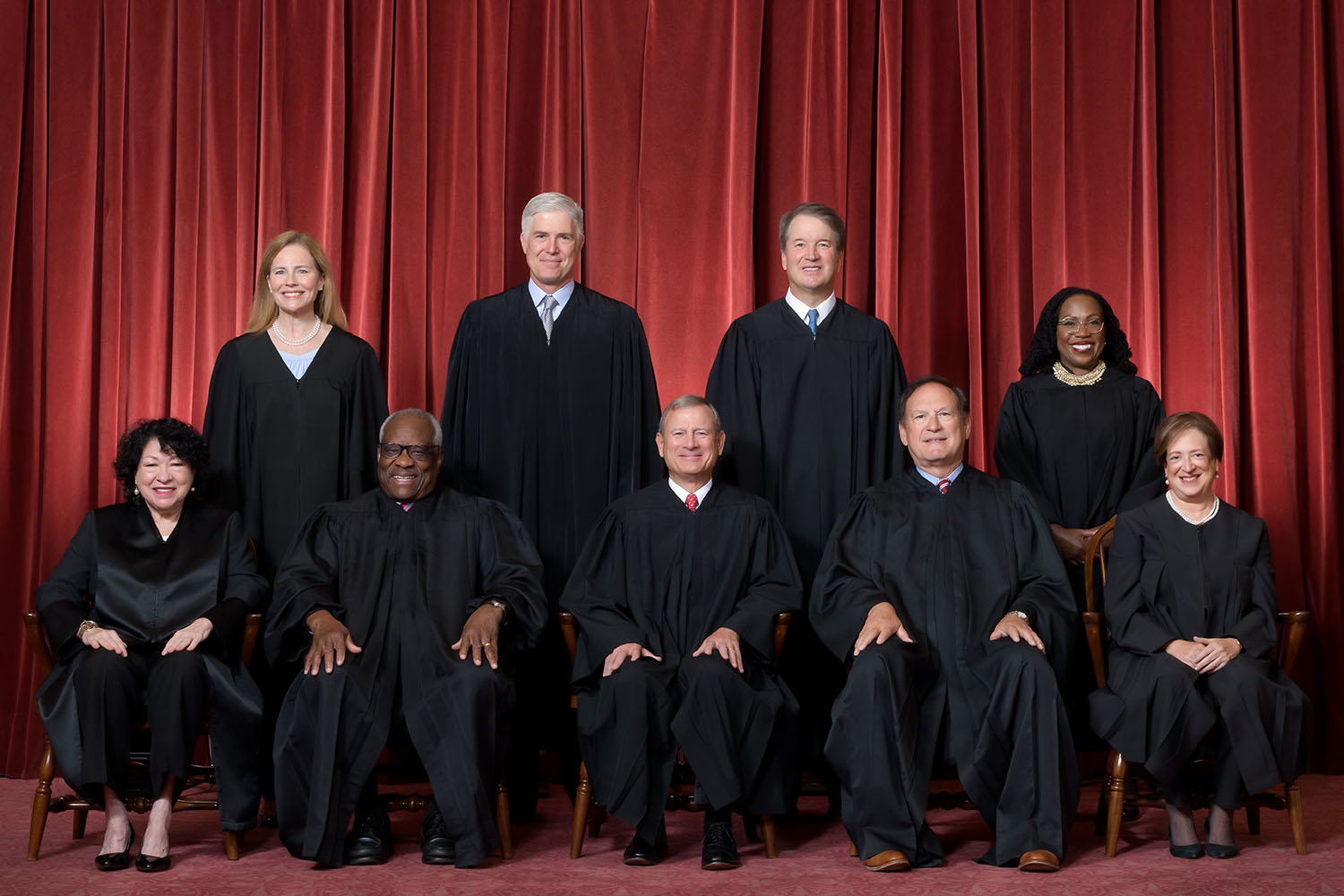
In analyzing this issue from a legal perspective, it is difficult to see how the U.S. Supreme Court could not be the final arbiter in this matter.

Several states have already passed laws restricting participation, based on sex assigned at birth. Other states are facing legal challenges that assert discrimination.

As legal battles have ensued, courts have reached differing conclusions when reviewing challenges surrounding the placement of restrictions on transgender athletes’ participation in school sports. Legal challenges have invoked both Title IX and the Equal Protection Clause of the Fourteenth Amendment.

Some federal courts have rendered rulings that base discrimination on gender identity. Other courts have ruled that the restriction of teams based on biological sex does not violate legal protections.

Courts have also been divided in rulings that concern the application of the Equal Protection Clause with regard to laws and policies that involve gender identity in differing contexts.

President Trump’s Executive Order 14201, which seeks to ban biological males from female sports across all educational levels, brings an additional layer to the legal complexity.

In my legal opinion, the issue of biological male athletes competing in women’s sports necessitates a High Court decision, because of the need for a thorough analysis and ultimately a clear definitive ruling.

The direct involvement of the Supreme Court, regarding the manner in which Title IX and other anti-discrimination laws are applied to transgender athletes, is essential, due to the conflicting legal interpretations of multiple federal courts as well as the societal ramifications that will inevitably flow from the High Court’s decision.
California’s Electric Power Grab?

US-CALIFORNIA-FIRE

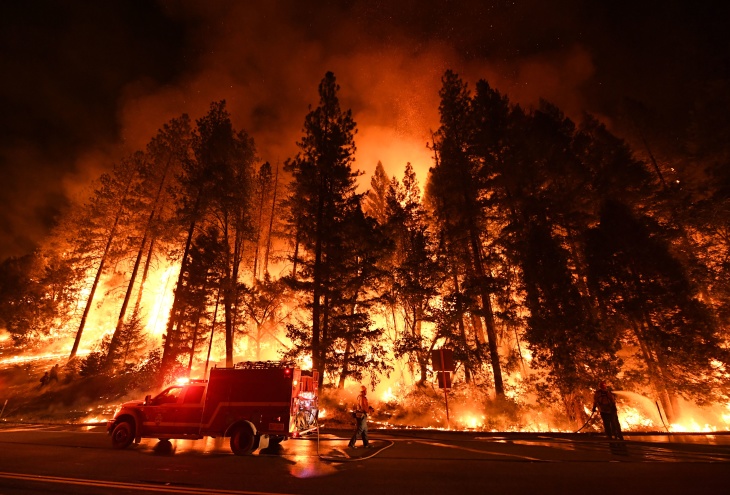
California currently lays claim to a record number of homeless people that are living in urban squalor, a string of diseases from the Dark Ages that have made a 21st century return, and a series of wildfires that are ravaging forests, businesses, and homes alike.

Now comes the news that millions of people are having to live off the grid, after having been involuntarily unplugged, courtesy of the utility company.

Gavin Newsom is the current Democratic governor of the state. He continues to advocate the same kinds of policies that placed California in the disastrous predicament in which it finds itself on so many fronts.

In struggling to address the problematic multi-layered situation, Newsom recently made the decision to appoint an individual to look into the idea of the state actually taking over California’s major energy company, Pacific Gas & Electric (PG&E).

One of Newsom’s cabinet secretaries was recently given the title of “energy czar,” ostensibly to try and deal with, as well as find solutions to, the massive utility problems that the state faces.

PG&E is California’s largest privately owned utility. The beleaguered company has had to seek bankruptcy protection, due to the billions of dollars in claims that have been heaped upon it for damages related to wildfires that occurred in two previous fire seasons, which were allegedly sparked by company-owned equipment.

At a recent press conference, Newsom gave a not-so-veiled warning that involved a government takeover of the utility company.

“PG&E may or may not be able to figure this one out,” Newsom said. “If they cannot, we are not going to sit around and be passive. We are gaming out a backup plan. If PG&E is unable to secure its own future… then the state will prepare itself as backup for a scenario where we do that job for them.”

Rep. Ro Khanna (D–Calif.), in an appearance on CNBC, provided an even more explicit statement, saying, “It’s time for the state to take ownership of PG&E…”

As the devastating fires rage on and electrical power for the people gets turned off, many of the politicians appear to be practicing the art of distraction, with focus being redirected toward the power company.

PG&E has not helped with its standing in the public eye, though. The company has been trying to sell the idea that, as a supposed safeguard, it has been preempting wildfires and preventing potential tragedies from occurring by cutting electrical power to customers before any flames actually materialize.

The problem is that folks are finding it extremely difficult to endure the power outages because, as everyone knows, our day-to-day survival in the modern world is highly dependent on a consistent flow of electricity to light our homes, run our appliances, charge our phones, digital devices, and electric vehicles, power our home medical equipment, and myriad other essential requirements.

What the mainstream media will not cover is the other side of the utility story; that being, environmentalist groups have caused the heretofore routine maintenance of forests and fire-prone shrubbery to come to a halt.

A portion of the regulatory framework has been compiled by environmental activists and left-leaning politicians, who have implemented policies that prohibit safety buffers around electric power facilities. This has resulted in a significantly heightened fire risk across the state.

The lack of proper forest maintenance has allowed for an overgrowth that literally becomes fuel for wildfires during the recurring dry hot period, which descends upon California each year between the autumn and winter seasons.

PG&E is a utility run, in great part, by the state. It is under the watchful eye of a stringent regulatory agency called the California Public Utilities Commission, a government bureaucracy with a whole lot of power and very few checks and balances.

Because PG&E is a regulated monopoly, the state has significant influence on how the company is managed. As politicians are prone to do, the political leaders in this deepest of blue states appear to have turned a blind eye to the deferred maintenance that the power company has piled up.

PG&E has been further boxed in by a legal edict that exists in only one other state, Montana. The premise is that of inverse condemnation for utility companies. Under the law, liabilities are imposed on utilities whenever their equipment is involved.

And so it is that PG&E is now going into a fire season with tens of billions of dollars in potential liability hanging over its head.

Meanwhile it looks as though California’s political leaders see yet another plum for the picking. Dangling before them is one of modern life’s most basic necessities, electricity. If they seize it, they will have gotten control over people’s lives like never before seen in this nation.

As goes California, so goes the rest of the country?

It’s long past time for folks in my state to wake up; that is, of course, if they still own a battery powered alarm clock.