AI’s Rising Hollywood Star

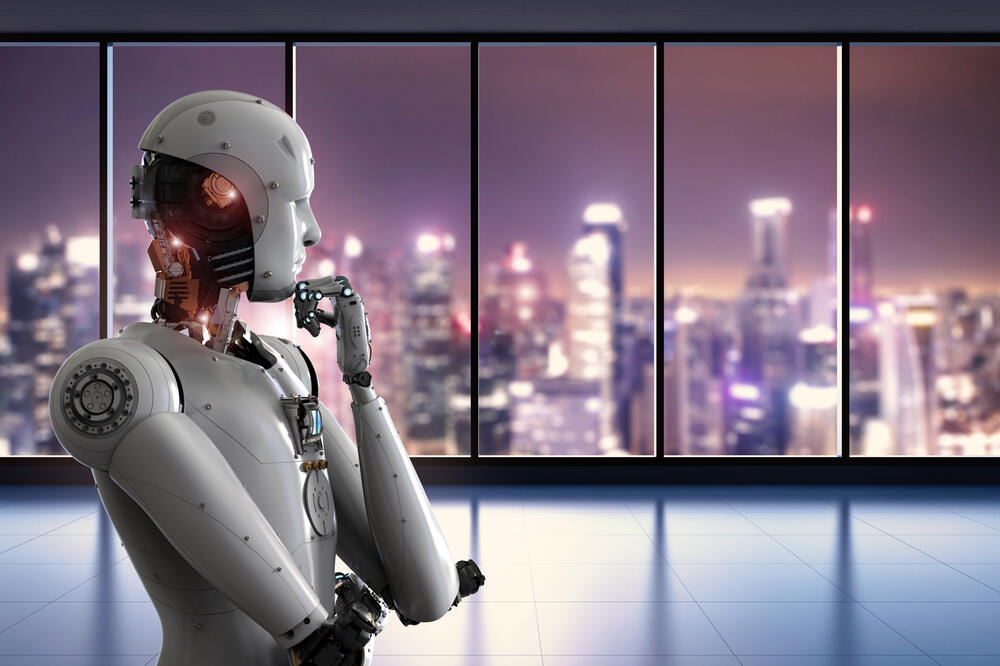
In a town known for its artificiality, Artificial Intelligence (AI) appears to be a perfect Hollywood fit.

Last year AI language models and image creations truly dazzled the public. But they scared the unions half out of their wits.

As a matter of fact the Hollywood unions negotiated hard with the studios to get limitations put in place regarding the use of AI.

In its new three-year agreement, the Directors Guild of America (DGA) contract has a provision that forbids studios from replacing a DGA member with AI.

The Screen Actors Guild (SAG-AFTRA) contract does not permit studios to use AI to replicate the likeness of a union member without obtaining (via a separate agreement) the member’s clear consent.

And the Writers Guild of America (WGA) Basic Agreement states, for purposes of credit and compensation, that any material written by AI will not be considered “literary material.”

However, it appears as though mere contractual provisions will not be enough to prevent AI technology from becoming a major future Hollywood player.

The latest anxiety inducer is the advent of text-to-video, a production-disrupting technology that allows film footage to be created without the involvement of writers, directors, actors, cinematographers, and the like.

AI models have already demonstrated a virtual capability to pen screenplays, create images, and produce music, solely from written commands.

Videos illustrating the extraordinary capabilities of AI have already been posted on the Internet, including a trailer that features Jared Leto promoting his band Thirty Seconds to Mars and a parody of the film “Ocean’s Eleven.”

While numerous AI technology projects have popped up in the entertainment realm, OpenAI’s Sora has gotten the biggest reaction. After having exclusively been fed only written instructions, the new model has been able to create stunningly realistic high quality short videos.

It seems inevitable that the technology will soon be converting entire movie scripts into complete feature-length films via an individual’s simple typing on a computer keyboard.

Sora’s demos sparked justified fears that the technology threatens future employment within the Hollywood creative community.

Filmmaker Tyler Perry specifically cited Sora as the reason for the cancellation of his proposed $800 million studio expansion project in Atlanta, Georgia.

“Being told that it [Sora] can do all of these things is one thing, but actually seeing the capabilities, it was mind-blowing,” Perry said in an interview with The Hollywood Reporter.

“There’s got to be some sort of regulations in order to protect us. If not, I just don’t see how we survive,” he added.

In its apparent effort to secure fame and fortune, OpenAI has reportedly been wooing Hollywood executives to use Sora as their preferred filmmaking tool.

According to Bloomberg, the AI company is now setting up a series of meetings with major studios, media executives and talent agencies in order to pitch its automated video content creation machine.

In an apparent effort to pave the way for future business transactions, OpenAI CEO Sam Altman was spotted hanging out with key Hollywood players and was even in attendance at some of Oscar’s A-list parties.

A spokesperson for OpenAI told Bloomberg the following:

“OpenAI has a deliberate strategy of working in collaboration with industry through a process of iterative deployment – rolling out AI advances in phases in order to ensure safe implementation and to give people an idea of what’s on the horizon.”

Another way of phrasing “iterative deployment” might be a slow and steady takeover of Hollywood.

AI’s growing entertainment industry involvement will most certainly usher in plenty of lawyers and lawsuits. There has already been a sizable number of legal actions filed against AI companies, most of which assert copyright infringement.

When the output of AI has an obvious resemblance to an original work, the attendant lawsuits frequently have outcomes that are similar to those of traditional copyright claims.

Other cases involve a focus upon and an analysis of the time frame in which the protected works were uploaded into the AI technology as training data.

The Congress and the courts will have to wrestle with the notion of copyright protection as well as additional intellectual property rights issues that arise from the unauthorized uses of AI.

As Perry has suggested, guardrails must be put in place.

But the question is, Will this occur before the Hollywood Walk of Fame turns into a virtual one?

When Hollywood Made the Big Left Turn

The Hollywood tale begins in the 1920s.

It was a time when most major studio heads were decidedly on the conservative side of the political aisle.

So how did the entertainment industry veer into the leftist stratosphere?

Well, the process seemed to begin after some Hollywood-related scandals caused quite a bit of public embarrassment, which prompted the studios to become more proactive in terms of controlling the inner workings of the movie business.

Rather than having to bow to government regulators, the Motion Picture Producers and Distributors of America hired a former U.S. postmaster general by the name of Will Hays to help develop guardrails for movie production.

In 1933, Hays pushed the film industry to adopt what would come to be known as the Hays Code, which established rules that set boundaries pertaining to onscreen depictions of sex and crime.

Films and eventually television content that conformed to the code received a seal of approval upon which the movie-going public could rely, particularly families with children.

A pivotal event occurred in the late 1940s, which resulted in a transformation of the industry itself.

Some of the intellectuals around town, who were purportedly sympathetic to communist ideology, were investigated by the House Un-American Activities Committee.

The Motion Picture Alliance for the Preservation of American Ideals provided to the committee the names of those who were alleged to be communists as well as those who supported communist organizations.

Notable entertainment figures of the time, including Gary Cooper, Ronald Reagan, Robert Taylor, Sterling Hayden, and Edward G. Robinson named names and/or expressed concern about subversive content of screenplays.

Most of the names that were named were those of screenwriters. A select group of blacklisted individuals became known as the “Hollywood Ten.”

Hollywood is still burdened with an obsession over the blacklist era. Movies that deal with the subject are continuously being produced: “Good Night, and Good Luck,” “The Front,” “Guilty by Suspicion,” “Yoo-Hoo, Mrs. Goldberg,” “The Majestic,” and two biopics, both titled “Trumbo” based on blacklisted screenwriter Dalton Trumbo, just to name a few.

At the time of the blacklist and up until the late 1960s, Hollywood was structured along the lines of what came to be called the “studio system.”

This top-down model was controlled by five major movie studios known as the Big Five, and three smaller studios known as the Little Three.

The Big Five was comprised of Paramount, Warner Bros., RKO Pictures, Metro-Goldwyn-Mayer, and 20th Century Fox.

The Little Three were United Artists, Universal, and Columbia Pictures.

Interestingly, today’s largest and most powerful company, Disney, was not part of either the Big Five or the Little Three.

The studio system, as well as Hollywood’s Golden Era, took a hit both in power and influence as a result of a landmark Supreme Court decision, United States v. Paramount, an antitrust case.

Originally filed a decade earlier, the landmark case shocked the entertainment industry with language that called for the complete separation of ownership of movie theaters from film production and distribution, effectively terminating the studio system.

This legal decision, along with the continuing backlash against the blacklist, ended up being the catalyst for Hollywood’s extreme leftward tilt.

The studios opened up to independent filmmakers, and by the early 1960s the Hays Code had been replaced by a rating system that had been implemented by the newly formed Motion Picture Association of America, the same rating system that the industry uses to this day.

A new breed of filmmakers began to produce titles with defiant, rebellious, and anti-conventional themes, such as “Easy Rider,” “Midnight Cowboy,” and “Carnal Knowledge.”

By the late 1970s, its metamorphosis was evident. Hollywood continued over the years to become ever more left-wing, which cultivated the soil from which the unimpeded weeds of wokeness grew.

So here we are stuck with the 96th Academy Awards ceremony that recently aired, which, among other things, had imposed a set of DEI rules for a nominee to qualify for the Best Picture Oscar.

Needless to say, the DEI rules are at a minimum a profound obstacle to the creative process and another truly divisive thorn in our culture’s side.

Veteran actor Richard Dreyfuss gave a candid response to the Academy’s DEI standards, after they had been revealed to the public.

“They make me vomit,” Dreyfuss said. “Because this is an art form, it’s also a form of commerce, and it makes money, but it’s an art.”

Is life imitating art or art imitating life?

In a woke world, it’s anybody’s guess.

The Christian Nationalist Label

The unthinkable is happening.

Christians in America are under attack from the establishment media, the Hollywood community, and leftist activists within our country.

It was never supposed to be this way. Not in the Land of the Free.

Apart from our Christian founding, people in America generally tried to maintain a kind of “live and let live” attitude, particularly when it came to an individual’s personal religious and political beliefs.

But somehow this cultural tenet, like so many others, has mysteriously been turned on its head.

Christians are suddenly being tarred with the label “Christian Nationalist.”

So what exactly is a Christian Nationalist?

To the best of my knowledge it is a phrase that is currently being used to foment hatred against those who believe in the New Testament and who view the founding documents of our country as a national treasure.

Things seem to be escalating at a rapid pace. The pejorative has been turned into a meme that is being used to repeatedly massage people’s minds and turn Christians and patriots into pariahs.

It may also be a means to further suppress free speech as well as the free exercise of religion.

Apparently it began last year with verbal assaults that were aimed at House Speaker Mike Johnson.

Speaker Johnson had acknowledged his sincere religious beliefs, and the Christian Nationalist label has been used ever since to defame him and the GOP.

Mainstream news outlets have been releasing hit pieces disguised as journalism.

–Time Magazine published an article titled “The Christian Nationalism of Speaker Mike Johnson.”

–Politico followed suit with a piece called “The Christian Nationalist Ideas That Made Mike Johnson.”

–The New York Times joined in with an article titled “Christian Nationalism Is No Longer Operating Beneath the Surface.”

–More recently, in anticipation of the upcoming 2024 presidential campaign, Vanity Fair featured the title “Trump Allies Hope to Spread Christian Nationalism in the White House.”

–The Nation published an article called “Hit Trump on Theocracy, Not Hypocrisy.”

–The Hill deployed “America is facing a threat of biblical proportion: The rise of Christian nationalism.”

Other mainstream and left-wing outlets spewed out similar messages.

In an MSNBC appearance, Politico national investigative correspondent Heidi Przybyla indicated that a belief in the notion that rights come from God is an indicator of “Christian Nationalism.”

“The thing that unites them as Christian nationalists — not Christians, by the way, because Christian nationalist is very different — is that they believe that our rights as Americans, as all human beings, don’t come from any earthly authority. They don’t come from Congress. They don’t come to the Supreme Court, they come from God,” Przybyla uttered.

Referring to natural law as “a pillar of Catholicism,” Przybyla suggested that although natural law was once used for good, “an extremist element of conservative Christians” now apply it to abortion and same-sex marriage.

Bishop Robert Barron, founder of Word on Fire, a Catholic organization, responded to Przybyla in a video posted on X (formerly Twitter).

After citing language contained in the Declaration of Independence, Bishop Barron pointed out the peril of denigrating the ideas contained within this foundational document.

“It is exceptionally dangerous when we forget the principle that our rights come from God and not from the government,” the bishop said, “because the basic problem is if they come from the government (or Congress, or the Supreme Court) they can be taken away by those same people.”

He then issued an ominous warning: “This is opening the door to totalitarianism.”

Hollywood, too, has gotten into the Christian Nationalist name-calling craze.

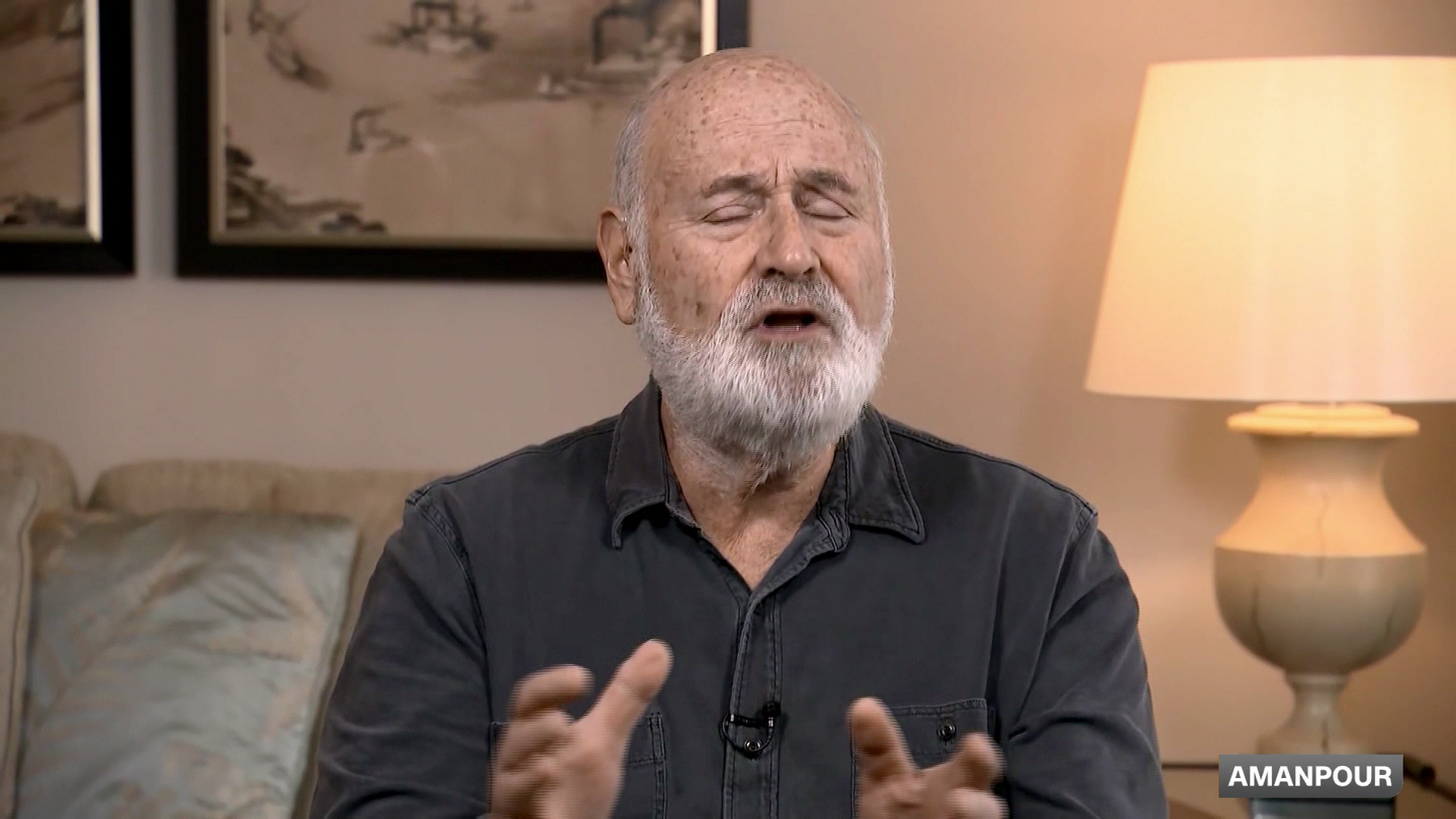
Rob Reiner has taken a lead role in a not so subtle attempt to negatively brand a huge portion of the population.

Acting as a kind of unofficial marketer of the propaganda, he has produced a film that is chock-ful of falsehoods.

He recently promoted his movie on MSNBC by pushing the meme while simultaneously maligning both Johnson and former President Donald Trump. Then he pulled out the race card.

“They believe that this is a white Christian nation,” Reiner said, seemingly implying that “they,” i.e., Christian Nationalists, are inherently racist.

In the documentary itself, respected institutions and organizations, including The Heritage Foundation, Turning Point USA, and Hillsdale College, are also disparaged in the propaganda process.

All of this started me thinking about the “Deplorables” label of the past.

I remembered that it took the air out of their sails when the label was embraced by those who were in support of the former president.

So here goes.

I love Jesus. I love our country. And I love all people.

If that makes me a Christian Nationalist, so be it.

Skip ‘The Exorcist: Believer’ Remake and Opt for the Original

Hollywood heads are spinning over the poor box-office performance of “The Exorcist: Believer.”

The recent big-screen release is a remake of the original horror flick “The Exorcist,” which back in 1973 scared the wits out of its massive viewing audience.

Universal shelled out a whopping $400 million for the intellectual property rights and was actually planning on a franchise trilogy.

However, the remake, with a budget of $30 million, only managed to take in $26.5 million in its initial debut. It then fell almost 60% in its second weekend, with a paltry $11 million haul.

Critics and audiences were in agreement that the movie was simply a dud. Studios generally view a CinemaScore grade below “B” as a fail. This movie received a grade of “C.”

The film’s over reliance on jump scares and computer-generated effects are only part of why it bombed. Blame the rest on the movie’s inauthentic approach to a very real supernatural occurrence.

The truth is the rite of exorcism is steeped in biblical and religious history, and the original film gave the plot and characters their proper due. It was a huge financial and critical success.

It also legitimately lays claim to being one of the scariest films ever made.

One of the constructive consequences at the time of being terrified by the notion of demonic possession, albeit via film, was that many individuals were affected deeply enough to turn away from the evil that had seeped into their own personal lives.

Here’s a summary of the true story upon which the original film was based.

The real-life demonic possession of a young 14-year-old boy occurred in Maryland.

The youth began to exhibit eerie and peculiar behavior, including speaking aloud in foreign tongues, the levitation of his body, and a display of inordinate superhuman strength.

His family consulted a number of doctors and psychiatric professionals, but they were unable to help. Eventually, his parents turned to the Catholic Church for assistance.

A request was made of two priests, Fr. William S. Bowdern and Fr. Edward Hughes, to perform the rite of exorcism on the boy. The ritual took place over the course of more than two weeks, and there were occasions of extreme violence.

Curse words directed at the priests flowed from the boy’s mouth. His body levitated at times and his speaking became that of an unnatural entity. Eventually, the priests were able to successfully drive out the evil spirit, which allowed the boy to return to a normal life.

The exorcism story was widely reported in the media, and it caught the attention of a Catholic Christian student at Georgetown University named William Peter Blatty. He began to research the subject and eventually wrote a novel based on the supernatural occurrence and deliverance from evil.

Blatty’s novel, which was also titled “The Exorcist,” was published in 1971.

Back when he was still climbing the ladder of success, a young Blatty dressed up as a Saudi Arabian prince and appeared as a contestant on Groucho Marx’s game show “You Bet Your Life.” He won $10,000.

This gave him enough money to quit his job and write full-time. He eventually penned a film adaptation of his novel that bore the same name and in 1973 took home an Oscar.

Blatty was uniquely prepared by his faith to take on the subject. His parents were Lebanese immigrants. His dad Peter was a cloth cutter and mom Mary a devout Catholic Christian. Mary was also the niece of a bishop.

In his youth, he attended a Jesuit school, Brooklyn Preparatory, was the recipient of a scholarship, and graduated as class valedictorian. He once filed a canon law petition against his alma mater, Georgetown, for its promotion of anti-Christian ideas.

There is a reason why Catholic priests are routinely featured in films of this kind. The Catholic Church has a long history of analyzing and seeking to understand the theology of demonic possession.

The sequences, prayers, and sacramentals utilized over the centuries by the Catholic Church, along with the extensive preparation of the individual who is conducting the exorcist rite, have proven to be efficacious in the deliverance ministry.

The remake’s story is purportedly inspired by the real-world experiences of Fr. Gary Thomas, who is said to have participated in more than eighty exorcisms. But even though the film resembles the original in a few ways, it is markedly different in the ways that matter most.

The bottom line is that “The Exorcist: Believer” contorts the rite of exorcism to conform to the political, cultural, and theological sensibilities of today’s radical left.

In my humble opinion, the original film is the one to watch.

And in my lifespan of experience, the original teachings on demonic possession and deliverance from evil are the ones to be believed.

Actress Sharon Stone’s Hollywood Lesson

It was the 1990s and Sharon Stone was on top of the world.

She was one of the most popular movie stars of her times.

Her big breakthrough came when she landed a part in the 1990 science fiction action film “Total Recall.”

In 1992 she catapulted to international stardom when she appeared in the big-screen thriller “Basic Instinct.”

Later she would play a role in the 1995 epic crime drama “Casino,” which ended up delivering the best reviews of her career, along with an Academy Award nomination for Best Actress.

Numerous films would follow, cementing her position as a top Hollywood actress.

Her life was going exceptionally well with her career soaring, due in large part to the Oscar nomination, which credentialed her as a serious actress.

Her personal life was blossoming too. She and her then-husband adopted a child, experiencing the joy and fulfillment that new parenthood brings.

Unbeknownst to Stone, her world was about to turn upside down. Within a few months, life would take a sudden and tragic change for the worse.

She suffered a type of stroke in which a vertebral artery ruptures. For nine straight days bleeding was occurring in her brain, and she was given only a 1 percent chance of surviving.

Sadly, at a time when she needed them the most, her Hollywood friends and acquaintances all but abandoned her. The only person who really stood by her side in this most difficult time was her devoted Dad.

“My father was there for me, but I would say that was about it,” Stone shared.

After the terrible health crisis, she faced further personal and professional challenges. Her marriage disintegrated and the Hollywood phone eerily stopped ringing.

“I lost everything,” she said. “I lost all my money. I lost custody of my child. I lost my career. I lost all those things that you feel are your real identity and your life.”

Stone’s Hollywood experience provides the opportunity to examine the changes that have taken place in our cultural attitudes and behaviors with regard to celebrity.

Stone was a genuine movie star, the kind that in these continuing digital revolution times seems to have disappeared.

Lost, in large part, is the sense of mystique that Hollywood stars of the past possessed. Lost oftentimes, too, is the basis for admiration given.

So who are today’s stars? And has the arc of fame been irretrievably altered?

The answers to these questions seem to depend chiefly on the medium as well as the manner in which entertainment is presented to and consumed by an anticipated audience.

Over the last several years the changes that have taken place within the entertainment business have no doubt been profound. Movie theater attendance has significantly declined. And for lack of a better word, so have “conventional” movie stars.

At the same time there has been a rise in the actual number of celebrities as well as the types of venues in which fame can be attained.

We now have multiple categories of film stars, television stars, music stars, sports stars, political stars, preacher stars, internet stars, social media stars, etc., all of whom vie for the public’s attention and the varying levels of fame that accompany it.

The opportunity for people to achieve Andy Warhol moments has expanded exponentially. And so it is that anyone with a smart phone and an internet connection can potentially claim their 15 minutes of fame.

While there may be a lot more famous faces around, it is also much more difficult for those faces to maintain their celebrity status over time. In other words, fame seems to be even more fleeting than it was in the past. And the arc of fame seems to have been altered in length and breadth.

For an individual, life in the fame lane can take you from the highest of highs to the lowest of lows.

Stone has lived it.

She shares her story of survival and serves as an example of the triumph of the human spirit.

She does offer the following admonition, though. “If you want to live with solid citizens, don’t come to Hollywood.”

Don’t know if anyone is going to stop chasing fame, but it’s worth thinking about for at least an LA minute.

Strike Two: Hollywood Actors Union Goes After Video Game Companies

For months now the Hollywood actors union has been on strike against the movie studios.

Now the union is seeking to authorize a second strike, this one involving major video game companies.

The current labor actions began when the Writers’ Guild of America union (WGA) went on strike in May of this year.

In mid-July, the WGA was joined by the Screen Actors Guild-American Federation of Television and Radio Artists (SAG-AFTRA).

It was historical in nature because a simultaneous strike of both actors and writers hadn’t happened in 63 years.

The actors union hasn’t gone on strike against video game companies since 2016. The strike back then lasted 11 months.

If the sought after strike addition materializes, video game actors most affected would be ones who do motion capture work and voice-overs for the video game producers.

The largest producers of video games in the world are big-name companies like Disney, EA, Activision, Epic Games, and Take Two. These are companies that are parties to the SAG-AFTRA video game contract.

The union has stated that it is asking video game companies for an 11% raise, with two 4% increases during the term of the labor contract, along with protections against AI technology.

SAG-AFTRA President Fran Drescher issued a statement about the proposed new strike.

“Here we go again! Now our Interactive (Video Game) Agreement is at a stalemate too. Once again we are facing employer greed and disrespect. Once again artificial intelligence is putting our members in jeopardy of reducing their opportunity to work. And once again, SAG-AFTRA is standing up to tyranny on behalf of its members,” she said.

Use of the term “stalemate” by the head of a prominent union doesn’t bode well for those seeking a speedy resolution to the labor turmoil in Hollywood.

SAG-AFTRA’s strike has almost completely shutdown the activities of Hollywood studios.

Talks between the industry and the unions have not been promising. There have been no breakthroughs over a long summer. The unions seem to be far away from the better wages, residuals, working conditions, and AI protections that actors and writers seek.

SAG-AFTRA needs to supplement the picketing and negotiating with additional action. Adding video game companies to the labor lockout list is one way of increasing leverage while raising public awareness.

Evaluating these strikes is a complex calculus, one with multiple variables.

Entertainment companies are very much in need of content, and the preference would be to have the labor disputes come to an end.

Powerful studio heads are concerned about how the strikes are perceived by Wall Street. The entertainment industry had been in the doldrums before the strike began. And layoffs at production companies and talent agencies certainly didn’t help the overall economy.

Additionally, the strikes have caused significant disruptions to film and television productions all over the world. According to the Financial Times, the ongoing strikes have cost the California economy about 5 billion dollars.

The consequences of the shutdown of Hollywood productions have set off a ripple effect across a large swath of local businesses; those that provide services to the movie industry, including catering, dry cleaning services, drivers, rental companies, etc.

Hollywood jobs seem to be in constant flux. The entertainment industry in general is not known for its job security. People are routinely thinking about getting out of the industry and opting for something with more employment stability.

Workers and businesses that have been affected by the strikes may decide to relocate elsewhere, and would therefore not be available if and when productions actually resume.

On the other hand, if the unions push too long and too hard on the studios, the studios may find an alternative way to obtain the content that they need.

During the 2007-08 WGA strike, the studios were unable to hire union writers. So they turned to the reality TV genre that propelled reality shows to a level in which they still lay claim to a large portion of television production.

Then there’s the elephant in the room, Artificial Intelligence (AI).

Do the work stoppages and production-set standstill become incentives for studios and production companies to accelerate the use of AI technology?

The strike may just push content executives to expedite their AI capabilities.

In fact, this seems to be happening as job postings for AI product managers offering compensation packages of $300,000-$900,000 would indicate.

The studios and streaming services are already using AI technology in the script-screening process, synopsizing stories and diminishing the need for human story analysts.

When writers and actors strike because they are afraid of being replaced by technology, will the content executives be tempted to hire compliant robots that are programmed not to picket?

Hopefully, something will give soon so the cameras can get rolling again.

AI Is Stealing Hollywood Jobs

Believe it or not the Hollywood strike is still going on.

The problem for the members of the Writers Guild of America (WGA) and the Screen Actors Guild (SAG-AFTRA) is that right now almost nobody is paying attention to their plight.

Yes, the picket lines continue to be manned and the press conferences rage on. But something very different is going on behind the scenes.

The current strikes were initially prompted by the usual compensation-related concerns. However, this time the central issue revolves around the role that Artificial Intelligence (AI) is going to play in the future creation, production, and marketing of entertainment content.

In terms of the negotiations between labor and management, the situation is truly unprecedented, due to the technological elephant in the room.

Strikers are seeking an agreement that would set up guardrails across the industry in relation to the expanding application of AI technology.

Advances in AI are testing the law, especially when it comes to the manner in which courts are applying, interpreting, and ruling in cases that involve intellectual property.

Comedian Sarah Silverman recently brought a lawsuit in federal court against Meta and OpenAI for copyright infringement. The case is part of a proposed class action lawsuit.

Silverman in particular alleges that, without having given her consent, books that she had authored were included in the technology’s training data.

No question that actors and writers have legitimate reasons to fear the loss of their livelihoods. After all, AI has the potential to allow studios to simulate the likenesses and voices of actors in perpetuity, without ever having to compensate individuals for the use of their personal identities, characteristics, personas, etc.

Let’s not forget that AI also has the ability to create screenplays, minus the human writers.

In relation to the strike, SAG-AFTRA president Fran Drescher, best known for her starring role in the 1990s sitcom “The Nanny,” stated the following: “If we don’t stand tall right now, we are all going to be in trouble, we are all going to be in jeopardy of being replaced by machines.”

Bob Iger, who is currently a prime target of the unions, is on record as specifically having stated the drawings and videos generated by AI are “something that at some point in the future the company [Disney] will embrace.”

While speaking to a crowd gathered in Times Square, actor Bryan Cranston aimed his comment directly at Disney’s CEO, saying, “We’ve got a message for Mr. Iger. I know, sir, that you look at things through a different lens. We don’t expect you to understand who we are. But we ask you to hear us, and beyond that to listen to us when we tell you we will not be having our jobs taken away and given to robots.”

Union workers typically strike in order to increase leverage for negotiations with management.

The sad truth for both the WGA and SAG-AFTRA is that the recent strikes have increased the incentive for Hollywood employers to find ways in which they can actually prevent future strikes.

Despite the rhetoric of studio reps, AI technology equips entertainment employers to potentially avoid future strikes altogether, via drastic reductions or the complete elimination of conventional creative workers.

The Alliance of Motion Picture and Television Producers (AMPTP), i.e., the studios’ organization, has taken the position that AI should be used in what the group calls “a balanced approach based on careful use, not prohibition.”

Judging by actions as opposed to words, it appears that the major studios are tacitly embracing AI.

As a matter of fact, an AI hiring spree is currently taking place and almost every major entertainment company is involved.

— Disney has a number of open positions that focus on AI and machine learning.

— Netflix has similar job offerings, including an AI Product Manager job that promises an annual salary of up to $900,000.

— Sony is looking for what the company refers to as an AI “ethics” engineer.

— Warner Bros. Discovery, Paramount, and NBCUniversal have also joined in the AI hiring boom with their own job offerings.

It seems quite significant that Hollywood studios are seeking to fill AI jobs; this in the midst of strikes that have occurred over AI’s use itself. Tack this on to the fact that workers are having to witness layoffs that may prove to be the largest in the history of the entertainment business, including the firing of about 7,000 Disney employees.

From ancient past to present day, new inventions have historically caused the displacement of workers.

Again, though, something very different is going on. And it probably has to do with the philosophical, political, societal, cultural, and ethical transformations that are occurring simultaneously in our country and in the world.

The Hollywood strikes are likely to last a long time and may not bring a satisfactory outcome to the unions’ memberships.

So goes Hollywood, so goes the world?