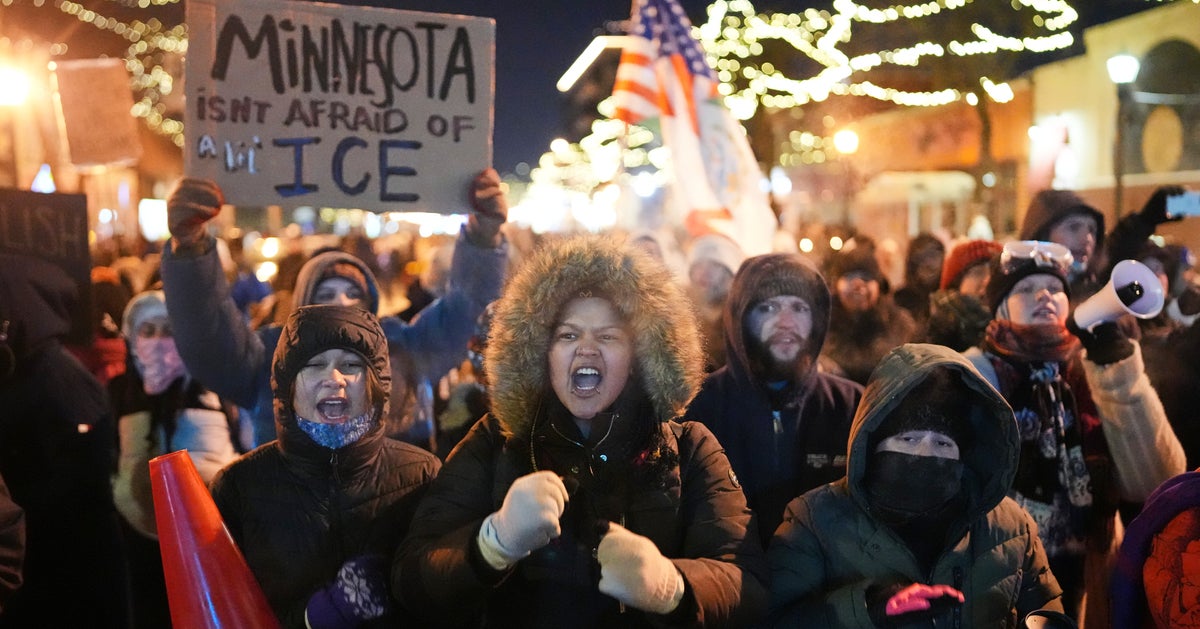
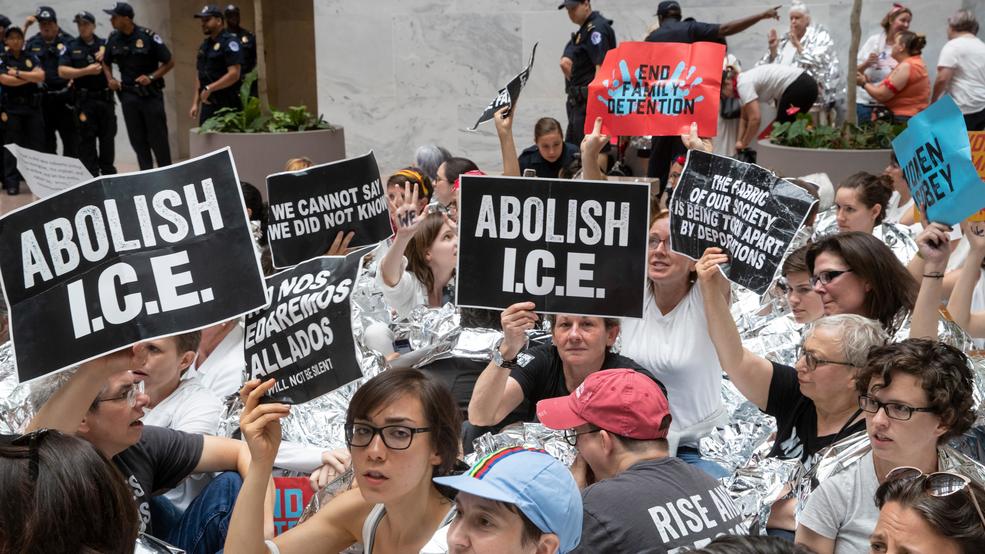
Many people in our country are painfully aware of the numerous clashes that have recently occurred between protesters and our state and federal law enforcement officials.
A lot of folks have also heard the word “sanctuary” being bandied about, in reference to the policies of some of the major cities and states within the U.S.
I thought I would do a deeper dive into the meaning of the word “sanctuary” within its current political context to try and shed some light on what has happened, what may happen next, and how we as a nation can find a way to navigate the uncharted waters.
From California’s longstanding policies to Minnesota’s more recent defiance amid ICE operations, these state jurisdictions appear to be working to severely limit cooperation between state and federal immigration authorities.
Certain jurisdictions have refused to honor detainer requests or lend assistance in deportation matters, even in cases that involve the most dangerous of criminals.
Proponents of city and state sanctuary policies claim to be guardians of civil liberties. However, a closer examination reveals that sanctuary status is actually a legal fiction.
In my research, I have found the idea of sanctuary cities and states to be a clever contrivance. Clever, but at the same time insidious, because it skirts federal supremacy and flirts with partial secession.
As President Donald Trump’s administration attempts to restore the rule of law, logic dictates that it is an appropriate time to deconstruct the sanctuary myth and clarify the constitutional principle of uniform enforcement of the law.
The concept of a sanctuary jurisdiction is dependent on something called “the anti-commandeering doctrine,” which was set forth in specific Supreme Court rulings as follows:
– In New York v. United States (1992), the High Court struck down parts of a federal law that required states to take title to radioactive waste if they failed to regulate the waste themselves. The majority held that Congress cannot “commandeer” state legislatures into enacting federal programs.
– In Printz v. United States (1997), SCOTUS invalidated certain provisions of the Brady Handgun Violence Prevention Act, which required local law enforcement officers to conduct background checks on gun buyers.
– In Murphy v. NCAA (2018), the doctrine was used to prohibit Congress from barring states from authorizing sports betting.
The Supreme Court has not yet directly ruled on sanctuary policies in a major case.
Lower courts, however, have applied this doctrine to affirm that cities or states do not have to cooperate with federal agents who are enforcing immigration law.
This interpretation, in my opinion, is a legal fiction, because it is built on a selective reading of the law, which ignores the broader constitutional framework.
The Supremacy Clause (Article VI) declares federal law to be the “supreme Law of the Land,” preempting conflicting state actions.
By actively obstructing federal efforts, such as prohibiting local police from notifying federal law enforcement about arrested illegal immigrants, sanctuary policies do not merely deny law enforcement the much-needed assistance, such policies materially interfere with national sovereignty.
There is the very real practical fallout of the implementation of city and/or state sanctuary policies.
In sanctuary strongholds, federal law enforcement professionals, in the midst of carrying out their official duties, are forced to maneuver through a labyrinth of obstructive non-cooperation, which may lead to serious risk of harm to themselves and to the public at large.
Notably, federal law (e.g., 8 U.S.C. § 1373) prohibits states from restricting information-sharing about immigration status. And even more importantly, the federal law prohibits states from going beyond mere non-cooperation into active obstruction.
Obstruction is precisely what we are now witnessing in places such as the state of Minnesota. Under the Supremacy Clause, actions involving obstruction are directly crossing over into preemption territory, thereby rendering them illegal.
The Department of Justice’s August 2025 list, which designated states (including California, Illinois, and New York) as sanctuaries, underscores this. These areas create de facto safe havens in which federal immigration law is selectively ignored.
Rather than applying law, courts have allowed states to nullify federal policy without the outright defiance of the Nullification Crises, which put forth the idea that a state could declare federal laws unconstitutional and thus void within its borders. This tested the Union’s cohesion and was a precursor to the Civil War.
This brings us into a discussion of “secession.”
Sanctuary policies are, in essence, a form of partial secession, a kind of veiled attempt to carve out territorial exemptions from national authority.
By declaring certain cities or states off-limits to full federal enforcement, these jurisdictions are asserting a type of faux-sovereignty, which mirrors the resistance of the Confederate states to the abolition of slavery.
Imagine if states were to refuse to cooperate with federal tax collection, environmental regulations, etc. Such defiant fragmentation could never be tolerated.
Immigration, which is a core federal power under Article I, Section 8, demands uniformity in order to prevent chaos.
Defiance of federal law has an actual human toll, one that history demonstrates may lead to tragic consequences.
Congress needs to pass legislation affirming that while states should not be “commandeered,” they also cannot obstruct federal operations.
The Union must be protected.
For this to happen we need a return to reality.
Time to end the illegal charade of sanctuary cities and states.
May the USA remain that way.
 James Hirsen
You must be logged in to post a comment.