The Imaginary Notion of a Sanctuary City or State

Many people in our country are painfully aware of the numerous clashes that have recently occurred between protesters and our state and federal law enforcement officials.

A lot of folks have also heard the word “sanctuary” being bandied about, in reference to the policies of some of the major cities and states within the U.S.

I thought I would do a deeper dive into the meaning of the word “sanctuary” within its current political context to try and shed some light on what has happened, what may happen next, and how we as a nation can find a way to navigate the uncharted waters.

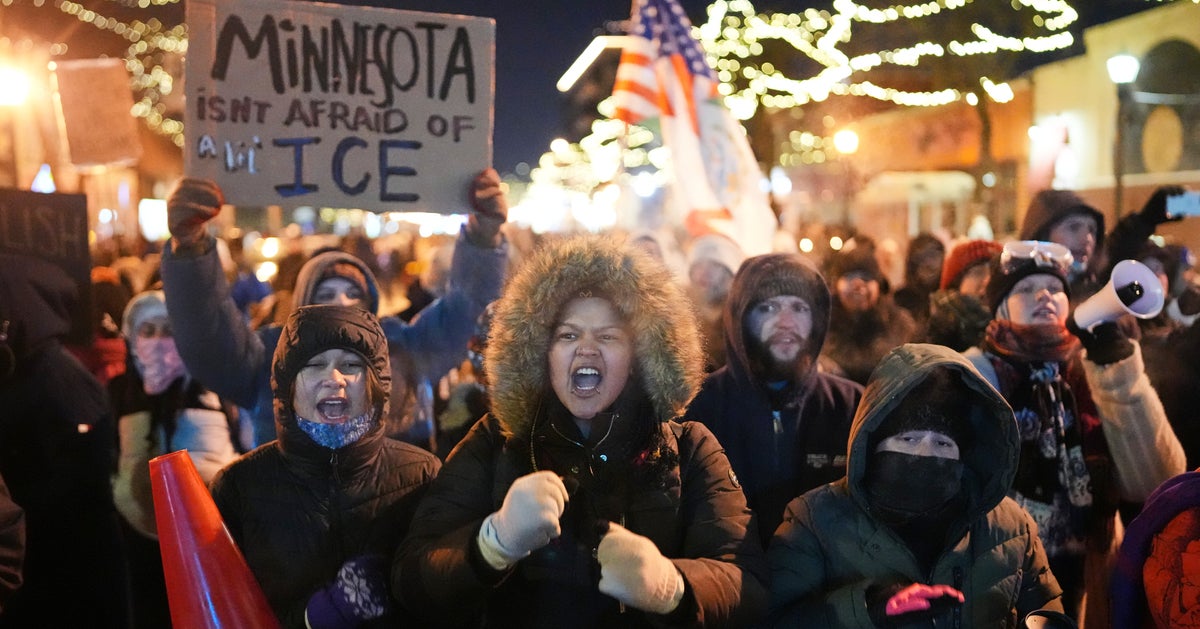
From California’s longstanding policies to Minnesota’s more recent defiance amid ICE operations, these state jurisdictions appear to be working to severely limit cooperation between state and federal immigration authorities.

Certain jurisdictions have refused to honor detainer requests or lend assistance in deportation matters, even in cases that involve the most dangerous of criminals.

Proponents of city and state sanctuary policies claim to be guardians of civil liberties. However, a closer examination reveals that sanctuary status is actually a legal fiction.

In my research, I have found the idea of sanctuary cities and states to be a clever contrivance. Clever, but at the same time insidious, because it skirts federal supremacy and flirts with partial secession.

As President Donald Trump’s administration attempts to restore the rule of law, logic dictates that it is an appropriate time to deconstruct the sanctuary myth and clarify the constitutional principle of uniform enforcement of the law.

The concept of a sanctuary jurisdiction is dependent on something called “the anti-commandeering doctrine,” which was set forth in specific Supreme Court rulings as follows:

– In New York v. United States (1992), the High Court struck down parts of a federal law that required states to take title to radioactive waste if they failed to regulate the waste themselves. The majority held that Congress cannot “commandeer” state legislatures into enacting federal programs.

– In Printz v. United States (1997), SCOTUS invalidated certain provisions of the Brady Handgun Violence Prevention Act, which required local law enforcement officers to conduct background checks on gun buyers.

– In Murphy v. NCAA (2018), the doctrine was used to prohibit Congress from barring states from authorizing sports betting.

The Supreme Court has not yet directly ruled on sanctuary policies in a major case.

Lower courts, however, have applied this doctrine to affirm that cities or states do not have to cooperate with federal agents who are enforcing immigration law.

This interpretation, in my opinion, is a legal fiction, because it is built on a selective reading of the law, which ignores the broader constitutional framework.

The Supremacy Clause (Article VI) declares federal law to be the “supreme Law of the Land,” preempting conflicting state actions.

By actively obstructing federal efforts, such as prohibiting local police from notifying federal law enforcement about arrested illegal immigrants, sanctuary policies do not merely deny law enforcement the much-needed assistance, such policies materially interfere with national sovereignty.

There is the very real practical fallout of the implementation of city and/or state sanctuary policies.

In sanctuary strongholds, federal law enforcement professionals, in the midst of carrying out their official duties, are forced to maneuver through a labyrinth of obstructive non-cooperation, which may lead to serious risk of harm to themselves and to the public at large.

Notably, federal law (e.g., 8 U.S.C. § 1373) prohibits states from restricting information-sharing about immigration status. And even more importantly, the federal law prohibits states from going beyond mere non-cooperation into active obstruction.

Obstruction is precisely what we are now witnessing in places such as the state of Minnesota. Under the Supremacy Clause, actions involving obstruction are directly crossing over into preemption territory, thereby rendering them illegal.

The Department of Justice’s August 2025 list, which designated states (including California, Illinois, and New York) as sanctuaries, underscores this. These areas create de facto safe havens in which federal immigration law is selectively ignored.

Rather than applying law, courts have allowed states to nullify federal policy without the outright defiance of the Nullification Crises, which put forth the idea that a state could declare federal laws unconstitutional and thus void within its borders. This tested the Union’s cohesion and was a precursor to the Civil War.

This brings us into a discussion of “secession.”

Sanctuary policies are, in essence, a form of partial secession, a kind of veiled attempt to carve out territorial exemptions from national authority.

By declaring certain cities or states off-limits to full federal enforcement, these jurisdictions are asserting a type of faux-sovereignty, which mirrors the resistance of the Confederate states to the abolition of slavery.

Imagine if states were to refuse to cooperate with federal tax collection, environmental regulations, etc. Such defiant fragmentation could never be tolerated.

Immigration, which is a core federal power under Article I, Section 8, demands uniformity in order to prevent chaos.

Defiance of federal law has an actual human toll, one that history demonstrates may lead to tragic consequences.

Congress needs to pass legislation affirming that while states should not be “commandeered,” they also cannot obstruct federal operations.

The Union must be protected.

For this to happen we need a return to reality.

Time to end the illegal charade of sanctuary cities and states.

May the USA remain that way.

Birthright Citizenship and Five Little Words

An activist federal judge has blocked a key executive order that was recently implemented by President Donald Trump.

The executive order that was signed by President Trump does away with birthright citizenship, i.e., the granting of full citizenship to the offspring of illegal aliens who are physically present in the United States.

The order is part and parcel of the president’s overall border reform package.

Several lawsuits have been initiated by states that are opposed to the order. In addition, the ACLU has taken it upon itself to be a representative for a number of left-wing groups in bringing legal action.

In my legal assessment, by issuing the executive order on birthright citizenship, President Trump is prompting the courts to clarify and rule on the language, meaning, and substance of what the law actually states.

For quite a long time government institutions have allowed policies to be implemented apart from the law, policies that deem all persons born in the U.S. to illegal alien parents are citizens.

However, the United States Constitution does not necessitate this policy. In fact, there is nothing in either the Constitution or in any federal statute that grants birthright citizenship to a child born in the U.S. to illegal alien parents.

What appears to be a complex issue actually isn’t. A look back at constitutional history provides quite a bit of insight and may help to clarify things.

The most repugnant decision in Supreme Court history took place in 1857, when the High Court issued its ruling on the Dred Scott v. Sandford case. The Court held that U.S.-born descendants of African slaves were not citizens.

In response to the Dred Scott decision, when the Civil War ended Congress did two things.

First, it passed the Civil Rights Act of 1866.

Second, the Fourteenth Amendment to the Constitution was drafted and passed, which took the protections of the Civil Rights Act and incorporated them into the text of the Constitution.

The goal was a singular one: To grant citizenship to formerly enslaved people.

The amendment does not say that all children born in the United States are citizens. The drafters of the amendment would have used different language if this were the intention. But they didn’t.

The Fourteenth Amendment, as approved and written, states the following: “[a]ll persons born or naturalized in the United States and subject to the jurisdiction thereof” are citizens.

It is important to note the conditional phrase “subject to the jurisdiction thereof.”

The original meaning of the phrase has to do with the concept of political allegiance.

Senator Lyman Trumbull, who was one of the principal figures involved in the drafting of the Fourteenth Amendment, spelled it out. Individuals who owed allegiance to or were subject to a foreign power were not granted citizenship by the amendment.

Clearly, the language of the Fourteenth Amendment didn’t apply to everyone born here. Children of tribally-affiliated Native Americans as well as diplomats were not included in the extension of citizenship, even if they were born in the U.S.

The historical reasoning that excluded tribally affiliated Native Americans and diplomats from birthright citizenship applies equally to those who are illegally present in our country today.

Why? Because illegal aliens are not “subject to the jurisdiction thereof” of the United States in that their first contact with the U.S. was an illegal act, and additionally they maintain citizenship with another country while illegally residing in the U.S.

In an apparent attempt to bolster their arguments, opponents of President Trump’s executive order bring up the 1898 Supreme Court ruling in United States v. Wong. This case involved a child born in the U.S. during a period when federal law barred Chinese immigrants from becoming naturalized citizens.

However, the High Court’s decision was predicated on the fact that the child’s Chinese parents were in the country lawfully and permanently. In other words, the case dealt with a child born to parents who were both legal immigrants.

Truth be known, the Supreme Court has never had to deal with a birthright citizenship case involving children born to parents living in the country illegally.

Looks like the High Court will have to now.

Hopefully, the Justices will be paying close attention to the 5 little words and will rule accordingly.

Democrats’ Policies of Past Match President Trump’s Present

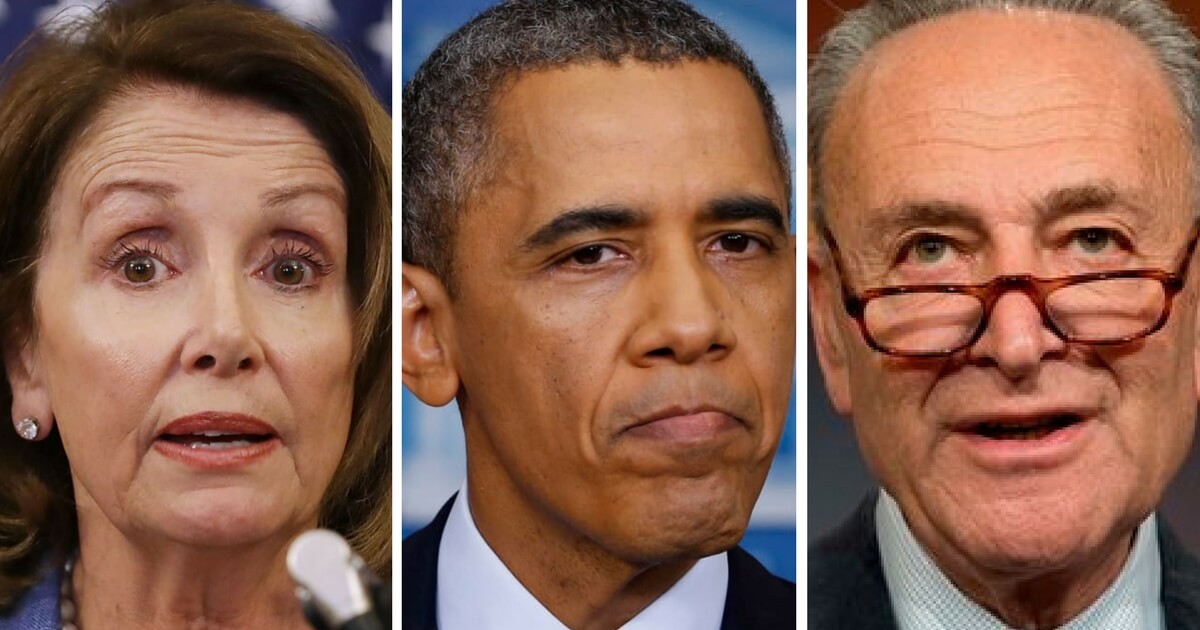
Nancy_PelosiBarack_ObamaChuck_Schumer

When it comes to the issue of immigration, a lot of Democrats are singing a different tune than the one the Party sang in the past.

The current crop of Democrat leaders are advocating for open borders, throwing their support behind so-called sanctuary cities and states, seeking to grant amnesty to illegal immigrants, and believe it or not, actively engaging in voter registration of non-citizens. Some leaders are even pushing to completely abolish ICE, the very agency responsible for enforcing border security.

As a result of some of the policies that the Trump administration has implemented, especially the policies that attempt to enforce the rule of law, a sizable segment of the Hollywood community thinks, most likely erroneously, that they have found a safe opening through which they can enter the political arena. The safe opening to which I refer is what left-wing activists have labeled the “separation of families.”

In truth, President Trump put an end to the separation practice implemented by the Obama administration; however, this fact has been ignored by members of the Hollywood left, which like so many other individuals and groups, are increasingly becoming unglued.

In an interview with The Hollywood Reporter, George and Amal Clooney mused aloud about whether children of the future would ask if our country took babies away from their parents and “put them in detention centers…”

Ellen DeGeneres posted that “we can’t be a country that separates children from their parents.”

In an interview with Rolling Stone, Willie Nelson opined, “What’s going on at our southern border is outrageous…What happened to ‘Bring us your tired and weak…’”

Jim Carrey posted a cartoon painting of Attorney General Jeff Sessions in front of a chain link cage.

Jessica Chastain asked, “Are we really such monsters?”

Mark Hamill tweeted a political cartoon of children in cages.

As a tribute to her father, Anne Hathaway made a donation to Americans For Immigrant Justice for the purpose of honoring “all the fathers torn from their children…”

J.K. Rowling tweeted, “The screams reverberating around the world are coming from terrified children in cages.”

The intriguing thing is that a short time ago Democrats had an entirely different perspective on immigration. In fact, many sounded as if they were partially, and in some cases even totally, in accord with the views of the Trump administration.

Back in 1993 Sen. Dianne Feinstein (D-Calif.) said, “The day when America could be the welfare system for Mexico is gone. We simply can’t afford it.”

That same year former senator from Nevada Harry Reid said, “…the American people think our immigration policies are a joke when we select 40,000 new immigrants a year by lottery.” Reid also stated that Americans were concerned about immigration laws because the “net costs of legal and illegal immigration to all levels of government” would be a ridiculously large, a whopping “$45 billion over the next decade.”

In 1994 Feinstein again chimed in on the immigration issue with a political ad showing illegal immigrants crossing the border. She also promised to deal with illegal immigration with more “agents, fencing, lighting, and other equipment.”

In 1995 Bill Clinton said, “It is wrong and ultimately self-defeating for a nation of immigrants to permit the kind of abuse of our immigration laws we have seen in recent years, and we must do more to stop it.” The former president also stated that the jobs illegal immigrants obtain “might otherwise be held by citizens,” and that illegal immigrants “impose burdens on our taxpayers.”

In 1998 then-congressman Chuck Schumer put out a call for New York’s Attorney General to “bar students from nations designated as terrorist sponsors.” He also insisted that students should not be “using American universities as terrorism training academies.”

President Trump recently tweeted a 2005 video in which then-senator Barack Obama said, “Those who enter the country illegally and those who employ them disrespect the rule of law and they are showing disregard for those who are following the law.” Obama added, “We simply cannot allow people to pour into the United States undetected, undocumented, unchecked, and circumventing the line of people who are waiting patiently, diligently and lawfully to become immigrants into this country.”

In 2006 then-senator Obama wrote, “When I see Mexican flags waved at pro-immigration demonstrations, I sometimes feel a flush of patriotic resentment.” That same year, Obama suggested that “better fences and better security along our borders” would “help stem some of the tide of illegal immigration in this country.”

Also in 2006, a majority of Senate Democrats voted in favor of legislation for the construction of 700 miles of fencing along the U.S.-Mexico border.

In 2007 Sen. Bernie Sanders (D-VT) railed against “…allowing corporate interests to drive wages down by importing more and more people into this country to do the work that Americans should be doing.”

In 2008 the Democratic platform warned, “We cannot continue to allow people to enter the United States undetected, undocumented, and unchecked.”

And again, in 2008, House Minority Leader Nancy Pelosi addressed the “challenge” of illegal immigrants, saying that “we certainly do not want any more coming in.”

In 2009 Sen. Chuck Schumer (D-NY) said that “when we use phrases like ‘undocumented workers,’ we convey a message to the American people that their government is not serious about combating illegal immigration.”

In 2013 former President Obama promised to put illegal immigrants “to the back of the line behind the folks trying to come here legally.” And in 2014 he said that an “influx of mostly low-skill workers” threatens “the wages of blue-collar Americans” and “put strains on an already overburdened safety net.”

By 2016 Democrat Party leaders had eliminated from their platform and speeches all talk of border security as they seemingly became convinced that the size of the legal and illegal immigrant population had given them enough electoral leverage to abandon working class Americans.

Most of today’s Democrats are deliberately embracing sovereignty-destroying open border policies and intentionally favoring those who are in the country illegally over their own citizen constituents, which means they have gone further left than pretty much anyone in the Party’s past could ever have imagined.