Wise Words of Wikipedia’s Co-founder Larry Sanger

Larry Sanger is an esteemed figure in the technology community.

Recognized as one of the early pioneers of the Internet, in 2001 he co-founded Wikipedia.

He is also credited with having come up with the site’s name, which is a combination of the word “encyclopedia” and the Hawaiian word “wiki,” which means “quick.”

He and almost all of the early tech-innovators back in the day envisioned a continuous “free and open” Internet, one in which the marketplace of ideas could forever run with abandon.

Sanger has a Ph.D. in philosophy, served as a professor at a number of universities, and remains one of the truly deep thinkers of the technology world.

Many view him as the chief source of the underlying philosophy of the World Wide Web.

In an interview with senior fellow at the Manhattan Institute Christopher Rufo, which was conducted for City Journal, he reacted to statements of former Wikimedia Foundation CEO Katherine Maher, who is now CEO of NPR.

Maher’s statements have created a major backlash. She has basically rejected Internet freedom, admitted that collaboration with government to censor content has been occurring, and seemingly embraces relativism over objective truth.

Acknowledging the inherent bias that exists in Wikipedia, Sanger stated, “The fact that certain points of view have been systematically silenced, is nothing new.”

Yet the Maher comments that were recently reported by Rufo appear to have left Sanger seriously befuddled.

“My jaw is on the floor,” he said.

The Wikipedia co-founder indicated that he was previously unaware of “just how radical-sounding Katherine Maher is.”

Wikimedia’s former CEO reportedly said that it was an error for Wikipedia to be “free and open” and also suggested that allowing the site to be managed in this manner has led to bad outcomes.

Maher also acknowledged that she has worked together with governments to suppress what she deems as “misinformation” appearing on the Wikipedia site.

Sanger was quick to remark, “It’s fantastic, in a bad way, that she actually comes out against the system for being ‘free and open.’”

He views her actions in collaborating with government to censor material as completely incongruent with the notion of a free Internet.

“When she says that she’s worked with government to shut down what they consider ‘misinformation,’ that, in itself, means that it’s no longer free and open,” he noted.

He views it as outrageous that the site “has not just been taken over by the Left, but has been co-opted by and working with the government. That’s not a thing I would’ve imagined happening 20 years ago.”

What makes the situation even more untenable is the fact that now Maher is the head of a national broadcasting company that is financed by American taxpayers.

Sanger believes that she should be immediately removed from her position as CEO of NPR.

“If NPR wanted to prove that they were still committed to free speech, to being ideologically neutral, and simply nonpartisan, they would let her go right away,” he said.

He remembers clearly the vision of the web at its inception.

“We didn’t have to have a special vision of a free and open Internet. That was the Internet,” he emphasized.

Those of us who were early Internet adopters believed that freedom would forever be its hallmark.

Sanger said that in those early days “the notion of restrictions on free speech was nowhere to be found.”

He additionally commented that “in the 1990s and 2000s, Democrats and Republicans were competing with each other to demonstrate how much in favor of free speech they were.”

In an attempt to enhance the understanding of the fragile nature of the net, the online founding father drew from his academic background.

“As a philosopher, I knew that this was not automatic, that it could easily change,” he explained, noting that “we could lose these freedoms.”

To paraphrase the words of one of our nation’s eminent founding fathers, it’s a free platform if you don’t bleep it.

Science Fiction Comes to Life in AI Executive Order

An executive order recently signed by the president centers on the regulation of Artificial Intelligence (AI) and its implementation in the “whole of government.”

The AI acronym itself has been absorbed into our national lexicon. And although it may sound as if we all share the same definitional understanding of the words, the truth is we actually don’t.

I begin this article with a clarification of terms in the hopes that it will serve to increase awareness of misunderstandings that are making the rounds.

The term “Artificial Intelligence” refers to computer algorithms being combined with data for the purpose of solving problems, addressing issues, or facilitating the creation of innovative ideas, products, etc.

An algorithm is basically a list of instructions for specific actions to be carried out in step-by-step fashion by computer technology.

AI utilizes something called “machine learning,” which allows the computer technology to be educated, so to speak, and to advance further by adapting without having been given explicit instructions to do so.

The type of AI that most people are familiar with and that is currently in widespread use is designed to specialize in a single task.

Conducting a web search, determining the fastest route to a destination, and alerting the driver of a car to the presence of a vehicle in the car’s blind spot are just a few examples. This type of AI is often referred to as Specialized AI.

Specialized AI is starkly different from another type of AI called Artificial General Intelligence. Artificial General Intelligence is the kind of AI that can, and likely will, match and even exceed human intelligence capabilities.

The executive order recently signed by the president is voluminous, exceeding 100 pages. It is also massive in scope, directing the “whole of government” to strictly regulate Artificial Intelligence technology.

There are several items that should be of concern. However, one thing that is especially alarming is the repeated use of the word “equity.”

In the executive order, all federal agencies are directed to establish an annual “equity action plan” aimed at helping “underserved communities.”

In a section titled “Embedding Equity into Government-wide Processes,” the Director of the Office of Management and Budget is tasked “to support equitable decision-making, promote equitable deployment of financial and technical assistance, and assist agencies in advancing equity, as appropriate and wherever possible.”

The same section also states, “When designing, developing, acquiring, and using artificial intelligence and automated systems in the Federal Government, agencies shall do so…in a manner that advances equity.”

Again looking at definitional meaning, even though the words are often conflated, the meaning of “equity” is quite different from the meaning of “equality.”

The meaning of “equality” was iconically conveyed in the words of Rev. Martin Luther King Jr., when he urged that people “…not be judged by the color of their skin but by the content of their character.” Character is the essence of a person and is unique to the individual within whom it is found.

The meaning of “equity,” particularly within the context of the executive order, is something very different. It means treating each individual in a selective manner precisely because of skin color, gender identity, or myriad other designated categories.

The end result of such an overriding governmental policy may actually end up being the antithesis of true equality.

The executive order dictates that AI projects conform to prescribed equity principles.

Senior Fellow of the Manhattan Institute Christopher Rufo tweeted that the order has created “a national DEI [Diversity, Equity, and Inclusion] bureaucracy” and has “a special mandate for woke AI.”

This may mean that woke algorithms could ultimately be incorporated into cell phones, electronic devices, automobiles, household appliances, etc.

Writing for Forbes, Senior Fellow at the Competitive Enterprise Institute James Broughel did not mince words.

Broughel called the order “the biggest policy mistake of my lifetime.” He also emphasized the hazardous aspects of the executive order, stating that it “may prove one of the most dangerous government policies in years.”

To sum things up, Specialized Artificial Intelligence improved our lives in a lot of ways.

But when the inevitable happens and it evolves into a woke Artificial General Intelligence, under government control it has the very real potential to wreck our lives.

I find myself longing for the days when it was only science fiction.

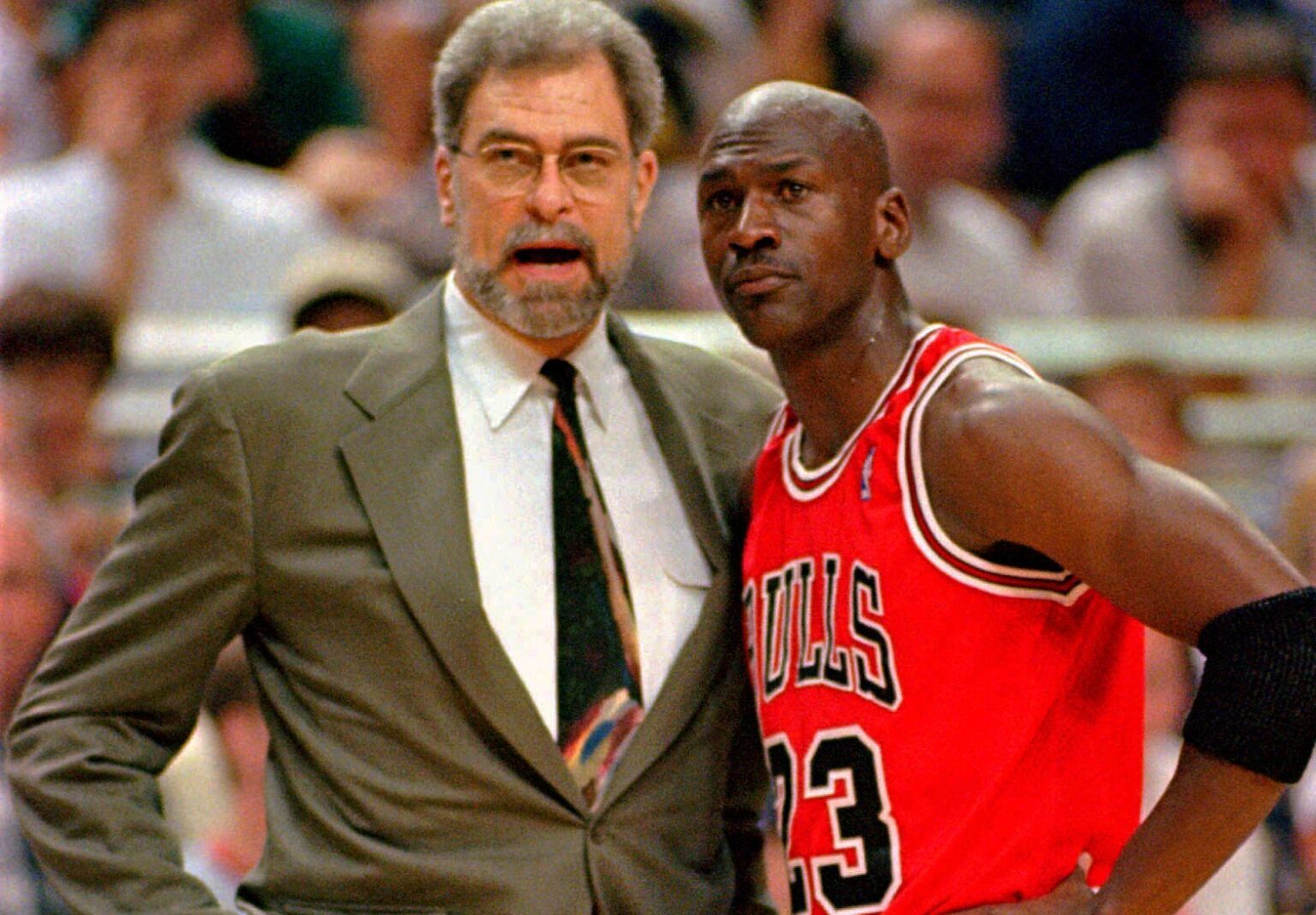
Lover of Basketball Phil Jackson Tunes Out

Phil Jackson is the personification of pro basketball. The widely recognized giant of the sport has walked, talked, and breathed the game for most of his life.

Over time he has found himself in the role of player, coach, and executive and has racked up wins with each endeavor.

As a power forward for 12 seasons with the New York Knicks, he won two NBA championships. As the head coach of the Chicago Bulls, he brought home six championships. And during his coaching stint with the Los Angeles Lakers, he secured another five league titles for his team.

Jackson actually holds the all-time highest win-loss percentage of any pro basketball coach. But shockingly, the legendary sports figure now finds professional basketball unwatchable.

This revelation appears to be one more sign that the strange times in which we live are getting stranger by the minute.

Jackson finding basketball unwatchable is like Mark Zuckerberg finding Facebook unusable. Or Taylor Swift finding music un-listenable. Or Meryl Streep finding award shows un-attendable.

In an interview on a podcast called “Tetragrammaton with Rick Rubin,” Jackson let it be known that for him tuning in was no longer fun.

“I am not enjoying the game,” he stated, adding, “There’s a whole generation that doesn’t like the game.”

He stopped viewing NBA games in 2020. That was the year of the lockdown, where playoff games had to be played with no fans in attendance, and viewers had to have their eyes assaulted with woke messages displayed on the backs of players’ jerseys.

Jackson noted that the politically charged phrases had taken the place of players’ surnames.

“They had things on their back like, ‘Justice.’ They made a funny thing like, ‘Justice just went to the basket and Equal Opportunity just knocked him down.’ My grandkids thought that was pretty funny to play up those names. …I couldn’t watch that,” he said.

Plenty of sports devotees reacted in a similar manner. Capturing the sentiments of countless others, Jackson called out the NBA for pandering and virtue signaling, and for having picked the wrong venue for political posturing.

“They even had slogans on the floor and the baseline,” Jackson said. “It was trying to cater to an audience or trying to bring a certain audience to the game, and they didn’t know it was turning other people off.”

To emphasize the point that sporting events should be free from political expression, Jackson said, “Politics stays out of the game. It doesn’t need to be there.”

A glimpse into the former coach’s upbringing gives some insight into how he gained the reputation of an individual who makes decisions within a philosophical context. His parents Charles and Elisabeth were both Assemblies of God ministers.

Along with his two brothers and half-sister, Jackson grew up in a remote area of Montana. Dancing and television were not allowed in their home.

He saw his first movie when he was a senior in high school and attended his first dance when he was in college. In those earlier days, it was assumed that he would eventually become a minister.

During his professional coaching days, he became known for using Tex Winter’s triangle offense, along with the implementation of a holistic approach to coaching, which was influenced by Eastern philosophy. Consequently, sports writers dubbed him the “Zen Master.”

He advises players to express their political beliefs outside of the league and off the court. He points to athletes, such as Bill Bradley, who have successfully pursued political careers. As a result of his outspokenness, he has predictably been attacked on social media.

The world of sports is going the way of Hollywood. Sports execs would be wise to heed the Zen Master’s warning, if they don’t want to suffer the same fate.

After all, the scoreboard doesn’t lie, and neither do the ratings.

AT&T All In on the Woke Agenda

AT&T and its subsidiary DirecTV recently dropped Newsmax from its lineup, while leaving in place 22 liberal news channels.

The subsidiary canceled the fourth highest-rated news channel, which left 25 million cable viewers scrambling to get their preferred channel from a different source.

DirecTV’s parent company doesn’t appear to be operating under any kind of conventional business model. The blatant ideological discrimination begs the question: Just how woke is the telecommunications giant?

It turns out that AT&T is so woke its executives are asleep at the wheel.

Congressional investigations are surely coming, as are a growing number of boycotts, etc., that could really have an impact.

In a nutshell, the world’s largest telecommunications company (and third largest provider of cell phones) has insidiously morphed into a far-left organization that poses as a service company.

According to OpenSecrets, during the time period between 1989 and 2019, AT&T was the fourteenth-largest donor to United States federal political campaigns and committees, contributing tens of millions of dollars, a majority of which went straight into Democrat hands.

As Newsmax contributor Jeffrey Lord reported in the American Spectator, the company’s leaders have backgrounds that link them with politicians of the liberal Democrat kind.

AT&T’s board of directors includes a chairman of the board that previously served as FCC chair, and was appointed by former President Bill Clinton. This same chairman of the board was an ambassador that was appointed to the position by former President Barack Obama.

Two board members are reliable contributors to prominent Democratic candidates, including one individual who was an advisor and supporter of former President Bill Clinton, as well as being the co-chair of the left-leaning Brookings Institution.

One board member was an appointee to President Obama’s “President’s Council on Jobs and Competitiveness.”

Another board member was a former President of the Ford Foundation, an outfit that donated millions of dollars to an anti-Trump organization.

AT&T’s board is extremely suspect when it comes to decisions concerning conservative political expression, as Lord wrote in his conclusion:

“Board of Directors of AT&T that is stacked with like-minded far Left extremists who cannot abide conservatives or political dissent.”

And what about AT&T’s top management position?

According to City Journal’s Christopher Rufo, a senior fellow at the Manhattan Institute, AT&T’s CEO John Stankey launched a radical re-education program in 2020 for his employees, which promoted the following racially tinged idea: “American racism is a uniquely white trait.”

The CEO’s program also pushed left-wing concepts such as “reparations,” “defunding of police” and “trans activism.”

The training essentially massages the minds of white employees into believing that they “are the problem.”

The line of reasoning is based on core principles of critical race theory that include “systemic racism,” “white privilege” and “white fragility.”

So the person at the helm of the telecommunications company is pushing an agenda that could have been crafted by Saul Alinsky?

As Lord observed, “AT&T has been changed from a politically neutral communications company to a woke, far left censor which has charged itself with an obsessive mission of silencing conservatives — Newsmax in this case, and One America News before that.”

AT&T doesn’t exactly have a track record that inspires trust.

–In January of 2006 The Electronic Frontier Foundation (EFF) filed a class action lawsuit, alleging that the company had allowed a government intelligence agency to monitor, without warrants, phone and Internet communications of its customers.

–In May of 2006, USA Today reported that all of AT&T’s international and domestic calling records had been handed over to a government intelligence agency for the purpose of creating a massive calling database.

–In June of 2006, the San Francisco Chronicle reported that AT&T had rewritten rules on its privacy policy so that “AT&T – not customers – owns customers’ confidential info and can use it ‘to protect its legitimate business interests, safeguard others, or respond to legal process.’”

–In July of 2006, a federal district court rejected a federal government motion to dismiss EFF’s case. After the case had been appealed to the Ninth Circuit Court of Appeals, the federal appellate court dismissed it in June of 2009.

–In August of 2007, National Intelligence Director Mike McConnell confirmed that AT&T was one of the telecommunications companies that assisted with the government’s warrantless wire-tapping program on calls between foreign and domestic sources.

AT&T’s DirecTV pays cable license fees to all 22 left-leaning news channels that it carries, despite the fact that most of the channels have far lower ratings than Newsmax.

Additionally, leftist organizations have exerted pressure on the already woke company to actually get rid of conservative programming.

New York Magazine in January 2022 reported the following: “In recent months, several organizations, including the NAACP and Media Matters for America, had been pressuring AT&T and DirecTV to dump OAN for promoting false information…”

Added to those lobbying the telecommunication company to deplatform Newsmax and other conservative media outlets are Democrats in Congress, who sit on a committee that is charged with regulating AT&T.

Did corporate heads at AT&T via its DirecTV subsidiary set out to suppress the speech of Newsmax? And was the company following the dictates of its fellow left-leaning politicians, media apparatchiks and radical activist groups?

The pieces of the puzzle seem to be falling into place.

Meaningful steps can be taken to let AT&T know that it doesn’t get to rewrite the Constitution.

–Cancel DirecTV by calling 877-763-9762.

–Cancel AT&T by calling 888-855-2338.

–Call congressional representatives and senators at 202-224-3121.

–Sign the online petition at IwantNewsmax.com

–Spread the word.

Freedom of speech hangs in the balance.

Walter Hill’s Stand against Wokeness

It has been noted recently by many of the greats within the comedy arts that wokeness has killed comedy.

But the truth is wokeness may actually be killing art itself.

Walter Hill is a famed director, screenwriter and producer.

He directed an amazing number of film projects over the years, including “48 hrs,” “Southern Comfort,” “Streets of Fire,” “Red Heat,” “Hard Times,” “The Warriors” and “The Driver.”

He also penned the screenplay for the crime drama “The Getaway” and produced a majority of the “Alien” film franchise.

Throughout his career, his baseline for storytelling has been the venerable western, the singular American genre that once upon a time was the envied export of the world.

He kick-started his Hollywood career as a production assistant. He was afforded the opportunity to work on iconic television shows that were set in the old American West; series such as “Gunsmoke,” “Bonanza” and “The Big Valley.”

To this day this classic American entertainment fare continues to be treasured by audiences around the globe.

Walter’s love for westerns has spanned the decades. It was on full display in works that include the 1980 movie “The Long Riders,” the 1995 film “Wild Bill,” the 2004 – 2006 television series “Deadwood” and the 2006 TV mini series “Broken Trail.”

The filmmaker once told a reporter, “Every film I’ve done has been a western.”

In a separate interview, he astutely pointed out that “the Western is ultimately a stripped down moral universe” and shared that he likes applying this principle to modern-day tales.

It is precisely this moral universe of which Walter speaks that is part and parcel of the western genre itself. It is also this moral universe that is in direct conflict with the dictates of contemporary woke ideology.

Traditional westerns have storylines that are in complete alignment with the moral constructs of integrity, justice, courage, individualism and loyalty, among others.

At the core of the filmmaking arts is contrast; i.e., clear distinctions between right and wrong, good and evil, hero and villain, etc. Not that there aren’t dimensions of character or plot or interrelationships. But good storytelling via film typically demands that the scriptwriter is able to freely create his or her work, untethered by external restrictions. This process results in characters to which viewers can intimately relate and storylines that can provide virtual life experiences that only one’s imagination could ever limit.

The present arts have hit a proverbial brick wall. This is because art cannot survive the current woke restrictions that Hollywood is imposing upon the entire entertainment industry.

Thankfully, the artist in Walter is unwilling to conform. Instead he is going against the grain, giving new life to his favorite genre.

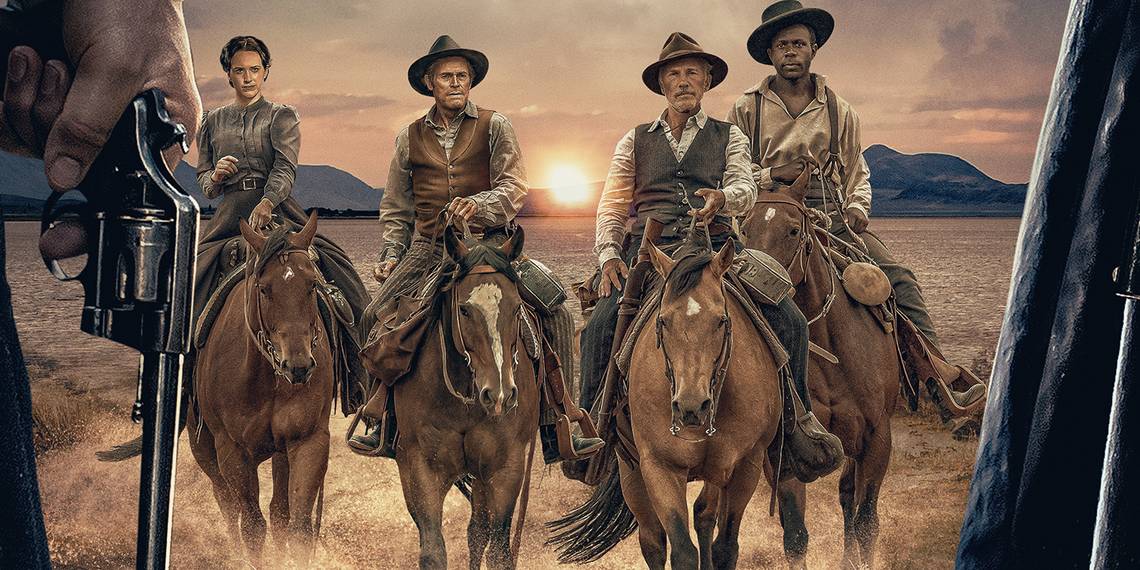
His latest western, which he has directed and co-written, is titled “Dead for a Dollar.” The movie stars Christoph Waltz, Rachel Brosnahan and Willem Dafoe.

Perhaps not surprisingly it hasn’t been easy for even a successful director like Walter to get a western made these days. He recalls in his notes for the film that “getting it financed was a miracle” and that it had to be shot on a “very low budget.”

Waltz portrays a Danish bounty hunter who travels into Mexico. While there he encounters an individual, who years earlier he had sent to prison. The man, played by Dafoe, is a gambler and an outlaw.

While making the press rounds to promote “Dead for a Dollar,” Walter revealed some of his thoughts on the current woke state of affairs. In an interview with Moviemaker Magazine, he said ominously that wokeness is “death to the arts.”

“You’re giving me a chance to say this: this woke environment, politically correct environment, is a terrible thing. And it hurts. It is death to the arts and it’s death to creativity. There’s no question that there were injustices in the past. Nobody is arguing that point. But how you redress it is how you treat the future,” Walter remarked.

Most folks in Hollywood are under pressure to mold their projects to the prevailing woke mentality.

But like a character in one of his beloved westerns, Walter remains steadfast.

He understands that the creative impulses essential to filmmakers and all contemporary artists are thoroughly stifled by woke constraints.

Shallow characters, forced plots, anachronistic themes and the like make for extremely bland product, which is the antithesis of art’s purpose and its very essence.

Funny Guy David Zucker’s Serious Warning

Humor is David Zucker’s specialty.

Not the lazy blue variety that passes for comedy these days, but the laugh out loud kind that makes your sides hurt, your eyes water and the world disappear.

The mega-successful film director, producer and screenwriter is best known for the legendary spoof flick “Airplane!” and the side-splitting “Naked Gun” and “Scary Movie” franchises.

He happens to be one of our culture’s current reigning experts on all things funny, and he’s sounding an alarm bell for all to hear.

Lucky for us he has joined the ranks of other comedy greats who have issued similar warnings: Dennis Miller, Jerry Seinfeld, Dave Chappelle, Chris Rock, Gilbert Gottfried, Mel Brooks, Adam Carolla, Steve Harvey and John Cleese.

The giants of humor are all saying pretty much the same thing; that Tinseltown’s head honchos and their like-minded fellow residents of the New Woke Hollywood are virtually strangling comedians, comedy writers and comedy itself.

Zucker was recently featured in a video posted by PragerU, where he shared some reflections on his trademark comedy.

He doesn’t think the jokes that propelled his films to the top could be delivered today. Too many folks now fail to understand the nature of comedy.

Unlike most audiences of the past, many of today’s joke consumers are so easily offended that it has risen to the level of ridiculous.

If everything is offensive, then nothing is funny.

New Woke Hollywood is decimating the comedic arts, along with the writers and performers that bring laughter to our lives.

As Zucker stated, “They’re destroying comedy because of nine percent of the people who don’t have a sense of humor.”

He used a real-life Hollywood example to illustrate the point. In a pitching session that he and his writing partner did for a James Bond/Mission: Impossible-style parody, he was stunned by the reaction of an executive just to some of the project’s dialogue.

“One female executive said, ‘This joke is getting pretty risqué here.’ It was a mild joke about the lead female character. Because she had come up through the police department and through the FBI…she needed a breast reduction to fit into the kevlar vest,” Zucker said.

“It was pure oatmeal, so mild,” he said. “Not one of our funniest things, but this was too much. I thought, ‘If this was the criteria for it, we’re in big trouble.’”

In speaking of the past, he said, “We went where the laughs were…We never worried about any of this stuff with the Naked Gun or Scary Movie films.”

Zucker honed his comedic skills in the 1980s and 90s with movies like “The Kentucky Fried Movie” (1977), “Airplane!” (1980), “Top Secret” (1984), “Ruthless People” (1986), “The Naked Gun” (1988), “The Naked Gun 2½: The Smell of Fear” (1991) and BASEketball” (1998).

He added his 21st Century contributions “Scary Movie 3” in 2003 and its sequel “Scary Movie 4” in 2006.

Many of the films that he was involved with are now classics and continue to attract appreciative audiences and younger movie fans.

He is often asked whether his most iconic film could be made today.

“When we do screenings of ‘Airplane!’ we get the question if we could do ‘Airplane!’ today,” he said. “The first thing I could think of was, ‘Sure, just without the jokes.’”

According to Zucker, although in the current comedy climate freedom may be taking a hit, the future actually looks bright.

“Comedy is in trouble, of course, but I think it’s going to come back,” he said. “There’s a pendulum, and the pendulum will swing back. I’d like to see comedy filmmakers do comedies without fear.”

Zucker has gone against the grain in liberal Hollywood. He has even worked on political ads for the GOP and directed a political parody film at the expense of Michael Moore, titled “An American Carol” (2008).

Charmingly, he is a huge fan of Davy Crockett. He once made a cameo appearance dressed as Crockett in “The Naked Gun 2½.” As a matter of fact, one of his dream projects is a Crockett biopic. He also hosted a “Davy Crockett Rifle Frolic” at his ranch back in the 1990s. And he decided to write some additional verses to the celebrated song “The Ballad of Davy Crockett.”

Regarding his faith, he was asked by the BBC some years ago whether he believes in God.

His answer was exquisite.

“Oh yeah, I believe in God,” he replied. “I think there’s much more evidence that there is a God than that there isn’t. I don’t believe that Mother Teresa and Hitler go to the same place. I believe in justice, maybe not in this life, but there has to be justice.”

In addition to justice, no doubt there’s laughter too.

As C.S. Lewis put it, “Joy is the serious business of Heaven.”

Woke Hollywood Passes on Pro-life Film despite Top Name Involvement

Kendrick brothers Alex, Stephen, and Shannon have been the creative forces behind many a faith-based box-office hit, including the successful “Facing the Giants,” “Fireproof,” “Courageous,” “Overcomer,” and “War Room.”

“War Room” was actually the No. 1 movie in the country on the second weekend of its release. It was also one of highest-grossing Christian films ever made.

The Kendrick brothers recently teamed up with actor Kirk Cameron to produce “Lifemark,” a movie that deals with some of the most central and poignant themes of our times – relationships, forgiveness, and the film’s primary focus, adoption.

Inspired by a true story, a movie such as this would typically have had Hollywood studio executives competing for the project.

It goes a long way to prove that these are anything but normal times.

Alex is one of the executive producers, as are Stephen and Shannon. But Alex has also co-written the film, and he has an acting part in it as well.

The adoption storyline is particularly meaningful for the Kendricks and Cameron.

Stephen Kendrick and his wife welcomed a daughter from China via adoption.

Cameron’s wife Chelsea was adopted by her parents, and four of Kirk and Chelsea’s six children were also adopted.

For those who haven’t yet noticed, contemporary Hollywood has given itself an extreme makeover in both form and substance.

All of this seems to have happened fairly quickly and also quite craftily. It went from “The Entertainment Capital of the World” to “The Woke Capital of the World,” with the end result being that the largest and most powerful entertainment companies are now haplessly out of touch with the beliefs, attitudes, and values of a large portion of their customer base.

Consequently, despite the viable track records of “Lifemark”’s filmmakers, both its star and its executive producer revealed that Hollywood studios, even those that had worked with the Kendrick brothers in the past, rejected the distribution of the film and did so because of the movie’s pro-life message.

Lead actor Cameron called the rebuff by Hollywood studios “good old-fashion cowardice.”

“Even the so-called faith divisions of studios would rather pass from tens of millions of dollars and support horror, violence, and drag queen movies than risk doing anything that celebrates life,”

Cameron said.

According to Alex, the studios stated that they were not releasing the film because they were “scared of the response,’”

Alex additionally revealed the following: “Several of the studios that have courted us in the past, and wanted us to go with them as distributors, they all turned down this film.”

The studios apparently wanted something else, anything else but this film.

Alex added, “We said, ‘Well, we cannot be ashamed or afraid to share the truth regarding this subject, to share a true story.’ It’s hard to argue with a true story.”

Still, the lack of independent thought displayed by a sizable number of Hollywood executives makes it seem as though they are impervious to the truth.

Fortunately, Fathom Events, a distribution company, was able to make a rational business decision and is going to arrange to have the film displayed in more than 1,400 theaters.

Alex acknowledges that the subject matter of “Lifemark” is a sensitive one.

“It’s become a political battleground in our country,” he remarked, adding, “We are acknowledging both sides, we’re acknowledging the difficult decision to choose to place your baby for adoption, but it is the better decision.”

“This whole path is not always easy. It is often difficult, but it is beautiful. And so this true story was a perfect example of showing how it could go…,” he said.

The movie project began with a telephone call.

While still in the process of wrapping up a previous film, the Kendricks received an unexpected call from Cameron, who had just watched what he described as “one of the most powerful and moving documentaries I’ve ever seen.”

The documentary was titled “I Lived on Parker Avenue,” and it dealt with the story upon which the “Lifemark” film is based.

The plotline centers around a teenage boy who is contacted by his birth mother, a woman who eighteen years prior had chosen adoption over abortion for her then-tiny son.

Alex believes that the movie can play a role in informing and educating people.

“We’re hopeful that churches, crisis pregnancy centers, ministries, all jump on this as a real-life tool to reach people… who are trying to determine ‘is this baby worth saving?’” Alex explained.

His objective in making and promoting this movie project is “to change the heart of the nation.”

To this end, the desire on the part of the filmmakers is for life itself to be ultimately viewed as “precious, beautiful, and worth protecting.”

“Lifemark” is set to make its mark in theaters nationwide on Sept. 9.