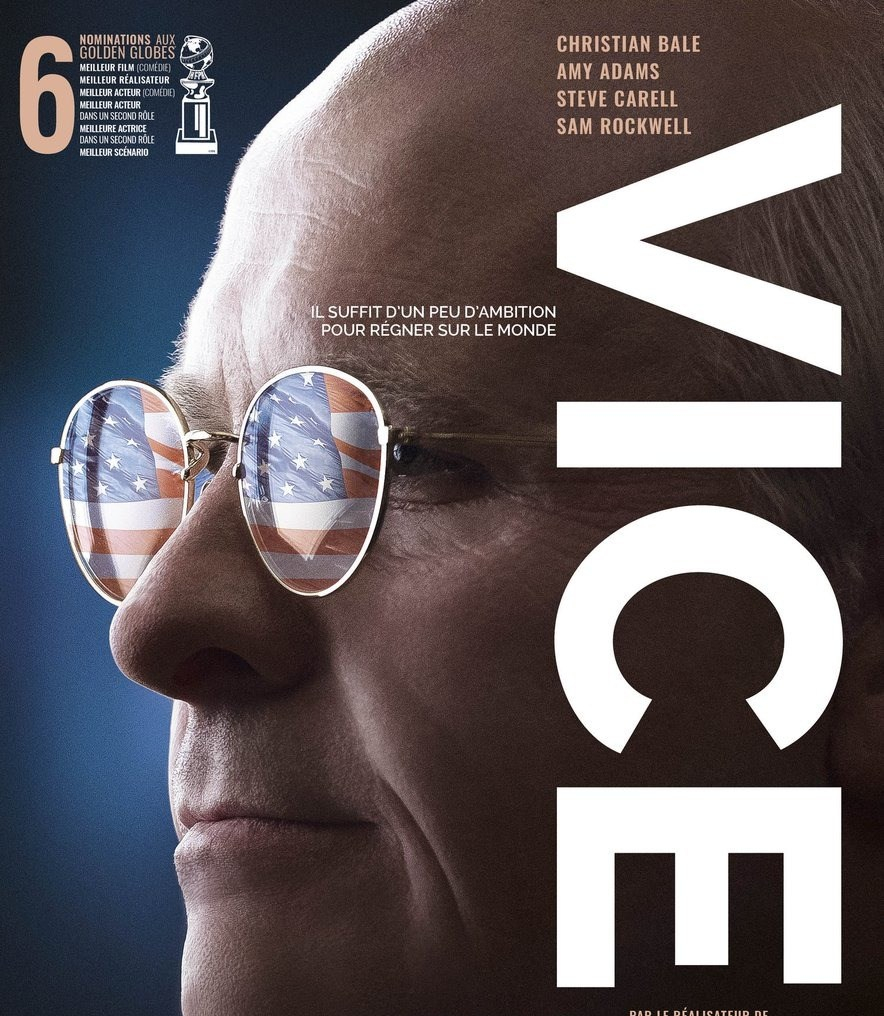
Adam McKay’s Oscar-seeking ‘Vice’

vice_ver4_xlg

Filmmaker Adam McKay has unleashed a cinematic hit piece just in time for Christmas.

McKay is first and foremost a comedian, whose stand-up helped him lock in a gig as head writer for “Saturday Night Live” for two seasons. He additionally formed a creative alliance with actor Will Ferrell, which opened the pathway for his directing of zany comedic romps including “Anchorman,” “Talladega Nights,” and “Step Brothers.”

One of the biggest turning points for McKay, though, came in 2015. He experienced critical acclaim and a whole lot of ataboys from his peers for his Oscar-winning movie “The Big Short.” The political dramedy about the 2008 financial crash was the winner of Best Adapted Screenplay and received four other nominations from the Academy.

Like so many modern-day stars, who have parlayed their success into full-fledged liberal activism in exchange for the secret promise of more accolades and awards, McKay’s latest outing, titled “Vice,” is a biopic of the hateful and distorted kind.

In the film, he re-writes the historical annals of Dick Cheney, who served as Secretary of Defense (1989 to 1993) during the presidency of the late President George H.W. Bush, and who went on to serve as Vice President of the United States (2001 to 2009) in the administration of former President George W. Bush.

As a self-identified Democratic socialist and an endorser of Bernie Sanders in the 2016 presidential election, McKay detests most Republicans, but he appears to have a special animus for one of Hollywood’s primary targets of vilification; that is, Cheney.

The filmmaker was seemingly intent on presenting Cheney’s rise to power from a left-wing perspective and was likely simultaneously motivated to win the affection of fellow GOP-haters within the film critic community and award granting organizations. He assembled actors from his prior successful ventures and enlisted others as well to create a project that is intended to please both film critics and Oscar voters.

To realistically portray Cheney, actor Christian Bale had to undergo a physical transformation through the use of facial prosthetics and weight gain.

Nominated five times without a win and viewed by Academy members as overdue for an award, actress Amy Adams plays Cheney’s wife Lynne. Adams’s role requires her to mature in age as she transitions from a college-years wife to a vice president’s spouse.

McKay’s strategy has already yielded awards season results. With six nominations, the liberal fictional treatment of Cheney’s life in “Vice” has resulted in the highest number of nominations in the upcoming Golden Globe awards. The movie has also garnered nine Critics’ Choice Award nominations and two Screen Actors Guild Award noms, as Oscar talk ensues.

An intriguing thing has coincided with the release of the film, though. Despite praise given for the performances of Christian Bale and Amy Adams, many establishment movie critics are expressing disappointment with the biopic and even some hostility. The critic community apparently loathes Cheney more than McKay does, and some have panned the movie for being too soft on the former vice president.

A Daily Beast review calls the film a “baffling tonal hodgepodge” that “at best marginally humanizes Dick Cheney and at worst lionizes him…” And a review in the San Francisco Chronicle states that “the failure of “Vice” is a failure on its own terms. If Cheney is really as bad as McKay believes — an empty shell of ambition, a destructive and malign force in American life — he warrants serious moral horror, not a smirky treatment that assumes, going in, that we all agree.”

Despite the fact that McKay channeled plenty of hate into “Vice,” his final cut appeared to move in two different directions. Apparently McKay’s humor background and sensibilities compelled the filmmaker to insert a sufficient amount of comedic material, but it may have served to undercut the perception by some that it met the appropriate attack mark.

McKay’s end product seems to be a conflicted work that is caught between comedy and drama, and the movie characters are thereby left without discernible motivations, floating about in a farcical superficial storyline.

Also, by presenting an all-powerful Cheney and an empty-suited Bush, the film unwittingly takes the 43rd president off the hook for the list of wrongs of which the left maintains the Bush administration is guilty.

Audiences get their first glimpse of the former vice president as a heavy drinker and brawler, who is expelled from Yale. He is being cajoled by his wife Lynn into changing his life.

Soon a revved up ambitious Cheney works for a future Secretary of Defense Donald Rumsfeld, who is portrayed in an overly cavalier manner by Steve Carell. Cheney learns the political ropes from Rumsfeld and ends up conning the clueless caricature of G.W., played with zero depth by Sam Rockwell.

The “Vice” version of Cheney easily persuades the supposedly simpleton GOP nominee Bush into an arrangement that hands excessive power over to Cheney, allowing him to be the de-facto leader of the free world. Soon enough Cheney and his cadre of neo-cons slowly take over the reins of the presidency.

Although the movie starts out by informing the audience via an onscreen message that “Vice” is a “true story,” people in the know, including former Bush Attorney General Alberto Gonzales and former Undersecretary of Homeland Security Michael Brown, have pointed out that the film’s central theme of Cheney being the so-called man behind the curtain that called the shots for a feckless president is plain old fiction.
So-called Trump Campaign Finance Violations Are a Fallacy

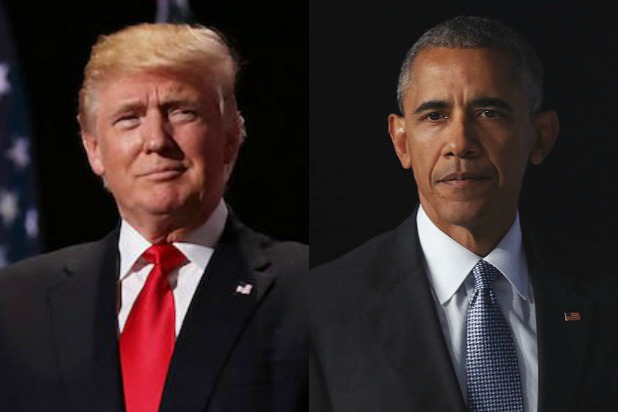
DonaldTrumpBarackObama

Democrat leaders and their allies in the media have momentarily dropped the Trump-Russia collusion narrative from their playbooks and are instead talking about purported campaign finance violations.

In fact, some Democrats such as Rep. Jerrold Nadler, D-N.Y. are attempting to characterize their latest campaign finance meme as constituting an impeachable offense.

To claim that the payments to adult film star Stormy Daniels and Playboy playmate Karen McDougal would be impeachable offenses, one would have to ignore both the law and historical practices.

During former President Barack Obama’s 2008 campaign, some real and arguably more serious violations of campaign finance law were treated as civil matters, resulting only in penalties paid to the Federal Election Commission (FEC).

According to the Washington Post, in 2008 Obama’s campaign allowed donors to use untraceable prepaid credit cards, which are capable of being utilized to evade campaign finance restrictions. Obama’s campaign additionally failed to employ basic verification and security procedures to prevent illegal donations to the campaign.

Years after the 2008 election, the Obama campaign paid a $375,000 fine, one of the largest ever levied against a presidential campaign but otherwise walked away from the violation. Impeachment was never a topic of discussion.

Despite claims by panelists on cable news shows, the current Trump campaign finance narrative contains serious flaws when it comes to the law.

According to the Federal Election Campaign Act, in order to constitute violations the payments to the two women would have to have been implemented “for the purpose of influencing any election for Federal Office” and not for a personal use.

The law stipulates that a personal use, as opposed to a campaign use, occurs when funds are “used to fulfill any commitment, obligation, or expense of a person that would exist irrespective of the candidate’s election campaign.”

President Trump’s company, which is branded with his name, his celebrity status, and his need to protect his family, all point to the personal component of the payments as opposed to a campaign related one. Moreover, the necessity for the payments preceded his announcement to run for president.

Former FEC Commissioner Hans von Spakovsky is in agreement, having told Fox News, “The blackmail threat by Daniels and McDougal to reveal their claims would exist whether or not Trump was running for office.”

Former FEC Chairman Bradley Smith told Fox News, “Even if it [the payment] was intended to have some influence on the campaign, that’s not the standard. The standard is: ‘Does the obligation exist because you’re running for office?’”

Smith wrote in the National Review that the president’s “alleged decade-old affairs occurred long before he became a candidate for president and were not caused by his run for president.”

As Smith noted, engaging in activities such as polling, purchasing ads, and printing bumper stickers are expenditures that seek to influence an election, however “paying hush money to silence allegations of decade-old affairs is not.”

In a somewhat similar but stronger case, which involved former presidential candidate and Democratic vice presidential nominee John Edwards, prosecutors attempted to prove that payments made during a presidential run were intended to assist Edwards’s electoral chances, claiming that they were made to protect his public image. Yet, in that case the prosecution could not persuade a jury that Edwards had made campaign related payments. After an acquittal of the main charge and a mistrial on other charges, the case was not pursued by the Justice Department, and Edwards was never retried.

Seeing a similar result with the case against President Trump, von Spakovsky wrote in a Fox News editorial, “Convicting Donald Trump of a criminal campaign finance violation will be extremely difficult, if not impossible. Just as Edwards was found not guilty, the same is likely to happen to President Trump if he is charged while he is president or after he leaves the White House.”

In a potential prosecution of the president, an additional problem involves evidence of the president’s mindset at the time the payments were made. The level of intent that must be proved in a campaign finance prosecution is that the alleged misconduct is committed knowingly and willfully, which is an extremely challenging element of the case for prosecutors, who must prove that a defendant intended to violate the law.

Because the Federal Election Commission does not consider payments made to a mistress to be an expenditure covered by the federal campaign law, it is not possible for a defendant to have made such a payment with knowledge that it was an unlawful violation.

In other words, the president cannot be charged with a knowing and willful violation of the law under these facts, since the Federal Election Commission and legal experts who served on the commission determined that such payments are not campaign finance violations in the first place.


Republicans Can Win in 2020 If They Step Up Their Game

5b67a7612000009f00378fcc

Legendary football coach Vince Lombardi once famously said, “It’s not whether you get knocked down, it’s whether you get up.”

Some of the Republican rank and file may be feeling a bit punchy at the present. However, there are a lot more positives than negatives upon which to focus, and the goal in 2020 is very realistically achievable.

After loads of liberal media gloom and doom regarding the fate of the GOP, it may be a surprise for some to hear that, despite the midterm election results, Republicans are in a good position to take the White House again, retake the House of Representatives, and maintain the Senate. That is, if they are able to focus on three key elements: voter data, party unity, and strategically significant issues.

According to the hyperventilating panelists who appear on the left-leaning media news shows, President Trump and the Republican Party are in trouble. The recent court filings made by Special Counsel Robert Mueller concerning Paul Manafort and Michael Cohen have the talking heads sneering with delight at the prospect of more GOP misfortune.

The lopsided media, though, is not presenting an accurate picture of the political playing field. Since the Republican Party will lay claim to an even larger Senate majority in 2019, the likelihood of Mueller producing sufficient evidence to convince enough GOP Senators to support impeachment proceedings is highly remote. Twenty Republican Senators would have to link arms with the Democrats for President Trump to be removed from office, which is far-fetched, if not impossible.

With President Trump at the top of the ticket in 2020, the GOP will be running an incumbent for reelection, while the Democrats will have the disadvantage of an open, crowded field with a couple dozen presidential candidates who are likely to want to storm the debate stage.

In contrast with the Republicans, Democrats appear to be having serious problems with their voter data infrastructure. Following the GOP lead, the DNC leadership is attempting to combine all of the voter data from Democratic groups into a single entity. However, disagreement between the national committee and the state parties is preventing the compilation of data from materializing.

The state Democrat parties are still smarting from the unusual rules that favored Hillary Clinton to the detriment of Bernie Sanders, as former DNC interim chair Donna Brazile described in her book.

On the other hand, Republican voter data operations appear to be very strong. The voter database used by RNC and the Trump campaign in 2016 took the political world by surprise. Former Trump campaign strategist Michael Caputo does not believe that Democrats will be able to keep up with the president’s data machine. In fact, Caputo said that the Trump campaign will have a data operation in 2020 that will make the use of data in 2016 “look like child’s play.”

In the 2018 election cycle, President Trump held numerous trademark MAGA rallies in states with contested senate seats during the closing weeks of the midterms. The rallies did more than just assist Republicans in winning races. A well-honed approach to building a voter database was being implemented by the Trump campaign working together with the RNC. The two organizations have entered into a data-sharing agreement that will increase the chances of the GOP winning in 2020.

The MAGA rallies provide the perfect opportunity to sign up new potential voters for future elections.

Republicans are actually showing a greater degree of party unity than the experts had anticipated during the tenure of the Trump administration. Meanwhile the Democratic Party is fractured, with its mostly wealthy far-left wing support of candidates such as Rep. Alexandra Ocasio-Cortez (D-N.Y.), separating from the objectives and desires of the Democrats traditional working class base.

The far left-wing constituency and donor base continually drive the Democrats to focus on social issues, which tend to alienate working-class voters, the same voters who played a significant role in President Trump’s earth shaking 2016 win. With Democrat candidates supporting open borders, new legal definitions of gender, and taxpayer funding for abortion, they risk losing significant portions of their base.

The Trump campaign and the RNC need to solidify their bond with working-class voters, who are alienated by the Democrats’ left-wing pandering. Simultaneously, they need to articulate pro-family and economic ideas such as school choice, increased parental autonomy for children’s education, and real limitations on the abortion industry.

By focusing on and further refining the same factors that resulted in the 2016 victory, Republicans can enhance and utilize a better database, maintain cohesiveness, and center on resonant issues. President Trump will then be reelected by a large enough margin to bring a significant number of Republican candidates alongside him to victory.

Christmas Past, Present, and Future

choir_625_0

For centuries Christmastime in America was widely recognized as a special season of joy, filled with festive celebrations, heartfelt gift-giving, and, of course, transcendent music that conveyed the faith of so many of our nation’s people.

Unfortunately, what has transpired over the last few decades is a rise of suppression of Christian expression, which has become most evident during the time leading up to this brightest of holidays.

In the not-so-distant past, some institutions of higher learning have seen fit to ban from college campuses Christmas decorations, Christmas gifts, Christmas trees, and even the word “Christmas” itself, according to Campus Reform.

Some vexing seasonal disharmony recently arrived courtesy of the Huffington Post. The publication featured a piece that encouraged parents to prevent their children from saying “Merry Christmas” and to replace the phrase instead with “Happy Holidays.”

Other signs of the country’s divide and the tangential erosion of attitudes toward Christian expression can be found in the results of a telephone poll. The poll, which was conducted in English and Spanish by the Public Religion Research Institute and took place from Dec. 7 to Dec. 11, 2016, with 1,004 adults participating, found that Democrats oppose the use of the phrase “Merry Christmas” more than 2-1 over Republicans.

Something that happened recently in Midlothian, Virginia, though, is particularly emblematic of the situation in which Christ Child well-wishers find themselves. The Robious Middle School banned any carols that make mention of the reason for the season for Christian believers, i.e., Jesus.

School administrators reportedly said that the decision had been made to “avoid singing anything of a direct sacred nature” in order to be “more sensitive to the increasing diverse population at the school.”

The problem with the school’s approach appears to center upon the word “sacred.” The end result at Robious Middle School, and at so many other similar public institutions and venues, is that concerts and festivities will be required to celebrate the season without any mention or even a veiled reference to the birth event of the principal character for whom, according to Gallup, 74 percent of the country’s population joyfully awaits.

Despite public disinformation over the subject, public schools are not legally required to remove the name of Christ from Christmas pageants, concerts, and the like. Also, Christmas carols that use his name are not necessarily considered “sacred,” as the Robious Middle School has characterized them. Christmas is part of the cultural and religious heritage of our country, and the national holiday’s songbook is allowed to be presented as such.

The American culture at large has for years simply allowed the secular and the spiritual to peacefully reside, especially within the music realm, through a seamless tapestry of secular and religious beliefs. A beautiful tapestry, when you think of it, which reflects true diversity and authentic tolerance, encompassing respect and understanding of our fellow neighbors’ identities and belief systems.

Perhaps this year Christmas Future could become Christmas Past once again, at least in celebration and song.