Lover of Basketball Phil Jackson Tunes Out

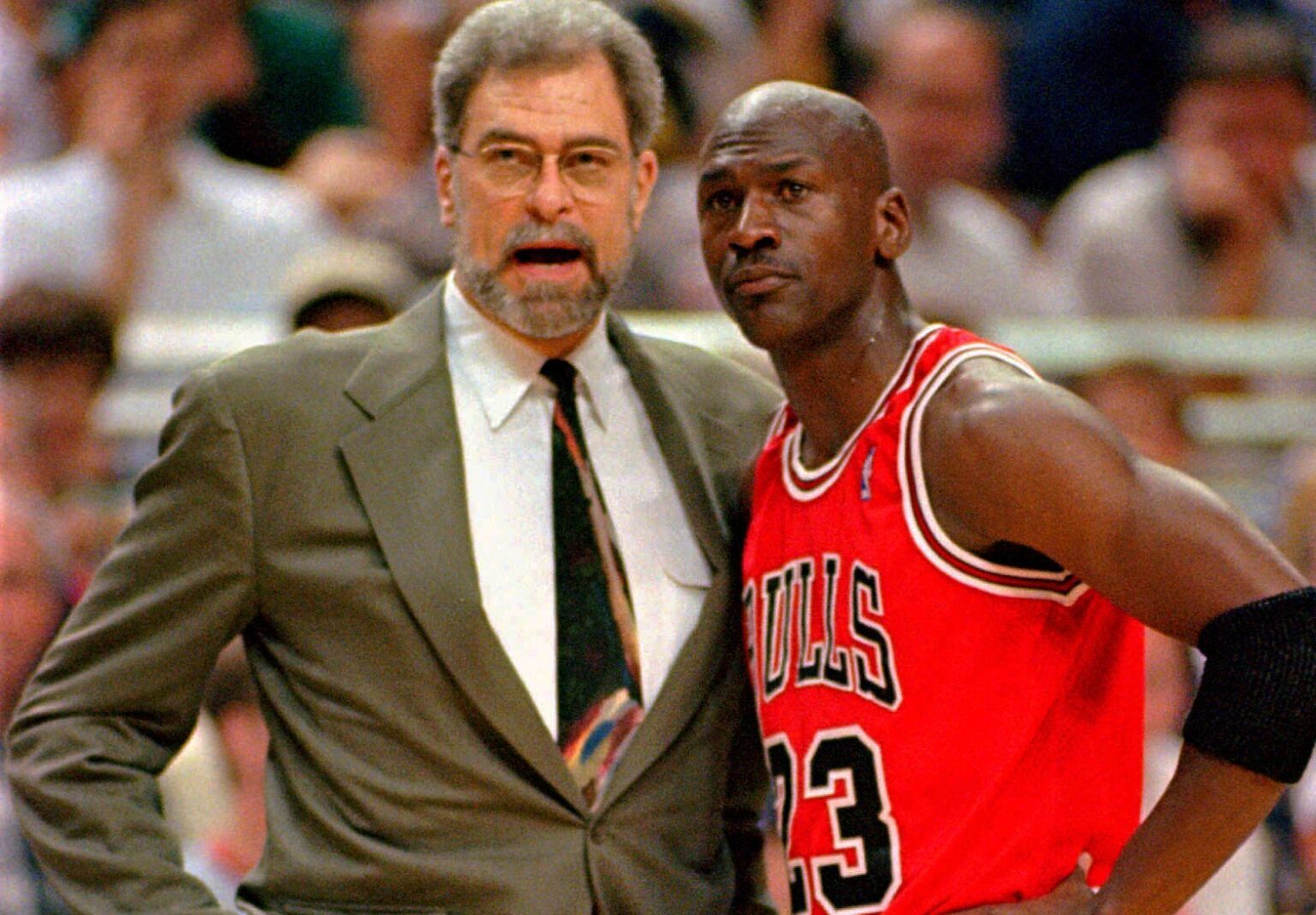
Phil Jackson is the personification of pro basketball. The widely recognized giant of the sport has walked, talked, and breathed the game for most of his life.

Over time he has found himself in the role of player, coach, and executive and has racked up wins with each endeavor.

As a power forward for 12 seasons with the New York Knicks, he won two NBA championships. As the head coach of the Chicago Bulls, he brought home six championships. And during his coaching stint with the Los Angeles Lakers, he secured another five league titles for his team.

Jackson actually holds the all-time highest win-loss percentage of any pro basketball coach. But shockingly, the legendary sports figure now finds professional basketball unwatchable.

This revelation appears to be one more sign that the strange times in which we live are getting stranger by the minute.

Jackson finding basketball unwatchable is like Mark Zuckerberg finding Facebook unusable. Or Taylor Swift finding music un-listenable. Or Meryl Streep finding award shows un-attendable.

In an interview on a podcast called “Tetragrammaton with Rick Rubin,” Jackson let it be known that for him tuning in was no longer fun.

“I am not enjoying the game,” he stated, adding, “There’s a whole generation that doesn’t like the game.”

He stopped viewing NBA games in 2020. That was the year of the lockdown, where playoff games had to be played with no fans in attendance, and viewers had to have their eyes assaulted with woke messages displayed on the backs of players’ jerseys.

Jackson noted that the politically charged phrases had taken the place of players’ surnames.

“They had things on their back like, ‘Justice.’ They made a funny thing like, ‘Justice just went to the basket and Equal Opportunity just knocked him down.’ My grandkids thought that was pretty funny to play up those names. …I couldn’t watch that,” he said.

Plenty of sports devotees reacted in a similar manner. Capturing the sentiments of countless others, Jackson called out the NBA for pandering and virtue signaling, and for having picked the wrong venue for political posturing.

“They even had slogans on the floor and the baseline,” Jackson said. “It was trying to cater to an audience or trying to bring a certain audience to the game, and they didn’t know it was turning other people off.”

To emphasize the point that sporting events should be free from political expression, Jackson said, “Politics stays out of the game. It doesn’t need to be there.”

A glimpse into the former coach’s upbringing gives some insight into how he gained the reputation of an individual who makes decisions within a philosophical context. His parents Charles and Elisabeth were both Assemblies of God ministers.

Along with his two brothers and half-sister, Jackson grew up in a remote area of Montana. Dancing and television were not allowed in their home.

He saw his first movie when he was a senior in high school and attended his first dance when he was in college. In those earlier days, it was assumed that he would eventually become a minister.

During his professional coaching days, he became known for using Tex Winter’s triangle offense, along with the implementation of a holistic approach to coaching, which was influenced by Eastern philosophy. Consequently, sports writers dubbed him the “Zen Master.”

He advises players to express their political beliefs outside of the league and off the court. He points to athletes, such as Bill Bradley, who have successfully pursued political careers. As a result of his outspokenness, he has predictably been attacked on social media.

The world of sports is going the way of Hollywood. Sports execs would be wise to heed the Zen Master’s warning, if they don’t want to suffer the same fate.

After all, the scoreboard doesn’t lie, and neither do the ratings.

The Real Dangers of Artificial Intelligence

Over the past year, the technological development surrounding Artificial Intelligence (AI) has advanced much more rapidly than ever anticipated.

A recent letter, signed by Apple co-founder Steve Wozniak, OpenAI co-founder Elon Musk, and additional AI experts and entrepreneurs, cautioned that a six-month pause needs to be placed on all new AI models.

Time published an article by founder of AI alignment Eliezer Yudkowsky, encouraging the implementation of a permanent global ban and international sanctions on any country pursuing AI research.

The high-profile figures are warning that AI technology is accelerating so quickly, machine systems will soon be able to perform, or even exceed, human intellectual functioning.

A majority of the nation shares the same concerns as the experts. According to a recent Monmouth University poll, 55% of Americans are worried about the threat of AI to the future of humanity.

And according to a Morning Consult survey, nearly half of those who participated would support a pause on advanced AI development.

Because the public has been able to access generative AI platforms that are capable of creating text and participating in human-like conversations, the two-letter acronym itself has been absorbed into the national lexicon.

The term “AI” was coined by a computer scientist back in 1956. At its simplest, Artificial Intelligence combines computer science algorithms with data in order to solve problems.

An algorithm is a list of instructions for specific actions to be carried out by computer technology in a step-by-step fashion. AI utilizes “machine learning,” which enables learning and adaptation to occur without explicit instructions being given.

The type of AI that is presently in use is designed to specialize in a single task; for instance, conducting a web search, determining the fastest route to a destination, or alerting the driver of a car to the presence of a vehicle in the car’s blind spot.

Such functions have oftentimes served to make the lives of individuals better, easier, safer, and so on.

However, it is critical to understand that existing AI is starkly different from the type of AI that is in the pipeline – Artificial General Intelligence (AGI).

This type has a benign sounding title, but it is nothing of the sort.

AGI can, and no likely will, match and even exceed human capability.

The point at which AGI exceeds human intelligence is known as “the singularity.” There have been gobs of books and films that have featured AI themes, based on the assumption that advanced AI could somehow turn against humans.

“2001: A Space Odyssey,” “The Matrix,” “The Terminator,” and “Blade Runner” all contained AGI warnings about things to come.

The fact of the matter is human beings program machines. So it stands to reason that should a given programmer err during the programming process, the resultant technology that is created will be flawed.

When it comes to ethics, the possession, or lack thereof, on the part of the programmer can result in the type of programming that may have catastrophic consequences.

This is because AI possesses the capacity to learn from its mistakes and adjust on its own, It may be able to improve itself to the point where human beings will lose control of their own invention.

The nightmare begins when the stop mechanism no longer functions.

In one of the unimaginable situations, we could have a super intelligent AI advance in a way that runs counter to all human morals, ethics, and values.

This tips into the realm of the spiritual, which requires a great deal of critical thought and further discussion.

For now, a pause is not only advisable, it’s a must.

The BRICS Problem for America

The American dollar has long enjoyed a prominent position in the world, one that has allowed the United States to retain its superpower status and to elevate the quality of life for her people.

Unfortunately, all of this preeminence and prosperity may be coming to a disturbingly unpleasant end.

The BRICS alliance, which consists of Brazil, Russia, India, China, and South Africa, is a group of nations that has assembled together. A newly emerging goal of the alliance is to move away from the US dollar and move towards the creation of a new global currency.

The ramifications of the BRICS coalition are profound, not only for America’s place on the international economic stage, but for the potential future of international relations.

Speaking at a recent economic event in New Delhi, India, Russian Deputy Chairman of the State Duma Alexander Babakov urged India and Russia to form a financial relationship that would include the establishment of a new common currency.

Babakov placed particular emphasis on the notion that both nations should work to obtain a new medium for facilitating payments.

“New Delhi, Moscow should institute a new economic association with a new shared currency, which could be a digital ruble or the Indian rupee,” Babakov said.

He also stressed that China would be a major player in developing a common currency for India, Russia, and China itself.

“New Delhi, Beijing and Moscow are the nations that now institute a multipolar world that is endorsed by the majority of governments,” the Russian official said.

He additionally emphasized the need for a new currency that does not rely on the US dollar or the euro.

“Its composition should be based on inducting new monetary ties established on a strategy that does not defend the US’s dollar or euro, but rather forms a new currency competent of benefiting our shared objectives,” he remarked.

Jim O’Neill, a British economist and a former chairman of Goldman Sachs Asset Management, is recognized for having coined the acronym BRIC, which initially stood for Brazil, Russia, India, and China. He used the term to describe rapidly growing economies that he felt would eventually dominate the global economy.

When South Africa was added in 2010, the set of initials was altered to read as BRICS.

The five BRICS nations have a combined area of 15,346,100 sq. miles (about 27% of the world’s land surface), and an estimated total population of about 3.2 billion (approximately 42% of the global population).

Russia, India, and China are included among the world’s largest countries by population, area, and GDP.

Since 2009, BRICS representatives have met annually at formal summits, where multilateral policies have been coordinated. China hosted the most recent BRICS summit in July of 2022. The next one is scheduled for this coming August.

In a paper that was published in the Global Policy journal in late March of 2023, O’Neill, urged the BRICS bloc to challenge the US dollar’s dominance. He stated that “the U.S. dollar plays a far too dominant role in global finance.”

The effect of the BRICS alliance on international finance and geopolitics is yet to be determined. However, it is clear that the current BRICS nations are attempting to position themselves as an alternative model to the G7.

The G7 is comprised of the world’s most advanced economies, including the United States, Germany, France, the United Kingdom, Italy, Japan, Canada, and the EU.

As a likely consequence of the war in Ukraine, the BRICS countries have distanced themselves from the efforts of the United States and its allies to aid Ukraine. BRICS nations have refused to take part in any of the sanctions against Russia.

Many European and US policymakers are rightly concerned that this group of nations may become less of an economically-oriented institution and more of a geopolitical alliance.

In 2014, with $50 billion in seed money, the BRICS nations launched the New Development Bank as an alternative to the World Bank and the International Monetary Fund. They additionally created a liquidity mechanism called the “Contingent Reserve Arrangement” to assist member states with payments.

The alternatives appear to be attractive to many other developing and emerging economies, and a large number of them have expressed interest in joining.

The BRICS bank has brought in new member nations. In 2021, Egypt, the United Arab Emirates, Uruguay, and Bangladesh became shareholders.

Worldwide interest from other nations in joining the BRICS group is on the rise. The bloc is formulating criteria for new member states and may decide by the end of this year on whether to admit some additional countries.

South Africa is the 2023 chair of BRICS, and South African Foreign Minister Naledi Pandor recently revealed that a number of countries have approached the previous chair, China, about joining.

“The world is changing in very worrying ways. Countries are searching for like-minded partners around the world,” Pandor said at a press conference in Johannesburg.

“Many countries are finding that the approach of BRICS is one [in which] they would like to take part,” she added.

Reportedly, the list of potential new BRICS members includes Saudi Arabia, the United Arab Emirates, Egypt, Algeria, Argentina, Mexico, and Nigeria. By brokering a peace deal between Saudi Arabia and Iran, China paved the way for both nations to join BRICS.

A multipolar economic order seems to be advancing quickly, which is expected to have serious implications for America.

If the US dollar loses its position as the reserve currency of the world, this would mean a loss of more than just economic power and influence.

A new global currency could make it even more difficult for the US to enforce sanctions, which it uses regularly as an alternative to military action.

A global shift away from the US dollar may lead to far less geopolitical power for the United States.

It may also constitute a grave threat to the geopolitical stability the world has experienced up until now.

Stars of ‘Jesus Revolution’ Ride the Heavenly Wave

Liberals mock it, mainstream media critics slam it, and jaded journalists sneer at it. But “Jesus Revolution” just keeps beating every benchmark.

With a few weeks running under its belt, the Lionsgate faith-based film just sprinted past $47 million in domestic box office, simultaneously out-grossing the combined total of four of this year’s Best Picture Oscar nominees.

Directed by Jon Erwin and Brent McCorkle, the little flick with a $15 million budget has Hollywood execs green with envy over its ample profit margin.

In order to raise awareness and interest in the film prior to its release, the PR team scheduled lots of church and university screenings. The strategy paid off big-time, especially at the movie’s debut where it was projected to bring in $7 million and instead more than doubled expectations with its $15.5 million take its first weekend.

“Jesus Revolution” tells the true story of the national spiritual awakening that occurred in the late 1960s and early 1970s. It has officially become Lionsgate’s highest-grossing post-pandemic film since 2019.

As is the custom in the entertainment business, when a project experiences this type of success, opportunities tend to multiply for the lucky folks involved.

The filmmakers recently announced the release of another faith-based movie, which is set for later this year. The movie’s lead character is played by two-time Oscar-winner Hillary Swank.

Casting Swank in the starring role was quite a coup. Not only has the actress garnered two Academy Awards for Best Actress, Time once named her as one of the 100 most influential people in the world.

After winning her second Oscar, Swank famously said, “I don’t know what I did in this life to deserve this. I’m just a girl from a trailer park who had a dream.”

The upcoming movie, titled “Ordinary Angels,” tells the real-life story of a struggling Kentucky hairdresser, who helps rally a community to come to the aid of a widowed father to help save the life of his gravely ill little girl.

“I was drawn to this beautiful true story because it’s such a powerful reminder that angels reside everywhere among us. And that faith, hope, grit, and positivity are all powerful fuel for miracles,” Swank said in a statement.

The backdrop for the hairdresser’s heroism is a region that has been devastated by an immense snowstorm, which occurs during the record cold wave of 1994. The father is pursuing a life-giving liver transplant for his daughter.

“Ordinary Angels” has a lot of connections to “Jesus Revolution.” The film is directed by one of “Jesus Revolution’’’s screenwriters, Jon Gunn. It is co-written by “Jesus Revolution” director Jon Erwin. And it will be released by the same company that brought the public “Jesus Revolution,” Lionsgate.

“Ordinary Angels” also features Nancy Travis of “Last Man Standing.” And Oscar nominated actress Meg Tilly of “Agnes of God” and “The Big Chill” fame has a co-writing credit for the screenplay.

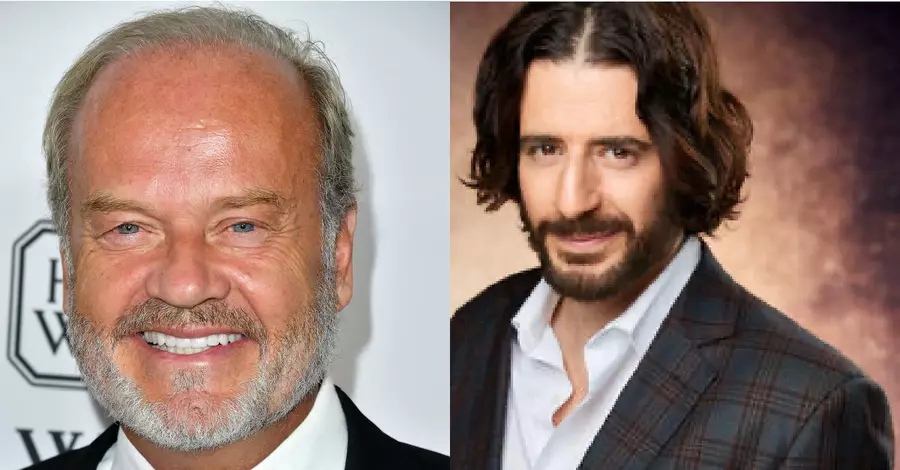
Meanwhile Kelsey Grammer, the star of “Jesus Revolution,” and Jonathan Roumie, the co-star of the film, have new projects in the offing.

Grammer’s career has been seriously elevated, due to his brilliant portrayal of Pastor Chuck Smith as the legendary evangelist who pilots the Christian revival of the late 1960s and early 1970s.

The signature hit sitcom that established Grammer’s stardom, “Frasier,” has been rebooted by Paramount+. Grammer’s character, Dr. Frasier Crane, is an on-the-air psychologist, who comes back to Boston and now has to deal with unexpected life challenges. The “Frasier” reboot boasts a fresh cast.

After plenty of internet speculation by fans of the series, a few weeks ago the reboot was confirmed.

The original co-stars, which include David Hyde Pierce (Niles), Jane Leeves (Daphne), and Peri Gilpin (Roz), are not counted among the cast of the reboot. In fact, the only returning original cast member is Grammer himself.

The new series will feature Jack Cutmore-Scott as Frasier’s son Freddy Crane, who is expected to bring in elements of the beloved Frasier dad character Marty Crane, a role that was portrayed by John Mahoney, who passed away in 2019.

Unfortunately, no release date has yet been set for the “Frasier” reboot, but it is likely that the series premiere will be slated for late 2023 on Paramount+.

Nothing but good things also seem to be on the horizon for Grammer’s co-star Roumie, who has become a favorite faith-based actor.

Not only is he fresh on the heels of his success in “Jesus Revolution,” he is the star of the largest fan-supported entertainment project of all time, “The Chosen,” a dramatic streaming series about the life of Jesus Christ (portrayed by Roumie).

The powerful United Talent Agency (UTA) took note of Roumie and signed the faith-based phenom to a multi-year deal.

Brendan Fraser’s Inspirational Comeback

During last Sunday night’s Academy Awards ceremonies, an emotional Brendan Fraser won his very first Oscar. He took home the Best Actor trophy for his role in the movie “The Whale.”

In his acceptance speech, he made reference to his unusual career trajectory.

“I started in this business 30 years ago, and things didn’t come easily to me, but there was a facility that I didn’t appreciate at the time until it stopped,” he said.

The actor achieved fame and fortune for his compelling roles in a host of hit movies. In his “Encino Man” breakthrough role, he portrays a caveman who is revived out of his frozen state and upon awakening finds himself in the modern world.

Best known for his starring role in “The Mummy” franchise, Brendan appeared to have exited for a fairly long stretch from the entertainment industry as well as the public square.

Lots of folks took note of his extended absence, but they also noticed his amazing reemergence. Only this time he is holding an Oscar in his hand.

Those in the know understood why the career of the talented and successful actor had come to an abrupt halt.

The back story of his disappearance and reappearance provides insight into one of the darker sides of Hollywood. Thankfully for Brendan, some bright spots were ahead.

His is a tale of suffering, rejection, and eventually redemption.

Like a number of other action stars, Brendan has routinely decided to perform many of his own stunts in both his action and comedy roles. The decision turned out to have some major consequences though, taking a steep toll on his body.

He spoke candidly about having to deal with serious pain as a result of his work in the 2008 film “The Mummy: Tomb of the Dragon Emperor,” as well as previous films.

“I was put together with tape and ice… Screw-cap ice packs and downhill-mountain-biking pads, ‘cause they’re small and light and they can fit under your clothes. I was building an exoskeleton for myself daily,” he said.

Injuries would force him to undergo several surgeries over a period of seven years, including a partial knee replacement, a laminectomy, lumbar surgery, and vocal cord repair.

In addition to physical suffering, he shared that his world had been shaken by a sexual assault.

In 2018 he revealed that back in 2003 he had been sexually assaulted by an individual named Philip Berk, who was the then-president of the Hollywood Foreign Press Association, the organization that votes for the Golden Globe Awards. Berk denies the allegation.

Brendan explained that he had “played by the rules up until that point,” adding, “I felt like, okay, now, suddenly, I’ve been violated. And it has gone too far. And I will no longer abide this.”

He also said that the incident made him “retreat” and “feel reclusive.”

Interestingly, there is a kind of consensus among many entertainment writers and social media users that he was actually blacklisted from Hollywood because of the sexual assault allegations.

He himself alluded to the notion, saying, “I don’t know if this curried disfavor with the group, with the HFPA. But the silence was deafening.”

“The phone does stop ringing in your career, and you start asking yourself why. There’s many reasons, but was [this] one of them? I think it was,” he said.

He also characterized his acting work as having “withered on the vine.”

Much like the arc of a great script, Brendan’s real life story would be redirected, thanks to a unique movie role.

Securing the lead acting part in “The Whale” would end up being a monumental turnaround event in his life.

In his acceptance speech at the Oscars, he expressed heartfelt gratitude to the director of the film, stating, “I’m grateful to Darren Aronofsky for throwing me a creative lifeline and hauling me aboard the cruise ship ‘The Whale.’”

For him, or for any actor, the part that Brendan plays is a most unusual one. He took on the challenging role of playing a reclusive, precariously overweight English teacher.

Although many in the film critic community took issue with the movie itself, both the critics and the public loved Brendan’s portrayal.

At the 2022 Venice Film Festival where “The Whale.” premiered, the actor received a standing ovation. And in addition to an Academy Award for his artistic endeavor, he also garnered a Screen Actors Guild Award and Critic’s Choice Movie Award.

It’s all so remarkable, really.

The individual who seemed to have been exiled from the entertainment community got a golden return ticket back.

Kelsey Grammer Is the Preacher Man in ‘Jesus Revolution’

In its debut weekend, the new Lionsgate film “Jesus Revolution” managed to exceed all monetary expectations, more than doubling box-office estimates in North America.

The movie’s success has not only stunned the entertainment industry by soaring into third place in ticket sales, but it has also gotten sterling reviews from viewing audiences.

Providentially the film’s opening comes at a time when a bona fide Christian phenomenon has been taking place.

Now known as “The Asbury Revival,” tens of thousands of young people have been gathering together at Kentucky’s Asbury University for non-stop prayer, song and praise to heaven.

The Asbury awakening experience has been spreading around the globe, spontaneously igniting crowds at colleges, theaters and sports stadiums. Throngs of ardent worshipers are refocusing their lives and looking to a higher power.

Movie theaters in which “Jesus Revolution” has been shown are having similar, unprompted worship activity that cannot be contained. Attendees are bursting out in spontaneous prayer, and many end up making commitments to follow the Broken Road.

“Jesus Revolution” tells the true story of Calvary Chapel founder Chuck Smith, the highly influential and beloved Christian leader, pastor and teacher.

Never wanting personal credit but rather always giving the glory to God, Pastor Chuck was the humble leader of the “Jesus Movement,” the phenom of its time in the late-1960s and early-1970s. He went home to be with the Lord in 2013.

A lover of The Word, Pastor Chuck planted the “seeds” for the historical revival. The first Calvary Chapel was located in Costa Mesa, California, and many more Calvary Chapels were soon to follow.

The film’s title was taken from a 1971 Time magazine cover, where the two words made major headlines.

Based on a book of the same name, the movie follows pastor-in-waiting Greg Laurie (played by Joel Courtney), Christian flower child Lonnie Frisbee (played by Jonathan Roumie), and lead character Pastor Chuck Smith (played by Kelsey Grammer), as the three form what would come to be looked upon as a watershed spiritual awakening.

As a result of the efforts of Laurie and Frisbee, in the late 1960s Pastor Chuck finds that his Southern California church is suddenly overflowing with hippies, who are seeking an encounter with the God of the Bible.

Particularly gifted in the art of storytelling and blessed with a professional narrator’s voice, this was a pastor who was kind, gentle and irrepressibly joyous.

What better material for the master storyteller than The Bible? He took the congregation through The Good Book line by line, cover to cover, multiple times, and the people loved it. I was privileged to be one of them.

In both real life and now on the big screen, Pastor Chuck is the perfect greeter to welcome young truth seekers into the Christian community.

The film’s actual archival footage of Laurie, Frisbee and Pastor Chuck preaching to massive gatherings is a moving reminder of the spiritual power of revival.

The film was theatrically released in the United States by Lionsgate on February 24, 2023. Entertainment companies had forecasted that the faith-based film would bring in around 6 to 7 million dollars in revenue in its opening weekend.

But remarkably, “Jesus Revolution” took the third place slot in the weekend box office, with more than 15.5 million dollars. It actually played to packed houses, taking in almost $6,300 per theater.

The critics predictably gave the movie mixed reviews. Conversely, filmgoers themselves gave “Jesus Revolution” an A+ CinemaScore and a 99% Rotten Tomatoes rating.

The film’s director Jon Erwin made history by obtaining four A+ CinemaScores, more than any other filmmaker since the ratings began. Erwin had previously received the highest CinemaScore rating for “American Underdog,” “I Can Only Imagine” and “Woodlawn.”

The industry is struggling to explain why this film surpassed box-office expectations. It may have to do with the personal relationship that Christians have with their Savior, which they oftentimes keep to themselves until the right moment presents itself. Like enjoying a meaningful movie together.

Box-office predictors may also have underestimated the star power of Kelsey, the actor best known for the lead role in the long-running television sitcom “Frasier,” which is still going strong in syndication. His expert acting skills, length and breadth of experience, and unapologetic Christianity come to the fore in his Pastor Chuck portrayal.

Kelsey turned out to be a brilliant casting decision, not only because the resonant baritone voice that he possesses is so reminiscent of the pastor he portrays, but also because he’s the real deal when it comes to his Christian faith.

When he spoke during a recent interview about his portrayal of Pastor Chuck, he described his faith walk in a way in which a lot of folks are able to relate.

“I’ve had hiccups. I’ve had some tragic times,” Kelsey said.

He noted something that is a common struggle for those seeking God, particularly when individuals are going through difficult times.

“I have wrestled with those and worked my way through them: sometimes rejecting faith, sometimes rejecting God even, in a period of being pretty angry about it, like, ‘Where were you?’…,” he said.

Kelsey concluded with personal testimony that is unequivocal and at the same time relatable.

“I have come to terms with it and have found great peace in my faith and in Jesus. It’s not cavalier. Jesus made a difference in my life. That’s not anything I’ll apologize for,” he said.

To put it mildly, today’s Hollywood is generally less than friendly toward people of faith, especially Christians.

Leave it to Kelsey to go where most stars dare not tread.

Restore Newsmax to DirecTV and Score a Win for Our Free Speech Rights

To truly amass power, a would-be autocrat or totalitarian regime will typically suppress any criticism or dissent that might emanate from those who may wish to challenge such authority.

How is the sinister goal of silencing vast numbers of individuals or organizations reached? By controlling and/or eliminating the free flow of news and information within a society.

Examining Newsmax’s removal from DirecTV’s platform is critical in understanding what has happened to the Fourth Estate, what stage in the totalitarian process we are presently in, and what are the means by which we can make our way back to freedom.

In a 2020 Atlantic article, which was written by Harvard law professor Jack Goldsmith and University of Arizona law professor Andrew Keane Woods, and recently referenced by legal scholar and law professor Jonathan Turley, the article’s authors stated that “in the great debate of the past two decades about freedom versus control of the network, China was largely right and the United States was largely wrong.”

Characterizing “significant monitoring and speech control” as “inevitable,” the authors also determined that “governments must play a large role in these practices to ensure that the internet is compatible with society norms and values.”

This translates into the First Amendment’s complete abolishment.

It is imperative therefore to focus on the recent action by DirecTV (AT&T’s satellite TV provider) in removing Newsmax (the fourth largest cable news channel) from its network, and doing so on the heels of the similar earlier removal of One America News from its lineup.

Twitter owner Elon Musk opened the eyes of so many with the release of the “Twitter Files.” These are internal messages that demonstrate the company, under previous ownership, interacted with government and law enforcement officials to block or restrict prominent right-of-center accounts.

To the rescue have come some heroic office holders that are currently working, via policy and law, to rescue free expression from the jaws of suppression.

The attorneys general of Missouri and Louisiana have filed a lawsuit in Federal District Court in Louisiana against the White House and dozens of government officials, alleging that they have been coercing media to censor political criticisms, which is in direct violation of the First Amendment of the Constitution.

The outcome of the case is part of the valiant effort to restore the First Amendment to its proper place, and to also expose the “disinformation” ruse.

The attorneys general are responding to recent revelations that indicate news media companies, digital platforms and social media companies have worked in tandem with government officials to discriminate against the free expressions of their political opponents.

Andrew Bailey, Missouri’s new attorney general, was blunt in his language regarding administration officials.

“When, in the public forum, there is speech they disagree with and does not align with their political narratives they then collude with and coerce Big Tech’s social media to take that speech down.”

Via the discovery process attendant to the lawsuit, the depositions of administration officials and the production of documents have yielded evidence, which points to explicit and repeated censorship.

The legislatures of Florida and Texas have stepped into the free speech fray by passing new laws that help prevent digital platforms from removing content that is based on viewpoints involving politics, policies and the like.

The new Republican majority in the House has formed a select subcommittee to investigate what chairman Rep. Jim Jordan, R-Ohio, described as routine government violations of the First Amendment’s protections.

Legislators have subpoenaed top tech executives of some of the tech industry’s biggest companies. They are conducting a probe into whether there was collusion between Silicon Valley and Washington, D.C. to suppress free speech.

Letters demand documents and communications, including any White House communications related to the regulation of content between the companies and administration officials.

Said documents and communications are being sought from Google CEO Sundar Pichai, Amazon CEO Andy Jassy, Apple CEO Tim Cook, Meta CEO Mark Zuckerberg and Microsoft CEO Satya Nadella.

Perhaps legislators will consider adding the names of the executives who run DirecTV and AT&T to the list.

“Congress has an important role in protecting and advancing fundamental free speech principles, including by examining how private actors coordinate with the government to suppress First Amendment-protected speech,” Rep. Jordan’s office indicated in a statement.

So the free speech battle lines have been drawn. The fight to restore free speech in the digital media realm brings up a simple question.

How much ideological discrimination of speech should a free people tolerate?

Here’s the simple answer.

None.