Transhumanism and the Abolition of Free Will

What is free will?

It is the ability to act at one’s own discretion, to make choices of one’s own volition.

Within the earthly realm, it is actually a prerequisite to human rights, to the pursuit of happiness, and to true liberty.

In America we have oftentimes taken the gift of free will for granted. However, when we experience the loss of this treasure, in ways great or small, we are suddenly cognizant of how crucial it is for us to safeguard it always.

Elite leaders, who are part of influential global organizations, dream of a future in which the world is no longer populated by human beings as they are currently known.

Instead “new human beings” would consist of an amalgam of human as well as high-tech components. This would likely result in the manufacturing of synthetic creatures devoid of the remnants of free will.

The notion of a super-humanity, i.e., one that is theoretically enhanced via the merger of people with technological parts, is known as transhumanism.

Transhumanists are supposedly looking to convert human beings into creatures with amplified intellects and increased vigor.

More than anything, though, transhumanists seek to extend human life indefinitely.

In other words, they are on a quest for immortality.

Transhumanists see their form of eternal life being brought to fruition via the uploading of themselves into Artificial Intelligence hardware.

Oxford professor Nick Bostrom wrote that transhumanism is “a loosely defined movement…that can be viewed as an outgrowth of secular humanism and the Enlightenment.”

Many transhumanists are actually enamored with the whole notion of an immortal cyber-being, one in which the human intellect has been separated from the physical body and the “person” has been uploaded into computer hardware to achieve the ultimate end-goal.

Transhumanists refer to this state as the “posthuman” one.

Ray Kurzweil, a leading transhumanist, forecasts a world in which humans are extinct and the only “life” on earth will be computers.

Like many other transhumanists, Kurzweil’s view is that the universe is merely matter in motion. Our souls and minds are nothing more than bio-computers.

He further posits that his perspective leads to the logical conclusion that there is no essential difference between human brains and computers.

“We’re going to become increasingly non-biological, to the point where the biological part isn’t that important anymore,” Kurzweil stated at a conference about the coming 2045 world.

“Even if the biological part went away, it wouldn’t make any difference,” he remarked.

The pursuit of immortality is happening in plain sight.

Amazon founder Jeff Bezos and others are spending enormous amounts of money on anti-aging technology and treatments that they purportedly believe will allow humans to live forever.

In order to reach their goal of living forever, transhumanists are willing to give up everything it means to be human, including free will.

Yuval Noah Harari of the World Economic Forum stated, “Humans are now hackable animals. You know the whole idea that humans have this soul or spirit or free will, and nobody knows what’s happening inside me, so whatever I choose, whether in the election or whether in the supermarket, this is my free will – that’s over.”

The idea of humanity devoid of free will was featured in the 1948 novel, Walden Two, written by father of behaviorist psychology B.F. Skinner.

Skinner’s utopia was inhabited by people who were completely under the control of operant conditioning. In this fictional community, everyone is content because all have been fully conditioned to respond to their constraints with pleasure.

Individuals are ruled by elite experts who program them to pursue entertainment and leisure in controlled harmony. Of course, it is a world that is devoid of free will as well as representative government.

Similarly, Brave New World, the 1932 dystopian novel by Aldous Huxley, imagines a global government whose citizens are environmentally engineered into a blissful servitude. This is accomplished through reproductive technology, bioengineered drugs, and psychological conditioning.

Skinner’s Waldensians and Huxley’s 26th Century Londoners lack some very basic human attributes. Since they have become automatons they no can longer experience the transcendence of friendship, courage, self-sacrifice, love, and more.

Ironically, the folks who are pushing the transhumanist agenda are engaging in an intellectual sleight of hand.

They substitute a counterfeit faith in place of a genuine one.

Transhumanists desire to scan and transfer human consciousness into a machine. But in order for this to be accomplished, they must first come to believe in what could be called “a digital soul.”

Somehow a machine would have to possess the spiritual cognizance that human beings instinctively understand are not a part of the physical world.

Transhumanists have channeled their hope for salvation into an irrational belief.

Contrary to the religious wisdom of the ages concerning the sacredness and dignity of life, they cling to the idea that all of the mysteries of human consciousness can be reduced to mere algorithms.

Caution: If you go down this path, there’s no turning back.

Instead I recommend following the road where free will is the norm, happiness abounds, and life everlasting is waiting for you.

When Hollywood Made the Big Left Turn

The Hollywood tale begins in the 1920s.

It was a time when most major studio heads were decidedly on the conservative side of the political aisle.

So how did the entertainment industry veer into the leftist stratosphere?

Well, the process seemed to begin after some Hollywood-related scandals caused quite a bit of public embarrassment, which prompted the studios to become more proactive in terms of controlling the inner workings of the movie business.

Rather than having to bow to government regulators, the Motion Picture Producers and Distributors of America hired a former U.S. postmaster general by the name of Will Hays to help develop guardrails for movie production.

In 1933, Hays pushed the film industry to adopt what would come to be known as the Hays Code, which established rules that set boundaries pertaining to onscreen depictions of sex and crime.

Films and eventually television content that conformed to the code received a seal of approval upon which the movie-going public could rely, particularly families with children.

A pivotal event occurred in the late 1940s, which resulted in a transformation of the industry itself.

Some of the intellectuals around town, who were purportedly sympathetic to communist ideology, were investigated by the House Un-American Activities Committee.

The Motion Picture Alliance for the Preservation of American Ideals provided to the committee the names of those who were alleged to be communists as well as those who supported communist organizations.

Notable entertainment figures of the time, including Gary Cooper, Ronald Reagan, Robert Taylor, Sterling Hayden, and Edward G. Robinson named names and/or expressed concern about subversive content of screenplays.

Most of the names that were named were those of screenwriters. A select group of blacklisted individuals became known as the “Hollywood Ten.”

Hollywood is still burdened with an obsession over the blacklist era. Movies that deal with the subject are continuously being produced: “Good Night, and Good Luck,” “The Front,” “Guilty by Suspicion,” “Yoo-Hoo, Mrs. Goldberg,” “The Majestic,” and two biopics, both titled “Trumbo” based on blacklisted screenwriter Dalton Trumbo, just to name a few.

At the time of the blacklist and up until the late 1960s, Hollywood was structured along the lines of what came to be called the “studio system.”

This top-down model was controlled by five major movie studios known as the Big Five, and three smaller studios known as the Little Three.

The Big Five was comprised of Paramount, Warner Bros., RKO Pictures, Metro-Goldwyn-Mayer, and 20th Century Fox.

The Little Three were United Artists, Universal, and Columbia Pictures.

Interestingly, today’s largest and most powerful company, Disney, was not part of either the Big Five or the Little Three.

The studio system, as well as Hollywood’s Golden Era, took a hit both in power and influence as a result of a landmark Supreme Court decision, United States v. Paramount, an antitrust case.

Originally filed a decade earlier, the landmark case shocked the entertainment industry with language that called for the complete separation of ownership of movie theaters from film production and distribution, effectively terminating the studio system.

This legal decision, along with the continuing backlash against the blacklist, ended up being the catalyst for Hollywood’s extreme leftward tilt.

The studios opened up to independent filmmakers, and by the early 1960s the Hays Code had been replaced by a rating system that had been implemented by the newly formed Motion Picture Association of America, the same rating system that the industry uses to this day.

A new breed of filmmakers began to produce titles with defiant, rebellious, and anti-conventional themes, such as “Easy Rider,” “Midnight Cowboy,” and “Carnal Knowledge.”

By the late 1970s, its metamorphosis was evident. Hollywood continued over the years to become ever more left-wing, which cultivated the soil from which the unimpeded weeds of wokeness grew.

So here we are stuck with the 96th Academy Awards ceremony that recently aired, which, among other things, had imposed a set of DEI rules for a nominee to qualify for the Best Picture Oscar.

Needless to say, the DEI rules are at a minimum a profound obstacle to the creative process and another truly divisive thorn in our culture’s side.

Veteran actor Richard Dreyfuss gave a candid response to the Academy’s DEI standards, after they had been revealed to the public.

“They make me vomit,” Dreyfuss said. “Because this is an art form, it’s also a form of commerce, and it makes money, but it’s an art.”

Is life imitating art or art imitating life?

In a woke world, it’s anybody’s guess.

The Christian Nationalist Label

The unthinkable is happening.

Christians in America are under attack from the establishment media, the Hollywood community, and leftist activists within our country.

It was never supposed to be this way. Not in the Land of the Free.

Apart from our Christian founding, people in America generally tried to maintain a kind of “live and let live” attitude, particularly when it came to an individual’s personal religious and political beliefs.

But somehow this cultural tenet, like so many others, has mysteriously been turned on its head.

Christians are suddenly being tarred with the label “Christian Nationalist.”

So what exactly is a Christian Nationalist?

To the best of my knowledge it is a phrase that is currently being used to foment hatred against those who believe in the New Testament and who view the founding documents of our country as a national treasure.

Things seem to be escalating at a rapid pace. The pejorative has been turned into a meme that is being used to repeatedly massage people’s minds and turn Christians and patriots into pariahs.

It may also be a means to further suppress free speech as well as the free exercise of religion.

Apparently it began last year with verbal assaults that were aimed at House Speaker Mike Johnson.

Speaker Johnson had acknowledged his sincere religious beliefs, and the Christian Nationalist label has been used ever since to defame him and the GOP.

Mainstream news outlets have been releasing hit pieces disguised as journalism.

–Time Magazine published an article titled “The Christian Nationalism of Speaker Mike Johnson.”

–Politico followed suit with a piece called “The Christian Nationalist Ideas That Made Mike Johnson.”

–The New York Times joined in with an article titled “Christian Nationalism Is No Longer Operating Beneath the Surface.”

–More recently, in anticipation of the upcoming 2024 presidential campaign, Vanity Fair featured the title “Trump Allies Hope to Spread Christian Nationalism in the White House.”

–The Nation published an article called “Hit Trump on Theocracy, Not Hypocrisy.”

–The Hill deployed “America is facing a threat of biblical proportion: The rise of Christian nationalism.”

Other mainstream and left-wing outlets spewed out similar messages.

In an MSNBC appearance, Politico national investigative correspondent Heidi Przybyla indicated that a belief in the notion that rights come from God is an indicator of “Christian Nationalism.”

“The thing that unites them as Christian nationalists — not Christians, by the way, because Christian nationalist is very different — is that they believe that our rights as Americans, as all human beings, don’t come from any earthly authority. They don’t come from Congress. They don’t come to the Supreme Court, they come from God,” Przybyla uttered.

Referring to natural law as “a pillar of Catholicism,” Przybyla suggested that although natural law was once used for good, “an extremist element of conservative Christians” now apply it to abortion and same-sex marriage.

Bishop Robert Barron, founder of Word on Fire, a Catholic organization, responded to Przybyla in a video posted on X (formerly Twitter).

After citing language contained in the Declaration of Independence, Bishop Barron pointed out the peril of denigrating the ideas contained within this foundational document.

“It is exceptionally dangerous when we forget the principle that our rights come from God and not from the government,” the bishop said, “because the basic problem is if they come from the government (or Congress, or the Supreme Court) they can be taken away by those same people.”

He then issued an ominous warning: “This is opening the door to totalitarianism.”

Hollywood, too, has gotten into the Christian Nationalist name-calling craze.

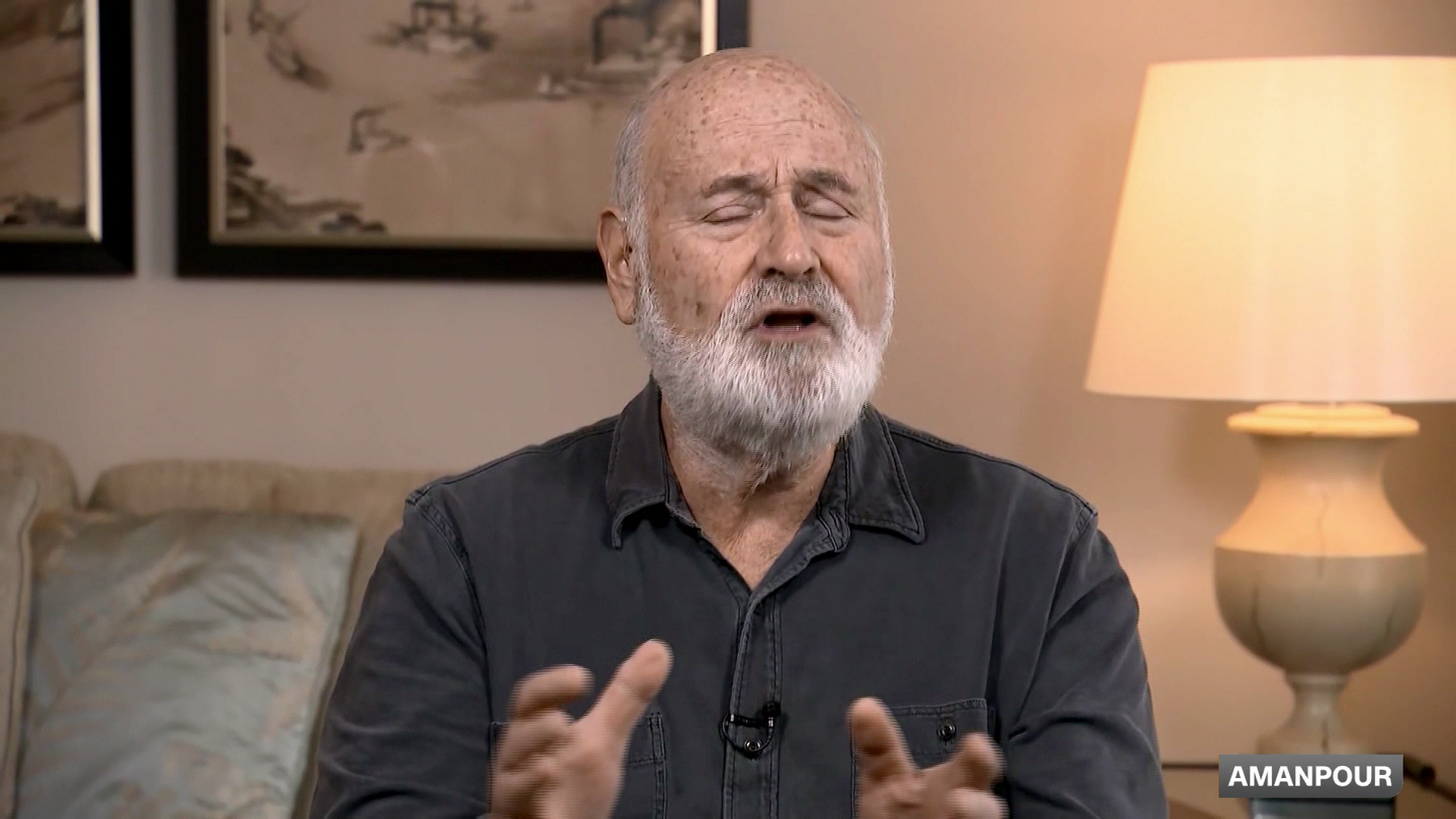
Rob Reiner has taken a lead role in a not so subtle attempt to negatively brand a huge portion of the population.

Acting as a kind of unofficial marketer of the propaganda, he has produced a film that is chock-ful of falsehoods.

He recently promoted his movie on MSNBC by pushing the meme while simultaneously maligning both Johnson and former President Donald Trump. Then he pulled out the race card.

“They believe that this is a white Christian nation,” Reiner said, seemingly implying that “they,” i.e., Christian Nationalists, are inherently racist.

In the documentary itself, respected institutions and organizations, including The Heritage Foundation, Turning Point USA, and Hillsdale College, are also disparaged in the propaganda process.

All of this started me thinking about the “Deplorables” label of the past.

I remembered that it took the air out of their sails when the label was embraced by those who were in support of the former president.

So here goes.

I love Jesus. I love our country. And I love all people.

If that makes me a Christian Nationalist, so be it.

The American Culture and the Overton Window

Are you feeling like the whole world’s gone crazy?

You’re not alone.

So many changes in such a short time and most of the changes don’t seem to have been for the good.

In America, a sizable number of our governmental, institutional, corporate, media, and even religious figures have been operating at warp speed to implement changes within society.

From the classroom to the courtroom to the boardroom and beyond, fundamental philosophy has been supplanted, institutional policy altered, and underlying goals redesigned.

It seems as though the changes that have occurred have impacted each and every facet of our lives. As a result, many of us are suffering, often silently, in mind and in spirit.

In this article I wish to focus on the effect that all of the changes have had specifically on the American culture, changes that a major portion of the population finds unacceptable, and at times downright heartbreaking.

The culture of a nation is generally comprised of a common set of beliefs, values, and behaviors. This common set acts as a kind of a glue that binds people together and holds them together through the best and the worst of times and circumstances.

Like many of you, I have spent plenty of sleepless nights trying to figure out what is happening to me personally as well as what is happening to America and to our people.

In my assessment, America’s culture has undergone an extensive transformation. The transformation is still ongoing, though, so it is difficult to see exactly what the country is transforming into.

The nation, as well as the culture that binds us together, appears to be more and more divided. This is extremely serious because our cultural bond is being tested to its limits.

There is a concept called the “Overton window” that may provide some insight into what has transpired.

The term Overton window is named after policy analyst Joseph Overton.

In the 1990s, Overton found a way of determining the viability of a given idea when presented to a population.

Much like a kitchen window, there are limits as to what can be viewed when one is peering through it.

Picture this if you will:

The Overton window presents ideas on the other side of the glass. But there are limits to the range of ideas that can be, and are, featured at any given point in time.

The culture, with its set of beliefs, values, and behaviors in common, is theoretically peering through the Overton window. It is also reacting to what it sees.

Overton found that the viability of an idea is dependent on where it falls within a range of acceptability to people.

There are powers that be who are working to push ideas beyond the range that the present culture finds acceptable.

For a large number of people, this is causing discomfort, confusion, and oftentimes distress.

For others, especially those who align with the powers that be, the ideas are seen as progress.

The American culture is a tolerant one. It is also one that seeks harmony. And so it is that our people who are negatively affected by the changes that have been implemented so far have arrived at the place of unwilling acceptance.

It is here when another change of perspective is likely to occur, courtesy of the powers that be.

The Overton window shifts.

When the Overton window moves, that which was formerly unthinkable may not only become acceptable, it may also become the new standard.

There are ongoing debates as to whether the Overton window has shifted to the left or to the right politically.

To me, the two things that matter most are the extent to which the window has shifted culturally, and, when it moves again, whether we will be able to put the scattered pieces back together.

The Tale of Two Super Bowl Quarterbacks

There is more to this year’s Super Bowl than meets the eye.

No, I’m not talking about the girlfriend of a certain star tight end that’s sucking up all the oxygen in the stadium. For me and a whole lot of other diehard football fans, we’re in the No Swift Zone.

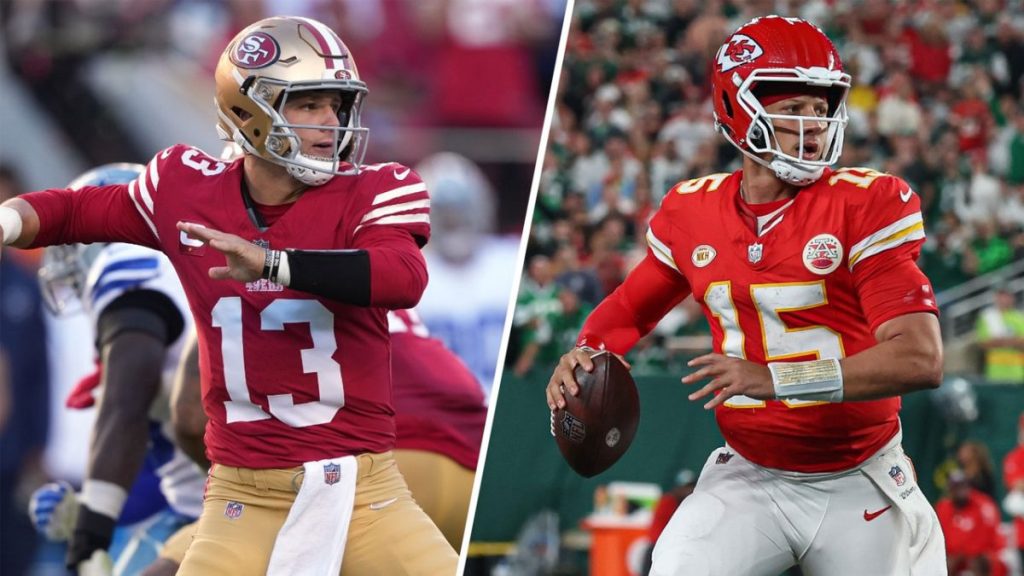
Super Bowl LVIII is a rematch between the San Francisco 49ers, the top seed in the NFC, and the Kansas City Chiefs, the current reigning NFL champs.

The two teams actually met four years ago in Super Bowl LIV.

It was a game during which the 49ers blew a 20-10 lead, the Chiefs scored 21 unanswered fourth-quarter points, the final tally was 31-20, and the Chiefs took home the coveted trophy.

This year’s rematch is really one for the books.

On one side, you have the 49ers aching for the first Super Bowl victory the team has seen in almost 30 years. And on the other side, you have the Chiefs longing for another Super Bowl win like it saw last year.

Shortly after “Queen of Country” Reba McEntire finishes singing the national anthem in Las Vegas’s Allegiant Stadium, two young gifted quarterbacks will take center stage on the gridiron.

Both quarterbacks are known for their creative improvised plays as well as their uncanny ability to befuddle the opposing team’s defense.

Brock Purdy is San Francisco’s second-year QB, and Patrick Mahomes is Kansas City’s two-time NFL MVP quarterback.

In quite a few ways, the two starters are figuratively goalposts apart.

Purdy will line up as the lowest-drafted quarterback to ever start a Super Bowl.

He was the 262nd and final pick of the 2022 NFL Draft. The media had even nicknamed him “Mr. Irrelevant” for his overlooked arrival after a college career at Iowa State. He only became the starter for the 49ers after two other players suffered injuries.

Ignoring his detractors, he persevered and flourished as a 49ers starter, leading the team to the 2022 NFC title game. Then during his first full year as a starting quarterback in 2023, he played all season long at MVP level.

On the opposite side of the field will be Mahomes.

The Kansas City Chiefs traded up to select him in the first round of the 2017 NFL Draft.

Since becoming the Chiefs’ starting quarterback, he has led the team to six consecutive AFC Championship Game appearances.

He will line up as the first QB to have started in four different Super Bowls, all before the age of 30.

Despite their differences, the two QBs have one very significant thing in common. Both have been graced with the amazing gift of faith. Both, too, have been open about it.

From relative obscurity, Purdy was catapulted on to the big stage of professional football. He looked to his faith to find meaning and comfort in order to cope with the multitude of challenges that a celebrity athlete experiences.

In a video for the Sports Spectrum Instagram account, he described the manner in which the teachings of Christ helped set his priorities straight.

“I didn’t want to grip on to this life of, ‘My gosh, I’m in the NFL. I have a starting quarterback role. I can’t lose it,’” he said.

“I was reminded of what Jesus told us thousands of years ago in terms of don’t try to hold on to your life. You’re going to lose it…And the minute you have fame and if you’re trying to chase status and money and all this kind of stuff, you’ll lose your life…,” he said.

Purdy’s opponent Mahomes spoke about his faith after winning the game that propelled him to Super Bowl LVII.

After leading the Chiefs to victory in the AFC Championship, the first thing he did was give gratitude to God.

“I wanna thank God, man. He healed my body this week,” he said in a post-game interview, adding, “To battle through that, He gave me the strength to be out here.”

His faith is central to his life, influencing all that he does on and off the field. His reliance on God is awe-inspiring.

“My Christian faith plays a role in everything I do,” he said. “I always ask God to lead me in the right direction and let me be who I am for His name.”

This got me thinking about when the clock runs out on Super Bowl LVIII and the game is over, one thing is for certain.

A true believing QB will be on the winning team.

Jim Harbaugh: Life Coach

In 1995 the Roman Catholic Pope John Paul II offered his perspective on what he saw as the “culture of death.”

The pontiff wrote about a belief system that had supplanted an existing ideology; one that had for centuries stood as the prevailing moral compass.

Pope John Paul II warned that the underlying assertions of the culture of death could cause the world to “revert to a state of barbarism which one hoped had been left behind forever,” adding that such presuppositions prompt individuals to disregard the sacredness of human life and view the world in a cold utilitarian way.

“In this way a kind of ‘conspiracy against life’ is unleashed. This conspiracy involves not only individuals in their personal, family or group relationships, but goes far beyond, to the point of damaging and distorting, at the international level, relations between peoples and States,” the Pope wrote.

News headlines from around the globe seem to confirm that we are living in the middle of a tug-of-war over the value and meaning of human life itself.

With his extensive experience and faith background, former quarterback and current football coach Jim Harbaugh has a lot of wisdom to contribute to the cultural discussion.

Harbaugh is presently the head football coach for the University of Michigan, having played football there as a student.

While in the NFL for 14 seasons on numerous teams, a memorable stretch had him in the quarterback position for the Chicago Bears.

In 1995 he led the Indianapolis Colts to the AFC Championship Game, was selected to the Pro Bowl, and was honored as NFL Comeback Player of the Year.

Prior to his Michigan stint, he gained experience as head coach for the University of San Diego, where he won two consecutive championships.

He moved on to another head coach position at Stanford, where he led the team to two bowl appearances and an Orange Bowl win.

He also served as head coach for the NFL’s San Francisco 49ers before returning to his present position at his alma mater, the University of Michigan.

As icing on the cake, Harbaugh’s Michigan team just won the College Football Playoff National Championship.

What did the coach do after securing the trophy in the national college football championship?

Well, he didn’t go to Disneyland.

Instead he headed to the annual “March for Life” rally, which took place on the National Mall this past weekend, to lend his support.

Harbaugh is a committed Catholic Christian. He spoke to a gathering of marchers who share his unshakable belief that human life, at all stages from conception through natural death, is a sacred gift.

“Just have the courage to let the unborn be born,” he said. “The testimony of so many here…just so thankful and grateful for that.”

Noting the cold temperature, he added, “This is a great day for a march, it’s a great day for the sanctity of life, and it’s football weather, so let’s go!”

He then introduced former NFL tight end Benjamin Watson, who proceeded to urge folks to engage in “the new fight for life.”

Harbaugh spoke further about the life issue in an interview with the Daily Caller.

“You know, we all talk about human rights. There’s really no rights that are important unless you have the right to life,” he said.

Following the rally, social media commentator Jon Root asked him about his many NFL coaching prospects.

Harbaugh had recently interviewed for a number of NFL head coaching positions and is reportedly receiving offers to come back to the NFL as a head coach.

What does someone as accomplished as Harbaugh do when confronted with tough decisions?

In his case, he looks to his faith and his family for guidance.

“I just take the counsel from God and the Holy Spirit, and Mr. Jack Harbaugh, my dad, and my wife Sarah,” he shared.

“Just taking the advice, just living one day at a time, one day at a time, one game at a time, one play at a time,” he said.

It all sounds like a good game plan in moving the ball forward in life and for life.

Canceling Captain Kirk

The “Star Trek” series made its television debut back in 1966.

The show would prove to be a game changer that would ultimately become a worldwide pop-culture phenomenon.

If only NBC had known.

The network unfortunately canceled the series after a short three-season run. But the saga lives on to this day.

“Star Trek” became a franchise of its own, giving birth to TV reboots, spin-offs, movies, video games, novels, comic books, and so much more.

For those who weren’t around at the start, the show takes place in the 23rd Century, and tells the tale of the starship USS Enterprise and its team of onboard futuristic characters.

In the original series, the mission of the Enterprise is enunciated in dramatic fashion at the beginning of each episode: “To explore strange new worlds, to seek out new life and new civilizations, to boldly go where no man has gone before.”

The lead star of the original series and the figure that truly personifies the “Star Trek” brand is William Shatner.

For three seasons Shatner played the role of Captain James Tiberius Kirk, the charismatic leader of the starship.

He also provided the voice of the animated version of Kirk in “Star Trek: The Animated Series,” and portrayed Kirk in seven “Star Trek” films. He was essential to the establishment of the franchise.

In a strange turn of events, it now appears that Paramount is deliberately trying to redact Shatner’s iconic Kirk character.

The subject recently came up on Shatner’s Twitter/X account, when a follower wanted to find out the actor’s reaction to Sir Patrick Stewart’s announcement that a new Captain Picard movie is in the works.

“I think that a new movie with Sir Patrick is wonderful news,” Shatner graciously wrote.

Another user asked, “But will we ever see Captain Kirk again?”

Shatner replied, “All you have to do is look at the Paramount+ graphics to answer that question.”

Along with his tweet, he posted a picture of “Star Trek Originals,” which included images of characters from across the history of the franchise. Noticeably absent is a picture of Shatner as Captain Kirk.

A third follower asked, “Has anyone at Paramount come out with an official explanation for this MASSIVE FLUB?”

In response, Shatner posted another example of the promotional imagery from Paramount+. Once again Shatner in the Captain Kirk role was nowhere to be seen.

“It’s not the first time it’s been going on for years,” the actor wrote. “It makes no difference to me that a group who think they are ‘enlightened’ (or whatever they think they are) obviously feels threatened by the Kirk character.”

“It’s a character from a 1960’s TV show- get over it,” he added, tweeting, “It it doesn’t bother me in the least.”

“A bunch of self righteous strangers thinking they are sending a message by erasing the past? Who is going to forget? It’s everywhere. It’s so indoctrinated that it will take many generations to be forgotten no matter what they do, Let it be,” Shatner stated.

It’s no mystery that Shatner’s “Star Trek” captain character was given the Paramount snub.

His version of Kirk is the kind that drives the Hollywood woke crowd crazy – a distinctly male leader who is competent, confident, and courageous. And what makes matters worse for them is that fans simply adore him.

The truth is that without Shatner’s Captain Kirk the “Star Trek” phenom would never have been. And after seven decades in film, television, and audio, the 92-year-old actor just keeps on keepin’ on.

In addition to his acting gigs, he is an award-winning horseman and owns a farm in Kentucky where he breeds American Saddlebreds.

In 2021 he found time to venture out into the real-life cosmos, hopping aboard a sub-orbital capsule. At age 90 he was the oldest person to fly into space.

His work ethic is a big part of the values that were instilled in him by his parents. A few years ago he shared with the Sydney Morning Herald his perspective regarding his personal belief system.

“My father and mother had an observant religious life. They went to temple every Sabbath, prayed to God, and I was dragged along. I’m not religious, but I’m spiritual. I read avidly on philosophy and animals, plants and trees; how connected all of life is,” he stated.

His background imbued him with valuable guideposts that are manifest in his life.

“There’s a value system. Giving to people. Being generous and charitable,” he said.

“Star Trek”’s Captain Kirk once uttered the following words: “What is a man but that lofty spirit, that sense of enterprise, that devotion for something that cannot be sensed, cannot be realized, but only dreamed, the highest reality?”

Words from a visionary “Star Trek” script that sound as if they describe Shatner himself.