The Ten Commandments and the Nation’s Heartbeat

Louisiana Governor Jeff Landry recently signed into law a requirement that the text of The Ten Commandments be displayed in public school classrooms.

House Bill No. 71 applies to public schools from elementary to secondary and even post-secondary institutions, with an exemption for charter schools.

The Louisiana bill is the first of its kind to be passed into law, and support is currently building in Texas to pass a similar one.

While other states have attempted comparable legislation, such proposed bills have failed to make it through the legislative processes.

In an effort to emphasize the historical and foundational importance of The Ten Commandments, the Louisiana legislature also added a provision that calls for a four paragraph “context statement” to be posted nearby, stating that the Commandments “were a prominent part of American public education for almost three centuries.”

Even though the legislation does not take effect until 2025, institutions on the left are already pushing back.

— MSNBC’s website recently featured a headline that referred to the legislation as “a grave threat to civic morality.”

— Slate’s headline stated that the law “couldn’t be more unconstitutional.”

— Richmond Times-Dispatch published a piece that characterized the law as “a move toward theocracy.”

— The Intelligencer’s headline read “Christian Nationalism Marches on in Louisiana.”

Gov. Landry indicated that he is looking forward to defending the new Ten Commandments law in court.

“I can’t wait to be sued,” the governor stated, according to The Tennessean.

Apparently, leftist legal groups cannot wait to grant Gov. Landry’s wish.

The American Civil Liberties Union, including the group’s Louisiana chapter, almost immediately announced that it would be filing a lawsuit, as did the Americans United for Separation of Church and State as well as the Freedom from Religion Foundation.

Each of the groups is claiming that the new law violates the First Amendment of the United States Constitution.

It is particularly ironic when groups such as these attempt to censor The Ten Commandments using the First Amendment as their basis, the constitutional amendment that safeguards freedom of religion at its start, prior to mentioning a series of additional rights.

The first part of the Bill of Rights, which memorializes both religious expression and freedom of speech, was penned in a manner that was clearly not intended to be used as a means of restricting the free exercise of said rights.

The Ten Commandments is no ordinary piece of prose, but is instead a historical description and delineation upon which the laws of our nation are based.

The Commandments detail the specifics of the “laws of nature and nature’s God,” which are set forth in The Birth Certificate of America, the exquisitely-worded Declaration of Independence.

The Declaration encompasses the laws that are “written on the heart,” the natural law that the founders of our nation imbued into our system of government, particularly our judicial branch.

The actual reason that the left is engaging in hyperbole with regard to The Ten Commandments may have to do with the challenges that the words within the Decalogue present to the left’s highly flexible standard for human behavior: Moral Relativism.

Rather than offering a situational ethics perspective, The Ten Commandments draw into focus the fundamental basis for the American legal system, which is expressed in the time-honored laws of Louisiana and the other 49 states.

In an April hearing for the bill, State Rep. Dodie Horton pointed out that the display of The Ten Commandments is “not preaching a Christian religion. It’s not preaching any religion. It’s teaching a moral code.”

In 1956, at the New York opening of the iconic film “The Ten Commandments,” director Cecil B. DeMille noted that “The Ten Commandments are the charter and guide of human liberty, for there can be no liberty without the law.”

And without the guardrails that uphold us, our nation’s heartbeat will no longer be heard.

No Equivalency between Trump and Biden Trials

President Joe Biden’s son Hunter was recently found guilty on three criminal charges: Making a false statement in the purchase of a gun, making a false statement in information required to be kept by a gun dealer, and possession of a gun by a person who is an unlawful user of a controlled substance.

After only three hours of deliberation, a Delaware jury convicted Hunter on all counts. Each count carries a maximum fine of $250,000. Additionally, the first son could be sentenced to a maximum of 25 years in prison.

Almost immediately after the guilty verdict had been announced, Democrats and the complicit media began singing from the identical song sheet. Phrases such as the tediously familiar “no one is above the law” echoed through the cybersphere.

Many supposed pundits made comparisons between Hunter’s trial and the unusual Manhattan proceedings, which claimed to convict current GOP presumptive nominee and former President Donald Trump.

First a little background on the current president’s son’s case.

Hunter ended up being tried on gun crimes. But this came about after a federal judge put the brakes on a plea deal that a previous prosecutor had attempted to push through.

The plea deal had been announced in June of 2023. Hunter had agreed to plead guilty to misdemeanor tax offenses through which he would have essentially escaped with a slap on the wrist.

If the deal had been implemented, he would have received two years probation and a “diversion agreement,” which would have enabled him to avoid prosecution on the felony gun charge.

However, U.S. District Judge Maryellen Noreika seriously questioned the agreement. Hunter’s lawyers tried to salvage it but were unsuccessful. Everything culminated in Hunter’s recent Delaware courtroom trial and his swift conviction.

Now for the main distinctions between the two high-profile trials:

— Trump was never offered any deal to avoid being criminally tried. Hunter was offered a very choice arrangement.

— In Trump’s case, the prosecution conflated a bookkeeping misdemeanor into 34 felony counts. In Hunter’s case, despite having possession of a now-authenticated laptop that was purportedly loaded with material indicating potentially serious crimes, the prosecution pared things down to a charge of lying on a gun application.

— Trump found himself in an extremely hostile venue, featuring conflicts of interest, star witnesses with credibility gaps, and evidence that was short on relevance and long on salaciousness.

On the other hand Hunter’s trial played out in a friendly venue, a place where people routinely viewed him and other family members as celebrities, and he wasn’t muzzled with a gag order.

— Lastly, Trump is running for president. Hunter isn’t.

The first son is set to return to the courthouse in late summer or fall 2024, this time in California. He will be facing charges of three felonies and six misdemeanors concerning $1.4 million in taxes.

The prosecution has alleged that he didn’t pay his federal income taxes from January 2017 to October 2020, and that he filed false tax reports to boot.

The back taxes have since been paid.

Under normal circumstances, a case such as this would pose greater potential legal jeopardy for Hunter than the case in Delaware.

But then again, there’s not much that can be considered “normal circumstances” these days, so it’s anyone’s guess what will ultimately happen.

Here’s one thing you can hang your hat on.

There is no equating the Trump and Biden trials.

Not in procedure.

Not in fairness.

Not in guilt or innocence.

Not in outcome.

And not when it comes to the dispiriting effect on our nation.

Upcoming Supreme Court Cases May Help Restore Free Speech on Social Media

The Supreme Court recently announced that it is going to hear two major cases relating to the right of free expression.

Both cases will examine the constitutionality of state laws that were created to prohibit tech companies from discriminating against social media platform users who are ideologically conservative.

At the heart of the cases is Big Tech’s pattern of targeting and eliminating select content.

The passage by state legislators in 2021 of the laws in question came in response to censorship of user-generated content, which was taking place on social media sites.

The Texas and Florida legislatures were acting on behalf of their constituents in using their lawmaking capabilities to try and restore freedom of expression to the portion of the digital world that was being impacted by selective censorship.

It is regrettable, to say the least, that the redacting of factual information, political ideology, faith expression, and the like, which frequently runs contrary to today’s progressive and/or radical narratives, is routine business for a majority of Big Tech companies.

The Texas and Florida legislators engaged in the appropriate processes in an effort to address the censorship problem.

Texas law H.B. 20 bars social media platforms with at least 50 million active users from blocking, removing, or demonetizing content based on a respective user’s point of view. Similar to phone companies, the law re-classifies social media platforms as “common carriers.”

Florida law S.B. 7072 forbids large social media platforms from censoring or banning political candidates and what the law refers to as a “journalistic enterprise.” The Florida bill also mandates that social media companies publish standards for the removal of content as well as for exercising consistency in the application of such standards.

Technology industry groups NetChoice and the Computer & Communications Industry Association have challenged each of the state laws. Members of the groups include TikTok, X, formerly called Twitter, and the owners of Facebook and Google.

The Biden administration joined with the technology groups, arguing that social media platforms’ rights include those of censoring the content of customers.

Two appeals courts have given conflicting rulings over the two state laws. One of the appellate courts upheld the Texas law, but another struck down the Florida statute. In both cases, implementation of the state laws during appeals has been temporarily halted by federal courts.

In May of 2022, the Supreme Court (by a 5-4 ruling) kept the Texas law on hold during the process of litigation.

Justice Samuel Alito was part of a dissenting opinion, which said that the law should be left in place and that the issues were so novel and significant that the Supreme Court would have to consider them at some point. The justice wrote, “Social media platforms have transformed the way people communicate with each other and obtain news.”

Justice Alito added, “At issue is a groundbreaking Texas law that addresses the power of dominant social media corporations to shape public discussion of the important issues of the day.”

The justice also expressed skepticism toward the argument that social media companies have editorial discretion protected by the First Amendment, such as the kind that newspapers and other traditional publishers enjoy.

The aforementioned tech trade groups, along with the Biden administration, are contending that the Constitution protects the social media platforms’ elimination of so-called disinformation.

Tech companies claim that taking away their unfettered right to censor will mean that their platforms will be filled with the vague categories they are claiming pose a danger, e.g. bullying, extremism, and hate speech.

However, the High Court will look closely at the carve-outs that state legislators placed in the laws to permit platforms to perform legitimate functions. These exceptions allow categories of content, such as pornography and foreign government speech, to be removed by the tech companies.

The above mentioned cases, which will be heard in the new nine-month term that recently began, will ultimately answer a single question of utmost importance: Do states have the ability to put a halt to speech discrimination by tech companies?

Social media platforms have become essential communication components of everyday life.

They allow us to connect and interact with individuals, organizations, educational institutions, governmental bodies, health agencies, etc.

Pray that the Supreme Court decides in favor of a free internet so free speech can live.

Lover of Basketball Phil Jackson Tunes Out

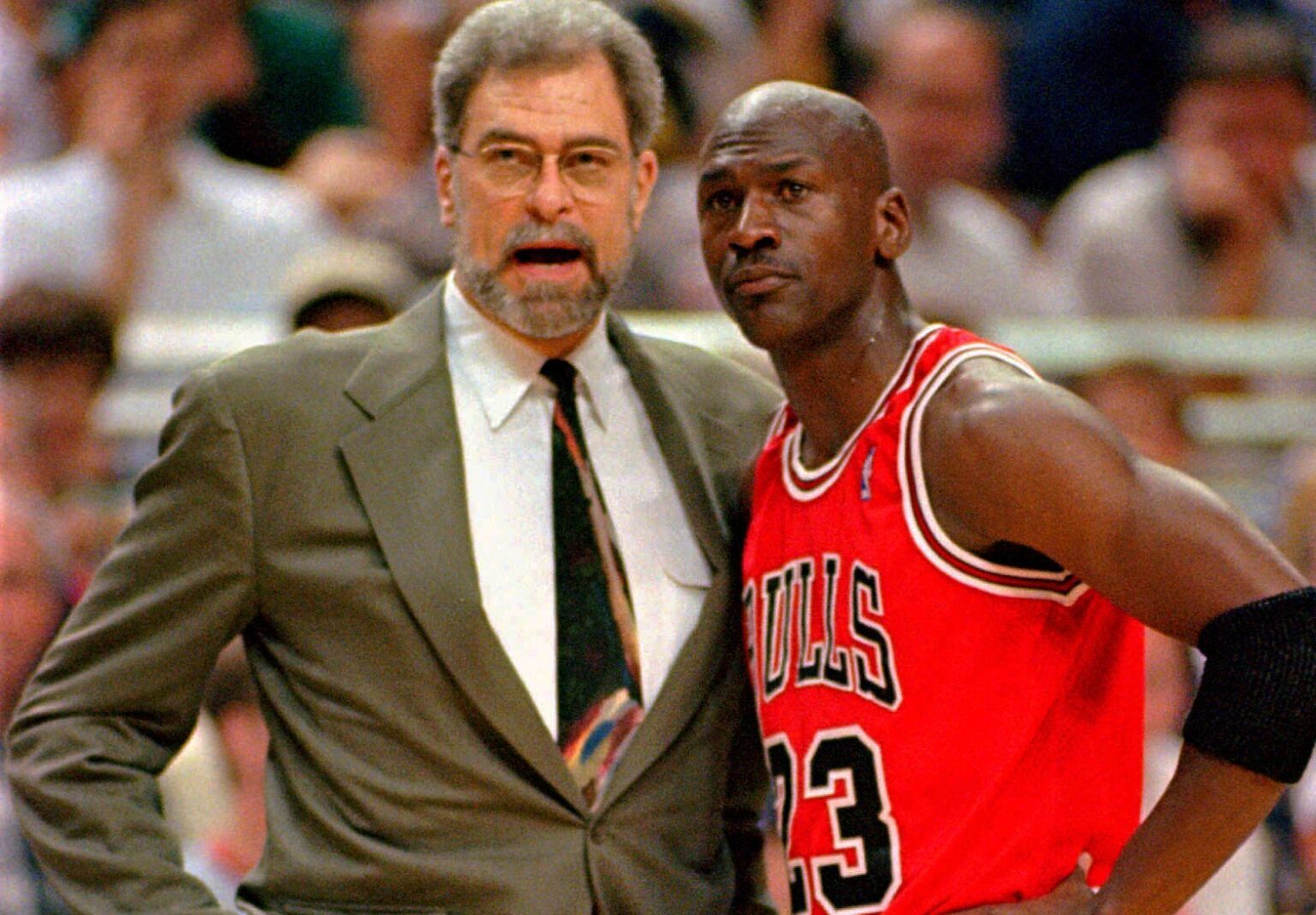
Phil Jackson is the personification of pro basketball. The widely recognized giant of the sport has walked, talked, and breathed the game for most of his life.

Over time he has found himself in the role of player, coach, and executive and has racked up wins with each endeavor.

As a power forward for 12 seasons with the New York Knicks, he won two NBA championships. As the head coach of the Chicago Bulls, he brought home six championships. And during his coaching stint with the Los Angeles Lakers, he secured another five league titles for his team.

Jackson actually holds the all-time highest win-loss percentage of any pro basketball coach. But shockingly, the legendary sports figure now finds professional basketball unwatchable.

This revelation appears to be one more sign that the strange times in which we live are getting stranger by the minute.

Jackson finding basketball unwatchable is like Mark Zuckerberg finding Facebook unusable. Or Taylor Swift finding music un-listenable. Or Meryl Streep finding award shows un-attendable.

In an interview on a podcast called “Tetragrammaton with Rick Rubin,” Jackson let it be known that for him tuning in was no longer fun.

“I am not enjoying the game,” he stated, adding, “There’s a whole generation that doesn’t like the game.”

He stopped viewing NBA games in 2020. That was the year of the lockdown, where playoff games had to be played with no fans in attendance, and viewers had to have their eyes assaulted with woke messages displayed on the backs of players’ jerseys.

Jackson noted that the politically charged phrases had taken the place of players’ surnames.

“They had things on their back like, ‘Justice.’ They made a funny thing like, ‘Justice just went to the basket and Equal Opportunity just knocked him down.’ My grandkids thought that was pretty funny to play up those names. …I couldn’t watch that,” he said.

Plenty of sports devotees reacted in a similar manner. Capturing the sentiments of countless others, Jackson called out the NBA for pandering and virtue signaling, and for having picked the wrong venue for political posturing.

“They even had slogans on the floor and the baseline,” Jackson said. “It was trying to cater to an audience or trying to bring a certain audience to the game, and they didn’t know it was turning other people off.”

To emphasize the point that sporting events should be free from political expression, Jackson said, “Politics stays out of the game. It doesn’t need to be there.”

A glimpse into the former coach’s upbringing gives some insight into how he gained the reputation of an individual who makes decisions within a philosophical context. His parents Charles and Elisabeth were both Assemblies of God ministers.

Along with his two brothers and half-sister, Jackson grew up in a remote area of Montana. Dancing and television were not allowed in their home.

He saw his first movie when he was a senior in high school and attended his first dance when he was in college. In those earlier days, it was assumed that he would eventually become a minister.

During his professional coaching days, he became known for using Tex Winter’s triangle offense, along with the implementation of a holistic approach to coaching, which was influenced by Eastern philosophy. Consequently, sports writers dubbed him the “Zen Master.”

He advises players to express their political beliefs outside of the league and off the court. He points to athletes, such as Bill Bradley, who have successfully pursued political careers. As a result of his outspokenness, he has predictably been attacked on social media.

The world of sports is going the way of Hollywood. Sports execs would be wise to heed the Zen Master’s warning, if they don’t want to suffer the same fate.

After all, the scoreboard doesn’t lie, and neither do the ratings.

Risking It All for the First Amendment, Elon-style

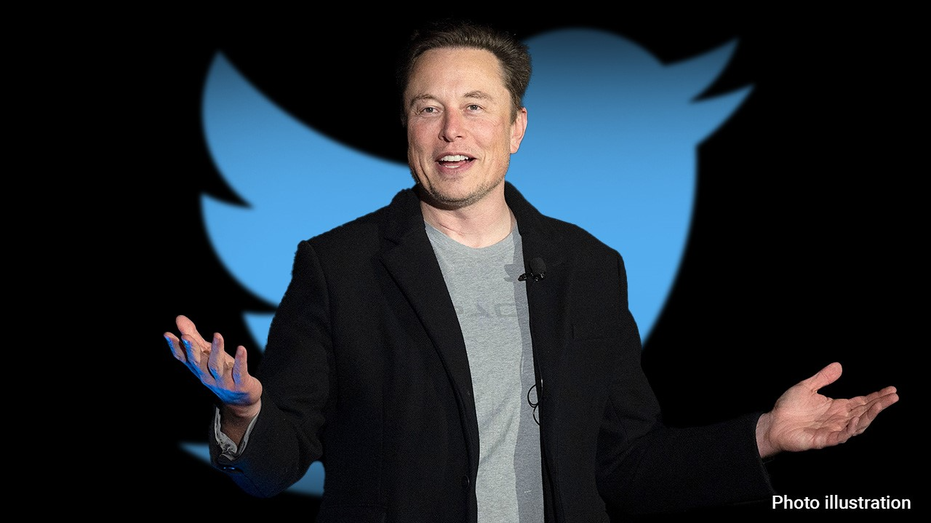
Thanks to Elon Musk’s release of the “Twitter Files,” it is now public knowledge that Twitter’s former executives were directed by government officials and campaign staffers to bury a report that contained information on an international influence-peddling scheme.

The scandal is a huge story, because it involves a Democratic Party nominee for the highest office in the land, just prior to the 2020 election.

Government officials were engaged in a supposed effort to address “disinformation.” However, said officials used social media companies to employ censorship, across media outlets of all types, of a story that was known full well to be accurate.

Among myriad other things, it was an attempt to influence an impending election.

Needless to say, the government’s involvement in the suppression of truth, with knowledge of same, is a violation of the First Amendment.

Although alarming in and of itself, what is perhaps even more disturbing is the tepid reaction at best, and indifferent response at worst, which has been exhibited on the part of the complicit media.

Woke-leaning venues ignored it and left-leaning outlets spun it.

Why does it matter? It makes all the difference in the world to those who seek truth, cherish freedom and love country.

Many press outlets have launched an attack against Elon himself. Personal remarks that have been directed at the CEO have been unfair, and in many cases, defamatory.

The radically intolerable judgmental left is in full takedown mode, characterizing Elon’s actions as those of an ambitious billionaire who seeks ever more wealth and power.

But how does one even begin to evaluate the sincerity of the motives and/or actions of fellow human beings?

One of the ways is to ask the question, What’s in it for them? That is, What do they have to gain?

Equally or even more telling is the question, What do they have to lose?

When we look at Elon’s position in the business world, it’s fairly obvious that he has a whole lot to lose in terms of tangible things. After all, he’s the richest person on the planet.

There’s also the matter of his reputation, an immaterial possession that many value even more than all of the material combined.

Yes, it could easily be said that Elon has risked everything in order to bring this important story to light.

In a recent “Twitter Spaces” appearance, the self-described Chief Twit engaged in a Q and A session.

He was asked a rather odd question about whether he was having any “suicidal thoughts.”

He replied, “I do not have any suicidal thoughts,” adding, “If I committed suicide, it’s not real.”

He also revealed that he perceives a greater risk to his personal safety, due to his widely reported actions at Twitter.

“Frankly, the risk of something bad happening or literally even being shot is quite significant,” he said. “I’m definitely not going to be doing any open-air car parades, let me put it that way.”

No exaggeration. Elon is risking his life, fortune and sacred honor.

When the First Amendment was adopted, the only institution with enough power to inhibit freedom of speech was the government. Now we know that big-tech companies are in on the speech-suppressing act. Whether ordered to or on a whim, they can muzzle us.

The Twitter Files confirm that our government worked directly with Big Tech. It was revealed that regular meetings took place between government and top executives of tech firms.

Thanks to Joe Rogan’s interview with Facebook CEO Mark Zuckerberg, it is now known that the same thing that was going on at Twitter was going on at Facebook.

It may be that some of those who were seeking to silence opposing views believed that they were resisting tyranny. If so, they were deluded. In reality, they were aiding and abetting tyranny.

In the words of Frederick Douglass, “Liberty is meaningless where the right to utter one’s thoughts and opinions has ceased to exist.”

Many believe that after death comes resurrection. Pray it is so with liberty.

Justice Samuel Alito’s Words of Warning on Religious Freedom

Justice Samuel Alito recently delivered the keynote speech at Notre Dame Law School’s Religious Liberty Summit in Rome.

The justice’s participation in the conference came as a surprise to many, since his speaker role had not been announced in advance.

He is one of the present Supreme Court’s most fervent advocates of religious freedom.

As a member of the highest court in the land and as a Catholic Christian himself, he has firsthand knowledge of the importance of faith in a higher power and the freedom to express it, both to the individual and to the greater society at large.

The justice used the occasion of his Rome summit appearance to express his concern over potential effects that may result from a “growing hostility to religion.”

In addition to the highly publicized Roe reversal, the Supreme Court upheld religious rights in a number of rulings in which Justice Alito was with the majority.

Kennedy v. Bremerton protected the right of a high school football coach to lead students in prayer at games.

– Carson v. Makin determined that the state of Maine cannot discriminate in the funding of tuition at religious schools.

Morrissey v. Beru held that anti-discrimination laws cannot force religious schools to ignore incompatible beliefs of teachers.

– Shurtleff v. Boston ruled that Boston’s City Hall was not entitled to maintain a policy disallowing religious flags.

During his speech, Justice Alito expressed concern that as the world becomes more secular in nature, people will no longer understand the vital role that religion plays in society.

Additionally, if there is a growth of secularism in society and a simultaneous reduction of religious involvement, the free exercise of religion will be in jeopardy.

Emphasizing that the decline of faith in the Western world has contributed to an antagonism toward religious traditions, which conflict with the trending moral relativism held by a sizable segment of society, Justice Alito stated the following:

“The problem that looms is not just indifference to religion, it’s not just ignorance about religion. There’s also growing hostility to religion, or at least the traditional religious beliefs that are contrary to the new moral code that is ascendant in some sectors.”

He remarked that religious liberty is “under attack” by those who seek complete power.

The drive to obtain power over others is in direct opposition to the values that religious beliefs instill, which presents an enormous obstacle for those who seek to achieve such power.

He also pointed out that Christians have been persecuted for centuries. He listed examples from history in which faith-filled individuals endured horrific torture, such as that which occurred at the Colosseum.

He reminded audience members, too, about Nero’s purported macabre use of Christians “as human torches.”

Moving forward in history, Justice Alito stated that despite the persecution of the past “more Christians are killed for their faith in our time than in the bloody days of the Roman Empire.”

He discussed the current challenge for religious liberty in the United States and Europe, where large percentages of the population have abandoned religion and are therefore no longer interested in safeguarding it.

“Unless the people can be convinced that robust religious liberty is worth protecting, it will not endure,” he warned.

He also included in his talk the tragic treatment of people of various other faiths, including the victims of the Holocaust, the slaughter of Yazidi in Iraq by Isis, and China’s “unspeakable treatment” of the Uyghurs.

Justice Alito has been an integral member of the Supreme Court since 2006. He has authored majority opinions in numerous landmark cases, including the one that is now most familiar to the public, the recent Dobbs v. Jackson Women’s Health Organization, which overturned Roe v. Wade.

As an assistant solicitor general in the 1980s, he argued 12 cases before the Supreme Court, winning 10 of them.

Recognized as an ardent seeker of justice, after an FBI agent was shot in the line of duty in 1988, Justice Alito assigned himself to the case and secured the shooter’s conviction by personally handling the trial.

During the same year, he sought the re-hearing of extradition proceedings against two foreign nationals who were accused of being terrorist assassins. He had uncovered that death threats the prosecutor had received were actually sent to her by herself.

In the recent keynote speech in Rome, he raised the hackles of the compromised press and left-wing social media, when he made some humorous remarks about foreign leaders who had suddenly become legal analysts of the Dobbs opinion.

The objects of his lighthearted barbs included outgoing UK Prime Minister Boris Johnson, Prince Harry, French President Emmanuel Macron, and Canadian Prime Minister Justin Trudeau.

“I had the honor this term of writing, I think, the only Supreme Court decision in the history of that institution that has been lambasted by a whole string of foreign leaders who felt perfectly fine commenting on American law,” Justice Alito said, adding, “One of these was former Prime Minister Boris Johnson, but he paid the price.”

As the audience broke into applause and laughter, he quipped, “Post hoc ergo propter hoc, right?” a reference to the logical fallacy that creates a questionable causal relationship between two events that follow each other in time.

The justice kidded about a speech that Prince Harry gave at the United Nations in which the royal tried to give a lecture on American jurisprudence and described the Supreme Court’s decision overruling Roe as a “rolling back of constitutional rights” in the U.S.

“What really wounded me was when the Duke of Sussex addressed the United Nations and seemed to compare the decision, whose name may not be spoken, with the Russian attack on Ukraine,” he said.

The reaction of many leftists to Justice Alito’s speech suggests that the reason hostility against him continues may be because he remains delightfully unfazed by their hate campaign. In fact, he consistently projects a personal optimism and professional demeanor.

One theme of his speech that truly stands out was meant to inform and/or remind people of how fragile religious freedom really is.

“We can’t assume that the religious liberty we enjoy today will always endure,” he said.

He encouraged us all to be bold in our advocacy of freedom of religion, and in closing gave us the following scriptural reference to cling to:

“The champions of religious liberty who go out as wise as serpents and as harmless as doves can expect to find hearts that are open to their message.”

Words to live by and to share.

Domestic Terrorism Waged Against Pregnancy Centers and Houses of Worship

Ever since a leaked draft opinion went public, which indicated that the U.S. Supreme Court was about to overturn Roe v. Wade, vicious attacks began to be carried out against facilities that offer women health care, counseling, financial assistance, and multiple alternatives to the pregnancy-ending option of abortion.

In addition to the centers, houses of worship have been the target of similar kinds of assaults, including destruction of property and physical harm to individuals. Dozens of church campuses and parish facilities across the country have been firebombed, burned, looted, and vandalized by abortion-advocating extremists.

In many cases, culprits leave behind the ugliest of trademarks, which oftentimes include spray-painted graffiti with rallying cries the likes of “If abortion ain’t safe, you ain’t safe.”

A pro-abortion organization, which identifies itself as “Jane’s Revenge,” is taking credit for many of the attacks. The group issued a public communication earlier on, declaring “open season” on what it called “anti-choice” groups and demanding that all pro-life organizations disband.

According to NBC News, pro-abortion vandals are utilizing a map created by two University of Georgia professors to target centers that provide assistance other than abortion to pregnant women. The map discloses centers’ addresses from across the nation.

A radical group from the state of Washington posted a link to the aforementioned map, along with instructions on how to go about pinpointing the locations of pro-life pregnancy centers.

Section 802 of the USA PATRIOT Act states that a person engages in domestic terrorism if said individual engages in “an act ‘dangerous to human life’ that is a violation of the criminal laws of a state or the United States, if the act appears to be intended to: (i) intimidate or coerce a civilian population…”

The FBI is succinct in its definition of domestic terrorism, identifying it as follows: “Violent, criminal acts committed by individuals and/or groups to further ideological goals stemming from domestic influences, such as those of a political, religious, social, racial, or environmental nature.”

The above-described acts in question were preceded by public messages that telegraphed political intent and specifically targeted religious groups. The acts were also carried out by those seeking to intimidate the public and to further ideological goals.

It should be called exactly what it is – domestic terrorism.

The manner in which attacks on chiefly faith-based facilities have been conducted emphasizes the heinousness of crimes committed.

One center in Colorado was torched. One in Virginia was defaced and had its windows smashed. And another in Oregon was vandalized.

In Los Angeles, California, one protestor reportedly aimed a flame thrower at a police officer, who ended up being one of four officers injured. The assailant is being charged with attempted murder.

Another group of demonstrators shut down a main highway, blocking cars and beating with sticks those who failed to stop.

In Nashville, Tennessee, a Molotov cocktail was thrown through the first-floor window of a pregnancy center. The message “Jane’s Revenge” was spray-painted on the side of the building.

Tennessee Governor Bill Lee had an appropriate reaction to the crime. “This is terrorism and should be prosecuted to the fullest extent of the law,” Gov. Lee posted in a tweet.

Pregnancy centers across the nation provide millions of dollars worth of free services and material assistance to women who choose life over death for their unborn babies.

One of TV’s most beloved sitcom stars, “Everybody Loves Raymond”’s Patricia Heaton, helps run one of the facilities. Heaton is one of a handful of Hollywood A-listers who is willing to stand up for the pre-born and their mamas-in-waiting.

“Our medical pregnancy clinic serves client families for five years, providing superior services for anyone who asks. We raised $250K for a mobile medical clinic for underserved areas, treating everyone,” the actress recently tweeted.

Heaton used her social media account to respond to Senator Elizabeth Warren (D-Mass.) after an inflammatory statement was posted about pregnancy centers at a most dangerous time for the facilities.

Sen. Warren falsely claimed that these centers “mislead and deceive patients seeking abortion care,” and added that it is “more important than ever” that a “crack down” on the clinics occurs.

Heaton responded to the senator’s remark, pointing out that such incendiary language made facilities, such as the one with which she herself is affiliated, less safe.

“Because of people like @SenWarren we now have to hire armed security,” she tweeted.

Heaton has gone public with her pro-life views in the past, sharing the following: “I find it impossible to subscribe to a philosophy that believes that the destruction of human life is a legitimate solution to a problem that is mostly social, economic and psychological.”

She summarized her thoughts in one sweet sentence.

“Women who experience unplanned pregnancy also deserve unplanned joy.”

Thumbs-up from grateful babies in the womb.