Lack of Authenticity Spells Doom for the Democrat Party

Democrats have been making the rounds on podcasts, cussing up a storm, singing sixties songs, and putting on their best tough guy and gal faces.

It’s all a desperate attempt to win back the voters they lost along the way to the Land of Woke.

Negative public feedback as well as pathetic polling results indicate their antics aren’t working. But they keep on trying.

Apparently, no one has told them yet that it is impossible to resonate with people if you haven’t got a message that’s worth hearing.

Envious of President Donald Trump’s positive poll numbers as well as his widespread appeal, Democrats have adopted a cheap imitation strategy in hopes of once again duping folks.

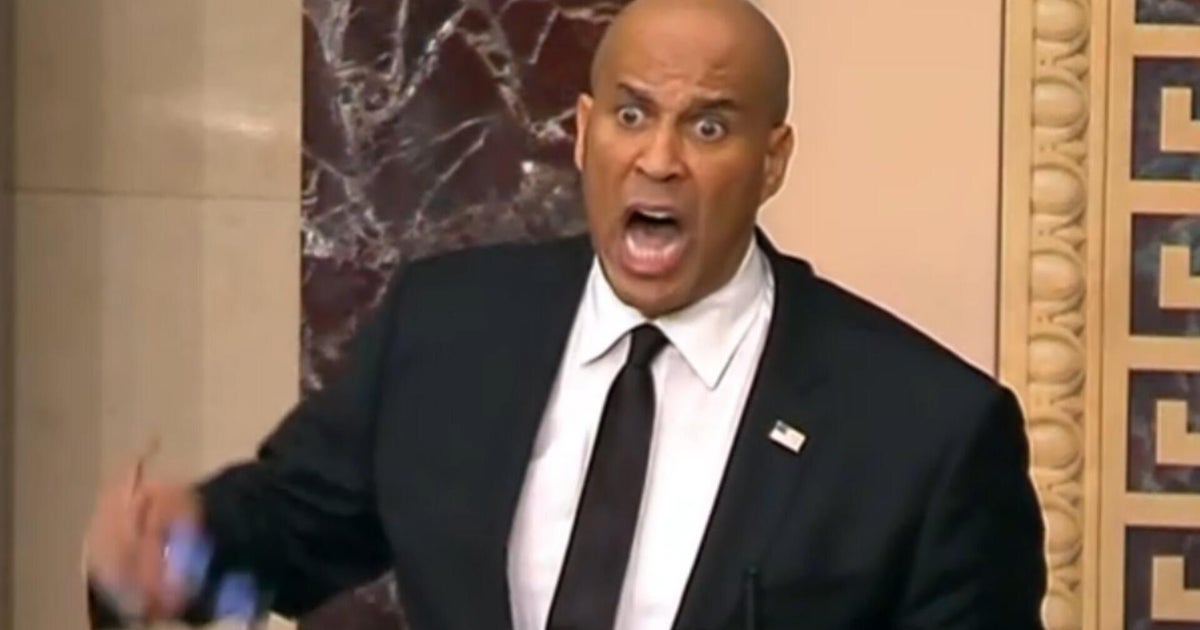
Recent stunts by Dems include former veep Kamala Harris’s unofficial beer summit with late-night host Stephen Colbert, Left Coast congressman Eric Swalwell’s anti-GOP jaw-flapping gym session, and Garden State Cory Booker’s “Jersey Shores”-style rant on the Senate floor.

Their machinations have consistently come across as unimaginative, juvenile, and inauthentic.

Why would prominent Democrat figures engage in such undignified behavior? The numbers provide the likely explanation.

According to The New York Times, when it comes to voter registration, Democrats are “bleeding support beyond the ballot box.” All of the 30 states that track voter registration by political party measured severe drops in Democratic Party registrations in between the elections of 2020 and 2024.

A recent survey from CNBC indicates that the Dem’s net favorability has hit a near three-decade low.

The Democratic Party carries a -32 net favorability rating among registered voters, which is the lowest rating for either the Democratic or Republican Party going as far back as1996.

The Dems have a 24 % positive rating and a 56 % negative rating.

A recent YouGov poll shows that 58% of Democratic voters view their leaders as “out of touch,” compared to only 42% of Republicans who view their leaders in the same way.

A recent Gallup poll indicates that 54% of Americans trust Republicans more on economic issues, compared to 39% for Democrats.

The numbers suggest that people are seeing through the political theatrics. The Democrats lost 2.1 million registered voters across 30 states and Washington, D.C., while Republicans gained 2.4 million registered voters.

These numbers reflect the self-evident principle that authenticity is something that cannot be concocted.

Democrats, many of whom have presidential ambitions, are attempting to duplicate President Trump’s communication and leadership style. Interestingly, pretending to be him just isn’t cutting it.

That’s because President Trump isn’t method acting. He’s himself 24/7. His comments resonate because they are routinely unscripted, unvarnished, and unapologetic. The exact opposite of the Dem Trump wannabes.

While the Democrats have been hard at work creating TikTok videos, President Trump has been hard at work solving problems. He makes sure that he updates the public each day, reporting on issues that have been resolved and those still in need of tackling. And he spells all of it out in primary colors so we don’t have to carry a pocket dictionary or woke wordbook to figure out what he’s trying to tell us.

Democrats are seemingly stuck in an unending sequel to High School Musical. They may be having fun but they don’t realize they aren’t being laughed with, they’re being laughed at, in addition to subsequently being ignored.

The backlash on social media confirms that their calculated spectacles are backfiring, perceived by the public as second-rate and utterly fake.

Reportedly, Democratic strategists have privately warned that the approach risks turning candidates into caricatures. Recent polling data indicate that voters want political candidates to be real. A Rasmussen survey from early 2025 shows 63% of the all-important independents say they’re less likely to vote for candidates who “try to act like someone they’re not.”

The younger voter demographic that Democrats covet appear to be increasingly apathetic. Only 49% of Gen Z voters plan to turn out in 2026, according to a recent Tufts University study. This number is down from the 57% seen in 2020.

The reason for the drop is simple. Many of the young people cited distrust of politicians, who in their words are “pretending to be like us,” as the reason for their pulling away.

Authenticity is a difficult concept to describe, but humans seem to have an inner sense of whether or not a fellow human being is being genuine.

In terms of the way in which Dems have been behaving, folks additionally sense what authenticity is not about.

It’s not about mugging for the cameras, showing off one’s talents or lack thereof, chasing internet fame, or channeling another person’s persona.

With regard to public service, authenticity is about being honest about who you are, straightforward about what you stand for, and resolute in putting the needs of your constituents ahead of your own. Things that the current iteration of the Democrat Party either can’t or won’t do.

If the Democrat Party doesn’t learn the authenticity lesson in a hurry, the curtain just may come down before the play is over.
TikTok Lawsuit May Forever Change Social Media

A lawsuit was recently brought against TikTok, which may end up altering the legal landscape for social media platforms operating in the U.S.

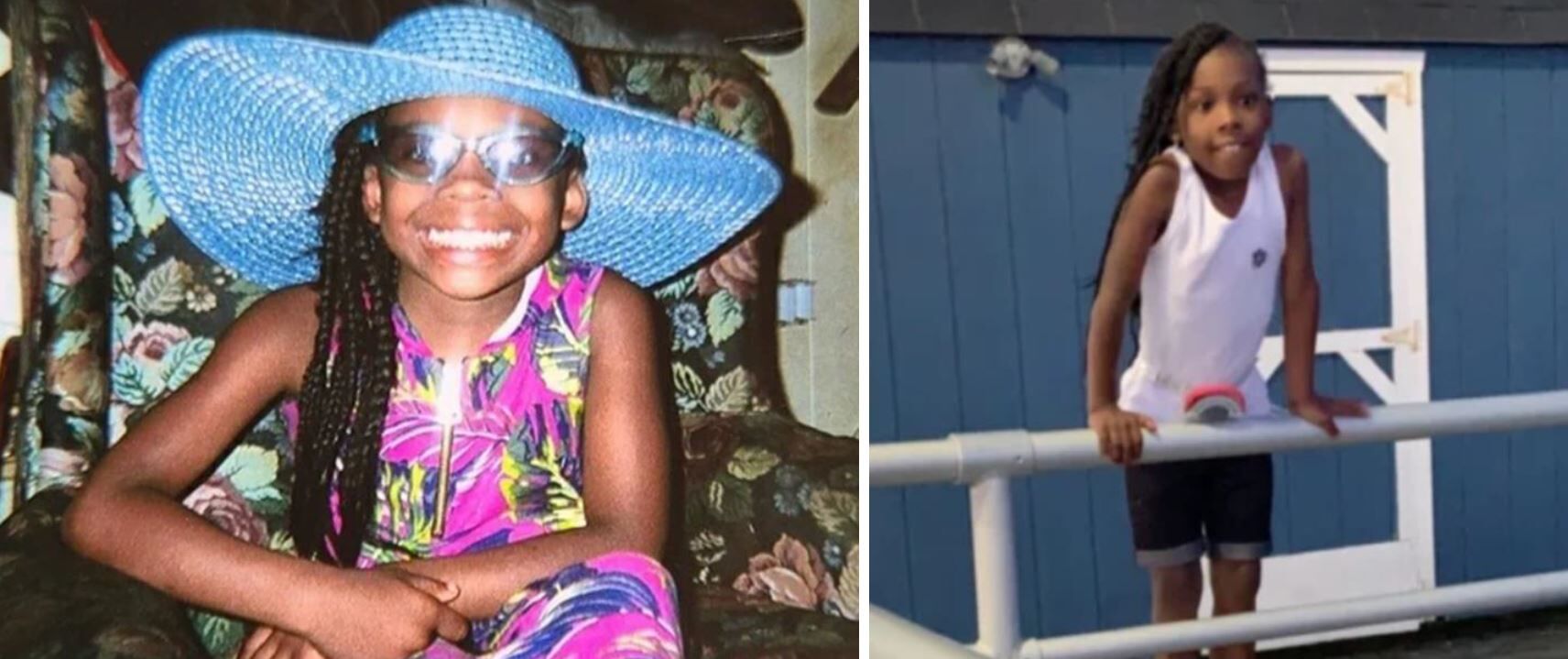
The lawsuit has its origins in the tragic death of a 10 year-old girl who, while engaging in a trendy but extremely dangerous activity on Tik Tok, sadly lost her life.

In 2021, young Nylah Anderson, was exposed to a viral meme in her TikTok feed. The video that presented itself was called “The Blackout Challenge.”

Social media platforms are loaded with supposedly cool game-like challenges, many of which are relatively harmless. But this particular challenge was anything but low risk.

Devastatingly for Nylah and her family, the specific activity that was advocated was to choke oneself until one lost consciousness. Nylah participated in the challenge and tragically passed away in the process.

Her family filed a lawsuit against TikTok, but the trial court threw out the case, based on the traditional statutory protections enjoyed by social media platforms.

However, a federal appellate court came to a different conclusion. The court held that the lawsuit could go forward because of the manner in which TikTok used its technology, finding that the platform’s algorithm may have promoted the harmful content that led to a fatal outcome for the young girl.

The court’s decision stated the following: “While no one person at TikTok curates content for anyone’s feed, it is fair to call the algorithm the arbiter, and the algorithm is programmed by TikTok…”

Social media platforms, such as TikTok, Facebook, Instagram, X (formerly Twitter), and others, have been protected by a 25 year-old law passed by Congress, which was intended to shield platforms that came into being during the internet’s infancy.

The early days of the internet featured platforms such as AOL, Compuserve, and Prodigy, which functioned as conduits that passively provided access to content, rather than actively influencing what would appear in users’ accounts.

Consequently, as part of the Communications Decency Act of 1996, protections were set up in order to shield these passive online services from liability for content that was posted by third parties.

For these early gateways to the web, revenue arrived in the form of subscription fees.

Today’s platforms have a completely different revenue model. Advertising as well as sharing user data comprise the primary sources of income.

The aim of modern social media companies is to acquire, and perhaps more importantly, to maintain its users.

The complex and sophisticated algorithm is the tool that enables a company to consistently maintain its users.

TikTok’s “For You” page, Facebook’s feed, Instagram’s recommendations, and X’s “For You” page are controlled by algorithms that learn what an individual likes to view, and subsequently, based on knowledge of a person’s interests, bring content from other users into the individual’s account. 

In essence, not only do modern social media platforms provide access to content, but they curate what users see via pre-programmed algorithms.

The TikTok lawsuit could have major implications for all of the major modern social media companies, since they all use algorithms to curate content.

If Nylah’s family prevails in its lawsuit, the resulting precedent could mean an effective end to the legal protections under which social media concerns have been operating.

TikTok, Facebook, Instagram, X, and other platforms would then face a significant shift from the protections they have enjoyed under Section 230 of the Communications Decency Act.

In order to avoid future liability, modern social media platforms would be legally responsible to re-design their algorithms in such a way as to prevent the delivery of harmful content.

It very well may be that loss of a precious life will spell the beginning of the end to the outdated legal protections that social media platforms have been enjoying at the expense of the innocent ones.

Upcoming Supreme Court Cases May Help Restore Free Speech on Social Media

The Supreme Court recently announced that it is going to hear two major cases relating to the right of free expression.

Both cases will examine the constitutionality of state laws that were created to prohibit tech companies from discriminating against social media platform users who are ideologically conservative.

At the heart of the cases is Big Tech’s pattern of targeting and eliminating select content.

The passage by state legislators in 2021 of the laws in question came in response to censorship of user-generated content, which was taking place on social media sites.

The Texas and Florida legislatures were acting on behalf of their constituents in using their lawmaking capabilities to try and restore freedom of expression to the portion of the digital world that was being impacted by selective censorship.

It is regrettable, to say the least, that the redacting of factual information, political ideology, faith expression, and the like, which frequently runs contrary to today’s progressive and/or radical narratives, is routine business for a majority of Big Tech companies.

The Texas and Florida legislators engaged in the appropriate processes in an effort to address the censorship problem.

Texas law H.B. 20 bars social media platforms with at least 50 million active users from blocking, removing, or demonetizing content based on a respective user’s point of view. Similar to phone companies, the law re-classifies social media platforms as “common carriers.”

Florida law S.B. 7072 forbids large social media platforms from censoring or banning political candidates and what the law refers to as a “journalistic enterprise.” The Florida bill also mandates that social media companies publish standards for the removal of content as well as for exercising consistency in the application of such standards.

Technology industry groups NetChoice and the Computer & Communications Industry Association have challenged each of the state laws. Members of the groups include TikTok, X, formerly called Twitter, and the owners of Facebook and Google.

The Biden administration joined with the technology groups, arguing that social media platforms’ rights include those of censoring the content of customers.

Two appeals courts have given conflicting rulings over the two state laws. One of the appellate courts upheld the Texas law, but another struck down the Florida statute. In both cases, implementation of the state laws during appeals has been temporarily halted by federal courts.

In May of 2022, the Supreme Court (by a 5-4 ruling) kept the Texas law on hold during the process of litigation.

Justice Samuel Alito was part of a dissenting opinion, which said that the law should be left in place and that the issues were so novel and significant that the Supreme Court would have to consider them at some point. The justice wrote, “Social media platforms have transformed the way people communicate with each other and obtain news.”

Justice Alito added, “At issue is a groundbreaking Texas law that addresses the power of dominant social media corporations to shape public discussion of the important issues of the day.”

The justice also expressed skepticism toward the argument that social media companies have editorial discretion protected by the First Amendment, such as the kind that newspapers and other traditional publishers enjoy.

The aforementioned tech trade groups, along with the Biden administration, are contending that the Constitution protects the social media platforms’ elimination of so-called disinformation.

Tech companies claim that taking away their unfettered right to censor will mean that their platforms will be filled with the vague categories they are claiming pose a danger, e.g. bullying, extremism, and hate speech.

However, the High Court will look closely at the carve-outs that state legislators placed in the laws to permit platforms to perform legitimate functions. These exceptions allow categories of content, such as pornography and foreign government speech, to be removed by the tech companies.

The above mentioned cases, which will be heard in the new nine-month term that recently began, will ultimately answer a single question of utmost importance: Do states have the ability to put a halt to speech discrimination by tech companies?

Social media platforms have become essential communication components of everyday life.

They allow us to connect and interact with individuals, organizations, educational institutions, governmental bodies, health agencies, etc.

Pray that the Supreme Court decides in favor of a free internet so free speech can live.

The Church of Woke

skiy9lstr8g83rx5qdlxazqldkahaaf0pdv4htoc_cw

All of us need to know beyond a shadow of a doubt that we are uniquely made, that we are here on this earth for a purpose, and that our lives have transcendent meaning.

If these innate characteristics go unfulfilled, or if life’s trials simply wear us down, our hearts become hardened and our spirits flaccid.

Wittingly or unwittingly, we find ourselves on a quest for the seemingly elusive someone or something that has placed these components deep within us.

We instinctively know that whoever or whatever is the originator of these inner sensibilities is greater than ourselves.

What we are not always cognizant of, though, is the fact that also built into us is the need to bow down to a power that is greater than ourselves.

And bow down we all do.

Like it or not, we all serve somebody. So who do you serve?

Some of us have the peace of always having had the answer to that question. Others have drifted in and out of certainty. And then there are those who don’t think that any of the things described above pertain to them.

But of course they do, as hopefully they will someday be able to recognize in themselves.

At the present time, a newfound spiritual group has assembled together. Members of the group have populated the social media with a creed of sorts, establishing a religion that could aptly be called “The Church of Woke.”

The fledgling church exhibits attributes of religious institutions that have come before it. However, its belief system is antithetical to the time-honored faiths of our country and of the world.

Members of The Church of Woke claim to seek a world in which no inequality exists and everything is paid for without anyone ever having to work. Rather than comparing our nation to other countries, they compare it to the utopia that their religion claims to offer.

The Church of Woke is dead set on disparaging, demeaning, and destroying all things related to traditional religious institutions. It adamantly rejects what it views as archaic absolute standards. Above all else it embraces moral relativism, which has no philosophical leg to stand on. No reasoning allowed, just sheer emotion. According to The Church of Woke, the only way forward is to tear down everything.

Adherents harbor a fierce hatred for America. This is because the notion that our country is the repository of evil has been drilled into their heads. The whole Western World is viewed as having a sinister history, ideology, and political bent. Wrongs are categorized as “systemic” and are therefore incapable of ever being corrected.

The Church of Woke is enlisting new members every day and converting them to the “correct” way of thinking. Services have taken the form of street protests, and prayers, the endlessly repeated worn-out chants of radicals past.

Followers of The Church of Woke consider themselves to be today’s chosen people. No way do they have to follow traditional rules of law. They are completely free to express any degree of hostility toward anyone they wish. They are also allowed to punish anyone who fails to bow to them.

Yes, we all serve somebody. And the reality is, the choice of whom we serve has clearly become a binary one.

What You Need to Know about the Heads of Social Media and Big Tech

untitled-5-6

In an unprecedented move by the head honchos of social media, President Donald Trump had several posts on his Twitter account slapped with “fact check” disclaimer labels.

When internet companies were in their infancy back in the 1990s, Congress, via legislation, provided them with immunity from certain civil lawsuits in order to encourage the development of “platforms,” i.e., digital places for users to share user-created content.

Similar to bookstores that are not in the business of creating, editing, or publishing the material contained on the shelves of their stores, companies such as Twitter were granted special protection from lawsuits so that digital platforms that merely host media content created by third parties (their users) would be able to operate unhindered by the threat of legal action.

Companies with very large social media platforms have been acting as if they merely provide space for third parties to share, when in actuality it is just that, acting. Based on the same premise, they additionally continue to maintain that they should not be held liable for what their users post.

Twitter’s decision to fact check in such a high profile and subjective manner stands as a watershed moment in the relationship between government and social media.

By fact checking the President of the United States on, of all things, an issue related to potential election fraud, Twitter tossed its identity of being a platform out into the ethersphere. But it also let the cat out of the bag as to its real present status, that of full-fledged publisher.

Twitter expressed a political opinion when it engaged in its fact checking. The issue was a mega-politically charged one involving mass mail-in voting and whether such a process is ripe for fraud.

President Trump’s tweet was evaluated by the overseers at Twitter, and users were prompted to “Get the facts about mail-in ballots.” Upon clicking a link, users were subsequently instructed that “experts say mail-in ballots are very rarely linked to voter fraud,” an unmistakable political statement that also happens to be false.

If one is willing to dig a little deeper, what is discovered is that Twitter has implemented a policy that currently seems to apply to a single user—President Trump.

When a social media company engages in the same activities as a publication, it must be treated as if it were one. Newspapers, magazines, etc., fall under the umbrella of conventional publishers that create and edit their own content and are not exempt from liability.

Twitter has not been considered a publisher, despite the fact that it has been acting like one. But to exacerbate the situation, it has increasingly become a publisher of the most highly partisan kind. And it just so happens that, as of this writing, we are less than six months away from a presidential election.

Some big tech companies have also demonstrated a political bias in giving liberals a pass while engaging in an all-out targeting of conservatives.

–PragerU’s Facebook page was marked with a virtual branding iron as containing “false news” and was demonetized as well.

–A study from NYU on the addition of zinc to a hydroxychloroquine and azithromycin treatment was removed by YouTube.

–A hydroxychloroquine video by Sharyl Attkisson was also removed, although it was subsequently reinstated.

–A contrarian Michael Moore-produced documentary, “Planet of the Humans,” was yanked from YouTube.

As reported by Vox, a number of top Silicon Valley figures appear to be working behind the scenes in a concerted effort to get presumptive Democratic presidential nominee Joe Biden elected. Big tech names include LinkedIn founder Reid Hoffman, Facebook co-founder Dustin Moskovitz, Apple founder Steve Job’s widow Laurene Powell Jobs, and ex-Google CEO Eric Schmidt.

Twitter’s own Yoel Roth, who presently holds the title “Head of Site Integrity,” has referred to President Trump and his team as “actual Nazis.” Roth has additionally mocked Trump supporters, insulted Senate Majority Leader Mitch McConnell, and provided campaign donations to former Democratic presidential candidate Hillary Clinton.

President Trump recently signed an executive order that sets in motion a potentially costly change for Twitter with respect to the company’s civil liability exposure. The order directs all executive departments and agencies to ensure that their application of Section 230(c), the law that limits liability, falls within “the narrow purpose of the section.”

The executive order cites the legislative purpose of the law to maintain the internet as a “forum for a true diversity of political discourse.” The departments and agencies are instructed to “take all appropriate actions in this regard.”

The heads of departments and agencies must also review advertising and marketing expenses that are paid to Twitter and other online platforms. This includes the Federal Communications Commission (FCC), the Federal Trade Commission (FTC), and the Department of Justice (DOJ), as well as other parts of the executive branch.

With regard to Twitter, Google, Facebook, YouTube, and others, it is possible that some of the personnel of these departments and agencies will be looking into the practice of the gathering of information about virtually everything users do and then selling the data for billions of dollars.

U.S. Attorney General William Barr has already indicated that the DOJ will begin drafting legislation to regulate social media companies.

President Trump’s executive order may have an immediate limiting effect on social media and big tech’s future editorial actions.

Apparently, tech CEOs, including Facebook’s Mark Zuckerberg, have already heard the footsteps of the federal government. Zuckerberg recently distanced himself from Twitter when he told Fox News that the social media platform had, in his opinion, made a mistake, and that no social media platform should be the “arbiter of truth.”

The bottom line is that social media and big tech companies can’t have it both ways. And hopefully, in the very near future, they won’t.

The Scene Stealer Wins

14-dems-debate.w700.h467

Democratic candidates who are vying to win the top spot as their Party’s 2020 presidential nominee are set to take the debate stage on Wednesday and Thursday of this week.

Twenty out of the twenty-three candidates who are currently running have made the cut, which means they will be participating in the debates on one of the two days listed above. They will, of course, be appearing on national television and several will likely be introducing themselves to the public at large for the very first time.

The political face-off is going to take place in Miami, Florida, with telecasts airing on NBC, MSNBC, and Telemundo. Lester Holt, Savannah Guthrie, Chuck Todd, Rachel Maddow, and José Díaz-Balart will be the moderators.

The rhetoric of many who are chasing the Democratic primary plum has been both confusing and unappealing to a sizable segment of the voting population. Candidates that fall within this category have, for the most part, been speaking to their far-left constituents, especially those who tend to be clustered in East and West Coast urban enclaves.

The candidates’ positions on the most crucial issues that our country presently faces appear to be pretty much the same in content and substance. They seem to be relatively distant from the views held by a major segment of the population as well, with the sometimes exception of former Vice President Joe Biden. When not flip-flopping or dodging questions, the former veep does his best to appear above the fray and create an air of inevitability.

The two-day debate drama will feature an unlikely cast of characters that includes the mayor of the nation’s largest city, the mayor of one of the nation’s smallest cities, certain individuals with no previous political experience, one individual with fifty years experience, and even a New Age guru who is a spiritual soul mate of none other than Oprah Winfrey.

The stakes are quite high for the largest primary campaign field ever assembled. As a result of the sheer number of candidates who are participating in the debate, the DNC has resorted to a lottery in order to assign the candidates’ dates and places across the two-day event.

Wednesday’s grouping includes only one of the current five top Democratic contenders, Sen. Elizabeth Warren. Consequently, Thursday is looking as if it will be a red carpet event, politically speaking. It will feature the four remaining highest placing candidates, which includes the front-runner, Biden.

A recent Quinnipiac poll showed that only 45 percent of Democrats are paying “a lot” of attention to the campaign. The candidates will vie for their share of attention during the two-hour broadcast, while at the same time trying to distinguish themselves from one another. They will no doubt have to make their points in a condensed period of time, because despite being limited to 10 participants the estimated duration that each will be able to speak is only about seven minutes.

For those in the political arena who have not yet achieved the degree of name recognition and fame that is required, particularly when compared with Biden’s levels, the dream of setting themselves apart in an age of social media depends on their wherewithal to generate a “viral” moment.

Before social media came into existence I would characterize a moment such as this as a “magic” one. The impact on the momentum of a candidate’s campaign had the same effect – shooting star.

In 1984 former President Ronald Reagan deftly dealt with his then-age of 73, when questioned on the matter during his debate with Democrat opponent Walter Mondale. Reagan famously responded, “I will not make age an issue of this campaign. I am not going to exploit, for political purposes, my opponent’s youth and inexperience.”

In 2000, during the third presidential debate with then-GOP candidate George W. Bush, former Vice President Al Gore, after sighing audibly through most of the proceedings, left his podium and entered his opponent’s space in an apparent attempt at intimidation. Bush merely nodded at Gore and in wry trademark fashion said a single word, “Hello,” continuing to make his point without skipping a beat.

Back in the day magic moments spread the old fashioned way, via television broadcasts, radio, and print publications. Moving like lighting, today a viral moment is fueled by 24/7 cable coverage and social media platforms.

As the intersection of Hollywood and politics grows ever wider and stardust makes its way from west coast to east and back again, analogies between the world of entertainment and of politics become ever more pronounced. What I see as a potentiality of the upcoming debates is what has frequently been observed on the Hollywood front. An actor who plays a secondary role in a film unexpectedly captures the audience’s attention and “steals the scene.” When this occurs, an unknown supporting actor may suddenly be catapulted on to a new trajectory aimed straight toward stardom.

In 1950, appearing in a mere two scenes of the film “The Asphalt Jungle,” little known actress Marilyn Monroe experienced the propelling of her career, which placed her on a path that ultimately led to cinematic icon status.

In 1969, like Monroe actor Jack Nicholson did much the same in the film “Easy Rider.” So, too, did Viola Davis in 2008 with her role in the film “Doubt.”

With today’s vast social media landscape, the type of moment that will thrust a candidate into the political stratosphere must be one that breaks through the Internet noise barrier. Like it or not, when “Action!” is called on the night of the debates, he or she who steals the scene wins.

John Wayne Becomes Social Media’s Latest Target

jwayne1

Social media trolls recently honed in on a new target of attack. The same agitators that consistently seek to tear down statues, ban books, and silence dissidents have now dug up an interview with legendary actor John Wayne, which appeared in a May 1971 issue of Playboy Magazine.

What are Wayne’s detractors aiming for?

Well for starters, they want to change the name of the airport that is located in Orange County, California and bears Wayne’s name. Presumably the 9-foot bronze statue of the famed figure that stands at the entrance would be knocked down as well.

Even though Wayne is no longer with us and thus unable to defend himself, the transforming America crowd who are attempting to destroy Wayne’s reputation will not be satisfied until the movie icon’s legacy has been completely redacted from Hollywood history.

Screenwriter Matt Williams used his Twitter account to publish portions of the 1971 interview of Wayne, and re-tweeters managed to push the post into the viral zone.

Although some of the quotes in the interview appear to be inappropriate when examined within the context of today’s more enlightened cultural prism, at the time of the interview Wayne, along with many of his contemporaries, spoke in a blunt and occasionally harsh style both on and off screen, which was part of a projected character image.

Williams attacked the movie icon personally in a profanity laced social media post.

“Jesus f—, John Wayne was a straight up piece of s—,” Williams tweeted.

Comments to various re-tweets seemed to be at odds, with some agreeing with Williams and others urging a consideration of conversational context as well as the era in which Wayne lived.

Wayne was a man who before becoming a film icon was known as Marion Morrison, a football star at Glendale High and later at USC. He called the Golden State his home from the age of ten on and in later years was intimately involved with the once-sleepy county just south of Los Angeles, which grew in size and stature and came to affectionately be known simply by its initials, the OC.

Wayne’s fame transcended the norm of the conventional movie star and rose to a level that few ever achieve – that of enduring icon. However, Duke had something all his own. His movie star identity was wrapped up in the symbolism, beliefs, and ideals of the country he adored.

In a tell of a great artist, Wayne was able to capture the emotions that people felt about their country and place them on the big screen in all their Americana glory. His stories were their stories, perfected in a way that only Hollywood at the time could.

Interestingly, Wayne was an outspoken conservative and anti-communist. During the Playboy interview, he queried aloud, “What kind of a nation is it that fails to understand that freedom of speech and assembly are one thing, and anarchy and treason are quite another, that allows known Communists to serve as teachers to pervert the natural loyalties and ideals of our kids, filling them with fear and doubt and hate and downgrading patriotism and all our heroes of the past?”

Wayne’s popularity and influence on the American mindset disturbed Russian dictator Joseph Stalin to the point that the Soviet despot ordered an attempted assassination of the actor that auspiciously never materialized.

According to Michael Munn, film historian and author of “John Wayne – The Man Behind the Myth,” back in the early 1950s Stalin ordered the KGB to assassinate Wayne because he considered his anti-communist rhetoric a threat to the Soviet Union.

In 1959, when Soviet leader Nikita Khrushchev came to the United States, the autocrat had two requests he wished fulfilled: to visit Disneyland and to meet Wayne.

When Japanese Emperor Hirohito visited the United States in 1975, he also asked to meet Wayne, who was viewed as the personification of the American spirit.

Wayne’s iconic American status was recognized by the U.S. government, granting him the two highest civilian decorations in existence. In 1979 Wayne was given the Congressional Gold Medal, and in 1980 he was posthumously awarded the Presidential Medal of Freedom by then-President Jimmy Carter.

The legendary film star was nominated for three Academy Awards and was a one-time winner in 1969, taking the Best Actor in a Leading Role trophy for “True Grit.”

Despite attempts on the part of the left to characterize him as a bigot, the truth is Wayne was married three times and the three women he married were Latinas: Josephine Alicia Saenz, Esperanza Baur, and Pilar Pallete. In the wake of the coverage of the Playboy interview, Wayne’s family released a statement to the press.

“We hope America remembers John Wayne as we do: a devoted family man, great friend and cherished actor on the big screen, as well as for his continuing work to find a cure for cancer through the John Wayne Cancer Foundation and the John Wayne Cancer Institute,” the statement read.

“It’s unfair to judge someone on something that was written that he said nearly 50 years ago when the person is no longer here to respond,” the statement continued. “Regardless of color, ethnicity or sexual preference, [our] father taught us to treat all people the same, with respect.”

The outrage industry is on an endless quest to secure the next individual to impugn. As a result of the social media’s stoking of the fire, a virtue-signaling editorial was recently published by the Los Angeles Times, advocating that Orange County’s John Wayne Airport be renamed.

A formidable task awaits those who wish to erase Wayne from the public square, though. In addition to the airport in Orange County, opponents will also have to contend with a 21-foot bronze statue in Beverly Hills, which displays Wayne on horseback.

There is also a John Wayne Marina near Sequim, Washington, a 100-plus-mile trail named the “John Wayne Pioneer Trail” in the Iron Horse State Park, which is also in Washington, the John Wayne Elementary School in Brooklyn, New York, which features a 38-foot mosaic mural depicting “John Wayne and the American Frontier,” and the John Wayne Parkway, which runs through Maricopa, Arizona.